



Tantangan Distribusi Pariwisata Bali: Wilayah Selatan Masih Mendominasi Kunjungan
Laporan resmi bagi wisatawan di Bali dan Indonesia: DENPASAR, Bali - September 26, 2026 - Bali's tourism challenge is becoming less about attracting visitors and more about where those visitors stay, move and spend their time.
DENPASAR, Bali - September 26, 2026 - Bali's tourism challenge is becoming less about attracting visitors and more about where those visitors stay, move and spend their time.
Recent statements from tourism industry leaders and government planners point to a persistent imbalance: the island's southern districts remain the principal base for visitors, while large parts of northern, eastern and western Bali continue to receive a much smaller share of tourism activity.
The issue resurfaced this week when the Indonesian Hotel and Restaurant Association (PHRI) Bali discussed the current pattern of visitor movement and hotel occupancy.
PHRI Bali chairman Tjokorda Oka Artha Ardhana Sukawati, known as Cok Ace, said on September 24 that South Bali, particularly areas such as Nusa Dua, remains a major concentration point for tourists because of the region's accessibility.
Air and sea connections are concentrated in the south, he explained, making the area a practical base for visitors. From there, tourists may travel to other parts of the island for day trips, but their accommodation remains concentrated around established southern tourism centres.
The pattern is visible even in recent hotel figures.
PHRI reported that average hotel occupancy across Bali was around 68 percent in mid-September, while Sanur was recording occupancy above 80 percent. According to Cok Ace, Sanur's performance has been supported not only by accommodation supply but also by a strong relationship between tourism businesses, local communities and the municipal government.
The figures suggest that tourism is not distributed evenly across the island even when overall demand remains healthy.
A problem of concentration, not simply visitor numbers
The distinction is important.
A higher visitor count does not automatically mean every part of Bali is under the same pressure. The current discussion is increasingly about how infrastructure, accommodation and visitor flows are distributed.
In August, Bali's Regional Development Planning Agency, or Bappeda Bali, said the notion that the island was uniformly experiencing overtourism was not accurate. The agency pointed to places such as Kuta, Legian and Canggu, where tourism activity is particularly intense.
Bappeda linked that pattern partly to infrastructure. Southern Bali has accumulated a denser network of roads, hotels, restaurants, entertainment facilities and supporting tourism services than many areas farther from the established southern corridor.
The accommodation pattern reinforces the geography
Visitors can spread across the island during the day without overnight demand moving at the same pace.
That is particularly visible in the relationship between South Bali and Ubud. A traveller may spend a day in Ubud, then return to a hotel in the south.
The same pattern can occur with northern and eastern destinations.
The result is that an attraction can receive substantial visitor traffic without becoming a major overnight market.
Tourism villages show the same imbalance
The concentration can also be seen at a smaller scale.
According to Bali Post, 18 tourism villages in Badung recorded 568,582 visits between January and July 2026. More than 92 percent of those visits went to just six villages.
Munggu alone recorded 145,526 visits, or 25.6 percent of the total.
The figures do not indicate that all tourism villages are equally busy. Instead, they show how destinations with stronger visibility, accessibility and established visitor infrastructure tend to attract a disproportionate share of demand.
The policy question is where growth should happen
The Ministry of Tourism is preparing a tourist-dispersion masterplan aimed at developing destinations in North, East and West Bali.
The approach links promotion with connectivity, basic services, environmental management and community participation.
That matters because simply telling visitors to explore another region does not guarantee that they will stay there.
A successful alternative destination needs accommodation, transport, restaurants, attractions and local businesses capable of supporting a longer visit.
Sanur offers a different model
One of the more interesting developments in this week's discussion has been the attention given to Sanur.
Cok Ace described Sanur as an example of tourism development in which local residents play a substantial role in shaping the destination.
Unlike some highly developed tourism districts dominated by large international properties, Sanur's tourism economy includes a broad network of local businesses and community stakeholders.
The model offers a possible lesson for other destinations: development does not necessarily require reproducing the same physical form or commercial structure found in Bali's busiest resort districts.
From day trips to longer stays
The economic difference is significant.
A visitor who spends several hours in another part of Bali contributes to that local economy, but a visitor who stays two or three nights creates opportunities across accommodation, dining, guiding, transport, activities and retail.
That is why the tourism-dispersion discussion is increasingly about destination readiness, not just destination promotion.
For Bali, the question is becoming more precise: how can the island convert strong visitor demand into a broader tourism economy without simply directing more traffic into the same established corridors?
The answer will depend on whether destinations beyond South Bali can develop enough depth to become places where visitors choose to stay, rather than places they merely visit.
Helpful planning insights for travelers exploring bookings, regional itineraries, and accommodations across the destination.
Planning a trip to Seminyak?
Explore current destination intelligence, curated accommodations, cultural landmarks, and island events before you travel.
Curated Stays & Sanctuaries in Seminyak
Akomodasi mewah pilihan dengan vila kolam renang privat, arsitektur warisan autentik, dan layanan concierge terpadu.

Desa Potato Head Bali
Desa Potato Head Bali is a 5-star hotel situated in Seminyak, Bali (Ultra-Luxury), holding a verified guest score of 9.5/10 across 2,537 reviews. Located 8 km (20–30 mins drive)) with short scooter / drive (< 2km to coast).

iSuite by Ekosistem
iSuite by Ekosistem is a 5-star hotel situated in Seminyak, Bali (Ultra-Luxury), holding a verified guest score of 9.6/10 across 530 reviews. Located 8.1 km (20–30 mins drive)) with short scooter / drive (< 2km to coast).
Hotel Indigo Bali Seminyak Beach By IHG
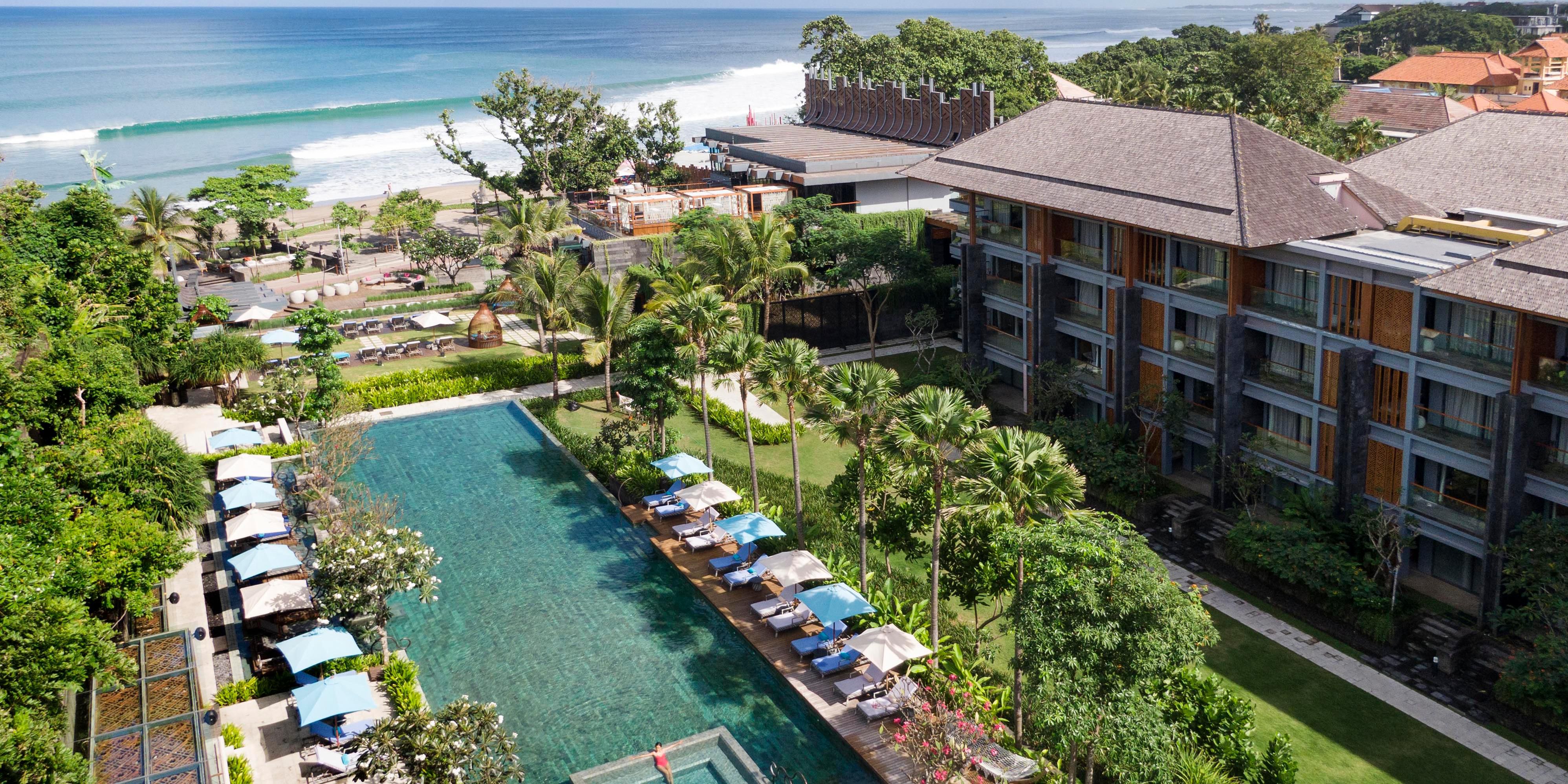
Hotel Indigo Bali Seminyak Beach By IHG is a 5-star hotel situated in Bali, Bali (Ultra-Luxury), holding a verified guest score of 9.4/10 across 2,878 reviews. Located 5.9 km (15–25 mins drive)) with absolute beachfront (< 100m).
Iconic Landmarks & Sacred Sanctuaries Across Bali
Protected cultural heritage, historical architecture, and iconic natural viewpoints with official entrance tariffs and etiquette rules.
 temple
Rp 75.000
temple
Rp 75.000
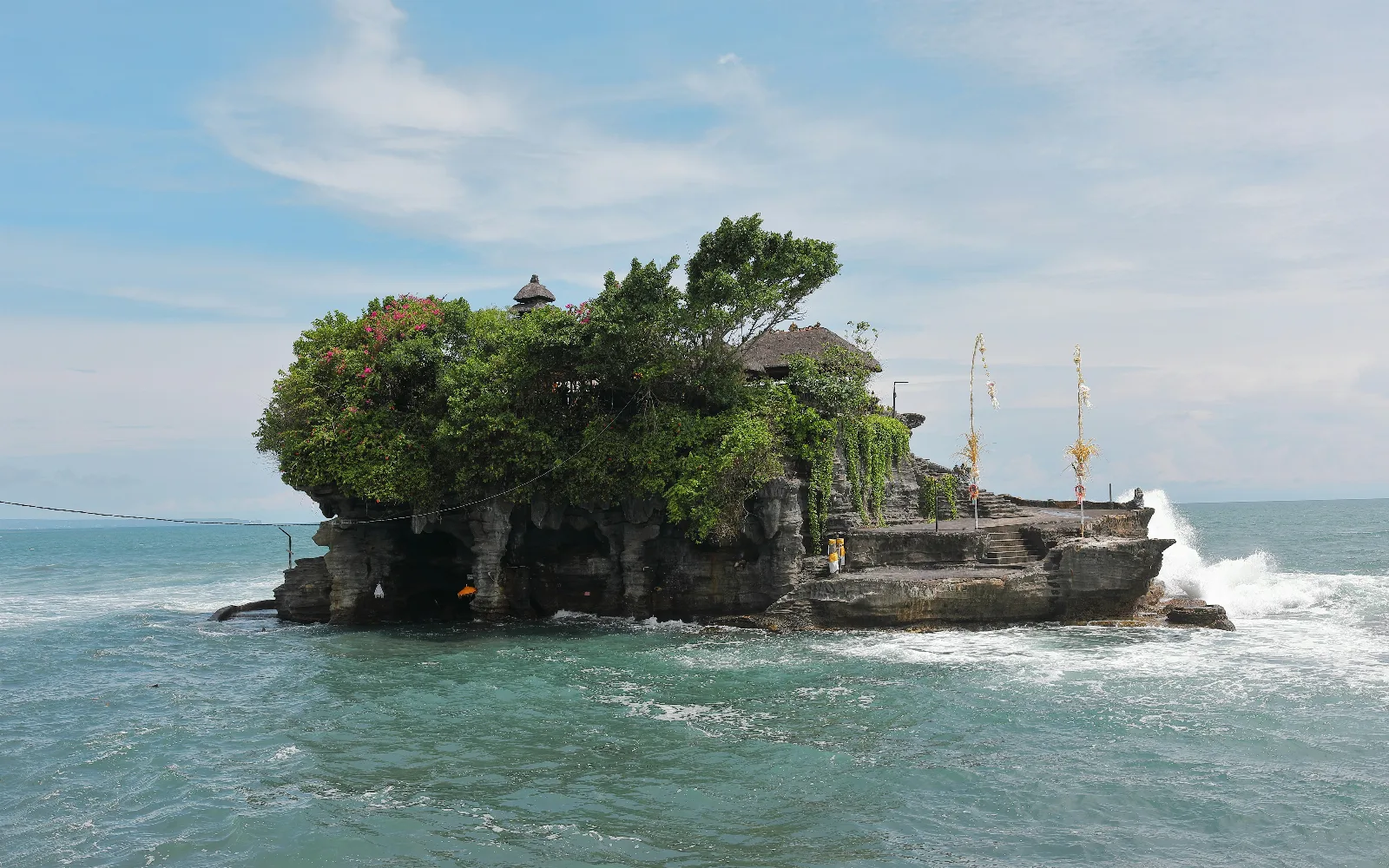
Pura Tanah Lot
Pura laut legendaris abad ke-16 yang berdiri megah di atas bongkahan batu karang di tengah deburan ombak Samudra Hindia, pemujaan Batara Segara.
 rice terrace
Rp 50.000
rice terrace
Rp 50.000
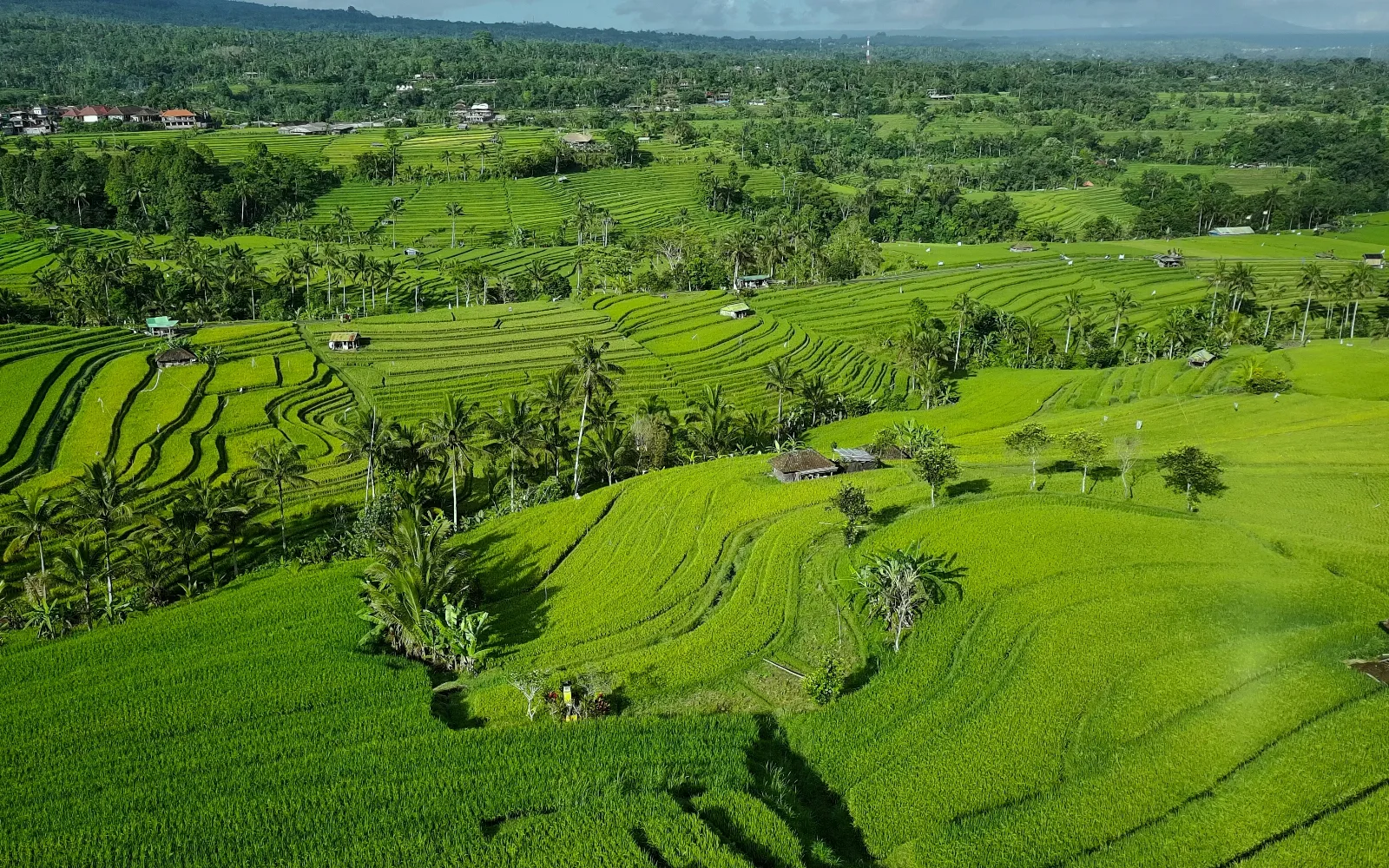
Jatiluwih Rice Terraces (UNESCO)
Warisan Budaya Dunia UNESCO seluas lebih dari 600 hektar di Tabanan, bentangan terasering sawah berundak terluas di Bali yang dialiri sistem irigasi Subak.
 temple
Rp 50.000
temple
Rp 50.000
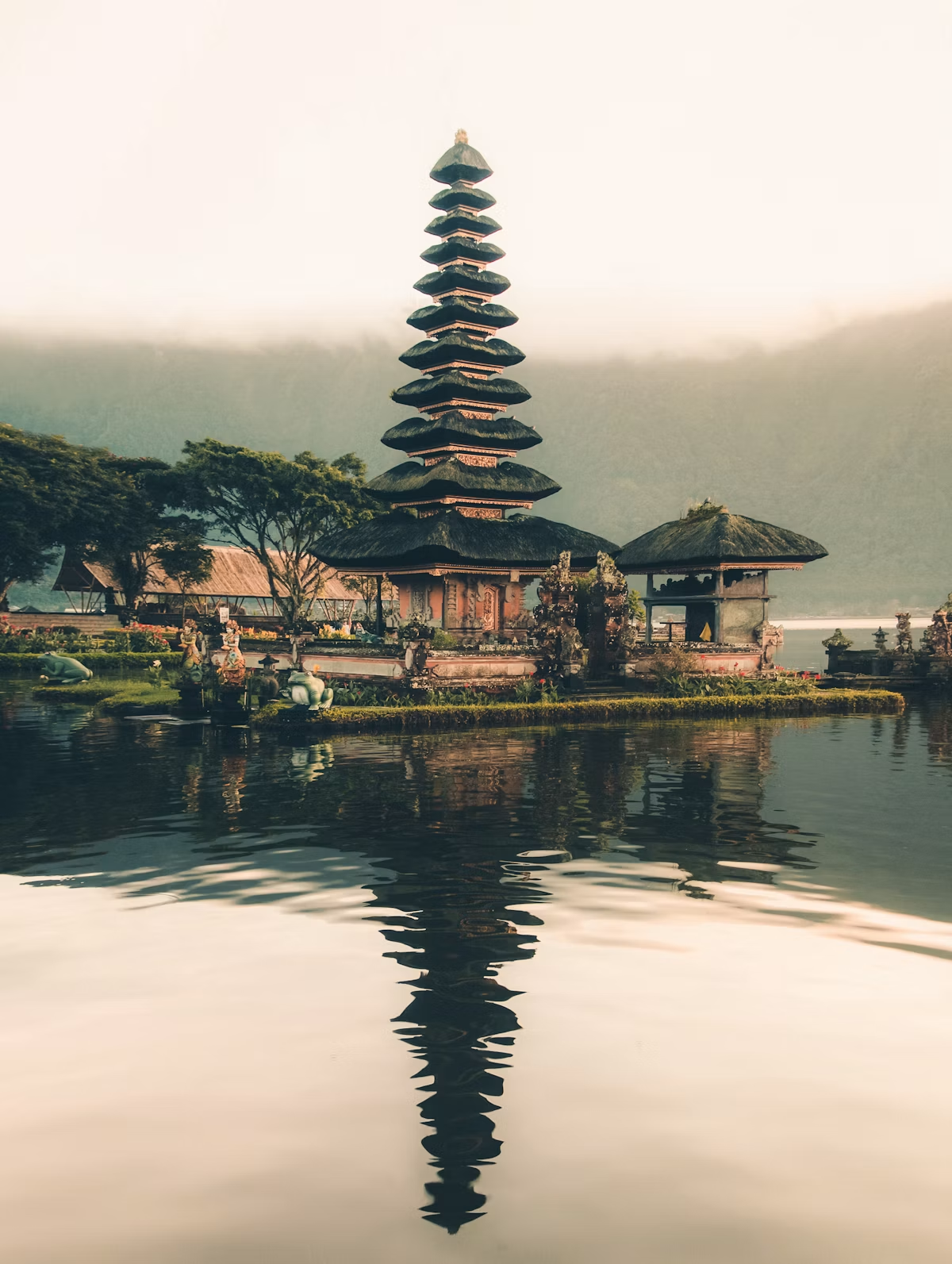
Pura Petitenget Beachfront Temple
Historic 16th-century seaside temple founded by sage Dang Hyang Nirartha, anchoring Seminyak’s cultural heritage amid high-end coastal dining and oceanfront sunsets.
Guided Tours & Field Experiences in Seminyak
Handcrafted tours, masterclasses, and coastal expeditions led by licensed local guides with verified booking options.
 culture
📍 Seminyak
Rp 1.150.000
culture
📍 Seminyak
Rp 1.150.000
Seminyak Gastronomy Walk & Modern Indonesian Tasting Menu
Experience the pinnacle of contemporary Indonesian culinary artistry on a curated evening gastronomy walk through Seminyak's premier dining enclaves. Led by a passionate food writer, guests embark on progressive tastings across celebrated fine-dining venues, culminating in an exclusive multi-course modern Indonesian degustation that reimagines regional archipelago classics. Each course highlights rare indigenous spices, exquisite plating, and inventive flavor pairings that redefine island haute cuisine.
 culture
📍 Seminyak
Rp 480.000
culture
📍 Seminyak
Rp 480.000
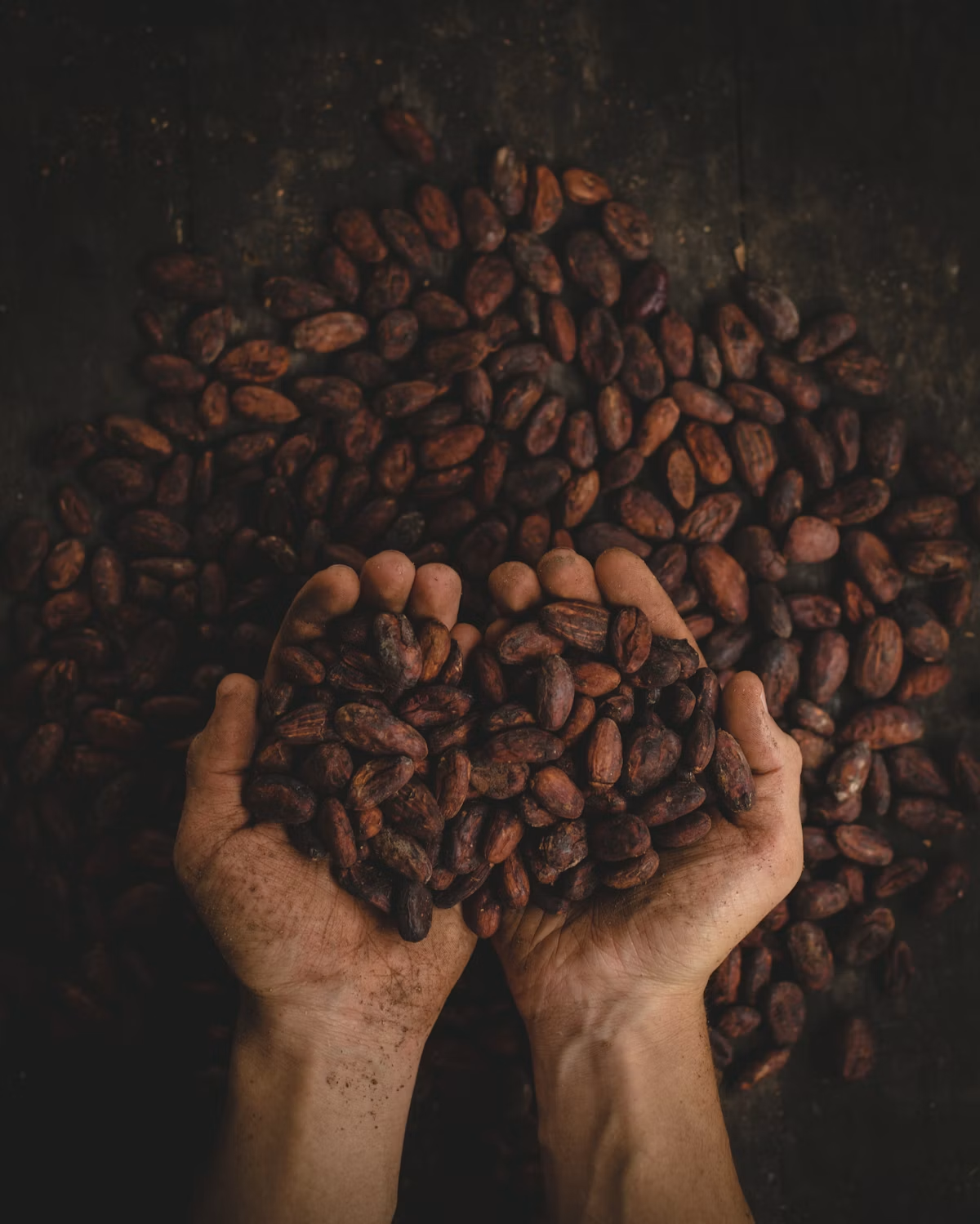
Balinese Artisan Cacao Workshop & Native Botanical Cocktail Lab
Delve into the rich flavors of ethically sourced single-origin Balinese cocoa and native botanicals at a sleek culinary laboratory in Seminyak. Guests discover the bean-to-bar chocolate-making process, roasting and conching fermented Tabanan beans before crafting personalized chocolate bars with sea salt and island spices. The workshop concludes with a hands-on mixology session blending artisanal cacao infusions with Balinese botanical spirits for a truly decadent sensory adventure.
 culture
📍 Seminyak
Rp 580.000
culture
📍 Seminyak
Rp 580.000
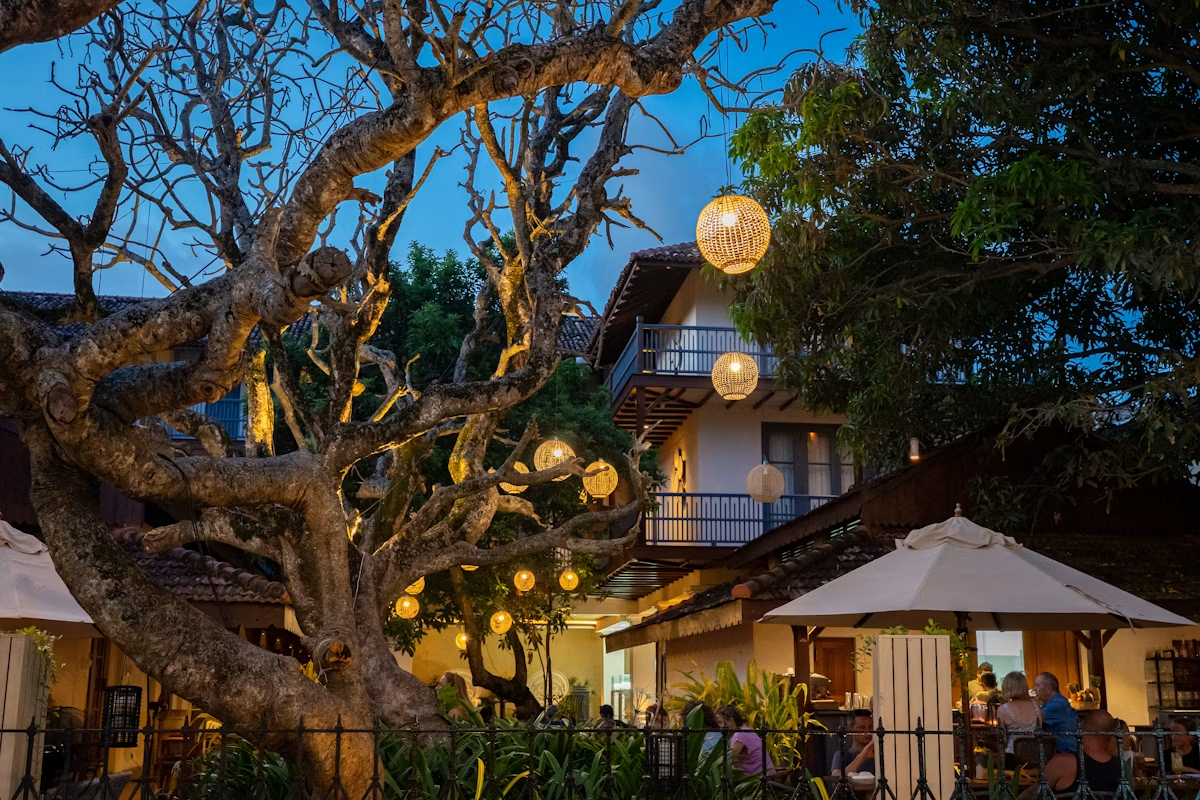
Seminyak Secret Food & Cocktail Walking Safari
Uncover the vibrant culinary underbelly of Seminyak on a twilight stroll connecting hidden warung treasures with chic cocktail dens. Led by an insider food anthropologist, you will taste sizzling babi guling pork crackling, aromatic satay lilit, and artisanal Balinese sambals before slipping into clandestine speakeasies for signature native botanical cocktails. This evening celebrates the dynamic synergy between centuries-old Indonesian culinary heritage and contemporary mixology.
Planning a Bali trip?
Explore current destination information, accommodation options, and events before you travel.
Related Travel News & Editorial Dispatches
Stay informed with latest field updates, regulatory notices, and luxury hospitality coverage across Bali and Beyond.
 📍 Seminyak
Pariwisata Bahari Sulawesi Utara Menggeliat, Bunaken dan Lembeh Pikat Penyelam Dunia
MANADO, Sulawesi Utara - 1 Oktober 2026 - Sektor pariwisata bahari Sulawesi Utara mencatatkan kebangkitan internasional yang impresif, didorong oleh lonjakan kunjungan komunitas penyelam scuba (*scuba divers*), fotografer bawah laut, dan pencinta konservasi alam dari berbagai negara. Berpusat pada kemegahan dinding karang vertikal Taman Nasional Bunaken dan keunikan surga fotografi makro Selat Lembeh, provinsi ini kian mengukuhkan reputasinya sebagai destinasi selam paling lengkap dan mudah diakses di dunia.
 📍 Seminyak
Rute Internasional Langsung Mulai Lewati Bali, Buka Akses Wisatawan ke Berbagai Penjuru Nusantara
JAKARTA, Indonesia - 1 Oktober 2026 - Transformasi tenang dalam industri penerbangan komersial tengah mendefinisikan ulang peta pariwisata internasional Indonesia. Maskapai penerbangan internasional dan maskapai bertarif rendah (*low-cost carrier*) regional kini secara bertahap memperluas rute penerbangan langsung terjadwal yang menghubungkan Singapura, Kuala Lumpur, dan kota-kota besar Australia langsung menuju destinasi sekunder Nusantara, memungkinkan pelancong global menjelajahi kepulauan tanpa harus melewati titik transit padat di Jakarta atau Bali.
 📍 Seminyak
Kalender Wisata Budaya Indonesia Oktober 2026: Deretan Festival Unggulan di Seluruh Nusantara
JAKARTA, Indonesia - 1 Oktober 2026 - Bulan Oktober 2026 menjadi salah satu periode paling semarak dalam kalender pariwisata dan kebudayaan Indonesia. Pertemuan harmonis National Archipelagic Wire festival seni adat, kejuaraan balap motor internasional, perhelatan bahari tradisi, dan pameran kriya kreatif modern hadir serentak di berbagai penjuru kepulauan, menawarkan pengalaman penjelajahan budaya yang kaya bagi pelancong mancanegara maupun domestik.
 📍 Seminyak
Outlook Pariwisata Indonesia 2026/2027: Strategi Nasional Prioritaskan Pemerataan Wilayah dan Wisata Pengalaman
JAKARTA, Indonesia - 1 Oktober 2026 - Kementerian Pariwisata dan Ekonomi Kreatif (Kemenparekraf) secara resmi merilis dokumen strategis *Indonesia Tourism Outlook 2026/2027*. Publikasi komprehensif ini menjadi rujukan arah kebijakan nasional dalam memandu pertumbuhan sektor pariwisata yang berkelanjutan, bernilai ekonomi tinggi, dan terdistribusi merata di seluruh pelosok Nusantara menuju tahun 2027.
 📍 Seminyak
Kemenpar Luncurkan Program Aktivasi Wisata Digital COBAIN untuk Promosi Destinasi Nusantara
JAKARTA - 29 September 2026 - Kementerian Pariwisata dan Ekonomi Kreatif (Kemenparekraf) resmi meluncurkan inisiatif kampanye digital interaktif berskala nasional bertajuk "COBAIN!" (*Cobain Wisata Indonesia*). Program ini dirancang untuk memodernisasi cara promosi destinasi wisata nusantara melalui pemanfaatan platform digital gamifikasi, kurasi berbasis kecerdasan buatan, dan integrasi rantai pasok pelaku ekonomi kreatif lokal.
 📍 Seminyak
Wisatawan Mancanegara Antusias Ikuti Tradisi Perang Siat Tipat Bantal di Desa Adat Kapal Badung
MENGWI, Badung - 29 September 2026 - Ruas jalan utama di Desa Adat Kapal, Kecamatan Mengwi, Kabupaten Badung, dipadati ribuan warga dan international travelers pada Sabtu sore, 26 September 2026. Masyarakat berkumpul untuk melaksanakan tradisi sakral Aci Tabuh Rah Pengangon, yang lebih dikenal luas oleh publik sebagai tradisi Siat Tipat Bantal (perang ketupat dan bantal).