


Celuk Gold & Silver Artisan Village
Bali's renowned gold and silver filigree capital, where hereditary Pande smith families have crafted intricate hand-wrought jewelry for royal courts and devotional offerings for centuries.
📜 Historical Context & Significance
Celuk's Pande clan goldsmiths held a royal charter from the Gianyar kingdom, supplying ceremonial jewelry and ritual objects to Balinese courts for at least 300 years.
Official Entry Ticket Rates
| Visitor Category | Official Rate (IDR) | Est. (USD) | Inclusions & Notes |
|---|---|---|---|
| Domestic / WNI (Adult) | IDR 0 | $0.00 | Free |
| Domestic / WNI (Child) | IDR 0 | $0.00 | Free |
| Foreign Tourist (Adult) | IDR 0 | $0.00 | Free village entry & open artisan workshop visits |
| Foreign Tourist (Child) | IDR 0 | $0.00 | Free |
Balinese Cultural Etiquette & Awig-Awig Bylaws
Official village adat guidelines and sacred site protocol for Celuk Gold & Silver Artisan Village.
Casual. Sarong required only to enter any village temple; workshops are open casual.
Awig-Awig Desa Adat Celuk: No aggressive bargaining. Respect working artisans and do not disturb smiths during active hammering.
Drone Flights Permitted. No restrictions over village lanes; avoid flying directly over active outdoor smithing workshops.
Motorbike/Scooter: IDR 2.000
Passenger Car: IDR 5.000
Transportation & Access Radar
Grab and Gojek accessible.
Large showrooms on the main road may inflate prices heavily. For authentic artisan prices, walk off the main strip into family workshops. Verify gold/silver purity hallmarks before purchasing.
Elevation & Accessibility Radar
Navigation & Transit
Visual Highlights & Architecture (7 Photos)
Celuk Gold & Silver Artisan Village — Master silversmith using precision hand tools to shape delicate sterling silver wire into intricate filigree jewelry.
Photo: Getty Images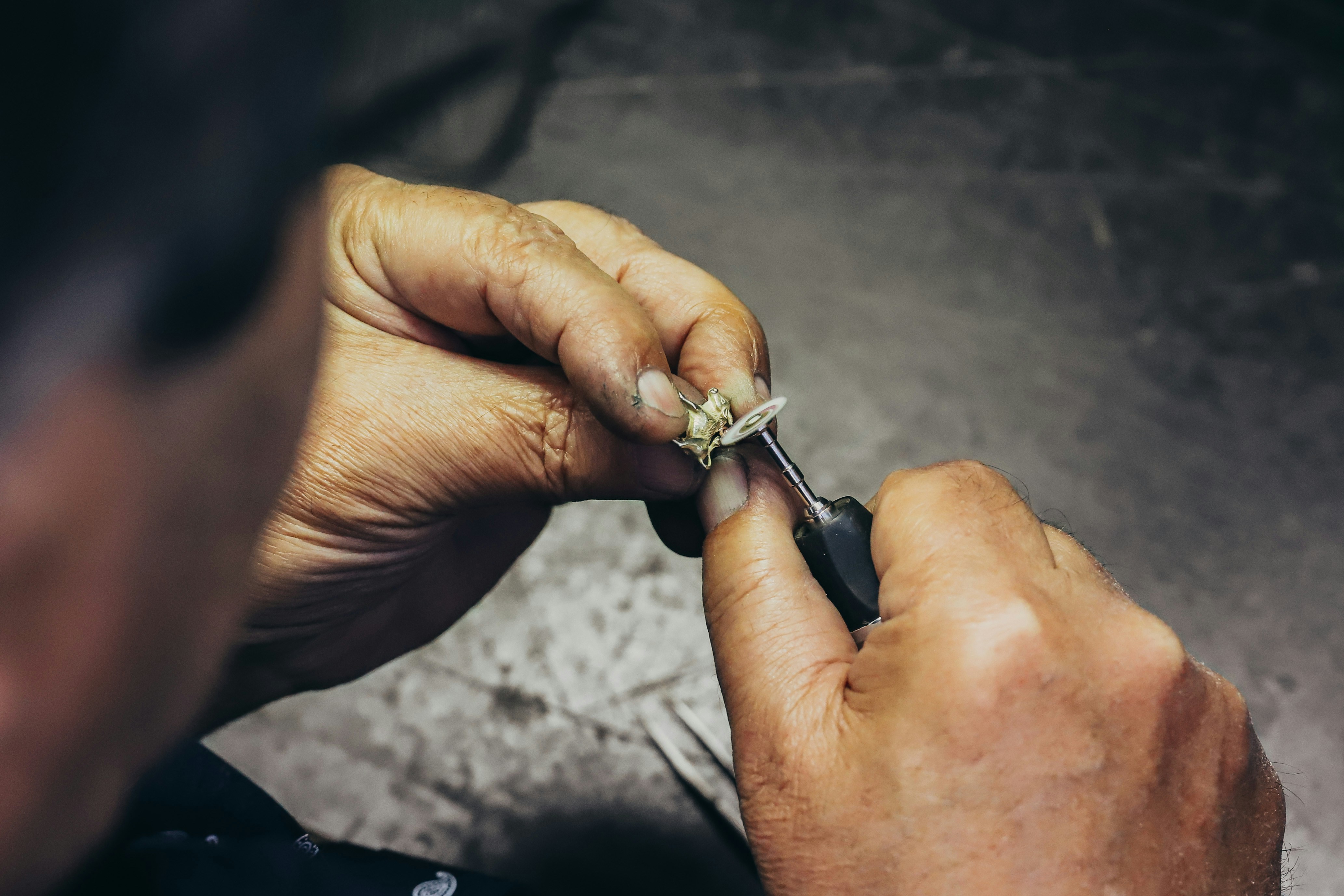
Celuk Gold & Silver Artisan Village — Craftsman bending fine silver filigree wire (rawitan) at a traditional low teak workbench.
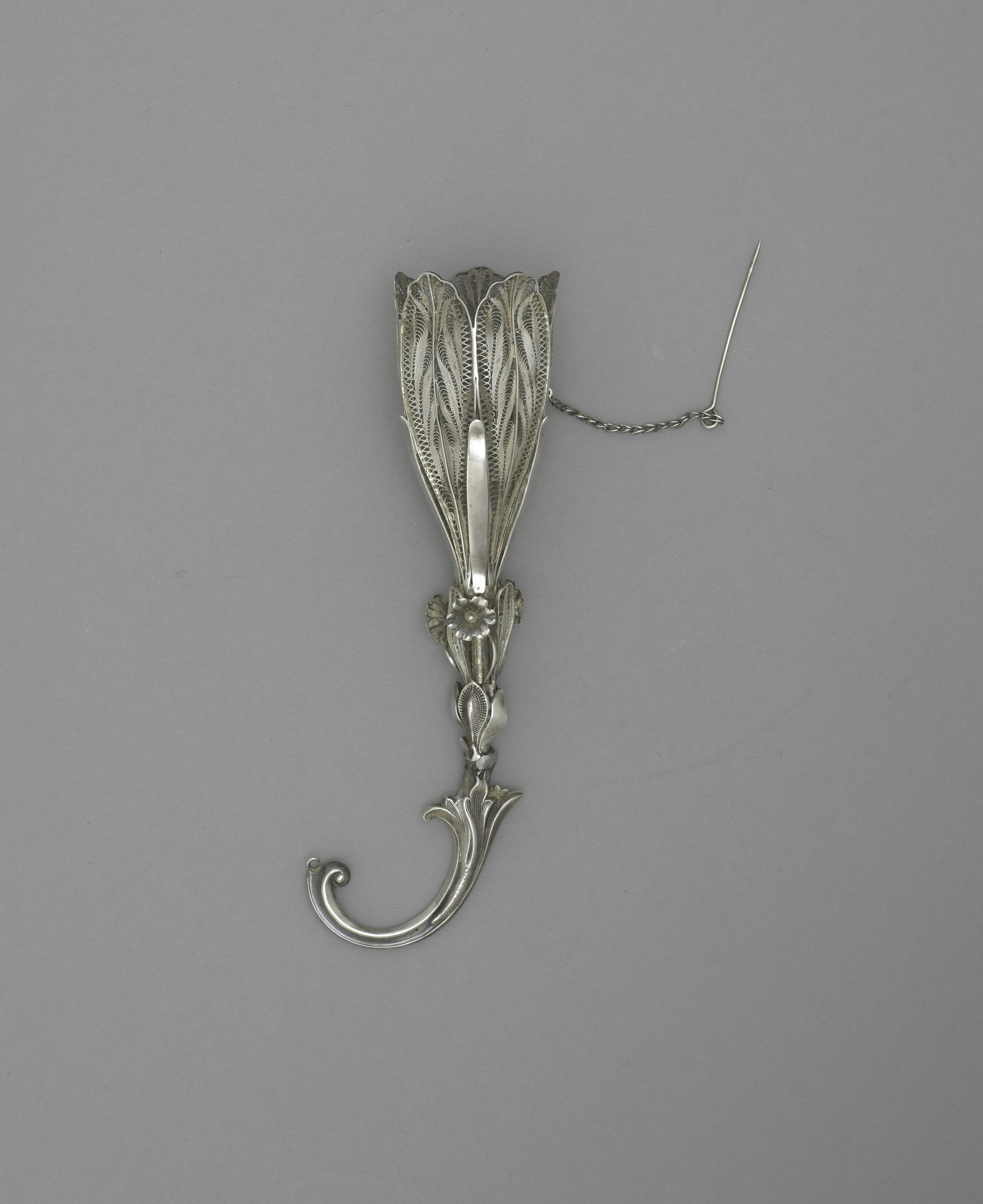
Celuk Gold & Silver Artisan Village — Exquisite sterling silver filigree artwork displaying traditional Balinese floral scrollwork and delicate openwork.
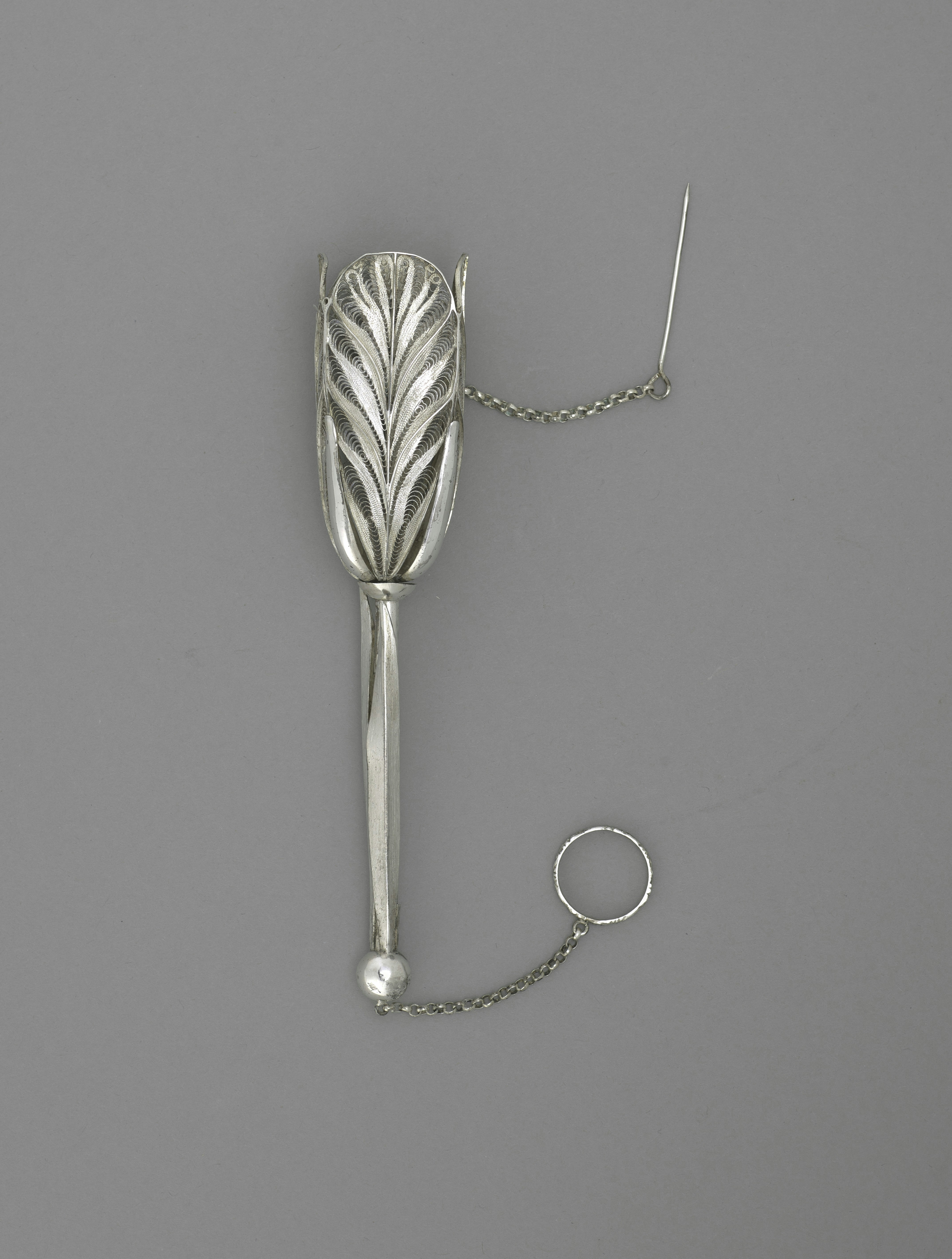
Celuk Gold & Silver Artisan Village — Handcrafted silver filigree case showing complex wire arabesques and micro-soldered granulation beads.
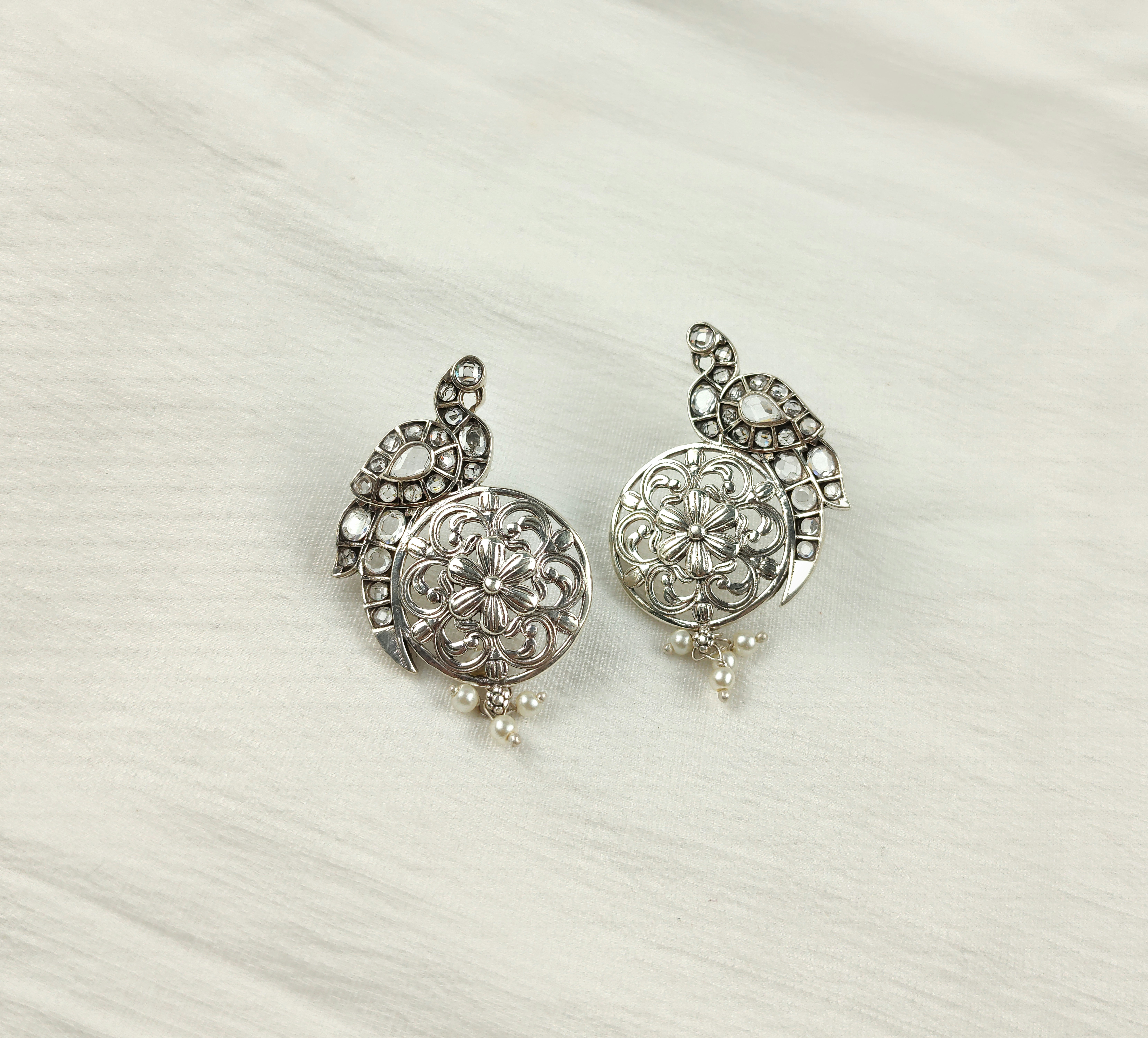
Celuk Gold & Silver Artisan Village — Pair of handcrafted 925 sterling silver filigree earrings created using multi-generational Pande clan techniques.
Cultural, Historical & Architectural Guide
Comprehensive Cultural Guide: Celuk Gold & Silver Artisan Village
1. Comprehensive Overview & Cultural Significance
Desa Celuk stands as Bali's illustrious, three-century-old capital of precious metal craftsmanship. Located in the southwestern reach of Gianyar Regency just eight kilometres south of Ubud, Celuk is world-renowned for its hereditary communities of goldsmiths and silversmiths whose breathtaking hand-wrought jewelry, filigree sculptures, and sacred ritual objects represent the zenith of Indonesian metallurgical artistry. Where ancient royal court commissions have seamlessly evolved into sophisticated contemporary jewelry design, Celuk offers visitors an intimate, behind-the-scenes immersion into a living craft community where metallurgy remains an honorable, spiritually elevated way of life.
Historically, Celuk's master craftsmen—belonging to the prestigious Pande clan—served as the exclusive royal jewellers to the sovereign court of the Gianyar Kingdom, hand-forging jewel-encrusted kris daggers, ceremonial headdresses, and gold vessels for temple consecrations. When international travelers and collectors began discovering Bali in the mid-twentieth century, Celuk's artisans adapted their royal techniques to craft wearable silver jewelry, pioneering complex filigree (rawitan) and granulation (jendol) styles that earned global acclaim.
Unlike commercial factory production centers, Celuk remains deeply rooted in decentralized, multi-generational family workshops. Behind the elegant showrooms lining the main road lies an intricate network of home compounds where master artisans, many in their fourth or fifth decade of practice, sit alongside their children and apprentices, patiently shaping raw silver ingots into gossamer-fine works of wearable art. For cultural connoisseurs, jewelry lovers, and mindful travelers, visiting Celuk is an inspiring encounter with human skill, dedication, and aesthetic refinement at its finest.
2. Exact Geographic Positioning & Micro-Terrain
Celuk is located at coordinates -8.5689° S latitude, 115.2734° E longitude, situated within Kecamatan Sukawati, Gianyar Regency. Positioned at an elevation of approximately 95 metres above sea level, the village occupies the flat, fertile coastal plain of southwestern Gianyar, enjoying a warm tropical climate tempered by coastal air currents from the nearby Badung Strait.
Geographically, Celuk is positioned along the primary historic arterial road (Jalan Raya Celuk) connecting Denpasar and Batubulan in the south to Batuan, Sukawati, and Ubud in the north. The village encompasses a compact urbanized core flanked by lush agricultural fields. Shaded residential side lanes (gang) radiate outward from the main avenue, offering peaceful walking routes completely sheltered from highway traffic.
The physical difficulty rating for exploring Celuk is classified as EASY. The village roads and family workshops are entirely flat and paved, requiring no strenuous climbing or stair navigation. Visitors of all ages, including families with strollers and travelers with limited mobility, can navigate the village showrooms, garden workshops, and artisan studios with complete ease. Ample vehicle and scooter parking is available along Jalan Raya Celuk.
3. The Sacred Pande Clan & the Metaphysics of Fire
To understand Celuk's jewelry tradition, one must understand the unique metaphysical status of the Warga Pande (Clan of Metal Artisans). In Balinese Hindu philosophy, metallurgy is not merely a secular trade; it is a sacred, alchemical transformation presided over by Lord Brahma, the cosmic creator and lord of fire. The transformation of raw, unyielding metal into luminous objects of divine beauty mirrors the spiritual purification of the human soul.
According to sacred clan scriptures (Babad Pande), the blacksmiths and silversmiths of Celuk trace their ancestry back to the mythical sage Empu Gandring and the royal armorers of the Majapahit Empire. Because the Pande clan works with sacred fire, iron, and molten gold, they possess their own distinct temple network—including Pura Penataran Pande—and observe unique ritual protocols. Before an artisan lights their furnace or strikes their anvil, they place a small offering (canang sari) at the family shrine, seeking divine permission to harness the fiery energy of Brahma without spiritual harm.
This deep spiritual underpinning explains why Celuk's craftsmanship has never degraded into soulless mass production. Every piece of jewelry is regarded as carrying a subtle energetic vibration (taksu) imparted by the focused mental intention (hening) and patient breath of the artisan. Even today, master silversmiths observe auspicious days on the 210-day Pawukon calendar, specifically Tumpek Landep—the holy day consecrated to iron, steel, and metal weapons—when all tools, drawplates, hammers, and furnaces are cleansed with holy water and blessed with prayers of gratitude.
4. The Royal Charter & the Global Evolution of Celuk Silver
For centuries, Celuk was a modest rural hamlet whose silversmiths worked exclusively on royal and ritual commissions. Gianyar's royal princes relied on Celuk's craftsmen to forge the warangka (scabbards) and hilt ornaments for royal kris daggers, often embellishing the blades with gold leaf, cabochon rubies, and protective sacred talismans (rajah). Celuk smiths also crafted the monumental gold and silver flower ornaments worn by Legong and Sanghyang dancers during sacred temple anniversaries.
The transformation of Celuk into an international jewelry destination gained momentum in the 1950s and 1960s following Indonesian independence. Progressive master artisans recognized that the growing stream of foreign travelers represented a vibrant new market for fine silver. Celuk smiths adapted traditional Balinese motifs—such as the Jepun (frangipani flower), Naga (mythical water dragon), and Dewi Sri (goddess of rice and prosperity)—into elegant earrings, pendants, and chain-link bracelets.
By the 1970s and 1980s, Celuk had become a staple stop on the classic Balinese cultural tour. International jewelry brands from New York, Paris, and Sydney established design partnerships with Celuk workshops, combining contemporary European minimalist sensibilities with the incomparable hand-filigree expertise of native Balinese smiths. Today, while modern casting technology exists, the true prestige of Celuk rests firmly upon its traditional hand-fabricated works, which machine manufacturing simply cannot replicate.
5. Architectural Anatomy & Master Metalworking Techniques
Walking into a Celuk family compound reveals a seamless integration of domestic architecture and living metallurgy:
- Traditional Family Compounds: Entering through a split stone gate (Candi Bentar), visitors step into a manicured courtyard garden filled with orchids, frangipani trees, and chirping songbirds. The front pavilion serves as an airy, air-conditioned or fan-cooled showroom, while the open-sided rear pavilion functions as the active workshop.
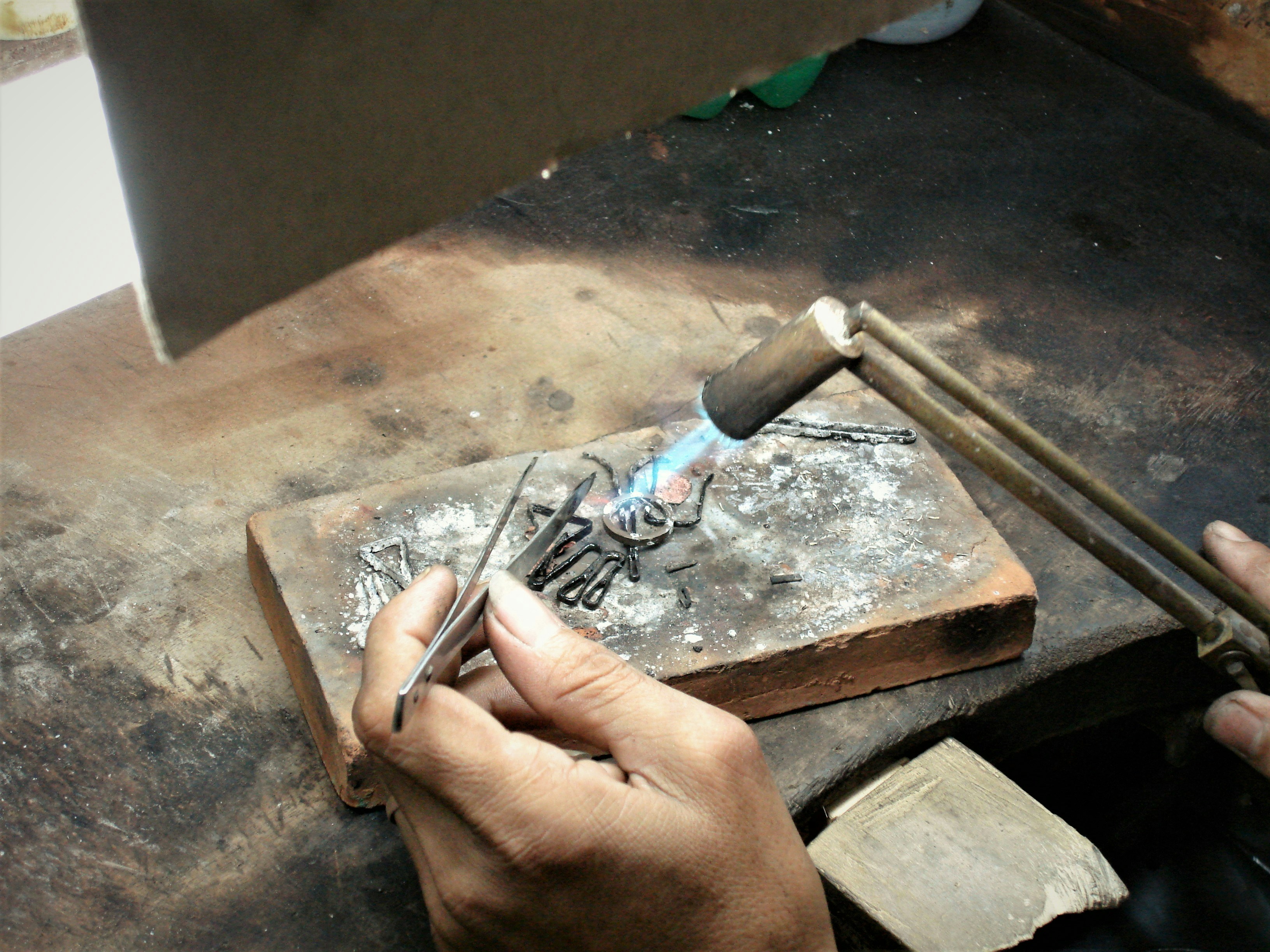
- The Metalworker's Bench: Artisans sit upon low wooden stools before heavy teakwood workbenches worn smooth by decades of hand friction. Tools are arranged with surgical precision: miniature steel anvils, ball-peen hammers, jewelers' saws, diamond files, charcoal soldering blocks, and fine tweezers.
Master Metallurgical Techniques
Celuk is renowned worldwide for three core artisan techniques:
- Filigree (Rawitan): The crowning glory of Celuk. The silversmith pulls 925 sterling silver wire through hardened steel drawplates until it reaches gossamer diameters (often under 0.2 mm). Two strands are twisted together, flattened between polished steel rollers to create a beaded edge, and curled into delicate openwork lace patterns within a structural silver frame.
- Granulation (Jendol): An ancient technique dating back to the Etruscans. Artisans cut microscopic lengths of silver wire and melt them over a charcoal bed; surface tension pulls the molten metal into perfect, microscopic spherical beads. These beads are painstakingly positioned one by one using fine bamboo picks and soldered onto the metal surface to create dazzling textured tapestries.
- Repoussé & Chasing (Kenteng): Flat sheets of silver are seated in a bed of warm pitch and hammered from both the front and back using delicate punches to create dramatic three-dimensional reliefs depicting mythical deities, dragons, and flora.
6. Essential Etiquette, Awig-Awig & Workshop Guidelines
Visiting the artisan workshops of Celuk is a warm and welcoming experience, governed by simple rules of respect:
- Workshop Courtesy: Visitors are warmly invited to watch silversmiths at work. Always ask polite permission before taking close-up photographs or videos of an artisan's hands. Do not touch hot soldering blocks, blowtorches, or open acid cleansing baths (air keras) used to clean oxidized silver.
- Respect for Anvil Shrines: The small shrine located near the workshop hearth is dedicated to Lord Brahma and clan ancestors. Never place bags, sunglasses, or feet upon the anvil altars.
- Respectful Bargaining: While polite bargaining is customary in retail souvenir markets, purchasing fine jewelry in Celuk family workshops is an appreciation of skilled artistic labor. Modest discounts (10% to 15%) may be politely requested, but aggressive or confrontational haggling is considered disrespectful to the craftsman's dignity.
- Temple Attire: Casual attire is perfectly acceptable throughout the village workshops and showrooms. However, if entering Pura Penataran Pande or any local village temple, a traditional sarong and sash are mandatory.
- Drone Regulations: Recreational drone flights over the village streets are permitted; however, avoid flying directly over open-sided workshop pavilions out of respect for working artisans.
7. Practical Logistics & Artisan Circuit Integration
Celuk is easily explored on a half-day or full-day excursion:
- Optimal Time of Day: Visit between 09:00 and 13:00. Morning hours offer optimal natural lighting inside the open-air workshops, when artisans are most active at their benches. Visiting before midday also avoids the afternoon traffic congestion along the Gianyar highway.
- Transportation & Accessibility: Celuk is located approximately 25 minutes north of Denpasar and 20 minutes south of central Ubud along Jalan Raya Celuk. Grab, Gojek, and Bluebird taxis operate freely with reliable pickup and drop-off service.
- Artisan Trail Combinations: Celuk pairs seamlessly with neighboring artisan settlements:
- Batubulan (1 km south): Famous for monumental volcanic stone carving and traditional Barong dance performances.
- Batuan (2 km north): World-renowned for classical ink painting and the historic Pura Puseh temple.
- Mas (5 km north): The celebrated capital of Balinese fine wood sculpture.
- Sukawati Art Market (2 km east): Bali's most famous wholesale traditional craft and textile market.
- Time Needed: Allow 60 to 90 minutes to stroll the village workshops, observe the filigree wire-drawing process, and browse finished jewelry collections.
8. Entry Tariffs & Transparent Inclusions
Celuk operates as an open, welcoming artisan village with completely free admission:
- Village Admission & Workshop Entry: IDR 0 (Free Public Access). Exploring the village, entering family compounds, and watching master silversmiths demonstrate filigree techniques carries zero admission charge.
- Vehicle Parking: Ample roadside and dedicated showroom parking is available free of charge or for a nominal community fee (IDR 2,000 for scooters; IDR 5,000 for passenger cars).
- Silver Workshop Classes: Many family workshops offer 2- to 3-hour hands-on jewelry making classes where visitors design and craft their own custom silver ring or pendant under the guidance of a master smith. Class fees typically range between IDR 350,000 and IDR 500,000 per person, including 5 to 7 grams of pure sterling silver and full instruction.
9. Sustainable Tourism & Ethical Jewelry Purchasing
Supporting Celuk's silversmithing community requires mindful, informed purchasing choices:
- Support Independent Family Workshops: While large commercial showrooms along the main highway offer vast selections, walking down residential side lanes (gang) to visit smaller, independent family workshops ensures that your purchase directly supports the artisans who created the piece, bypassing commercial middlemen.
- Verify Sterling Silver Hallmarks: Authentic Celuk silver jewelry is crafted from genuine 925 sterling silver (92.5% pure silver alloyed with 7.5% copper for structural durability). Look for the official 925 stamp on rings, earrings, and necklace clasps. Genuine artisans are always happy to test their silver purity upon request.
- Preserving an Intangible Heritage: Hand-drawn silver filigree is an endangered craft globally, as machine stamping and 3D printing replace human artisans in many industrial countries. By purchasing authentic hand-fabricated jewelry in Celuk, travelers directly fund the economic survival of an irreplaceable cultural art form, ensuring that Balinese youth continue to learn the timeless skills of the sacred Pande clan.
The Living Guild Economy & Modern Preservation Protocols
Within modern Desa Adat Celuk, the persistence of the Pande metalcraft guild demonstrates how ancestral sacred craft survives within contemporary global commerce. Unlike commercial manufacturing clusters that compromise alloy standards, the master artisans of Celuk enforce rigid purity benchmarks overseen by village elders. Every consignment of sterling silver is verified to maintain a minimum fineness of 92.5% elemental silver, balanced with copper to provide structural rigidity required for paper-thin filigree wire. Young apprentices undergo years of observational training, starting with the preparation of charcoal soldering blocks and the formulation of natural fluxes before advancing to freehand wire twisting. This intergenerational continuity guarantees that Celuk's three-hundred-year metallurgical lineage remains resilient against the encroachment of automated mechanical stamping.
Spatial Sanctity & Clan Fellowship
The spatial architecture of Celuk further reinforces the sacred bond between artisan and cosmos. The village's central spiritual axis connects household workshop shrines directly with Pura Penataran Pande, creating a consecrated geographic circuit that sanctifies daily metallurgical labor. Every major stage of metal production—from raw crucible melting to final polishing—is viewed as a devotional offering to the divine creators. Travelers stepping off Jalan Raya Celuk into family courtyards experience this serene, meditative environment firsthand: quiet domestic compounds where bird song mingles with the rhythmic tap of chasing hammers, and where master jewelers gladly demonstrate ancient wire-drawing techniques with warmth and dignified cultural pride.
The Pande Clan Lineage, Divine Metallurgy & Royal Charters of Celuk
Desa Celuk, positioned in the southwestern foothills of Gianyar Regency eight kilometres south of Ubud, is celebrated throughout Southeast Asia as the undisputed capital of Balinese gold and silver filigree craftsmanship. The spiritual and industrial foundation of Celuk is inseparably bound to the sacred lineage of the Warga Pande—the hereditary caste of blacksmiths, armories, and metallurgical masters. In traditional Balinese Hindu cosmology, the Pande clan occupies a uniquely revered and spiritually potent status: unlike mainstream castes, they revere Lord Brahma (the cosmic deity of fire and transformation) and Empu Gandring, practicing esoteric metallurgical rites (Pasupati Besi) to imbue molten metals with spiritual vitality, protective power, and sacred resonance.
Oral chronicles recount that in the 17th and 18th centuries CE, during the golden age of the royal Kingdom of Gianyar (Puri Agung Gianyar), the sovereign king granted an exclusive royal charter to the master smiths of Celuk. The royal court commissioned Celuk's artisans to manufacture sacred ceremonial heirlooms (pusaka), including jewel-encrusted ceremonial kris daggers, gilded royal crowns (gelungan), sacred betel-nut boxes (kinangan), and intricate gold filigree offerings presented during high temple consecrations. In exchange, the kingdom bestowed extensive agricultural grants, hereditary noble protections, and the prestigious privilege of establishing specialized metalcraft guilds.
When Western travel began expanding in the early twentieth century, Celuk's master silversmiths performed a brilliant creative pivot. Drawing upon centuries of royal regalia techniques, they adapted their skills to design wearable jewelry—rings, necklaces, brooches, and bracelets—infused with intricate traditional motifs such as bun-bunan (trailing floral vines), patra punggel (curling foliage), and granulasi (microscopic silver granulation beads). Today, Celuk remains a vibrant, hereditary artisanal enclave where the rhythmic chime of hammer against anvil rings through every courtyard, sustaining an unbroken lineage of metallurgical mastery that has endured for more than three centuries.
Workshop Morphology, Anvil Altars & the Artisan Courtyards of Celuk
The architectural topography of Celuk presents a fascinating blend of traditional Balinese residential planning and specialized industrial craft spaces. The village is structured around Jalan Raya Celuk, a wide paved thoroughfare lined with multi-generational family jewelry galleries, from which dozens of narrow pedestrian alleys branch outward into peaceful residential neighborhoods. Each family compound (pekarangan) adheres rigorously to the Tri Mandala spatial orientation, but is uniquely modified to accommodate the metallurgical trade:
- Pura Prajapati & Pura Pande: In the sacred northern corner (Kaja) stand family ancestral shrines dedicated to Lord Brahma and ancestral metal-smithing masters. Flanking the altars are sacred anvils (paron) and hearths, which are ritually sprinkled with holy water (tirta) and presented with daily offerings before any metalwork commences.
- The Workshop Pavilion (Bale Pande): Positioned in the open courtyard, this is the functional heartbeat of the home. Equipped with low wooden workbenches, miniature charcoal fire pits fueled by foot-operated bellows or motorized blowtorches, delicate hand-operated drawplates for pulling fine silver wire, and specialized chasing tools, this open pavilion allows master craftsmen and young apprentices to work side by side under natural daylight.
- The Exhibition Gallery (Bale Delod): The front-facing structure facing the street serves as an elegant display salon, where finished gold and silver pieces are showcased in glass cabinets.
The metalworking techniques practiced in Celuk's architecture are masterpieces of miniature engineering. The hallmark of Celuk silver is filigree (rawitan): artisans melt 925 sterling silver into ingots, hammer them into slender rods, and pull them through progressively narrower holes in steel drawplates until the metal becomes as fine as human hair. Two or more strands are twisted together, flattened, and meticulously shaped with tweezers into complex floral and paisley arabesques within a sturdy silver frame, secured with powdered silver solder. Simultaneously, artisans master the art of granulation (jendol), cutting microscopic snippets of silver wire and heating them on charcoal until surface tension pulls them into perfect, microscopic silver spheres that are affixed individually onto jewelry surfaces.
Frequently Asked Questions & Local Logistics
Key logistical insights, official tariffs, and customary etiquette for Celuk Gold & Silver Artisan Village.
Top Curated Stays Near Celuk Gold & Silver Artisan Village
Curated accommodations within 8km radius, ranked by traveler ratings and shortest transit times.

The Garcia Ubud Hotel & Resort

The Alena Resort A Pramana Experience

Ubud Nyuh Bali Resort & Spa

Bila De Ubud Villas
Curated Experiences Near Celuk Gold & Silver Artisan Village
Curated guided tours and local adventures operated within easy transit of this landmark.

Mount Batur Sunrise Summit Trek with Hot Springs
Pre-dawn summit ascent across volcanic basalt ridges to watch the sunrise above Lake Batur and Mount Rinjani, followed by restorative thermal hot springs.

Ayung River Class II-III White Water Rafting
Thrilling 11-kilometer descent through the pristine rainforest gorges of Ubud, skimming past ancient Hindu rock carvings and hidden waterfall cascades.

Ubud Jungle ATV Quad Bike & Gorilla Cave Expedition
Off-road quad biking across rice fields, bamboo forests, muddy riverbeds, and through the dramatic hollow mouth of the Gorilla Cave.