



From Sightseeing to Living Classrooms: Indonesia Promotes Six Model Tourism Villages for School Educational Travel
Indonesia’s Ministry of Tourism is establishing six tourism villages across Bali, Java, and Belitung as accredited destinations for school educational trips, linking classroom curricula with local ecosystems, artisan crafts, and agrarian traditions under strict child safety and transparent pricing protocols.
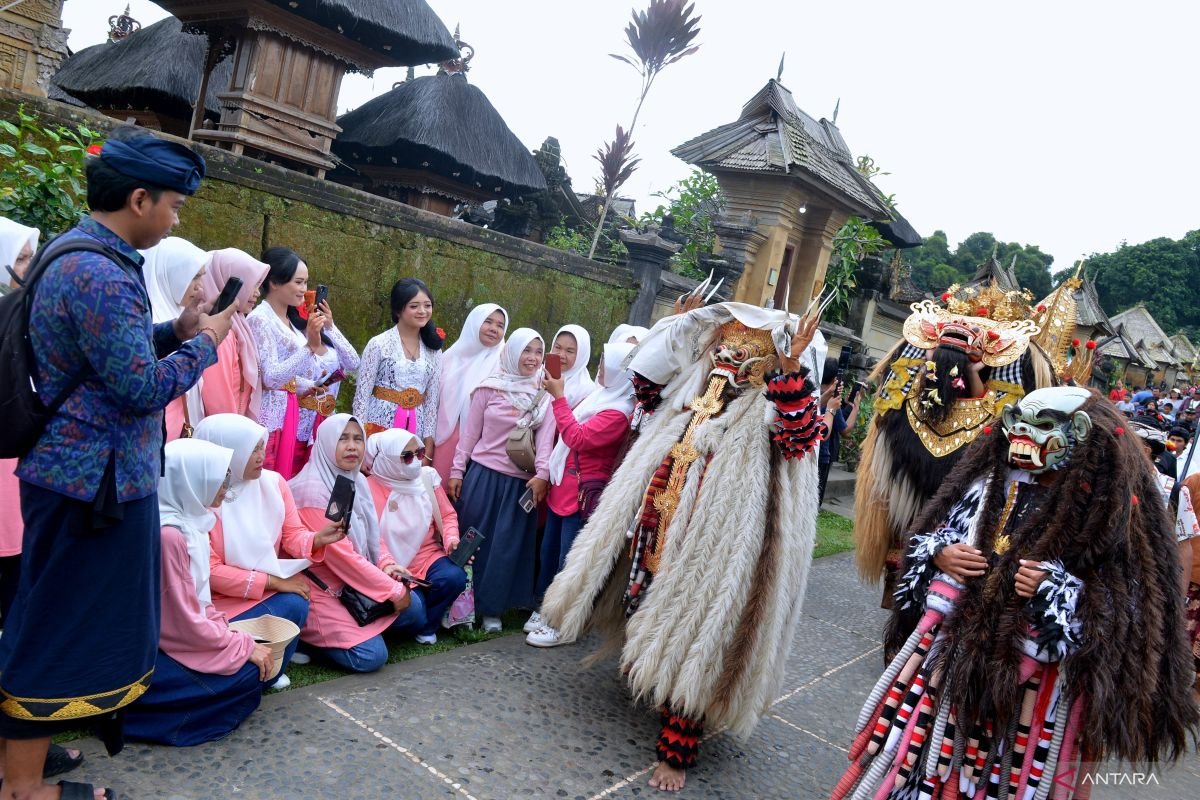
From Sightseeing to Living Classrooms: Indonesia Promotes Six Model Tourism Villages for School Educational Travel
BULELENG, BALI - An ambitious structural shift is taking shape across Indonesia's community tourism landscape, moving village destinations beyond weekend leisure day-trips toward structured, curriculum-integrated educational journeys. In an initiative formally highlighted during the 9th Annual Convention of SPK Indonesia (Satuan Pendidikan Kerjasama) in early October and according to regional travel authorities and bureau field correspondents, the Indonesian Ministry of Tourism announced the designation of six exemplary tourism villages (desa wisata) across Java, Bali, and Belitung as accredited national models for school educational trips (edutrips).
The program reflects a fundamental rethink in how community-based destinations are developed and marketed. For over a decade, hundreds of rural hamlets across the archipelago have been encouraged to build tourism infrastructure - often relying on scenic photo viewpoints, modest homestays, and local food stalls. While successful in pockets, this conventional leisure model frequently leaves rural communities vulnerable to intense weekend seasonality, volatile foot traffic, and low spending yields.
By repositioning selected villages as living, open-air classrooms, the Ministry of Tourism is targeting a vastly more resilient and predictable domestic market: institutional school groups. Yet transforming a rural farming or coastal village into an educational destination demands far more than putting a price tag on a tour package. It introduces rigorous operational standards: formal curriculum alignment, verified child safety protocols, transparent group pricing, and participatory community mentorship that treats village elders not as tourism props, but as authentic custodians of place-based knowledge.
The Six Model Educational Villages Across the Archipelago
The ministry's initial cohort of six educational destinations reflects intentional geographic, cultural, and ecological diversity. Rather than concentrating solely on established tourist circuits in Java, the selection spans distinct archipelagic micro-regions:
| Village & Regency | Province | Core Pedagogical & Experiential Focus |
|---|---|---|
| Desa Wisata Kreatif Terong (Belitung) | Bangka Belitung Islands | Mangrove ecosystem rehabilitation, tin-mining land reclamation, and coastal fisheries stewardship |
| Desa Wisata Krebet (Bantul) | DI Yogyakarta | Artisan wooden batik carving (batik kayu), rural craft cooperatives, and Javanese design heritage |
| Desa Wisata Les (Buleleng) | Bali | Coral reef restoration, cyanide-free marine ornamental fisheries, and ancestral sea salt farming |
| Desa Wisata Sudaji (Buleleng) | Bali | Ancient Subak terrace hydrology, heirloom permaculture, organic agro-forestry, and village customs |
| Desa Wisata Bugisan (Klaten) | Central Java | Heritage architecture around Candi Plaosan, agrarian ecology, and Javanese village social structures |
| Desa Wisata Selamanik (Ciamis) | West Java | Regenerative river catchment stewardship, bio-organic paddy farming, and Sundanese rural arts |
The selection of two villages located within Buleleng Regency in North Bali - Desa Les on the northeast coast and Desa Sudaji situated in the northern mountain foothills - is particularly instructive. It demonstrates how educational travel can actively decentralize tourism away from overcrowded southern resort enclaves (Kuta, Seminyak, Canggu) while introducing younger generations to the rich cultural and ecological tapestries of rural Bali.
Curricular Alignment: Beyond Sightseeing into Applied Learning
The defining distinction between conventional tourism and educational travel lies in learning intentionality. A standard leisure tour asks: “What picturesque sights can visitors see?” An educational trip asks: “What scientific concepts, social structures, or ethical insights will students understand by being here?”
To bridge this divide, the Ministry of Tourism’s preparatory mentoring programs require village management boards (Pokdarwis) to map their community activities directly against national primary and secondary school learning objectives:
- STEM & Ecological Science: In Desa Les, students don snorkeling masks to examine community-led artificial reef structures, learning marine biology principles and understanding how local fishermen transitioned away from destructive potassium cyanide techniques. In Desa Terong, students document mangrove carbon sequestration and measure water salinity in reclaimed post-mining quarry lakes.
- Agricultural Engineering & Hydrology: In Desa Sudaji, students walk ancient stone aqueducts stewarded by the Subak, learning the mathematics of water flow distribution, democratic resource allocation, and zero-chemical organic soil enrichment.
- Social Sciences & Customary Law: Students explore how traditional village governance (Desa Adat) and customary statutes (awig-awig) enforce community cohesion, natural resource protection, and dispute resolution.
- Creative Arts & Micro-Enterprise: In Desa Krebet, pupils learn the chemistry of natural plant dyes, the precision of wood carving on albizia timber, and the economics of running a village-owned cooperative enterprise (BUMDes).
"When education steps outside four classroom walls and into a village, learning ceases to be theoretical," explained an educational planner participating in the SPK convention. "Students do not simply read about ecological sustainability in a textbook; they handle the compost, plant the mangrove seedling, and converse directly with the farmer whose family has tilled the soil for five generations."
Child Safety and Risk Management Are Non-Negotiable
A critical differentiator of the ministry's framework is its uncompromising emphasis on institutional safety protocols. School-age children and adolescents navigate environments far differently than adult leisure travelers. Farm equipment, irrigation sluices, steep hillside trails, unpredictable coastal swell, and unfamiliar livestock introduce real physical risks.
Under the new guidelines, participating educational villages must institute verified risk-management matrices before hosting institutional delegations:
- Certified Guide-to-Student Supervision Ratios: Mandating a maximum ratio of one trained local village facilitator for every 8 to 10 students, working alongside visiting school chaperones.
- Hazard Auditing and Zoning: Explicit physical barriers and warning signage around deep farm reservoirs, chemical storage areas, and slippery waterfall paths, clearly demarcating safe zones from restricted operational agricultural facilities.
- Emergency Medical Readiness: Standardized first-aid posts stocked with sterile supplies, documented emergency evacuation transit routes to nearest regional hospitals, and on-call arrangements with local community health centers (Puskesmas).
- Food Hygiene and Dietary Protocols: Rigorous inspections of village catering kitchens to guarantee hygienic preparation, clean drinking water access, and accommodation of severe food allergies.
Destination managers recognize that a single unaddressed safety incident can permanently dismantle an educational village's reputation among school boards and parents. Professionalizing risk mitigation is the indispensable prerequisite for sustainable institutional demand.
Commercial Transparency and Cashless Economy
The ministry's guidelines also address the persistent operational friction points of educational group planning: budgeting transparency and payment friction.
School trip administrators face complex multi-tiered approvals involving parent-teacher associations, academic boards, and audit committees. Historically, informal village destinations struggled with opaque pricing, unexpected surcharges for guide tips, and cash-only transactions that complicated formal accounting.
The model guidelines mandate:
- Itemized Per-Student Pricing: Clear all-inclusive package rates covering educational materials, workshop tools, guide fees, local meals, and mandatory insurance premiums, eliminating surprise on-site costs.
- Digital Payment Integration (QRIS): Widespread deployment of the Quick Response Code Indonesian Standard (QRIS) across village kiosks, homestays, and craft workshops, enabling seamless digital tracking and cashless financial transparency.
- Direct Local Revenue Distribution: Ensuring that package revenues flow transparently to local mentoring families, craft artisans, transport drivers, and village communal funds, rather than being siphoned by predatory external aggregators.
Counter-Cyclical Demand and Rural Economic Stability
From an economic perspective, the school edutrip model provides rural destinations with something conventional tourism rarely delivers: predictable, counter-cyclical revenue streams.
International leisure travel is inherently vulnerable to external shocks - currency fluctuations, aviation disruptions, and severe seasonal peaks concentrated around July - August and December holidays. Between these peaks, rural tourism villages often endure prolonged periods of near-zero occupancy.
School academic calendars follow an entirely different rhythm. Educational excursions, field immersions, and leadership camps are scheduled during term weeks from September through November and February through May - precisely the shoulder and low-season troughs of conventional leisure travel. A village that hosts three 80-student school groups mid-week can generate stable operational cash flow that sustains homestay hosts, village cooks, and activity instructors year-round.
Bali's Strategic Rebalancing: Spotlight on Buleleng
For Bali specifically, the inclusion of Desa Les and Desa Sudaji holds strategic geographic significance. Over 75 percent of international tourism revenue remains heavily concentrated in South Bali's coastal belt (Badung, Denpasar, and Gianyar), generating severe infrastructure strain, traffic paralysis, and land conversion.
North Bali offers an entirely different atmosphere: tranquil coastal hamlets, dramatic mountain waterfalls, and deep agrarian heritage. By packaging Les and Sudaji as premier educational centers, the initiative provides domestic private academies, international schools from Jakarta and Surabaya, and curious independent travelers with a compelling structural rationale to cross the central mountain spine.
A three-day educational itinerary combining the marine coral restoration of Les with the Subak permaculture trails of Sudaji keeps visitor spending entirely within northern regencies, proving that tourism decentralization succeeds best when anchored in authentic experiential value rather than superficial advertising.
Guidelines for Educators and Family Travelers
While initially structured around formal school delegations, the principles of the educational village framework offer valuable benchmarks for families and independent travelers seeking meaningful community encounters:
- Verify Local Mentorship: Seek out village programs where activities are led directly by residents - farmers, artisans, village elders - rather than external agency tour leaders talking on their behalf.
- Confirm Safety Buffers: Inquire about supervision protocols, terrain difficulty, and emergency contingency plans, especially when traveling with young children.
- Respect Cultural Privacy: Understand that living villages are homes first and destinations second. Never enter family compounds without invitation, and obtain permission before photographing community members.
- Demand Waste-Free Practices: Carry reusable water bottles, reject single-use plastic wrappings, and ensure educational visits leave zero ecological footprint in rural waterways.
The Long-Term Outlook for Place-Based Learning
The true measure of success for Indonesia's six model tourism villages will not be recorded in aggregate visitor headcounts or viral social media impressions. It will be measured in enduring human metrics: whether visiting students return home with a profound understanding of ecological systems, whether village artisans are fairly compensated for sharing ancestral knowledge, and whether younger rural generations see dignity and economic viability in preserving their community homes.
When a tourism village functions as a living classroom, the visitor leaves with genuine knowledge rather than superficial selfies - and the destination retains its soul.
Planning a trip to Lovina?
Explore current destination intelligence, curated accommodations, cultural landmarks, and island events before you travel.
Curated Stays & Sanctuaries in Lovina
Curated luxury accommodations featuring private pool sanctuaries, authentic architectural heritage, and seamless concierge support.

The Cabin Hotel Lovina Bali
The Cabin Hotel Lovina Bali is a 5-star hotel situated in Bali, Bali (Ultra-Luxury), holding a verified guest score of 9.5/10 across 132 reviews. Located 65.8 km (2–3 hours drive) with coastal enclave (< 5km to beach).
The Lovina
The Lovina is a 5-star resort situated in Bali, Bali (Ultra-Luxury), holding a verified guest score of 9.2/10 across 829 reviews. Located 67.9 km (2–3 hours drive) with absolute beachfront (< 100m).

Lovina Haven Boutique Resort
Lovina Haven Boutique Resort is a 5-star hotel situated in Bali, Bali (Ultra-Luxury), holding a verified guest score of 9.1/10 across 338 reviews. Located 66.8 km (2–3 hours drive) with short scooter / drive (< 2km to coast).
Iconic Landmarks & Sacred Sanctuaries Across Bali
Protected cultural heritage, historical architecture, and iconic natural viewpoints with official entrance tariffs and etiquette rules.
 cultural village
Free Access
cultural village
Free Access
Mas Wood Carving Village
Mas is the epicentre of Balinese wood carving mastery, where legend holds that the sage Nirartha first taught the art of carving sacred masks and ritual statues to local craftsmen in the 16th century.
 cultural village
$2.52
cultural village
$2.52
Banjar Natural Hot Springs (Air Panas Banjar)
Century-old natural sulfuric hot spring pools set in tropical gardens, pouring from carved stone naga dragon mouths at a therapeutic 38°C.
 temple
$1.12
temple
$1.12
Brahmavihara Arama Buddhist Monastery
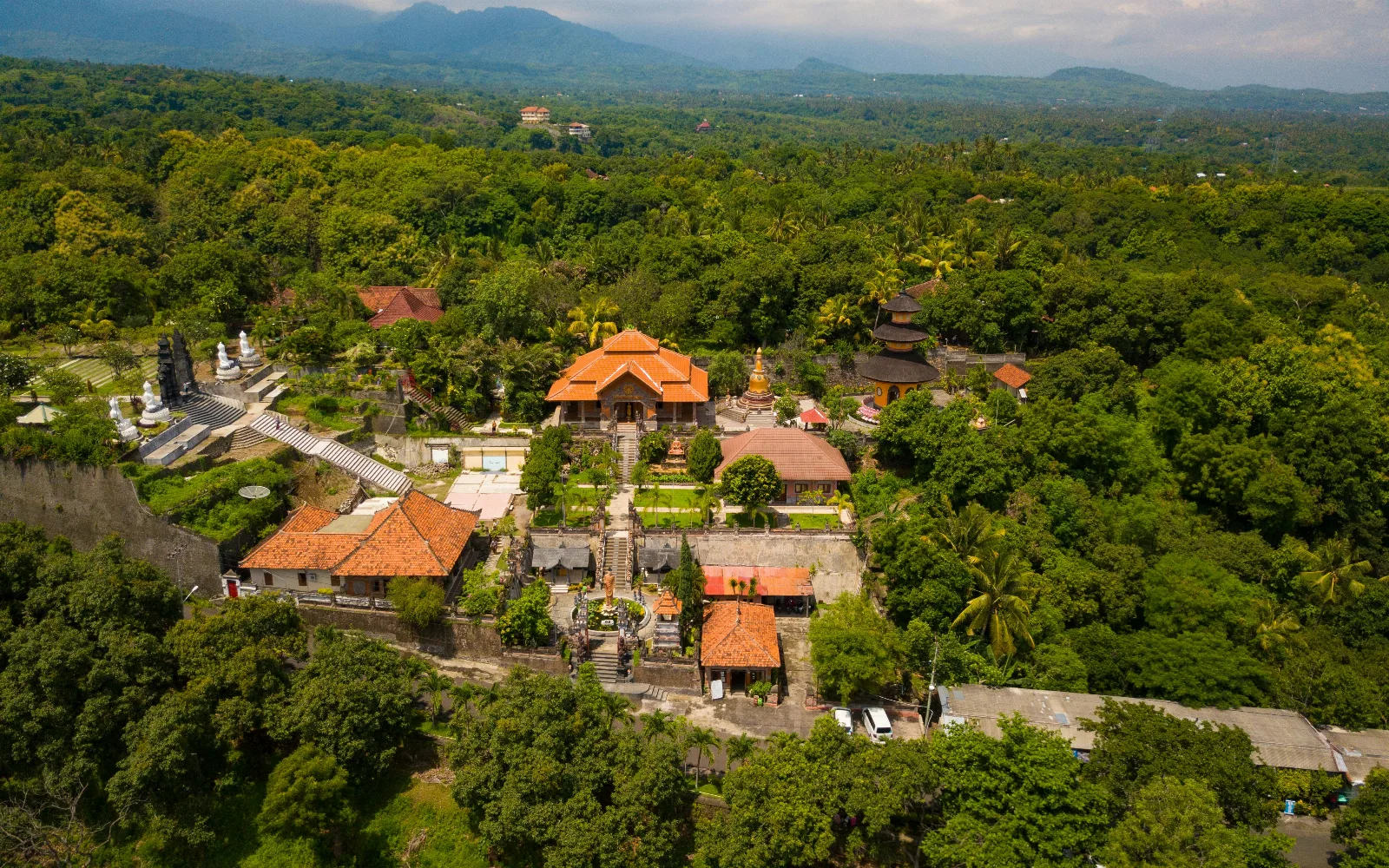
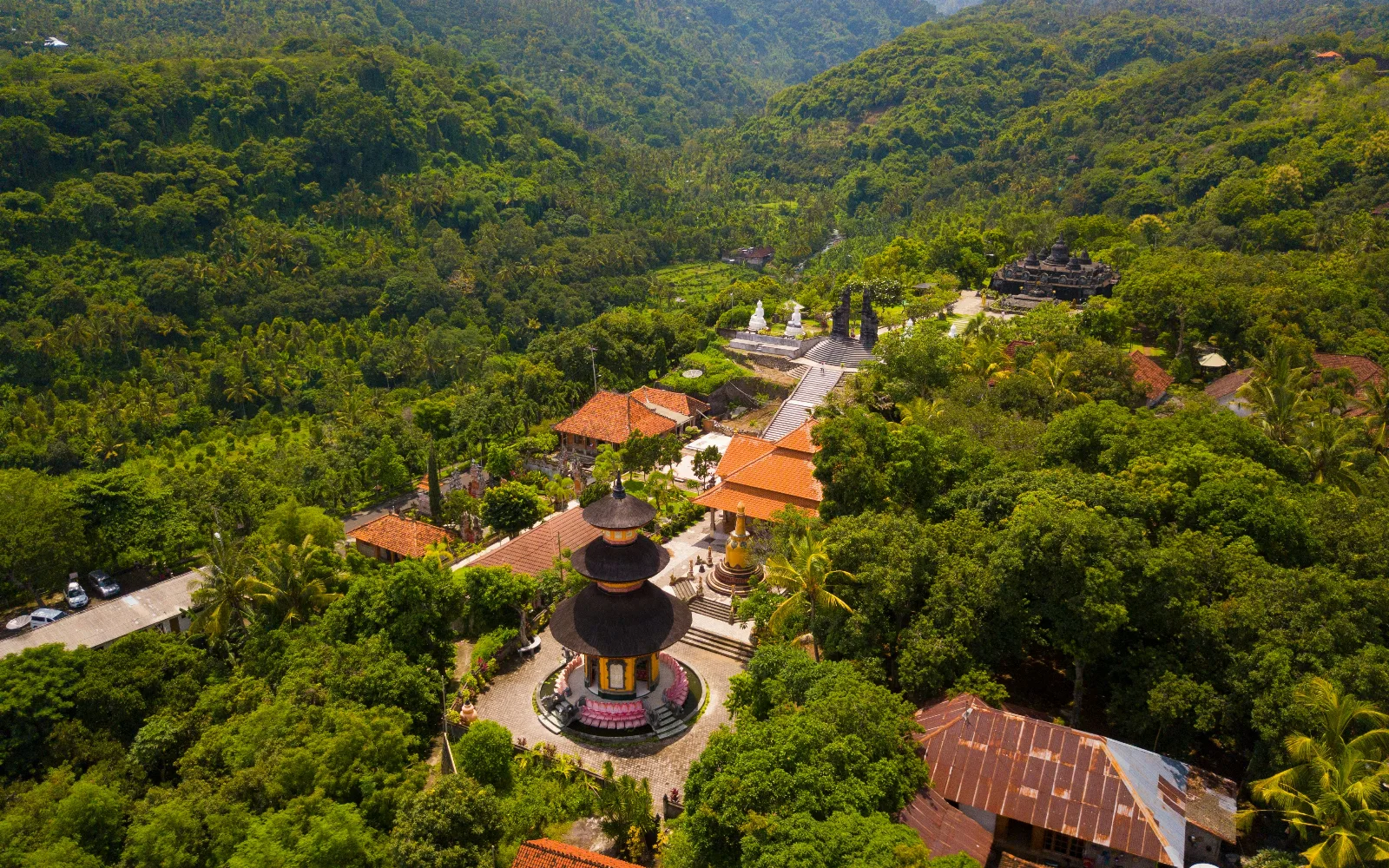
Bali’s largest Buddhist monastery, featuring orange roof pavilions, peaceful meditation lawns, and a miniature replica of Borobudur.
Guided Tours & Field Experiences in Lovina
Handcrafted tours, masterclasses, and coastal expeditions led by licensed local guides with verified booking options.
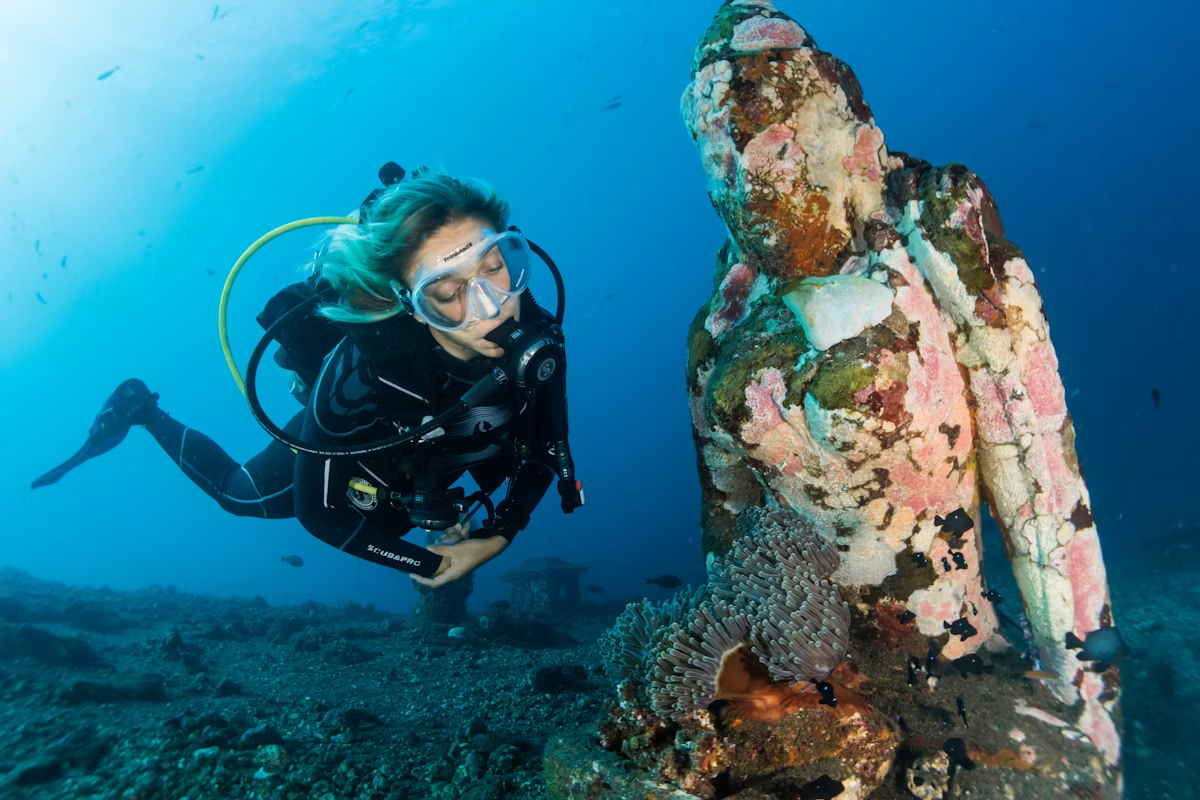 water marine
📍 Lovina
$75.45
water marine
📍 Lovina
$75.45
Menjangan Island Coral Wall Scuba Diving Expedition
Pristine vertical reef walls dropping 60 meters in West Bali National Park, celebrated for 40-meter visibility, sea fans, and hawksbill turtles.
 nature
📍 Lovina
$16.77
nature
📍 Lovina
$16.77
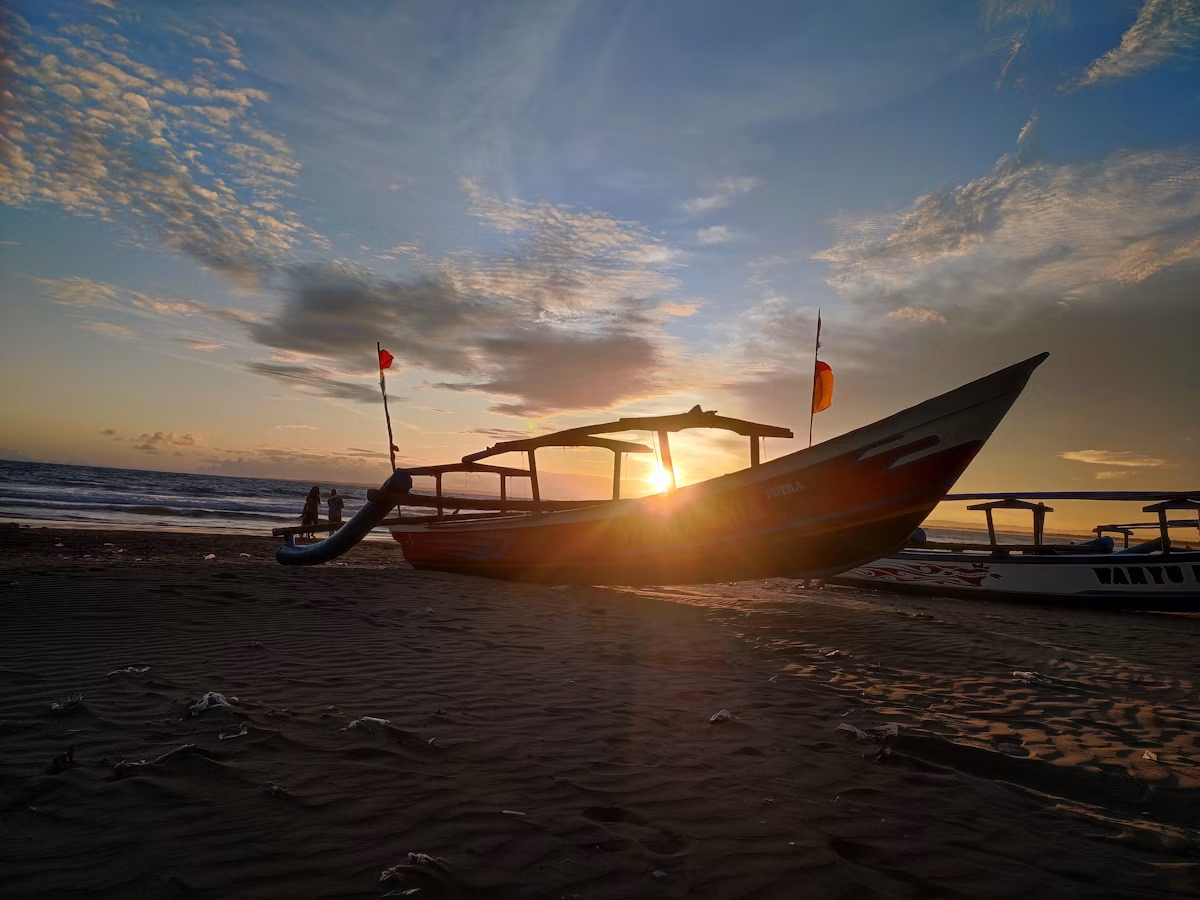
Lovina Sunrise Wild Dolphin Watching via Traditional Jukung
Cruise into the calm northern Bali Sea at sunrise as pods of wild spinner dolphins breach and leap in glassy turquoise waters.
 water marine
📍 Lovina
$17.89
water marine
📍 Lovina
$17.89
Lovina Coastal Reef Snorkeling & Black Sand Sunset Sail
Board a traditional wooden outrigger boat to explore the calm, sapphire waters of the Bali Sea along Lovina's volcanic coastline. Snorkel above thriving inshore coral reefs teeming with damselfish and sea anemones before drifting beneath a brilliant crimson sunset. It offers a tranquil marine escape showcasing the gentle pace of Northern Bali's fishing heritage.
Planning a Bali trip?
Explore current destination information, accommodation options, and events before you travel.
Related Travel News & Editorial Dispatches
Stay informed with latest field updates, regulatory notices, and luxury hospitality coverage across Bali and Beyond.
 📍 Lovina
Indonesia Repositions Tourism Villages as Living Classrooms: Inside the National Educational Travel Initiative
Indonesia’s Ministry of Tourism is establishing six tourism villages across Bali, Java, and Belitung as accredited destinations for school educational trips, linking classroom curricula with local ecosystems, artisan crafts, and agrarian traditions under strict child safety and transparent pricing protocols.
 📍 Lovina
North Bali Gains Attention as Education Events Broaden the Island’s MICE Geography
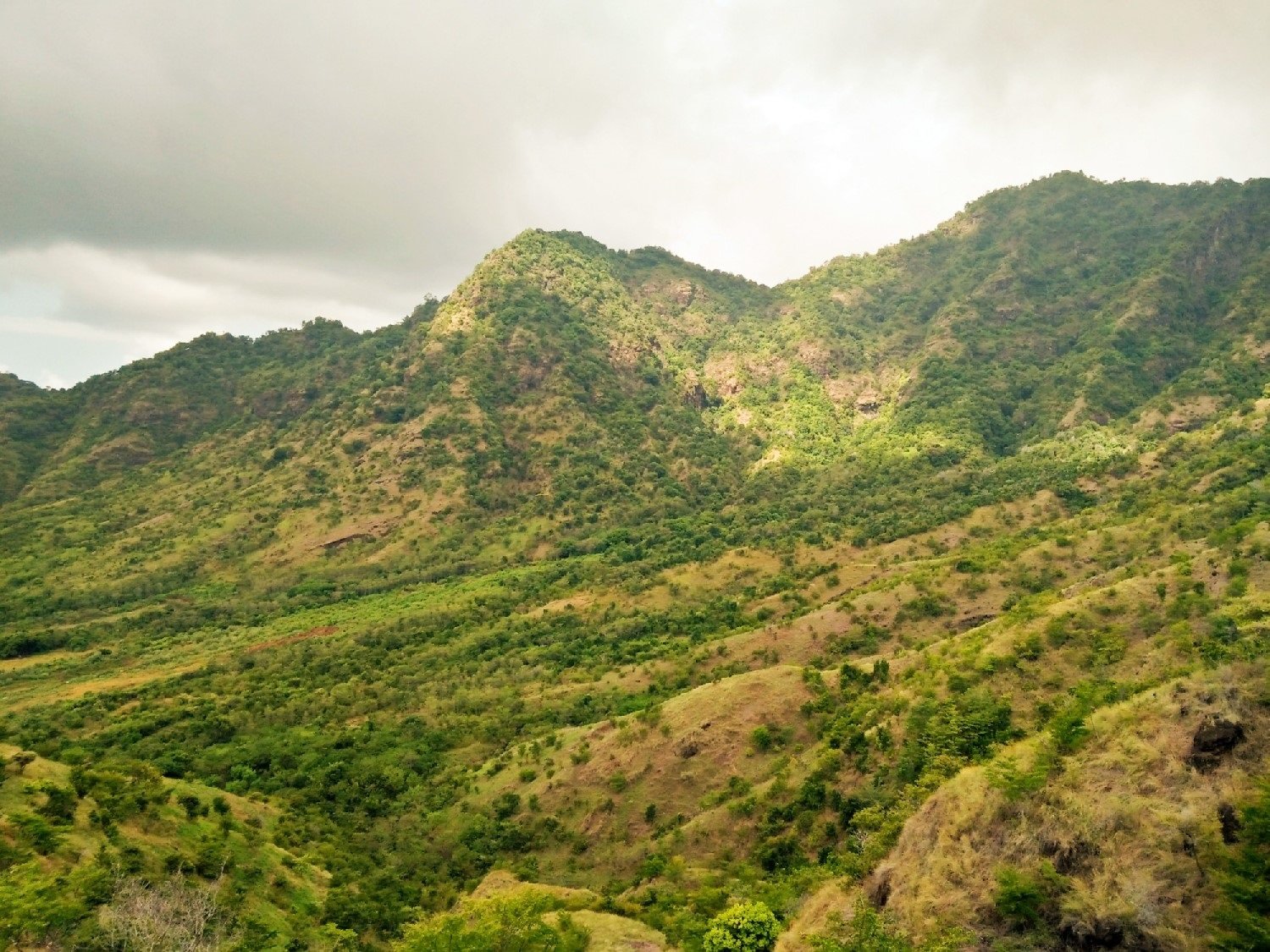
SINGARAJA, Buleleng - September 29, 2026 - While southern Bali's luxury resort enclaves in Nusa Dua, Kuta, and Seminyak have long maintained an effective monopoly over Indonesia’s multi-million-dollar Meetings, Incentives, Conferences, and Exhibitions (MICE) sector, Buleleng Regency and the North Bali coastal corridor are rapidly carving out a prominent reputation as a competitive national hub for academic conventions, educational symposiums, and institutional retreats.
 📍 Lovina
Gerokgak Records an Extended Dry Spell as Bali Watches Weather Transition
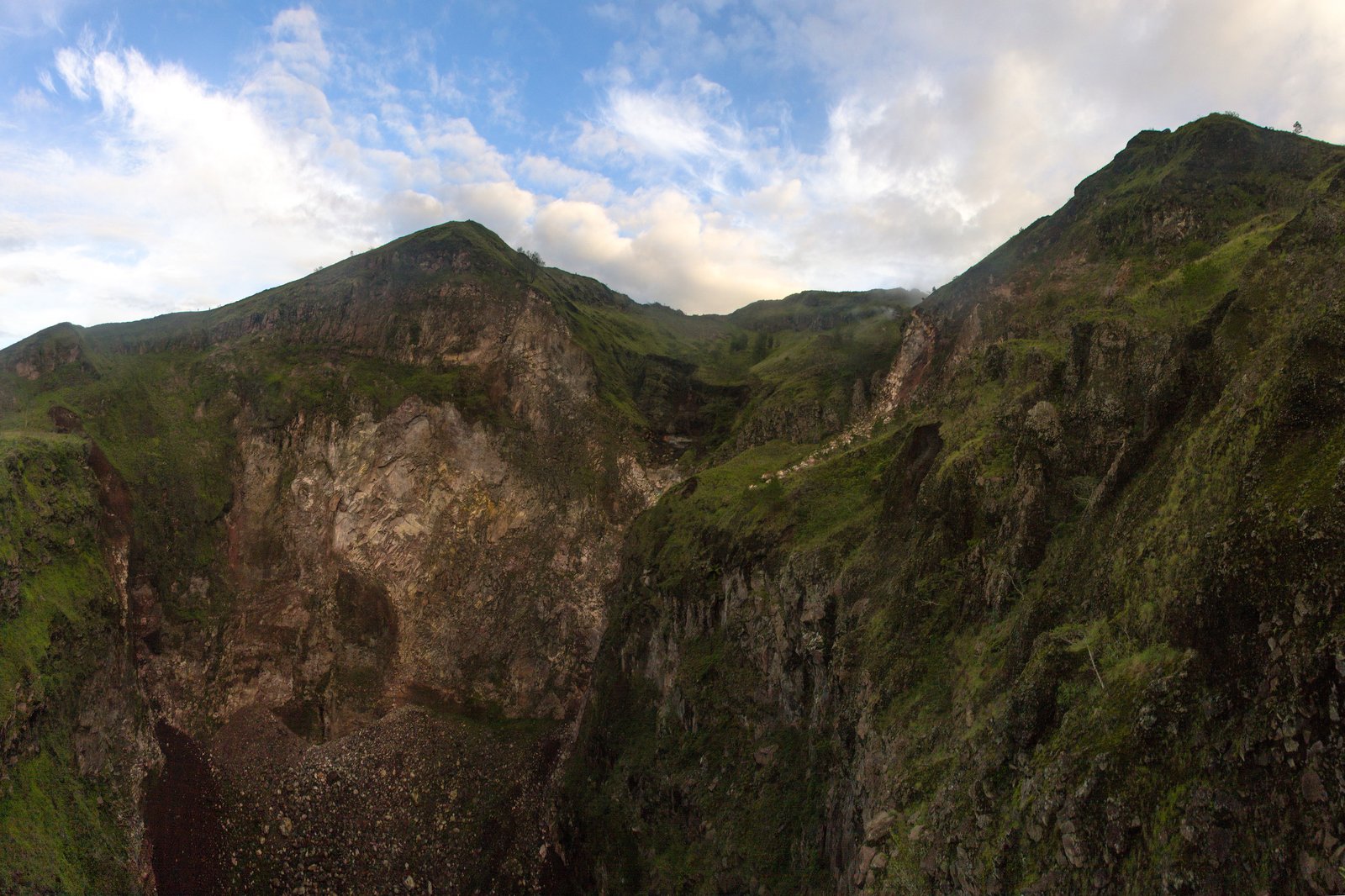
SINGARAJA, Buleleng - September 29, 2026 - The Climatology Station of the Meteorology, Climatology, and Geophysics Agency (BMKG Bali) has formally placed the sub-district of Gerokgak in western Buleleng Regency under "Extreme Drought Alert" status after meteorological monitoring confirmed that the region has recorded more than 60 consecutive days without measurable precipitation (Hari Tanpa Hujan / HTH).
 📍 Lovina
Bali Faces Growing Fire Risk as Prolonged Dry Conditions Continue
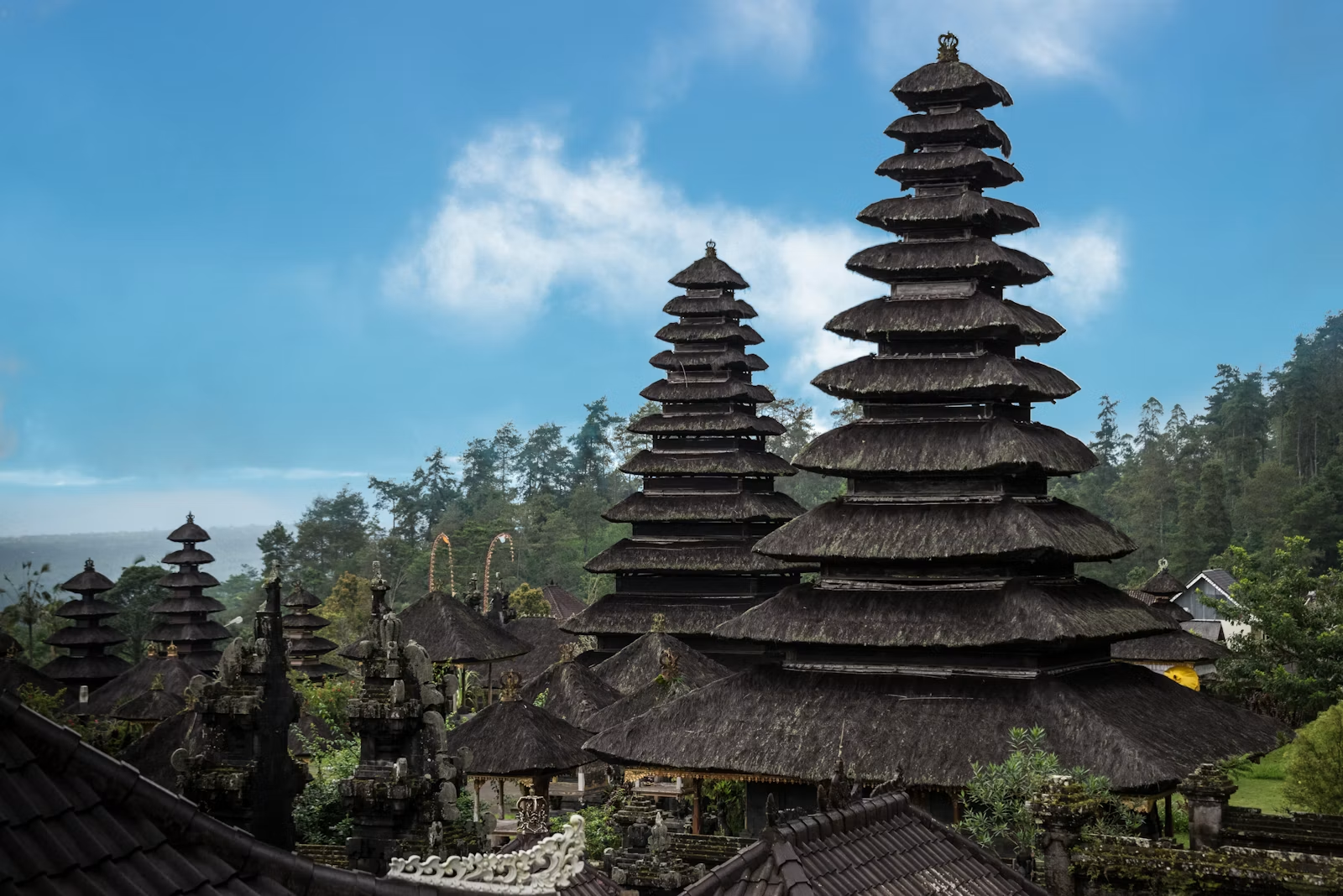
DENPASAR, Bali - September 29, 2026 - The Bali Regional Disaster Management Agency (BPBD Bali), in coordination with the Meteorology, Climatology, and Geophysics Agency (BMKG), has issued an elevated wildfire and structural fire advisory across multiple regencies as prolonged dry-season conditions and gusty southeasterly winds continue to desiccate open vegetation across the island.
 📍 Lovina
Why North and East Bali Matter to the Island's Next Tourism Chapter
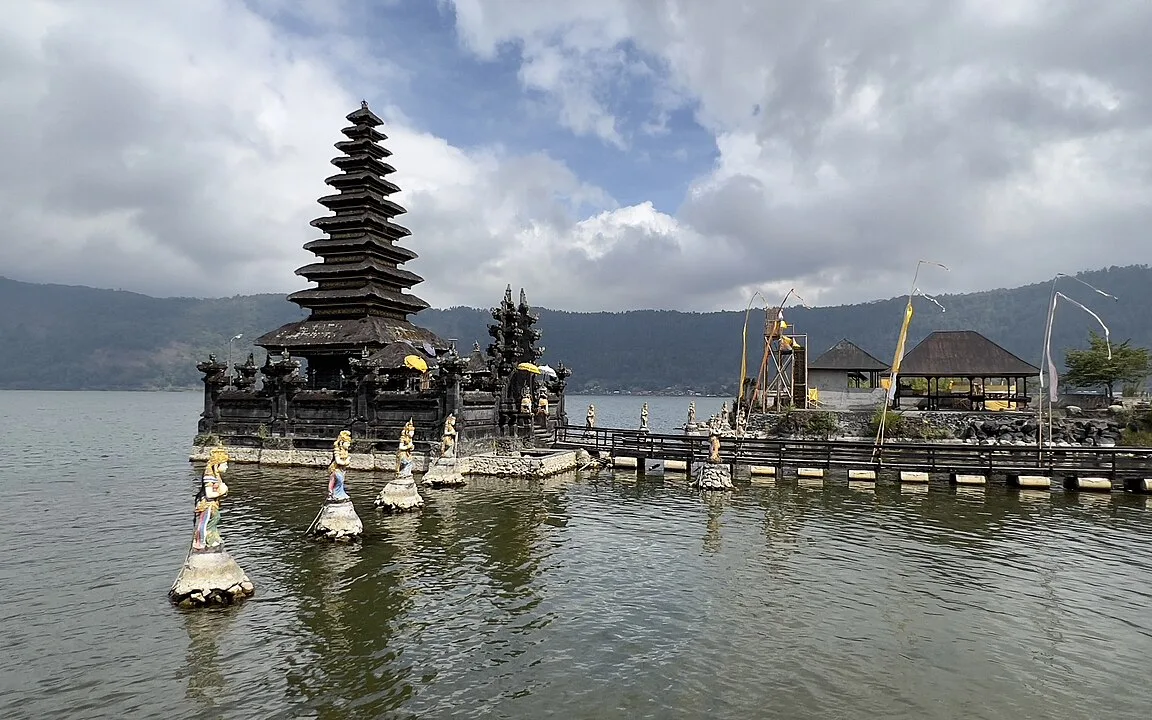
BULELENG, Bali - September 27, 2026 - Bali's next tourism battle may not be about attracting more visitors. It may be about persuading them to leave the southern corridor - and giving them enough reason to stay elsewhere.
 📍 Lovina
Intergenerational Meeting Point in Singaraja City Center
One by one the sidewalk lights started to come on. The originally blue sky slowly turned orange. Singaraja City Center looked different that afternoon. Areas that previously only had vehicles passing through have now become new public spaces that are busy with residents.