


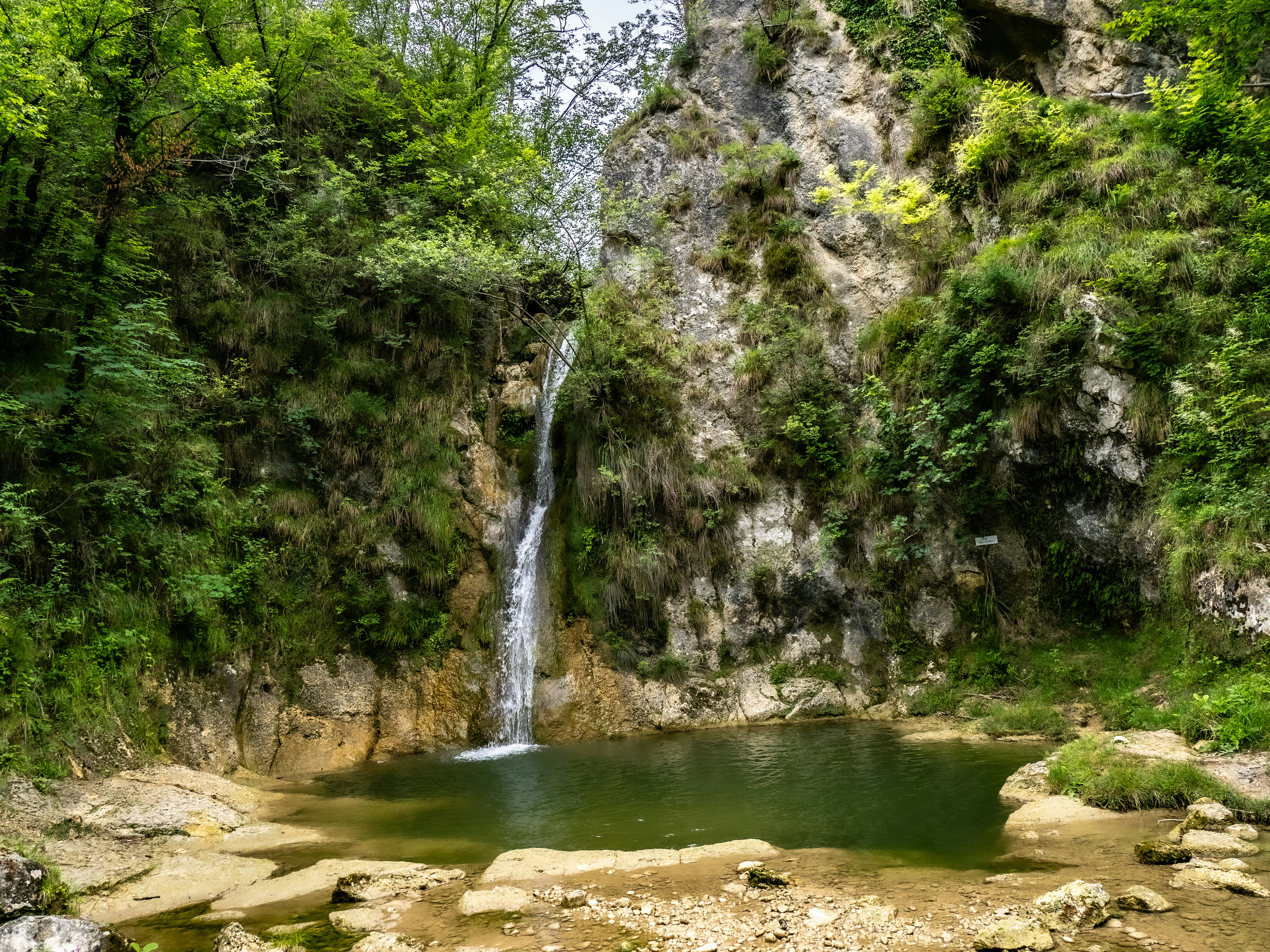
Singsing Waterfall
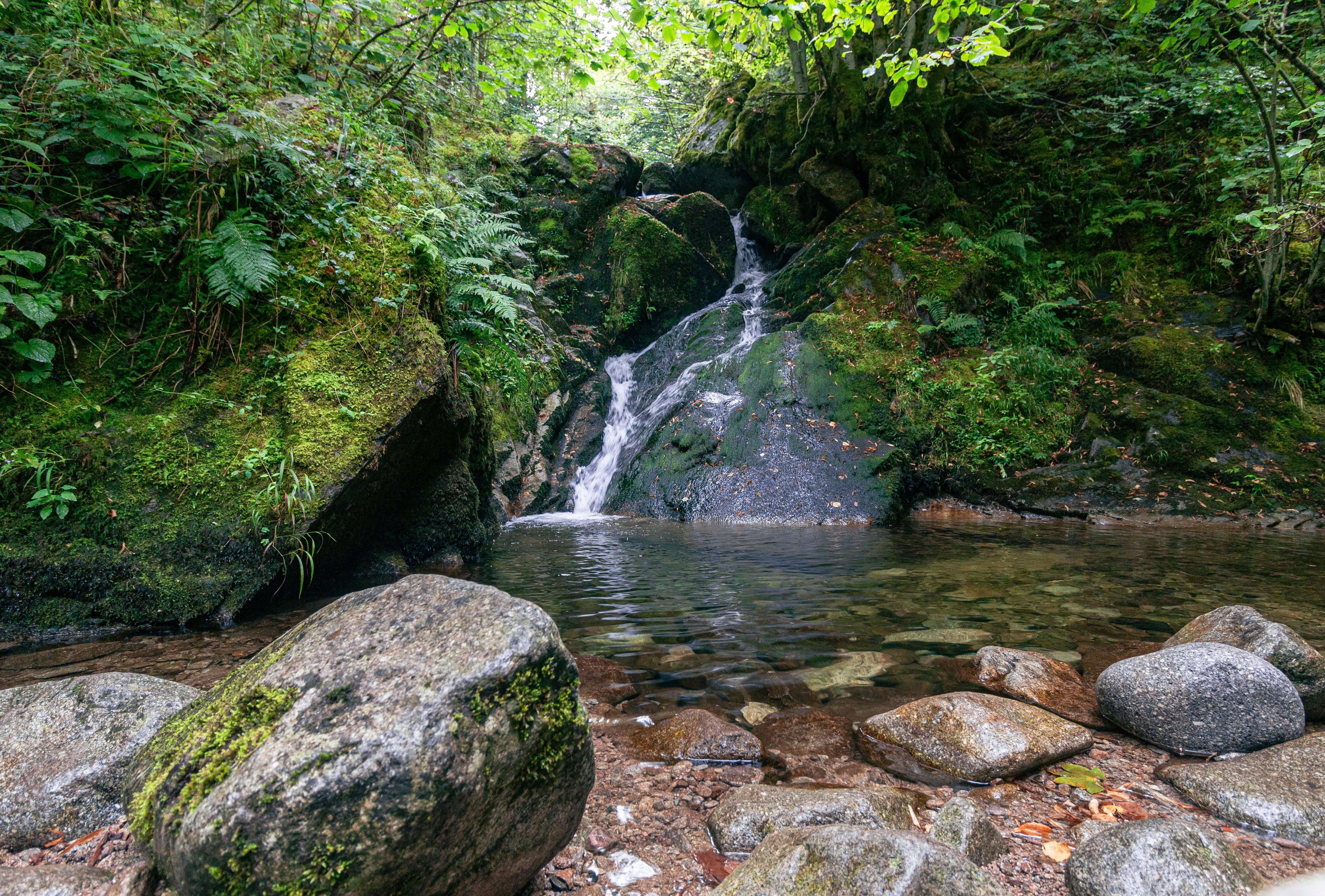
Air terjun legendaris di perbukitan Temukus, hanya 5 km di barat pantai Lovina, Air Terjun Singsing menawarkan pesona aliran ganda bertingkat yang mengalir tenang ke lubuk kolam batu alami di bawah naungan pepohonan rimba.
📜 Latar Belakang Sejarah & Makna Budaya
Telah menjadi primadona penjelajah sejak era awal berkembangnya pariwisata Lovina pada dekade 1970-an, dialiri Sungai Singsing dari deretan pegunungan tengah Bali sebagai tempat rekreasi alam yang tenang.
Tarif Resmi Tiket Masuk
| Kategori Pengunjung | Tarif Resmi (IDR) | Est. (USD) | Inklusi & Catatan |
|---|---|---|---|
| Domestic / WNI (Adult) | IDR 10.000 | $0.56 | WNI Adult ticket |
| Domestic / WNI (Child) | IDR 5.000 | $0.28 | WNI Child ticket |
| Foreign Tourist (Adult) | IDR 20.000 | $1.12 | Official community donation / entry ticket (IDR 20,000) |
| Foreign Tourist (Child) | IDR 10.000 | $0.56 | Child ticket (ages 5-11) |
Etika Budaya Bali & Hukum Adat Awig-Awig
Pedoman resmi adat desa dan tata tertib tempat suci untuk Singsing Waterfall.
Pakaian renang santai dan sandal air antiselip untuk melangkah aman di atas batuan sungai yang licin menuju kolam pemandian.
Awig-Awig Desa Adat Temukus: jaga kebersihan dan keasrian hutan perbukitan. Debit air memiliki pola musiman (paling melimpah Desember–April); dilarang membuat api unggun dan dilarang meninggalkan sampah plastik.
Penerbangan Drone Diizinkan. Penerbangan drone diizinkan di atas kolam dan lembah terbuka; perhatikan tajuk pohon hutan yang rindang saat bermanuver rendah.
Sepeda Motor: IDR 2.000
Mobil Penumpang: IDR 5.000
Sorotan Visual & Arsitektur (7 Foto)
Transportation & Access Radar
Grab/Gojek drop-offs available from Lovina. Local transport and scooter rentals easily accessible.
HYDROLOGY & FLASH FLOOD WARNING: Singsing has a highly seasonal flow. It is dramatic and deep from November through June (rainy and early dry seasons), but reduces to a trickle in late dry season (August–October). During intense downpours in the Banjar hills, sudden flash floods can sweep through the rocky riverbed canyon. Never attempt the scramble to the second tier (Singsing Dua) during rain, and exit the riverbed immediately if water turns brown.
Radar Elevasi & Aksesibilitas
Navigasi & Transit
Panduan Budaya, Sejarah & Arsitektur
Comprehensive Cultural & Geographic Guide: Singsing Waterfall
1. Comprehensive Overview & Cultural Significance
Nestled within the sun-warmed, dry tropical forest hills of Temukus village in Buleleng Regency, Singsing Waterfall stands as one of northern Bali’s most historic, nostalgic, and peacefully secluded natural landmarks. Located just five kilometers west of Lovina beach and twenty minutes from Singaraja, Singsing is celebrated as one of the original discovery waterfalls of Bali’s nascent tourism era. While modern travelers often rush to the thunderous, high-adrenaline cascades of central Bali, Singsing offers an authentic glimpse into the laid-back, bohemian soul of northern Bali in the 1970s—a serene double waterfall spilling into a calm, shaded stone swimming basin surrounded by peaceful teak and wild fig trees.
The cultural narrative of Singsing Waterfall is inextricably linked to the legacy of modern North Bali's founding father: Anak Agung Panji Tisna, the last King of Buleleng. A celebrated novelist, philosopher, and visionary statesman, King Panji Tisna established the Lovina retreat in 1953, naming it after the philosophy of "Love Indonesia." He frequently rode his horse up to the cool river canyon of Singsing to meditate, write, and enjoy the refreshing freshwater pools away from the coastal heat. Singsing was thus one of the very first natural cascades in Bali to welcome international bohemian travelers, who were drawn to its unpretentious charm, crystal-clear swimming hole, and profound sense of peace.
Managed with quiet pride by the local agrarian community of Desa Adat Temukus, Singsing Waterfall remains refreshingly uncommercialized. There are no concrete tourist plazas, no high-pressure vendor arcades, and no artificial photo swings. Instead, travelers discover an authentic natural sanctuary where gentle forest trails meander alongside the riverbed, leading to a tranquil swimming pool where the only sounds are the rhythmic splash of falling water and the calls of kingfishers. For those seeking a relaxed morning swim before spending the afternoon on Lovina’s black volcanic sand beaches, Singsing Waterfall is an idyllic retreat.
2. Exact Geographic Positioning & Micro-Terrain
Singsing Waterfall is situated in the north-coastal foothills of Buleleng Regency, positioned precisely at latitude -8.1887 and longitude 115.0211, in the hamlet of Temukus, Banjar District. Set at an elevation of approximately 95 meters above sea level, the waterfall occupies a transitional ecological zone just two kilometers inland from the Bali Sea coastline. The climate here is notably warmer, drier, and sunnier than the high-altitude cloud forests of Munduk or Bedugul, characterized by warm daytime temperatures averaging 28°C to 31°C, softened by cool mountain downdrafts from the hills behind.
The micro-terrain surrounding Singsing Waterfall is shaped by a gently ascending forest valley carved into northern Bali's limestone and volcanic foothills. Visitors turn off the main northern coastal highway (Jalan Raya Singaraja-Seririt) and drive approximately two kilometers south along a paved village road that winds through mango orchards, coconut groves, and quiet residential hamlets. The trailhead provides a level parking area shaded by mature tamarind and neem trees.
The physical difficulty rating for exploring Singsing Waterfall is classified as EASY. The walk to the lower cascade (Singsing 1) requires only about 35 wide, gently graded concrete and stone stairs followed by a flat, shaded five-minute dirt trail that follows the riverbed. The total walk takes fewer than ten minutes from the parking area, making it completely accessible to travelers of all fitness levels, including children and seniors. Handrails and bamboo banisters are provided along the stepped sections, ensuring safe and confident footing.
For more adventurous visitors, a rustic trail continues upstream from the lower fall to the upper cascade (Singsing 2). This upper trail involves a moderate five-to-ten-minute scramble across river rocks and dirt switchbacks, requiring steady balance and appropriate footwear. At both tiers, wide gravel banks and flat volcanic boulders offer comfortable, natural seating areas to relax, sunbathe, and enjoy the tranquil forest atmosphere.
3. Mythological Genesis & Sacred Lore
In the spiritual cosmology of northern Balinese Hinduism, water that originates in the volcanic interior and flows toward the northern sea (Pasih Kelod) is believed to carry the protective energy of the mountain deities down to the coastal realm. The river Singsing (Tukad Singsing) has been revered for centuries as a sacred cooling boundary. In ancient times, travelers journeying between the coastal trading ports of northern Bali and the mountain kingdoms of the interior would stop at Singsing to perform ritual ablutions, asking the river spirits for safe passage through the bandit-prone mountain passes.
Local oral chronicles (tutur) preserved by the elders of Desa Adat Temukus relate that the deep natural basin beneath Singsing Waterfall was manifested through the blessings of the water goddess Dewi Danu. The circular stone basin, carved into solid volcanic bedrock, was understood as a natural spiritual crucible (beji pasucian) where negative earthly vibrations could be neutralized by the continuous flow of fresh mountain water. Local villagers historically used the pool for purifying ceremonial regalia from the local village temples during major temple anniversaries (odalan).
Near the lower waterfall, perched on a mossy volcanic rock ledge shaded by a giant wild banyan tree, stands an ancient stone water shrine (Pelinggih Beji). Draped in traditional ceremonial yellow cloth, this sacred altar is the focal point for daily village devotions. Local caretakers place fresh Canang Sari offerings filled with fragrant frangipani blossoms, betel leaves, and burning sandalwood incense every morning. Devotees pause at the shrine to sprinkle holy water on their heads before entering the pool, expressing gratitude for the life-giving stream that nourishes their downstream crops.
The valley also holds poignant historical memories. In 1849, during the heroic Dutch-Buleleng colonial wars, intense skirmishes took place in the hills surrounding Temukus. A weathered colonial obelisk stands near the trail, commemorating Dutch Captain K.P. van Perponcher, who fell during the battle against the heroic forces of Prince Gusti Ketut Jelantik. Local Balinese view this monument not as an exaltation of colonialism, but as a solemn reminder of their ancestors' fierce independence and unyielding devotion to their sacred island home.
4. Chronicle of River Stewards, Sages & Agrarian History
The modern history of Singsing Waterfall is intrinsically woven into the bohemian discovery of North Bali. In the early 1970s, before mass tourism swept southern Bali, adventurous international travelers traveling the overland "Hippie Trail" across Asia began arriving in Lovina. Drawn by rumors of calm, dolphin-filled waters and peaceful mountain waterfalls, these early explorers were introduced to Singsing by local village youth. For a generation of global travelers, Singsing represented the quintessential tropical paradise: an idyllic, crowd-free freshwater swimming hole nestled in an untamed jungle ravine.
Throughout the decades of Bali's tourism boom, the agrarian community of Desa Adat Temukus made a deliberate choice to protect Singsing from hyper-commercialization. Rather than allowing corporate resort developers or outside tour agencies to build high-density attractions, the village kept ownership and stewardship firmly in communal hands. The village council organized local families into a cooperative that maintains the trails, protects the watershed, and manages visitor reception.
Today, the entrance and trails are cared for by local Temukus residents. Modest family-run warungs near the parking concourse offer chilled fresh coconuts, iced tea, and home-cooked snacks, providing direct income for village households. The revenue generated from admission tariffs is managed transparently by the village treasury, directly funding local temple restorations, health assistance for village elders, and educational scholarships for local children. Singsing stands as a shining example of how a historic natural attraction can retain its authentic, gentle character across decades of global tourism.
5. Architectural Anatomy, Canyon Geology & Water Formations
The spatial layout of Singsing Waterfall is designed to harmonize effortlessly with the surrounding natural topography, adhering strictly to the Balinese spatial philosophy of Tri Mandala:
- Nista Mandala (Outer Arrival Perimeter): The shaded parking concourse located at the end of the paved village road, featuring vehicle parking for scooters and cars, the local community ticket desk, clean public restrooms, and small family warungs.
- Madya Mandala (The Forest Trail Corridor): The flat, ten-minute nature trail that follows the riverbed through dry deciduous forest, passing giant tamarind trees, bamboo thickets, and the historic 1849 battle monument. This peaceful walk serves as a sensory transition from the coastal heat to the cool river atmosphere.
- Utama Mandala (The Sacred Waterfall Basin): The natural stone amphitheater at the head of the ravine, comprising the twelve-meter lower cascade, the deep circular swimming pool, the streamside offering shrine, and the upper trail leading to the second tier.
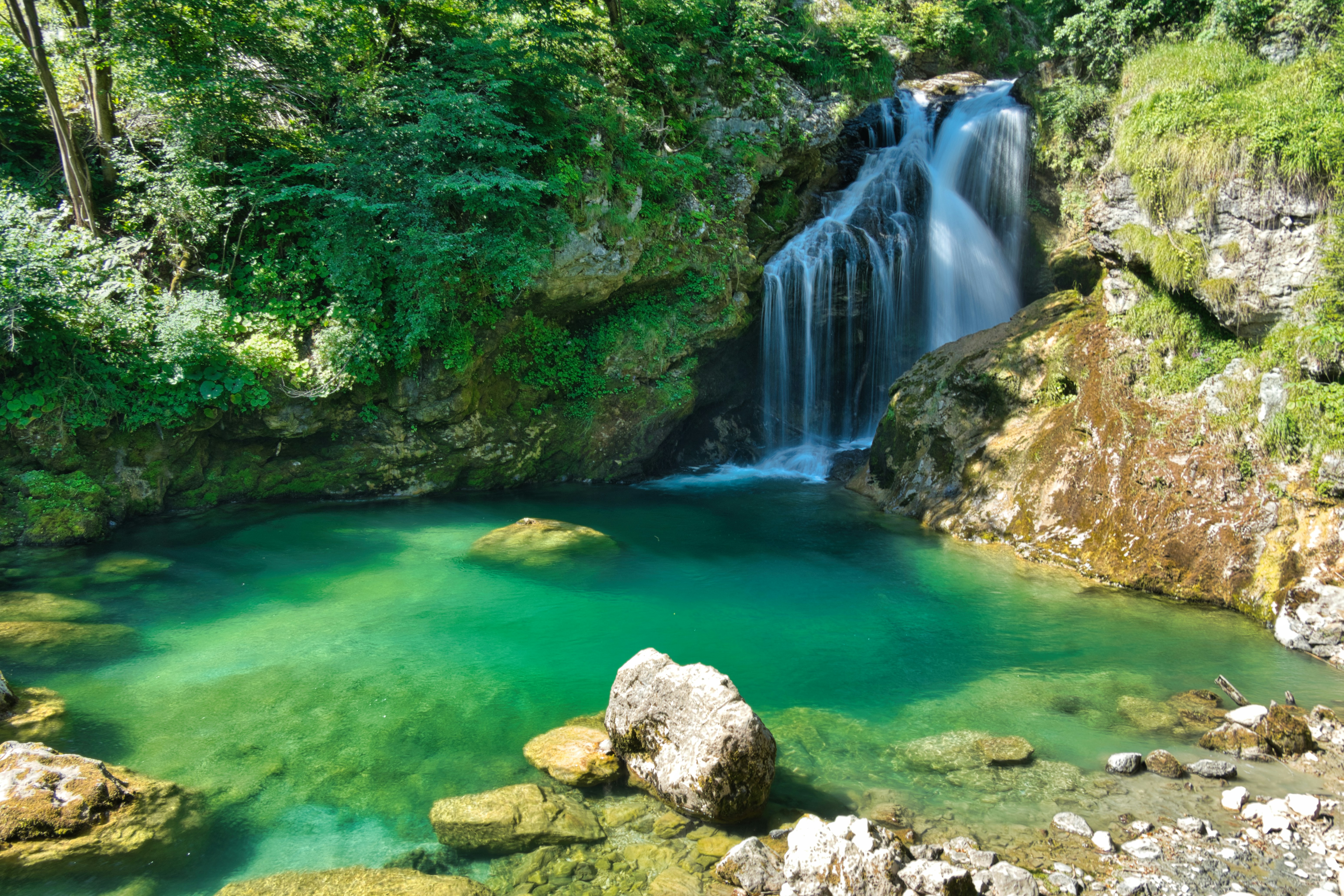
Geologically, the canyon is carved into an intriguing geological formation of layered volcanic andesite, tertiary limestone, and consolidated river breccia. The lower cascade (Singsing 1) drops approximately twelve meters in a clean, vertical stream from an overhanging rock ledge, striking a deep, circular plunge basin carved into solid bedrock. The water is clear, with a refreshing emerald hue created by mineral reflections and shaded overhanging vegetation.
The lower swimming pool is remarkably well-suited for relaxed bathing. Spanning roughly fifteen meters across, the pool slopes from a shallow, gravel-lined entry point to a depth of approximately two meters near the falling stream. The water is calm and inviting, lacking dangerous whirlpools or turbulent currents, making it a safe haven for swimming, floating, and enjoying natural water therapy beneath the cascade.
The upper waterfall (Singsing 2), accessible via a short scramble above the lower falls, offers an even more secluded, romantic setting. The cascade drops roughly six meters into a smaller, crystal-clear rock basin surrounded by vertical canyon walls festooned with clinging wild ferns and orchids. The upper pool provides an intimate, tranquil retreat where visitors can soak in total privacy, enveloped by the serene sounds of the forest.
6. Essential Etiquette, Awig-Awig & Taboos
To preserve the peaceful atmosphere, natural cleanliness, and sacred sanctity of Singsing Waterfall, all visitors are requested to respect traditional customary bylaws (awig-awig):
- Modest Swimwear Encouraged: While swimming in the natural basins is warmly encouraged, visitors must observe cultural modesty. Nude swimming, topless sunbathing, and revealing thong bikinis are strictly forbidden under village customary law. Swimmers should wear modest swimwear, board shorts, or swim shirts. When walking back to the parking concourse, dry clothing should cover swimwear.
- Water Purity Preservation: The waters of Singsing flow directly into downstream subak canals that irrigate local fruit orchards and coastal rice fields. The use of chemical soaps, shampoos, detergents, or synthetic tanning lotions in the river pool is completely prohibited. Eco-friendly, mineral-based sunscreens should be applied before arriving.
- Respect the Sacred Shrines: The streamside pelinggih shrine is a consecrated place of worship. Do not climb on shrine foundations, do not hang towels or bags from shrine fences, and do not touch sacred statues. Maintain a quiet, respectful demeanor if village devotees are conducting prayer rituals.
- Safe Swimming & Cliff Jumping: While the lower pool is deep enough for swimming, jumping from the high cliffs into the pool is dangerous and strictly discouraged due to seasonal variations in water depth and submerged rock ledges. Always check water depth carefully before wading in.
- Strict Waste Disposal: Littering is an offense against village customary law. All trash, food wrappers, and plastic containers must be placed in the designated bins at the parking concourse. Carry out whatever you carry in to keep the forest pristine.
7. Practical Logistics & Optimal Timing
Visiting Singsing Waterfall is an effortless, highly enjoyable excursion that fits seamlessly into any North Bali coastal itinerary:
- Optimal Season & Timing: Because Singsing has a seasonal flow, the quintessential window to visit is between November and June (the rainy season and early dry season), when water volume is at its peak and the swimming pools are full, emerald, and crystal-clear. The best time of day is between 09:00 and 12:00, when gentle morning sunlight illuminates the canyon pool before the midday heat sets in. During the late dry season (August to October), water flow is minimal, though the forest walk remains pleasant.
- Operating Hours: Open daily from 08:00 to 17:30. Last entry is typically at 16:45.
- Transportation Access: Located in Temukus, Banjar District, just five kilometers west of Lovina beach (approximately 10 minutes by scooter or taxi) and fifteen kilometers west of Singaraja. The road leading up from the coastal highway is fully paved, smooth, and easily navigated by both cars and motor scooters.
- Ride-Hailing & Local Transport: Unlike remote highland gorges, Singsing is ride-hailing friendly and local transport accessible. Grab and Gojek drivers operate in the Lovina area and can provide drop-offs, or travelers can easily hire a local Lovina driver or rent a motor scooter from their hotel for the short ten-minute ride.
- Itinerary Pairings: Singsing Waterfall can be effortlessly combined with morning dolphin-watching tours along Lovina Beach, an afternoon soak at the sacred Banjar Hot Springs (Air Panas Banjar, just 10 minutes further west), and a cultural visit to Bali's largest Buddhist monastery, Brahmavihara-Arama, creating an enriching and relaxing full-day North Bali excursion.
- Recommended Gear: Swimwear, a towel, water sandals or flip-flops, sunscreen, insect repellent, and a camera or smartphone with a waterproof case.
8. Entry Tariffs & Transparent Inclusions
The tariff structure at Singsing Waterfall is established transparently by the community council of Desa Adat Temukus, offering exceptional value while directly benefiting local village families:
- Foreign Adult Entry Ticket: IDR 20,000 (approximately USD $1.25)
- Foreign Child Entry Ticket (Ages 5–11): IDR 10,000 (approximately USD $0.65)
- Domestic Indonesian Adult: IDR 10,000
- Domestic Indonesian Child: IDR 5,000
- Vehicle Parking Fees: IDR 5,000 for private cars; IDR 2,000 for motor scooters.
- Children Under 5 Years: Free admission.
Transparent Inclusions: Every admission ticket includes full, unrestricted access to both the lower (Singsing 1) and upper (Singsing 2) waterfalls, natural swimming basins, forest walking trails, clean public restrooms, and changing cubicles. There are no mandatory guide fees or hidden surcharges. Local village youths are available to guide visitors up to the second tier for a modest, discretionary tip (IDR 20,000–50,000), which directly supports their education and family livelihoods.
Family-run warungs near the parking concourse offer chilled fresh young coconuts (IDR 15,000–20,000), cold bottled water (IDR 5,000), iced tea, and authentic Balinese snacks at fair village prices. All admission revenues are deposited into the village cooperative fund, supporting communal welfare, healthcare for the elderly, and the environmental conservation of the Tukad Singsing river corridor.
9. Sustainable Tourism & Respectful Exploration
Singsing Waterfall stands as a cherished reminder of Bali’s enduring natural beauty and community resilience:
- Direct Community Benefit: By visiting Singsing Waterfall, your admission fees bypass multinational tour conglomerates, directly supporting the agrarian families of Temukus village. Every coconut purchased and every entry ticket stamped helps ensure that rural Balinese families can continue to steward their ancestral lands with dignity.
- Protecting Dry Tropical Biospheres: The dry deciduous forests of northern Bali represent a rare and fragile ecosystem that harbors unique bird species, butterflies, and native flora. By staying on designated footpaths, avoiding single-use plastics, and treating the riverbed with care, visitors help protect this vital biodiversity corridor.
- Preserving Bohemian Heritage: In an era of manufactured attractions and commercial spectacles, Singsing Waterfall preserves the timeless, gentle magic of old North Bali. Swimming in its cool, shaded stone pool, surrounded by ancient wild fig trees and the historic echoes of royal contemplation, you experience a sanctuary of pure, unhurried tranquility—a true classic of Bali’s rich travel heritage.
Mythological Origins, Foundation Chronicles & Sacred River Folklore of Singsing Waterfall
Perched in the gentle, sun-drenched foothills of Temukus village, just five kilometers west of Lovina beach in northern Bali, Singsing Waterfall—revered locally as Air Terjun Singsing—holds an indelible place in the cultural and tourism chronicles of Buleleng. In the oral traditions (tutur) of northern Balinese kingdoms, the river Singsing (Tukad Singsing) was regarded as a sacred cooling boundary separating the arid coastal plains from the fertile mountain kingdoms of the interior. The name Singsing derives from an ancient Balinese word describing the steady, whispering hiss of water coursing through narrow stone channels.
The historical chronicles of the site are deeply intertwined with the royal heritage of Buleleng. During the mid-20th century, the visionary last ruling King of Buleleng, Anak Agung Panji Tisna (1908–1978)—a renowned Indonesian literary pioneer who founded the Lovina beach retreat in 1953—often visited the shaded river pools of Singsing for contemplation and literary inspiration. King Panji Tisna recognized that northern Bali's serene balance of calm sea and freshwater waterfalls was uniquely suited for spiritual restoration, welcoming early global travelers to experience the therapeutic peacefulness of the falls.
The gorge is also steeped in significant anti-colonial historical heritage. Just a short walk from the waterfall stands a historic Dutch stone monument commemorating Captain K.P. van Perponcher, an officer who fell during the bloody Buleleng War of 1849, when the fierce warrior king I Gusti Ketut Jelantik led northern Balinese forces in resistance against Dutch colonial incursions. Today, local village elders from Desa Adat Temukus maintain a consecrated river shrine (Pelinggih Beji) near the lower pool, draped in ceremonial yellow cloths. Priests regularly present daily Canang Sari offerings to honor the river guardians (Ida Bhatara Toya) and appease the ancestral spirits of the valley. Visitors are welcomed into a quiet, peaceful sanctuary where the echoes of Balinese royal history, heroic resistance, and tranquil river spirituality resonate in timeless harmony.
River Canyon Geology, Subak Waterways & Natural Formations of Singsing Waterfall
From a geological standpoint, Singsing Waterfall presents a fascinating study in northern Bali's transitional hydrology and rock formations. Unlike the lush, perpetually mist-drenched cloud forest cataracts of the central mountain spine, Singsing is situated at an elevation of approximately 95 meters above sea level within a distinctive tropical dry deciduous forest microclimate. The geological foundation is composed of stratified tertiary volcanic andesite interspersed with marine limestone layers and hardened alluvial conglomerates, reflecting northern Bali’s complex tectonic uplift history along the Flores back-arc basin.
The site is configured as a classic two-tiered waterfall system (Singsing Satu and Singsing Dua). The lower waterfall (Singsing 1) drops approximately twelve meters over a vertical volcanic cliff into a wide, circular stone swimming basin measuring roughly fifteen meters in diameter and up to two meters deep. The water has hollowed out a natural amphitheater draped in drought-tolerant tropical vegetation, wild ficus trees, and hanging banyan roots that anchor the limestone-volcanic cliffs. A short, five-minute scramble up a rocky path leads to the upper cascade (Singsing 2), which features a smaller, secluded six-meter fall emptying into a tranquil, rock-rimmed plunge pool.
The hydrological profile of Singsing Waterfall is characteristically seasonal, reflecting northern Bali's distinct monsoon rhythms. During the rainy season and early dry season (November through June), the river swells with abundant runoff from the central mountain chain, creating a dramatic, roaring double cascade with deep, emerald-green swimming waters. During the height of the dry season (August through October), the flow reduces to a gentle, tranquil trickle. Downstream, the river is harnessed by the traditional Subak Temukus cooperative, directing life-giving irrigation to surrounding mango groves, coconut plantations, and coastal rice fields before emptying into the calm waters of the Lovina coastline. Furthermore, rustic dry-stone embankments (turap batu kali) hand-assembled by ancestral farmers line the lower riverbanks, shielding the canyon trail from flash runoffs while allowing indigenous riparian banyans and tamarind trees to anchor the volcanic gravel banks.
Frequently Asked Questions & Local Logistics
Key logistical insights, official tariffs, and customary etiquette for Singsing Waterfall.
Top Curated Stays Near Singsing Waterfall
Akomodasi terkurasi dalam radius 8 km, diurutkan berdasarkan ulasan wisatawan dan waktu tempuh tercepat.

Calm Haven Villa with Amabela Garden Lovina Mitra RedDoorz

Family Hostel
Belvilla Calm Haven Amabela Garden Lovina BeachNearLovina Beach
Villa Kupu-Kupu 2A
Aktivitas Terkurasi Dekat Singsing Waterfall
Curated guided tours and local adventures operated within easy transit of this landmark.

Sambangan Secret Garden Waterfall Cliff Jumping & Sliding
Adrenaline-packed canyoning through northern Bali’s secluded jungle waterfalls with natural rock waterslides.

Sekumpul & Fiji Waterfalls Comprehensive Jungle Canyon Trek
Curated Balinese experience: Sekumpul & Fiji Waterfalls Comprehensive Jungle Canyon Trek. Part of Bali Expert Guide's signature curated journeys.

Aling-Aling Waterfall Jumping, Sliding & Canyon Safari
Curated Balinese experience: Aling-Aling Waterfall Jumping, Sliding & Canyon Safari. Part of Bali Expert Guide's signature curated journeys.