


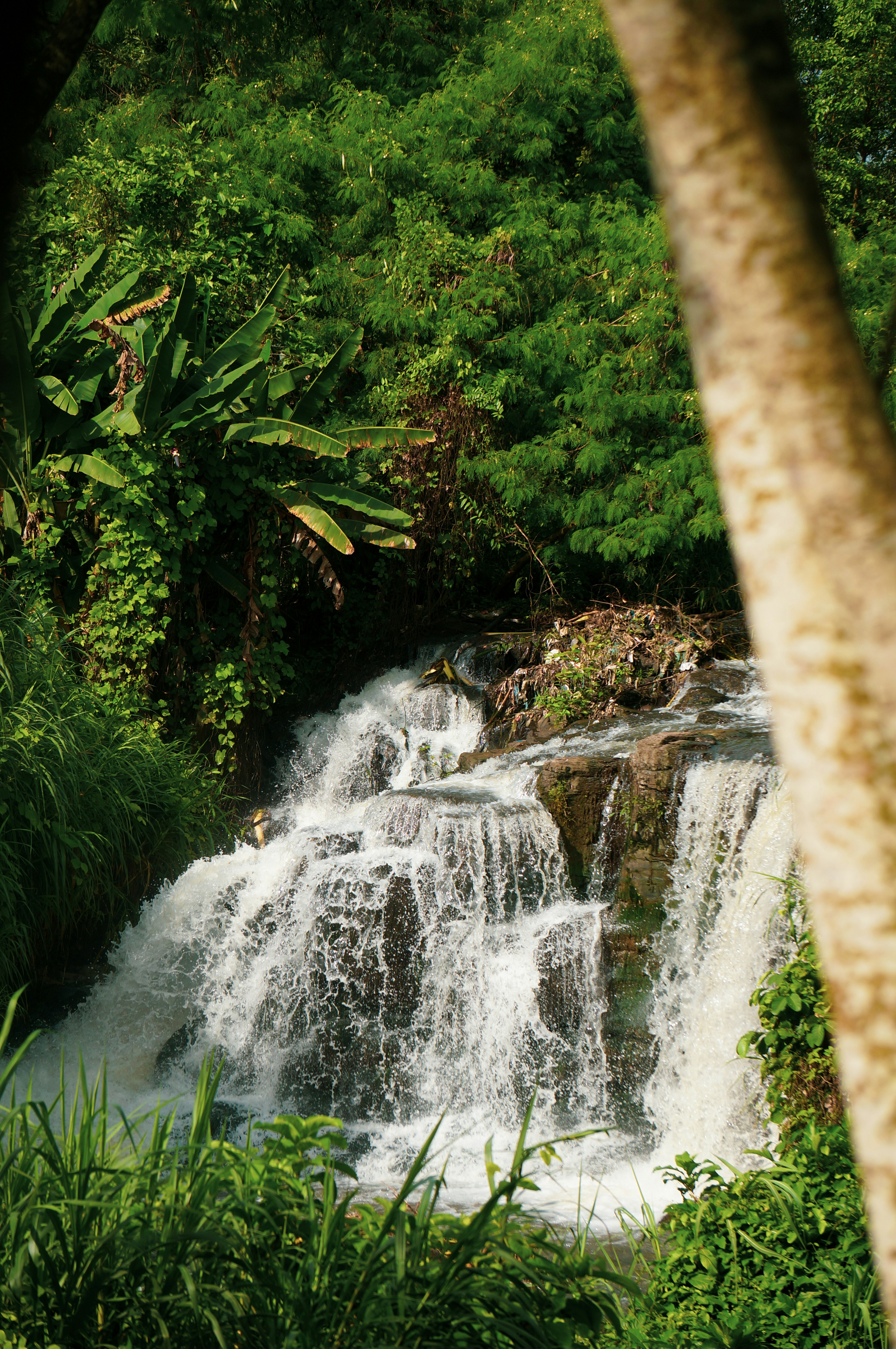
Yeh Hoo Waterfall (Jatiluwih)
Surga tersembunyi di bawah hamparan terasering warisan dunia UNESCO Jatiluwih, Air Terjun Yeh Hoo mengalirkan kesegaran mata air sistem irigasi Subak alami ke dalam kolam pemandian batu yang tenang dan asri.
📜 Latar Belakang Sejarah & Makna Budaya
Merupakan bagian tak terpisahkan dari kearifan sistem irigasi Subak Jatiluwih yang telah berusia ribuan tahun, mengalirkan limpahan mata air suci lereng Gunung Batukaru yang menyuburkan petak-petak persawahan lembah.
Tarif Resmi Tiket Masuk
| Kategori Pengunjung | Tarif Resmi (IDR) | Est. (USD) | Inklusi & Catatan |
|---|---|---|---|
| Domestic / WNI (Adult) | IDR 10.000 | $0.56 | WNI Adult ticket |
| Domestic / WNI (Child) | IDR 5.000 | $0.28 | WNI Child ticket |
| Foreign Tourist (Adult) | IDR 10.000 | $0.56 | Official community ticket IDR 10k (access also included with selected comprehensive Jatiluwih UNESCO passes) |
| Foreign Tourist (Child) | IDR 5.000 | $0.28 | Child ticket (ages 5-11) |
Etika Budaya Bali & Hukum Adat Awig-Awig
Pedoman resmi adat desa dan tata tertib tempat suci untuk Yeh Hoo Waterfall (Jatiluwih).
Sandal gunung atau sepatu santai untuk menuruni jalur trap yang pendek dan tertata rapi. Pakaian renang santai bagi yang ingin berendam di sejuknya mata air alami.
Berdasarkan Awig-Awig Subak Desa Adat Jatiluwih, kesucian dan kemurnian aliran air irigasi sawah wajib dijaga. Dilarang keras membuang sampah serta dilarang menggunakan sabun atau sampo kimia di dalam kolam pemandian.
Penerbangan Drone Diizinkan. Penerbangan drone diizinkan di atas lembah air terjun dan bentang sawah terasering terbuka; waspadai kabel utilitas di tepi jalan akses atas.
Sepeda Motor: IDR 2.000
Mobil Penumpang: IDR 5.000
Transportation & Access Radar
Zero ride-hailing services (no Grab/Gojek) in rural Jatiluwih. Must have private driver on standby or rent a scooter.
FLASH FLOOD & RAINY SEASON SAFETY: The stream is fed by upstream subak channels and Mount Batukaru mountain springs. During heavy afternoon mountain cloudbursts, runoff increases rapidly and the water turns murky brown. Never enter or swim in the basin if water is turbulent or brown. Short, easy 40-step descent makes it suitable for all fitness levels.
Radar Elevasi & Aksesibilitas
Navigasi & Transit
Sorotan Visual & Arsitektur (7 Foto)
Yeh Hoo Waterfall (Jatiluwih) — The scenic mountain cascade pouring into a tranquil emerald plunge basin beneath the Jatiluwih terraces.
Photo: Huy Nguyen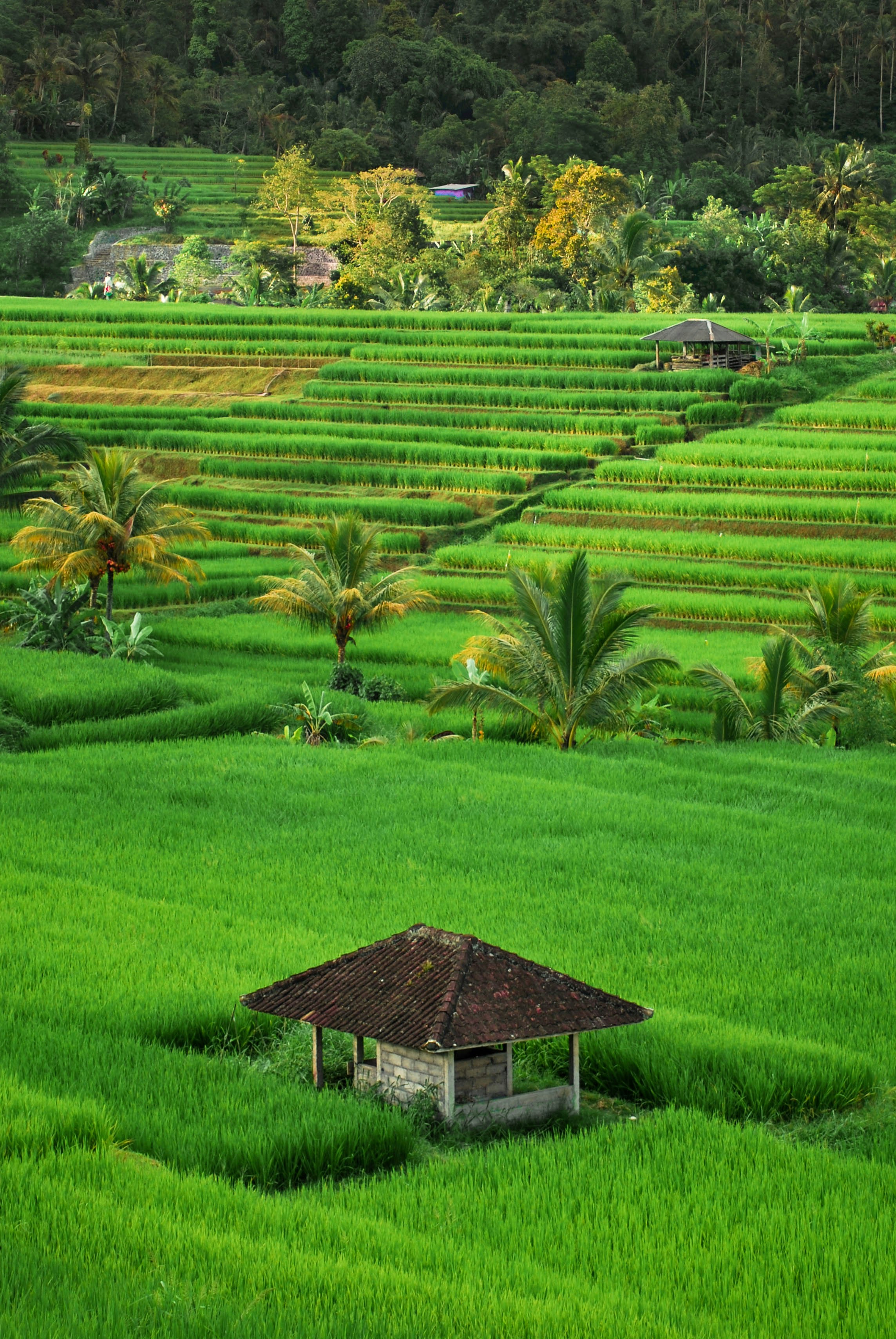
Yeh Hoo Waterfall (Jatiluwih) — The rustic agrarian approach overlooking the lush terraced landscape of Jatiluwih.
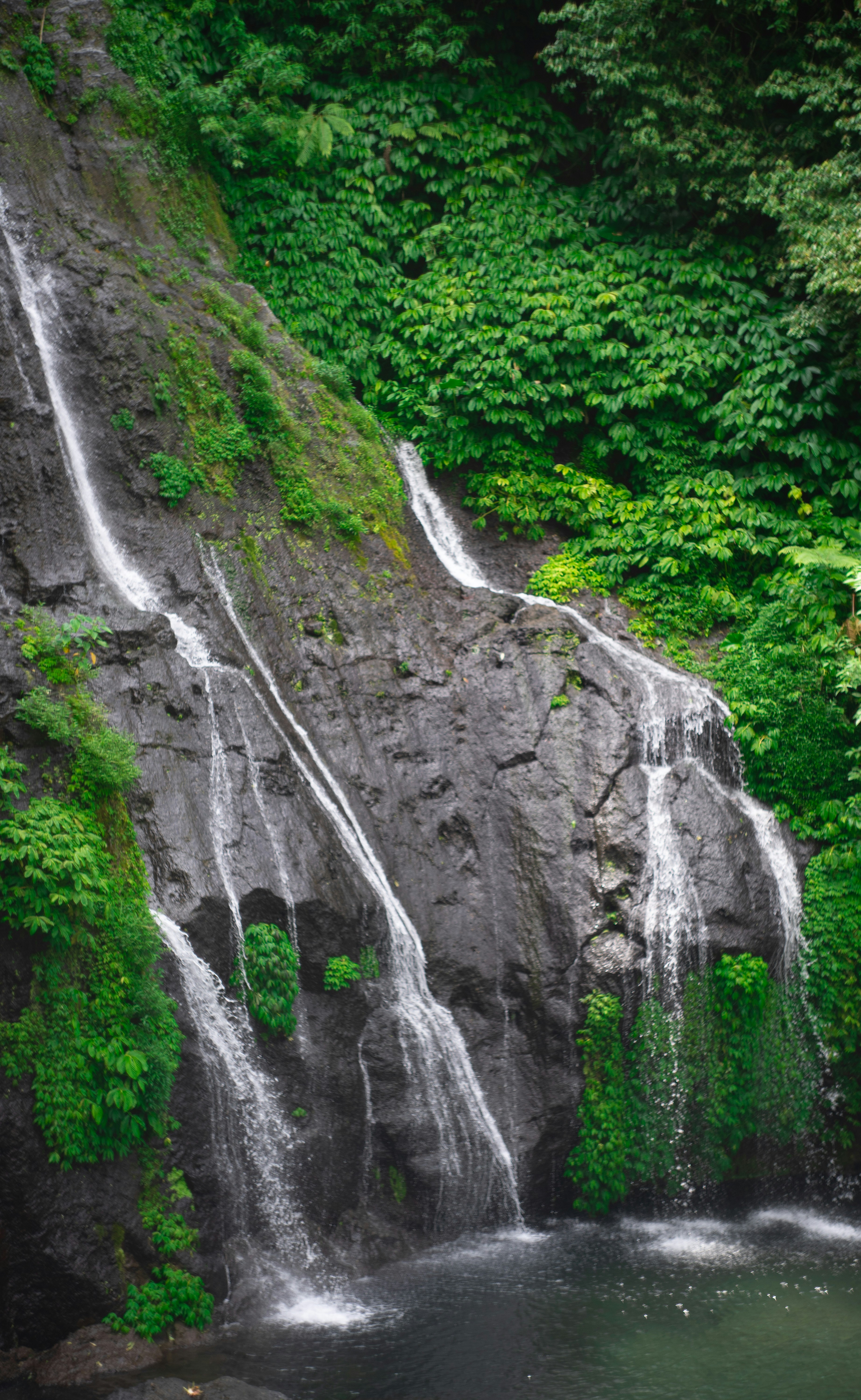
Yeh Hoo Waterfall (Jatiluwih) — Subak-fed crystal plunge pool formed over basalt sills, ideal for refreshing bathing.
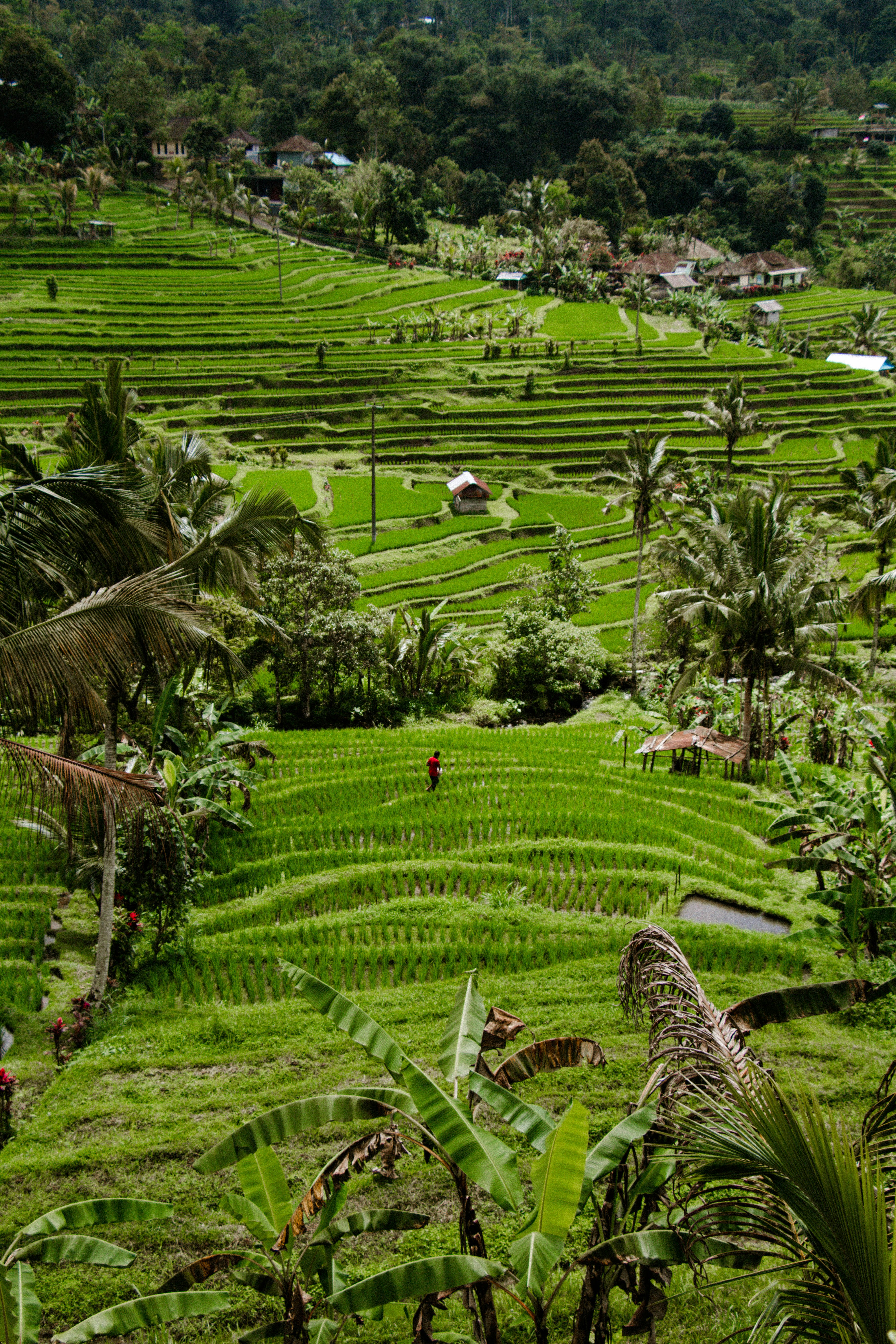
Yeh Hoo Waterfall (Jatiluwih) — Gentle stone pathway and steps descending through lush riverside vegetation.
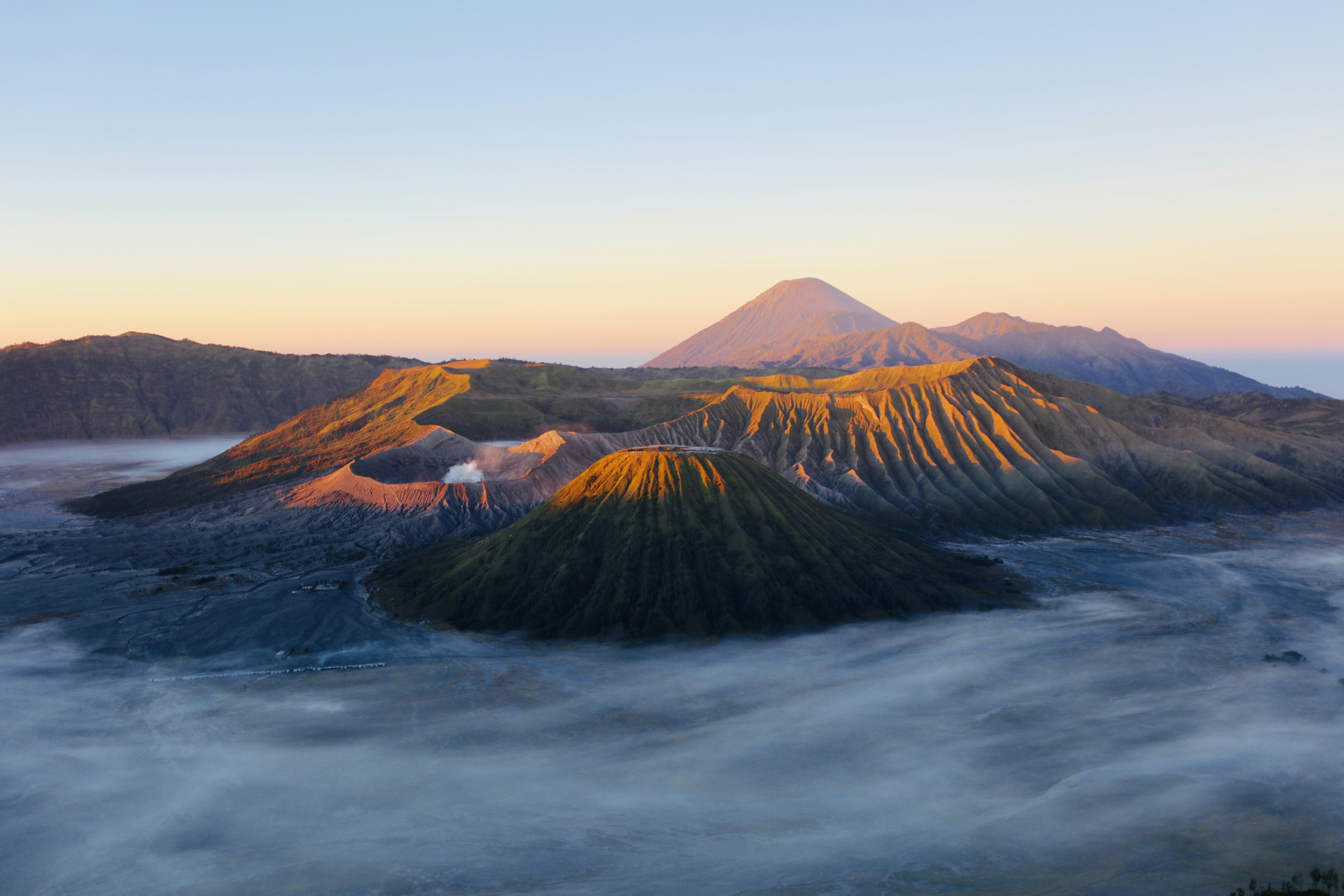
Yeh Hoo Waterfall (Jatiluwih) — Volcanic andesite rock shelf over which the Batukaru mountain springs tumble.
Panduan Budaya, Sejarah & Arsitektur
Comprehensive Cultural & Geographic Guide: Yeh Hoo Waterfall (Jatiluwih)
1. Comprehensive Overview & Cultural Significance
Tucked quietly beneath the soaring, emerald amphitheater of the UNESCO World Heritage Jatiluwih rice terraces in Tabanan Regency, Yeh Hoo Waterfall represents one of Bali’s most charming, accessible, and culturally rich natural sanctuaries. While thousands of international visitors journey to Jatiluwih every month to marvel at its sweeping panoramic vistas of stepped paddies, only a discerning few discover this hidden river oasis nestled just five minutes from the main scenic road. Yeh Hoo Waterfall offers an intimate, tranquil encounter with the living water culture that makes the surrounding agrarian paradise possible—a cool, crystalline mountain cascade tumbling into a serene natural pool shielded by lush jungle greenery.
The name Yeh Hoo carries deep emotional and linguistic resonance in traditional Balinese culture. Yeh is the Balinese word for water, universally revered across the island as a sacred instrument of spiritual purification and physical nourishment. Hoo, according to local village elders, represents the joyful sigh of relief uttered by ancient rice farmers who, exhausted from hours of cultivating the steep mountain terraces under the tropical sun, descended into this shaded river ravine to drink from its pure springs and submerge their tired bodies in the refreshing waters. To this day, the waterfall preserves that exact restorative spirit, offering weary travelers the ultimate natural refreshment after trekking through the sun-drenched rice paddies of Jatiluwih.
Culturally, Yeh Hoo Waterfall is an essential component of the millennium-old Subak irrigation cooperative of Jatiluwih. It is not an isolated tourist spectacle, but an active hydrological node within the sacred water temple network overseen by Pura Luhur Batukaru. Under the gentle, community-centered stewardship of Desa Adat Jatiluwih, the site has been maintained with exceptional ecological sensitivity. There are no garish commercial installations or artificial selfie platforms; instead, visitors find a simple, impeccably clean stone trail leading to a pristine natural swimming basin where the timeless rhythm of rural Balinese life can be experienced in profound peace.
The atmospheric intimacy of Yeh Hoo stands in striking contrast to the vast, open expanse of the Jatiluwih terraces above. Descending into the ravine feels like entering a private, emerald sanctuary. The ambient air temperature drops noticeably, saturated with cool water vapor, the earthy fragrance of wet moss, and the delicate perfume of wild ginger flowers. Here, surrounded by towering volcanic basalt rocks and singing tropical birds, travelers can float in pure mountain spring water while reflecting on the ancient ecological wisdom that has preserved this landscape across centuries.
2. Exact Geographic Positioning & Micro-Terrain
Yeh Hoo Waterfall is positioned on the southern volcanic slopes of Mount Batukaru, situated precisely at latitude -8.3687 and longitude 115.1321, in the village of Jatiluwih, Penebel District, Tabanan Regency. Set at an altitude of approximately 690 meters above sea level, the waterfall enjoys an invigorating, temperate montane climate. Daytime temperatures typically range between 22°C and 26°C, softened by cool mountain breezes descending from the forested volcanic peaks to the north.
The micro-terrain of Yeh Hoo is defined by a shallow, densely forested river ravine carved into the volcanic plateau directly below the southernmost terraced rice fields of Jatiluwih. The entrance to the waterfall is located along the southern approach road to Jatiluwih village, marked by a modest wooden signboard and a small roadside parking area for scooters and passenger cars. From the road, a well-constructed, gently graded concrete path descends into the river valley.
The physical difficulty rating for Yeh Hoo Waterfall is classified as EASY. The descent involves only about 40 wide, evenly spaced concrete and stone steps flanked by sturdy bamboo and metal handrails. The entire walk takes fewer than five minutes from the vehicle parking area, making it one of the most effortlessly accessible waterfalls in all of central Bali. Visitors of all fitness levels, including families with young children and seniors, can comfortably navigate the path without the exhausting cardiovascular exertion required at deeper canyon cataracts like Nungnung or Sekumpul.
At the bottom of the pathway, the terrain levels out into a clean, flat riverbank composed of water-smoothed river gravel, large volcanic boulders, and a timber viewing deck constructed by the local village cooperative. The approach to the water is gentle and slip-resistant, allowing visitors to easily take off their shoes, wade into the shallow gravel edge, or sit comfortably along the bank while enjoying the view.
Hydrologically, the ravine forms a natural micro-catchment that captures the subterranean overflow from the mountain springs above. Even during dry season months when coastal rivers across southern Bali experience reduced flows, Yeh Hoo maintains a steady, vibrant volume, fed by the deep, unpolluted aquifers of the protected Mount Batukaru nature reserve.
3. Mythological Genesis & Sacred Lore
In the sacred spiritual geography of Balinese Hinduism (Agama Hindu Dharma), water originating from holy mountains (Giri) is regarded as Tirta Amertha—the water of immortality and divine grace. The folklore surrounding Yeh Hoo Waterfall is intrinsically bound to the spiritual realm of Mount Batukaru, which is revered as the spiritual center of western Bali and the dwelling place of Lord Mahadewa. Ancient oral traditions (tutur lisan) recount that the springs feeding Yeh Hoo were consecrated by ancient holy ascetics who wandered these mist-shrouded slopes during the reign of the ancient Warmadewa dynasty in the 10th century AD.
Local lore tells of a legendary holy hermit who lived in a cave near the waterfall, meditating upon the cosmic syllable AUM. Through his selfless austerities (tapasya), he summoned the blessings of the water goddess Dewi Danu to ensure that the surrounding agricultural valleys would never experience famine or water scarcity. In response, a perpetual spring bubbled forth from the volcanic bedrock, creating the cascade that continues to hydrate the paddies and nourish the local population to this day.
Beside the cascade, nestled against a living basalt rock face draped in wild moss and orchids, stands a small stone water altar (Pelinggih Beji). Dedicated to Dewi Sri, the goddess of rice and agricultural abundance, and Ida Bhatara Beji, the protective spirit of the spring, the shrine is maintained with deep reverence by the farmers of Subak Jatiluwih. Daily offerings of Canang Sari, filled with vibrant marigolds, red hibiscus blossoms, holy betel nut (base lekesan), and burning incense, are placed upon the altar. Local villagers regularly perform simple prayers here before harvesting their heirloom red rice, offering heartfelt thanks for the sacred water that ensures their family's sustenance.
The presence of the shrine imbues the waterfall bowl with a palpable sense of peace and spiritual sanctity. Visitors are encouraged to pause at the water's edge, touch their fingers to the cool surface, and offer a quiet thought of gratitude to the natural world. This simple act of mindfulness aligns travelers with the living spiritual ethos that defines Balinese daily life.
4. Chronicle of River Stewards, Sages & Agrarian History
The historical chronicle of Yeh Hoo Waterfall is inseparable from the wider agrarian triumph of the Jatiluwih Subak system. For more than a thousand years, the farmers of Jatiluwih have managed their water resources through the Subak—an egalitarian, self-governing agrarian cooperative based on the philosophical principle of Tri Hita Karana. Water is shared equitably among all farmers, managed through consensus, democratic meetings, and shared religious ceremonies conducted at water temples.
Within this ancient socio-ecological system, Yeh Hoo served for centuries as a vital communal bathing and resting place for the farmers of Banjar Jatiluwih Kangin. After hours of bent-backed labor planting rice seedlings or terracing the steep volcanic hillsides, farmers would gather here in the late afternoon to bathe in the cool spring currents, wash their wooden tools, and exchange news about weather patterns and subak water schedules. The waterfall was a cherished communal hearth, protected by customary bylaws (awig-awig) that strictly forbade any pollution of the upstream waterways.
When the Jatiluwih cultural landscape was formally designated as a UNESCO World Heritage site in 2012, international tourism to the region surged dramatically. Recognizing that visitors exploring the rice paddies needed a place to cool off and connect with the source of the water, the elders of Desa Adat Jatiluwih carefully opened Yeh Hoo Waterfall to the public. Rather than allowing outside commercial tour operators to build concrete platforms or commercial souvenir stalls, the village cooperative undertook the work themselves.
Using local volcanic stone and sustainable bamboo, the community built safe access steps, neat changing cubicles, and a shaded resting bale. All revenue generated from entry tickets is retained directly by the village cooperative, funding subak irrigation canal maintenance, village social welfare, and education programs for local youth. By visiting Yeh Hoo, travelers directly participate in supporting the continuous living stewardship of Bali’s most celebrated agrarian community.
5. Architectural Anatomy, Canyon Geology & Water Formations
The architectural layout of Yeh Hoo Waterfall is an exemplary demonstration of minimalist, low-impact design that honors natural geological contours. Spatially, the landmark conforms to the classical Balinese spatial philosophy of Tri Mandala:
- Nista Mandala (Outer Arrival Perimeter): The roadside arrival area along the Jatiluwih scenic highway, comprising scooter and car parking spaces, the village registration desk, clean local restrooms, and small family warungs serving local organic red rice tea and fresh coconuts.
- Madya Mandala (The Garden Descent Corridor): The gentle five-minute stone stairway winding down through lush riverbank gardens of ornamental ferns, bamboo, and tropical fruit trees. This shaded descent provides a tranquil transitional zone that washes away road fatigue.
- Utama Mandala (The Sacred Water Sanctuary): The natural river amphitheater at the base, comprising the eight-meter cascade, the wide natural plunge pool, the streamside offering shrine, and the timber resting deck.
Geologically, the waterfall is formed from hard quaternary volcanic andesite deposited during the eruptive history of Mount Batukaru. The water cascades over a broad, smooth rock sill in a wide, elegant curtain, dropping approximately eight meters into a spacious natural plunge basin. The force of the falling water has carved out a concave plunge pool roughly fifteen meters wide and ten meters long, with an average depth ranging from 0.5 meters along the banks to approximately 1.5 meters directly beneath the waterfall.
The geology of the plunge pool makes Yeh Hoo uniquely appealing for swimmers. Unlike deep, turbulent cataract basins with dangerous undertows, Yeh Hoo’s pool has a gentle, predictable hydraulic circulation and a smooth, pebble-strewn bottom. Swimmers can comfortably wade out, stand directly beneath the falling water for an invigorating natural hydro-massage, or float lazily in the cool, crystal-clear mountain currents.
Downstream from the pool, the riverbed narrows into a series of shallow stone channels that weave through dense rainforest before re-emerging into the agricultural irrigation canals of Tabanan. The riverbanks are reinforced with traditional dry-stone revetments (turap batu kali) constructed by village farmers, protecting the walking paths from monsoon erosion while maintaining the organic aesthetic of the jungle ravine.
6. Essential Etiquette, Awig-Awig & Taboos
To preserve the exceptional cleanliness, ecological health, and spiritual sanctity of Yeh Hoo Waterfall, Desa Adat Jatiluwih enforces customary village bylaws (awig-awig):
- Modest Swimwear Required: Swimming in the natural pool is warmly welcomed, but visitors must respect local Balinese cultural standards. Revealing thong bikinis, topless sunbathing, and nudity are strictly prohibited under village customary law. Swimmers should wear modest swimwear, board shorts, or swim shirts. When ascending back to the road, dry clothing or a sarong should cover swimwear.
- Strict Protection of Water Purity: The water in the pool flows directly into downstream subak canals that irrigate organic food crops. The use of chemical soaps, shampoos, synthetic oils, or detergents in the water is strictly prohibited. Sunscreens should be applied well in advance, with reef-safe, mineral-based formulas strongly preferred.
- Respect for the Sacred Shrines: The riverside pelinggih shrine is a consecrated place of prayer. Do not climb on shrine foundations, do not hang towels or clothes on the altar, and avoid walking between praying devotees and the shrine.
- Safe Swimming Protocols: While the pool is calm and safe, diving headfirst into the water from the surrounding boulders is dangerous and strictly prohibited due to submerged rock contours. Children must be supervised by an adult at all times.
- Strict Zero-Waste Mandate: Littering is a serious violation of village customary law. All trash, food packaging, and plastic bottles must be disposed of in designated waste sorting receptacles at the upper parking concourse. Visitors are encouraged to bring reusable water bottles.
7. Practical Logistics & Optimal Timing
Visiting Yeh Hoo Waterfall is an effortless, deeply rewarding excursion that pairs perfectly with exploring the UNESCO Jatiluwih rice terraces:
- Optimal Time of Day: The quintessential time to visit is between 09:00 and 13:00. In the late morning, bright sunlight penetrates the ravine canopy, illuminating the crystal pool with vibrant emerald tones and warming the cool mountain air. Arriving after a morning walking trek through the Jatiluwih rice terraces makes the refreshing dip in the waterfall extraordinarily satisfying.
- Operating Hours: Open daily from 08:00 to 17:00. Last entry is typically at 16:30.
- Transportation Access: Located along the southern Jatiluwih scenic corridor, approximately 75 to 90 minutes north of Seminyak/Canggu and 60 minutes northwest of Ubud. Ride-hailing apps (Grab and Gojek) do not operate in rural Jatiluwih. Travelers must arrive via private hire car with a driver or on a rented scooter (for experienced riders comfortable with winding highland roads).
- Road Conditions: The main scenic road through Jatiluwih is fully paved, smooth, and easily navigable by cars and tour vans. The turnoff for Yeh Hoo Waterfall is well-signposted with dedicated roadside parking for both cars and motor scooters.
- Recommended Combination: Pair your visit to Yeh Hoo Waterfall with a two-hour walking trek through the UNESCO Jatiluwih rice terraces, followed by lunch at a local village warung serving organic Jatiluwih red rice and Balinese coffee, and an afternoon visit to sacred Pura Luhur Batukaru.
- Essential Gear: Swimwear, a quick-drying towel, a change of clothes, water sandals or flip-flops, and a waterproof pouch for smartphones. Clean changing stalls and restrooms are available on site.
8. Entry Tariffs & Transparent Inclusions
The entry fee structure at Yeh Hoo Waterfall is established transparently by the village administration of Desa Adat Jatiluwih, offering remarkable value while directly supporting local community welfare:
- Foreign Adult Entry Ticket: IDR 10,000 (approximately USD $0.65)
- Foreign Child Entry Ticket (Ages 5–11): IDR 5,000 (approximately USD $0.35)
- Domestic Indonesian Adult: IDR 10,000
- Domestic Indonesian Child: IDR 5,000
- Vehicle Parking Fees: IDR 5,000 for private cars; IDR 2,000 for motor scooters.
- Children Under 5 Years: Free admission.
- Jatiluwih Pass Holders: Entry to Yeh Hoo Waterfall is included with selected comprehensive Jatiluwih UNESCO ticket passes.
Transparent Inclusions: Every entry ticket provides complete access to the waterfall cascade, the natural swimming pool, shaded resting gazebos, clean changing cubicles, and basic visitor insurance. There are no hidden fees, photo surcharges, or compulsory guide fees. Simple village-run refreshment warungs near the parking area offer fresh young coconuts (IDR 20,000), hot Balinese coffee (IDR 10,000), and bottled mineral water at standard local prices.
All admission proceeds are managed openly by the village cooperative, with revenue directly funding the maintenance of the subak irrigation canals, local trail conservation, and cultural temple maintenance across Jatiluwih. Official printed tickets stamped with the seal of Desa Adat Jatiluwih are provided upon payment.
9. Sustainable Tourism & Respectful Exploration
Yeh Hoo Waterfall stands as an inspiring model of how low-impact, community-owned eco-tourism can harmoniously coexist with world-renowned agricultural heritage:
- Supporting Millennial Subak Heritage: By visiting Yeh Hoo Waterfall, your admission fee directly contributes to the preservation of the 1,000-year-old Subak cooperative that maintains the Jatiluwih rice terraces. Your contribution helps ensure that local farming families can continue to steward their heirloom red rice fields without being forced to sell their lands to corporate developers.
- Protecting Mountain Spring Aquifers: The water flowing through Yeh Hoo is a sacred lifeline for the communities downstream. By respecting village environmental guidelines, refraining from chemical soaps, and carrying out all personal trash, travelers help safeguard the purity of Bali’s vital mountain water catchment zones.
- The True Spirit of Balinese Rejuvenation: Standing in the cool, clear waters of Yeh Hoo Waterfall, gazing up at the lush jungle canopy while hearing the distant rustle of rice stalks in the mountain breeze, you experience the timeless heart of Bali. It is a place of gentle healing, profound gratitude, and effortless harmony—a quintessential highlight of any journey through the Island of the Gods.
Mythological Origins, Foundation Chronicles & Sacred River Folklore of Yeh Hoo Waterfall (Jatiluwih)
Directly below the world-famous UNESCO World Heritage cultural landscape of Jatiluwih, cradled within the southeastern slopes of sacred Mount Batukaru, lies the tranquil water sanctuary of Yeh Hoo Waterfall (Air Terjun Yeh Hoo). In traditional Balinese language, the word Yeh signifies the primal element of water—the supreme vehicle of cosmic purification—while Hoo represents an ancient onomatopoeic utterance of deep physical relief and refreshing exclamation uttered by ancestral farmers when discovering this crystalline oasis amidst their arduous agricultural labor. According to ancient babad (genealogical records) of the Tabanan kingdom, this waterfall represents a vital sacred organ within the spiritual network of Pura Luhur Batukaru, one of Bali's six supreme directional temples (Sad Kahyangan).
In the spiritual cosmology of the Batukaru mountain complex, water is understood as Amrita Bhuana—the divine elixir that sustains all earthly existence. Mount Batukaru, revered as the spiritual seat of Lord Mahadewa (the deity of the western quadrant and master of mountain fertility), captures the heavy monsoon clouds that roll in from the Indian Ocean, filtering the rainwater through deep volcanic ash and porous basalt strata. The springs that emerge at Yeh Hoo are believed by local subak elders (Pekaseh) to be directly blessed by the mountain deities, imbuing every droplet with life-giving pranic energy that guarantees bountiful harvests of heirloom Balinese red rice (beras merah).
A consecrated river shrine (Pelinggih Beji) stands near the rock ledges where the cascade enters the swimming basin, sheltered beneath the canopy of wild fig and bamboo trees. Here, local village priests and subak members place daily Canang Sari and seasonal Banten Subak offerings filled with newly harvested rice panicles, betel leaves, and fragrant frangipani petals. Devotees believe that submerging oneself in the pure, oxygen-rich currents of Yeh Hoo washes away spiritual weariness (leteh), resets the inner nervous system, and aligns the soul with the gentle, rhythmic harmony of the surrounding terraced landscape. Customary law dictates that all who approach the waters do so with a calm, reverent heart, honoring the ancient river spirits that have sustained Jatiluwih for over a millennium.
River Canyon Geology, Subak Waterways & Natural Formations of Yeh Hoo Waterfall (Jatiluwih)
Geologically, Yeh Hoo Waterfall is an exquisite manifestation of the volcanic hydrology that defines the slopes of Mount Batukaru, Bali's second-highest volcano. Situated at an elevation of approximately 690 meters above sea level, the waterfall descends through an incised volcanic rock sill composed of quaternary andesitic basalt and consolidated volcanic tuff. Over centuries of alluvial erosion, the persistent stream has carved a smooth, semi-circular rock amphitheater, creating a compact yet visually arresting natural plunge bowl measuring approximately eight meters in height and twelve meters across.
The hydraulic dynamic of Yeh Hoo Waterfall is intimately intertwined with the ancient Subak irrigation network of Jatiluwih, an agrarian masterpiece recognized by UNESCO as part of the Cultural Landscape of Bali Province. Unlike isolated wilderness waterfalls, Yeh Hoo is fed by a combination of pristine artesian mountain springs and carefully calibrated subak overflow channels. As the mountain spring water flows through the terraced paddies upstream, it absorbs vital dissolved minerals—including volcanic silica, iron, and potassium—before cascading over the basalt ledge into the pool. This natural mineral enrichment imparts a sparkling, translucent clarity to the water, while maintaining an invigorating, cool temperature of 18°C to 20°C year-round.
At the base of the cascade, the water has hollowed out a shallow, natural swimming basin with a sandy and pebbled floor. The pool depth slopes gently from ankle-deep wading zones along the gravel banks to approximately 1.5 meters directly beneath the curtain of falling water, making it exceptionally safe and welcoming for leisurely bathing. The surrounding ravine walls are densely colonized by wild moisture-loving flora, including giant wild taro (Colocasia), hanging maidenhair ferns, and ancient tree ferns whose sprawling fronds filter the sunlight, creating an ethereal dappled lighting effect over the shimmering water surface. Traditional dry-stone masonry retaining walls constructed by subak farmers border the riverbank, stabilizing the fertile volcanic topsoil against seasonal monsoonal runoffs while preserving the organic, ancient topography of the valley.
Frequently Asked Questions & Local Logistics
Key logistical insights, official tariffs, and customary etiquette for Yeh Hoo Waterfall (Jatiluwih).
Top Curated Stays Near Yeh Hoo Waterfall (Jatiluwih)
Akomodasi terkurasi dalam radius 8 km, diurutkan berdasarkan ulasan wisatawan dan waktu tempuh tercepat.

Adhi Jaya Suite

D'Wan Tea Mountain Side

Keuma Villa & Resto Jatiluwih by The Lavana

Jatiluwih Santya Loka Lodge & Twin Waterfall
Aktivitas Terkurasi Dekat Yeh Hoo Waterfall (Jatiluwih)
Curated guided tours and local adventures operated within easy transit of this landmark.

Mount Batur Sunrise Summit Trek with Hot Springs
Pre-dawn summit ascent across volcanic basalt ridges to watch the sunrise above Lake Batur and Mount Rinjani, followed by restorative thermal hot springs.

Ayung River Class II-III White Water Rafting
Thrilling 11-kilometer descent through the pristine rainforest gorges of Ubud, skimming past ancient Hindu rock carvings and hidden waterfall cascades.

Ubud Jungle ATV Quad Bike & Gorilla Cave Expedition
Off-road quad biking across rice fields, bamboo forests, muddy riverbeds, and through the dramatic hollow mouth of the Gorilla Cave.