


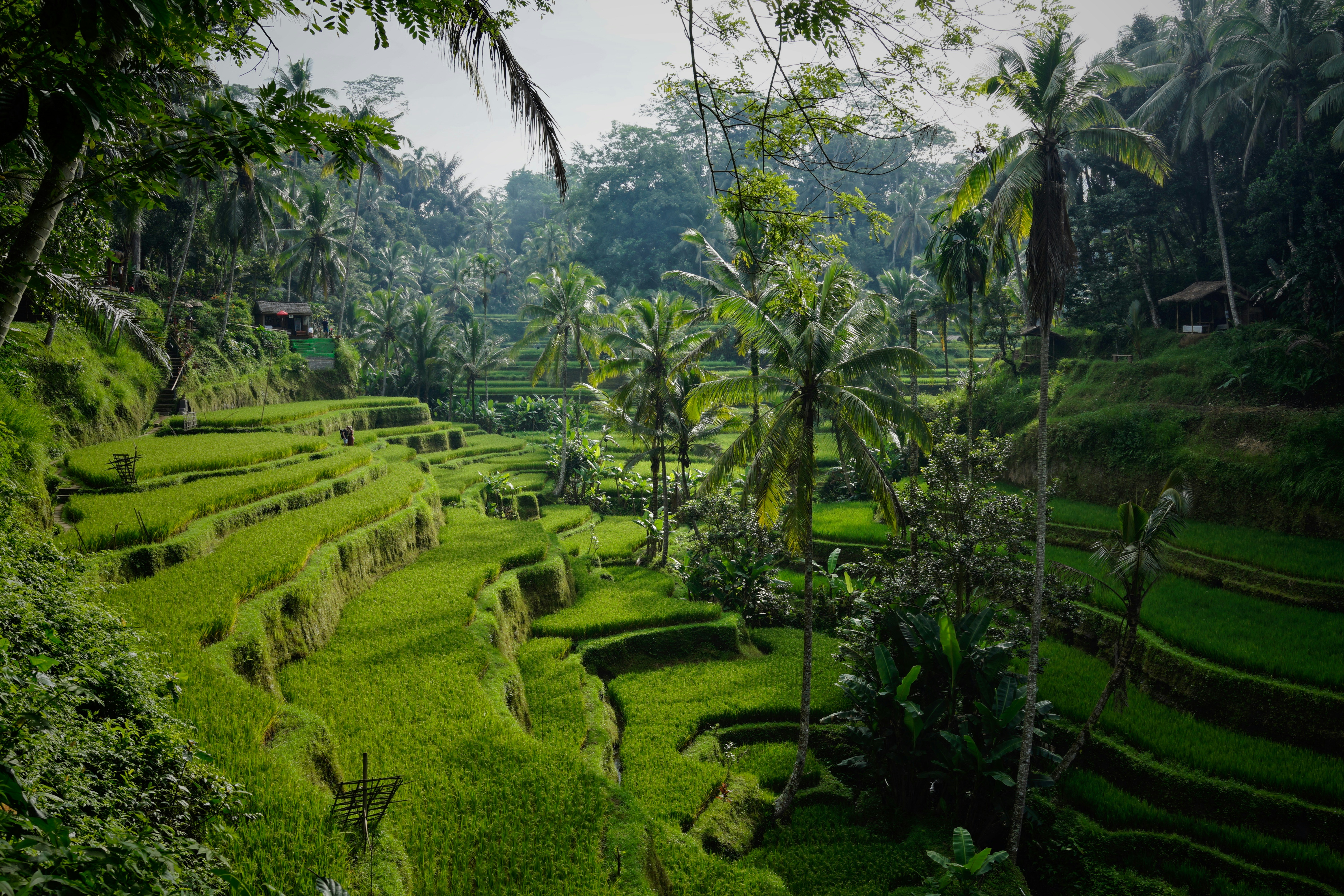
Batuan Village & Classical Art Heritage
Живая колыбель классической балийской живописи, где в 1930-х годах зародился самобытный стиль Батуан с его плотной тушевой графикой, а также дом тысячелетнего храма Пура Пусех (1022 г.).
📜 Исторический контекст и значение
Королевское поселение, основанное в 1022 году правителями династии Вармадева. В 1930-е годы в рамках объединения Пита Маха мастера создали уникальный психологический стиль живописи.
Официальные тарифы на входные билеты
| Категория посетителей | Официальный тариф (IDR) | Est. (USD) | Что включено и примечания |
|---|---|---|---|
| Domestic / WNI (Adult) | IDR 15.000 | $0.84 | Domestic visitor temple ticket & sarong |
| Domestic / WNI (Child) | IDR 10.000 | $0.56 | Domestic child ticket |
| Foreign Tourist (Adult) | IDR 30.000 | $1.69 | Pura Puseh Batuan donation & complimentary sarong loan (Village entry is free) |
| Foreign Tourist (Child) | IDR 15.000 | $0.84 | Foreign child ticket |
Балийский культурный этикет и правила Awig-Awig
Официальные правила деревенского адата и протокол священных мест для Batuan Village & Classical Art Heritage.
Для посещения храма Пура Пусех Батуан обязателен саронг с поясом (предоставляется бесплатно). В семейных галереях приветствуется скромная повседневная одежда. ✓ Для входа обязательны саронг (каин) и желтый пояс.
Обычаи общины Батуан: запрет на фотосъемку священников во время службы без разрешения. Почтительная тишина. Поощряется покупка картин напрямую у художников. ⚠️ Согласно балийскому индуизму, женщинам во время менструации и людям с кровоточащими ранами запрещено входить в святилище.
Полеты дронов разрешены. Полеты дронов строго запрещены над территорией храма Пура Пусех Батуан. Съемка над рисовыми полями допускается с уважением к частной жизни.
Мотоцикл/скутер: IDR 2.000
Легковой автомобиль: IDR 5.000
Transportation & Access Radar
Grab and Gojek accessible.
Distinguish genuine family-workshop galleries from commission-based tourist shops. Authentic Batuan paintings carry signed certificates of authorship. Always negotiate prices directly with the painter.
Радар высоты и доступности
Навигация и транспорт
Архитектурные и визуальные акценты (7 фото)
Batuan Village — Magnificent monumental Candi Bentar split gateway of Pura Puseh Batuan, carved from deep red brick and volcanic andesite stone.
Photo: Fakhri Labib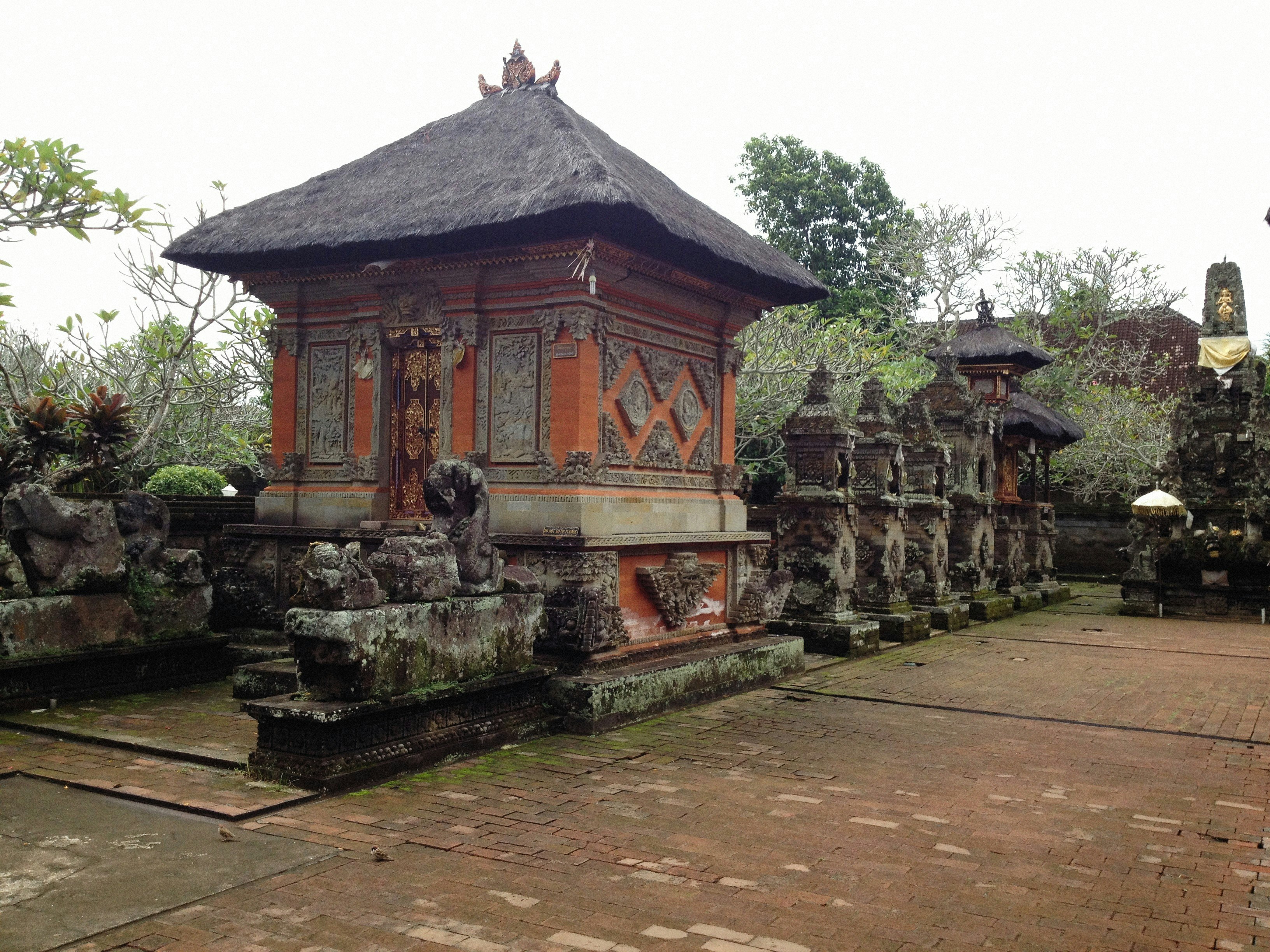
Batuan Village — Ancient stone shrine and multi-tiered pavilion within the sanctified middle courtyard (Madya Mandala) of Pura Puseh.
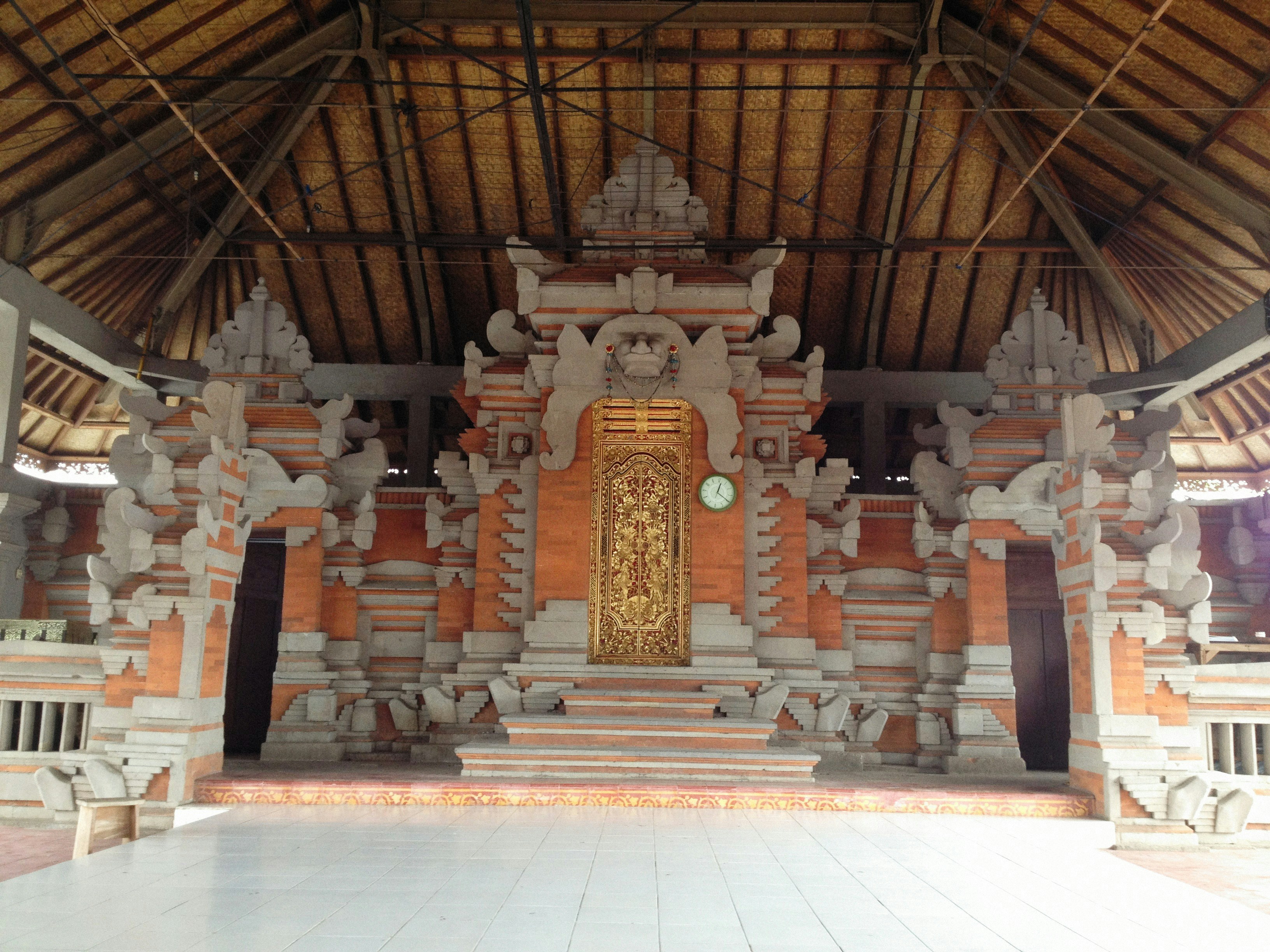
Batuan Village — Grand timber ceiling and carved structural pillars of the communal Bale Gong pavilion at Pura Puseh Batuan.

Batuan Village — Master artist applying meticulous black ink strokes and fine narrative detail onto canvas inside a Batuan painting atelier.
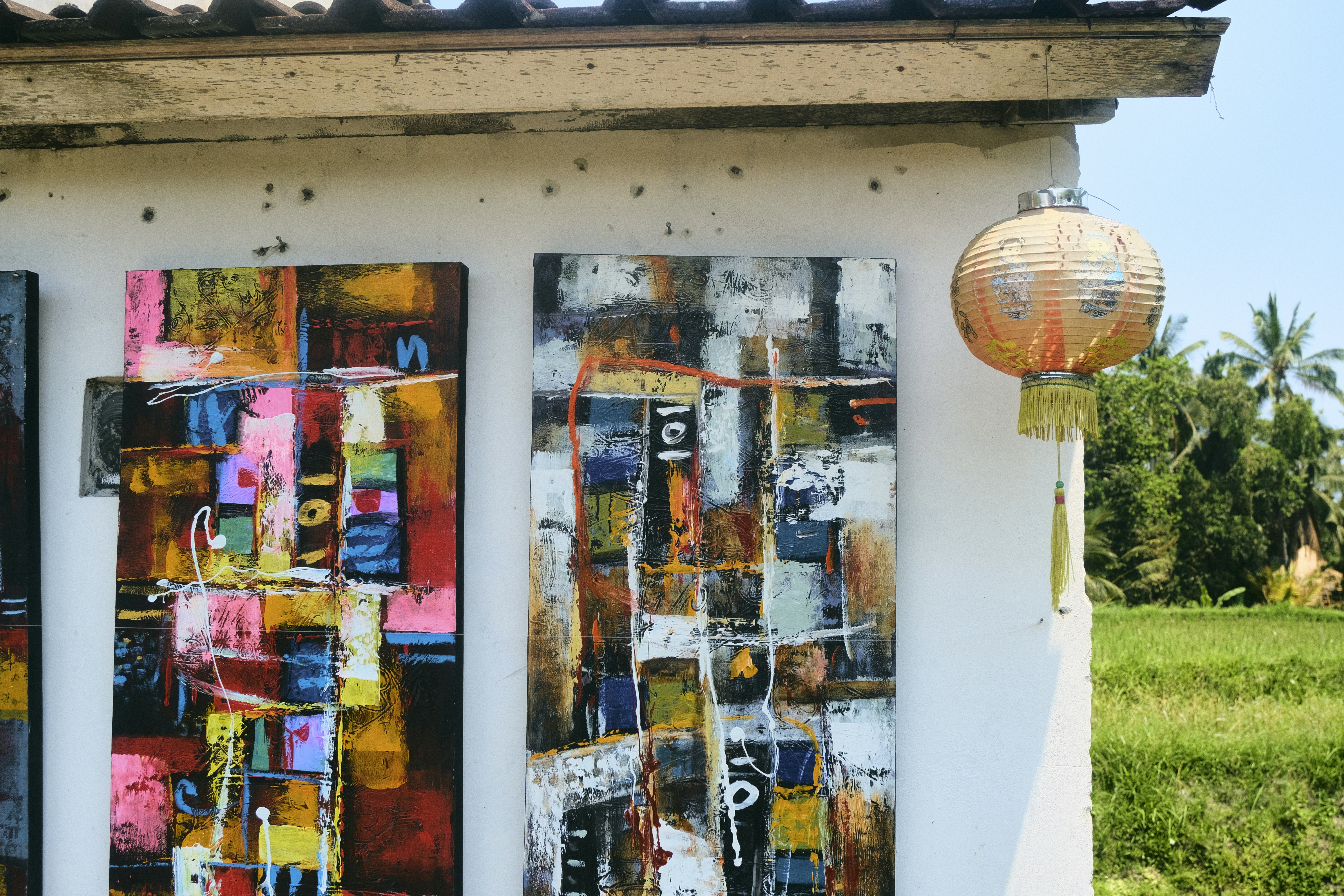
Batuan Village — Intricate classical Balinese narrative paintings displayed in a multi-generational family art gallery on Jalan Raya Batuan.
Культурный, исторический и архитектурный гид
Comprehensive Cultural Guide: Batuan Village & Classical Art Heritage
1. Comprehensive Overview & Cultural Significance
Batuan Village stands as an unshakeable citadel of classical Balinese fine art, royal history, and spiritual devotion. Situated in the heart of Gianyar Regency, just a short drive south of Ubud, Batuan is celebrated internationally as the birthplace and guardian of the world-famous "Batuan Painting Style"—an extraordinarily intricate, intellectually rigorous school of narrative painting that has fascinated art historians, museum curators, and collectors across the globe for nearly a century. Unlike other regions of Bali that adapted their artistic output to satisfy commercial decorative trends, the master painters of Batuan have tenaciously preserved their complex, introspective, and highly stylized visual language.
At the core of Batuan's identity is its millennium-long history as a chartered royal sanctuary. Established in 1022 CE by the Warmadewa Dynasty, the village has maintained an unbroken chain of artistic guilds (sekehe) encompassing stone sculpture, gamelan orchestration, classical court theater (Gambuh), and manuscript illustration (lontar). While tourists often visit Batuan primarily to marvel at the magnificent stone reliefs and ancient relics of Pura Puseh Batuan, those who linger to explore the village's quiet residential lanes discover an intimate, thriving artistic civilization where art is not a commercial product, but a sacred, hereditary devotion passed faithfully from generation to generation.
Crucially, Batuan's cultural sovereignty is maintained through the disciplined customary governance of Desa Adat Batuan. The community actively supports youth art apprenticeships, protects village temple treasures from illicit antiquities trafficking, and ensures that the economic fruits of cultural tourism directly empower native artist families. For travelers seeking an authentic encounter with the profound intellectual and spiritual depths of Balinese fine art, Batuan is an unmissable destination.
2. Exact Geographic Positioning & Micro-Terrain
Batuan is located at coordinates -8.5456° S latitude, 115.2789° E longitude, occupying a fertile river terrace in Kecamatan Sukawati, Gianyar Regency. Positioned at an elevation of approximately 120 metres above sea level, the village enjoys a mild, tropical lowland climate tempered by cooling breezes that flow down from the central volcanic highlands toward the southern coast.
Geographically, Batuan straddles the primary north-south cultural corridor connecting Denpasar to central Ubud along Jalan Raya Batuan. The village is bounded by lush, terraced rice paddies irrigated by ancient subak channels and framed by dense river gorges formed by the Petanu and Oos rivers. The village layout follows the traditional Balinese linear road village pattern, with the monumental Pura Puseh temple commanding the central crossroads and family residential compounds extending along shaded, stone-walled lanes (gang).
The physical difficulty level for visiting Batuan is classified as EASY. The village paths, temple courtyards, and family art galleries are completely flat, paved, and easily navigable on foot. Strollers and wheelchairs can access the outer and middle courtyards of Pura Puseh Batuan and the ground-floor showrooms of family painting studios. The main village road features broad parking aprons, making arrival and departure exceptionally convenient.
3. Mythological Genesis, Royal Charters & Ancient Relics
The historical foundations of Batuan are commemorated in one of Bali's most famous epigraphic records: the Prasasti Batur (Batuan Inscription), issued in the year 944 Saka (1022 CE). The inscription records an imperial decree issued by King Marakata Pangkaja Stanattunggadewa, brother of the celebrated King Airlangga of East Java. The edict granted Batuan autonomous freeholder status (sima), mandating that the villagers maintain religious ceremonies at the local temple and preserve peace throughout the kingdom's central trade routes. In exchange, the King granted the community sweeping tax exemptions and judicial independence.
The spiritual life of Batuan is anchored in the continuous balance between the forces of creation (Dharma) and destruction (Adharma). In the esoteric folklore of the village, Batuan's painters are believed to be endowed with Taksu—a divine spiritual charisma bestowed by Saraswati (goddess of knowledge and arts) and Lord Shiva. A painter does not simply depict an imaginative scene; they act as a spiritual medium who visualizes the unseen, metaphysical world (niskala)—depicting demons (bhuta kala), ancestral spirits, witches (leyak), and celestial deities in dense, dynamic compositions that harmonize cosmic disorder.
Within the precincts of Pura Puseh Batuan, an extraordinary collection of ancient stone sculptures dating from the 10th to 14th centuries CE confirms the village's deep antiquity. These relics include ancient stone linga-yoni emblems symbolizing universal fertility, weathered statues of Ganesha the remover of obstacles, and archaic anthropomorphic figures carved in a style closely related to East Javanese Singhasari and Majapahit court art. Local devotees revere these ancient stones not merely as historical artifacts, but as living, spiritually active repositories of ancestral energy that receive daily offerings of woven palm leaves and fragrant incense.
4. The 1930s Art Renaissance: The Birth of the Batuan Style
Prior to the 1930s, Balinese painting was almost exclusively liturgical: flat, two-dimensional narrative illustrations painted on handwoven cotton cloth (kain ider-ider) or bark paper (ulang) using natural pigments, depicting scenes from the Hindu epics (Mahabharata and Ramayana) for temple decoration. In 1936, visionary European artist-intellectuals Walter Spies and Rudolf Bonnet established the Pita Maha (Great Foundation) in Ubud, encouraging local Balinese artisans to experiment with secular themes, modern Western media (tempera paints, Chinese ink, and imported paper), and individualized artistic expression.
While artists in Ubud embraced Spies's romantic, light-infused visions of idyllic rural life, the master painters of Batuan—led by brilliant luminaries such as Ida Bagus Made Togog, Ida Bagus Made Jatisura, and I Ngendon—forged a radically different, fiercely original artistic path. They created what is now celebrated worldwide as the Batuan School of Painting:
- Extreme Density & Horror Vacui: Batuan paintings feature virtually no empty space (horror vacui). Every square millimetre of the canvas is meticulously filled with microscopic, overlapping detail—foliage, spirit faces in tree trunks, domestic animals, and ceremonial processions.
- No Horizon or Sky: Traditional Batuan compositions possess no conventional European perspective or distant sky. Instead, the canvas uses isometric or stacked perspective, viewing scenes simultaneously from high and low vantage points, immersing the viewer in an all-encompassing, dreamlike cultural landscape.
- Layered Grayscale & Luminous Tempera: A classical Batuan painting requires weeks of painstaking labor. The artist begins with a fine ink outline, followed by dozens of delicate washes of diluted black Chinese ink (ngabur) to build deep volumetric shadow, finished with layers of opaque gouache or tempera pigment.
- Socio-Political Commentary & Supernatural Intrigue: Batuan painters uniquely infused their canvases with biting social humor, depicting the arrival of awkward Western tourists, traditional witch doctors (balian) healing possessed villagers, and whimsical encounters between modern airplanes and flying mythological monsters.
Today, classical Batuan masterpieces hang in the permanent collections of the world's most prestigious institutions, including the Tropenmuseum in Amsterdam, the National Gallery of Australia in Canberra, and the Agung Rai Museum of Art (ARMA) in Ubud.
5. Architectural Anatomy & Temple Treasures
Pura Puseh Batuan represents one of the most structurally intact, architecturally magnificent classical temple compounds in Indonesia. Key architectural elements include:
- Candi Bentar (Split Gateway): An immense, razor-sharp split portal carved from deep red terracotta brick and charcoal-grey volcanic andesite stone. Its towering symmetrical wings symbolize Mount Meru, cleansing devotees of worldly attachments as they step across the threshold.
- Archaeological Gallery Pavilion: An open-sided bale in the middle courtyard that preserves rare, pre-Majapahit stone sarcophagi, bas-relief tablets, and statues of mythical beasts excavated from nearby sacred springs, confirming continuous ritual occupation for over one thousand years.
- Kori Agung & Bhoma Carvings: The closed inner gateway is crowned by an astonishingly intricate carving of Bhoma, whose wild, bulging eyes, fanged maw, and serpentine floral tendrils (patra punggel) repel malevolent cosmic entities from breaching the sacred inner courtyard.
- Multi-Tiered Meru Shrines: The inner sanctum shelters elegant 5-tiered and 7-tiered Meru towers thatched with dense black sugar palm fiber (ijuk), dedicated to the ancestral deities of Mount Agung and Mount Batur.
- Village Art Studios: Along Jalan Raya Batuan and surrounding alleys, traditional family compounds feature open-air bale pavilions where visitors can sit alongside master painters and watch the delicate, microscopic brushwork unfold firsthand.
6. Essential Etiquette, Awig-Awig & Cultural Bylaws
Visitors to Batuan Village and Pura Puseh Batuan are expected to observe standard Balinese customary bylaws (awig-awig):
- Sacred Temple Dress Code: Modesty is strictly enforced at Pura Puseh Batuan. All visitors, regardless of gender, must wear a traditional Balinese sarong (kamen) and waist sash (selendang). Complimentary sarongs are provided at the official temple ticket counter. Shoulders and knees must be fully covered; sleeveless tops, tank tops, and short shorts are strictly prohibited within the temple precinct.
- Purity & Menstruation Taboo (Cuntaka): In accordance with ancient Hindu ritual purity laws, women who are actively menstruating, individuals with unhealed bleeding wounds, and persons in a period of family mourning are respectfully requested to refrain from entering the inner sanctified courtyards (Utama Mandala).
- Artisan Workshop Etiquette: Visitors are warmly welcomed into private family home galleries throughout Batuan. Always ask polite permission before entering family courtyard studios, and refrain from touching wet, unvarnished paintings or fragile paper manuscripts. Photography of artists at work is generally welcomed, but ask permission beforehand.
- Ceremonial Boundaries: When visiting during a religious festival (odalan), never stand directly in front of praying devotees, do not walk between officiating priests (pemangku) and the shrine altars, and never climb onto sacred stone walls or raised pavilions for photographic vantage points.
- Drone Regulations: Flying recreational drones directly over Pura Puseh Batuan is prohibited to preserve the dignity of religious ceremonies. Drone flights over surrounding rice paddies are permitted with care for residential privacy.
7. Practical Logistics & Visiting Circuits
Batuan is exceptionally convenient to visit as part of a classic cultural excursion:
- Optimal Time of Day: The ideal window to visit is 09:00 to 12:00 or 14:30 to 17:00. Arriving in the morning allows you to explore Pura Puseh Batuan in comfortable, cooler temperatures before tour buses arrive, followed by relaxed visits to local family art galleries during peak daylight when painters are actively working at their benches.
- Transportation & Accessibility: Batuan is situated directly along the main paved highway, 15 minutes south of central Ubud and 35 minutes north of Denpasar/Sanur. Grab and Gojek drivers operate freely with reliable drop-off and pickup availability. Large official parking areas are situated immediately opposite Pura Puseh Batuan.
- Cultural Tour Combination: Batuan forms the natural anchor of a renowned Gianyar artisan circuit: combine Batuan Village with the Celuk gold and silver village (2 km south), Mas wood carving village (3 km north), and the bustling Sukawati Traditional Art Market (2 km southeast) for a comprehensive artisan immersion.
- Time Needed: Allow 90 to 120 minutes for a thorough visit—45 minutes to appreciate the architecture and archaeological relics of Pura Puseh Batuan, and 45 to 60 minutes to stroll the village lanes and visit authentic family painting studios.
8. Entry Tariffs & Transparent Inclusions
Batuan operates with transparent, standardized community-managed tariffs:
- Pura Puseh Batuan Temple Admission Donation:
- Foreign Adult Entry: IDR 15,000 (Includes temple admission and complimentary loan of a traditional Balinese sarong and waist sash)
- Foreign Child Entry (Ages 5–11): IDR 10,000
- Domestic Indonesian Adult: IDR 10,000
- Domestic Indonesian Child: IDR 5,000
- Village Walking & Gallery Visits: IDR 0 (Free Public Access). Exploring the village lanes, visiting family painting studios, and observing artisans at work is completely free of charge.
- Vehicle Parking Fees:
- Scooters and Motorcycles: IDR 2,000 per entry.
- Cars and Tour Vans: IDR 5,000 per entry.
- Parking fees directly support village security (pecalang), waste management, and temple maintenance.
9. Sustainable Tourism & Art Patronage Ethics
Supporting Batuan's living artistic heritage requires mindful, ethical engagement from travelers:
- Buy Directly from Family Artist Studios: To support authentic village livelihoods, purchase artwork directly from the artists in their home compounds rather than commercial roadside souvenir superstores. Buying directly ensures that 100% of the purchase price remains with the painter's family, sustaining multi-generational apprenticeships.
- Distinguish Authentic Originals from Mass Prints: Genuine Batuan paintings are meticulously hand-drawn and shaded over weeks or months on archival canvas or paper, carrying the signature and studio seal of the artist. Inquire about the narrative story depicted in the painting—authentic Batuan masters take great pride in explaining the complex mythological or folk allegories woven into their work.
- Support Youth Art Apprenticeships: Several prominent family compounds in Batuan operate informal weekend art academies where master painters teach local village children traditional drawing and ink-shading techniques free of charge. Inquiring about these community programs and leaving a modest contribution directly bolsters the preservation of this UNESCO-recognized art form.
- Zero-Waste Village Stewardship: Keep Batuan pristine by carrying a reusable water bottle and properly disposing of all waste in designated bins. Never discard plastic bottles or snack wrappers near the sacred river ravines or ancient temple shrines.
Royal Inscriptions of 1022 CE, Sacred Sages & the Living Art Spirit of Batuan
Batuan, situated in the fertile central plains of Gianyar Regency just six kilometres south of Ubud, is one of Bali's most historically distinguished cultural sanctuaria. Epigraphic evidence engraved upon ancient copper-plate charters (Prasasti Batur) definitively dates the formal founding of Desa Batuan to 1022 CE (944 Saka) during the reign of King Sri Dharmawangsa Wardhana Marakata Pangkaja Stanattunggadewa of the illustrious Warmadewa Dynasty. The charter established Batuan as an independent royal free-holding (sima), exempting the settlement from royal taxes in exchange for perpetual spiritual service maintaining the sacred state temples and upholding the artistic and philosophical traditions of Balinese Hinduism.
According to sacred village lore, the name Batuan derives from Batu-An, meaning "the place of rock" or "strong foundation," symbolizing both the unshakeable spiritual integrity of its priestly custodians and the literal stone-carving mastery that has flourished here for a millennium. Long before modern tourism arrived, Batuan was celebrated across the island as an aristocratic nursery of sacred arts: its master carvers sculpted the royal gateways of Gianyar, its high priests (pedanda) were renowned masters of sacred Sanskrit chant and wayang kulit shadow puppetry, and its dancers performed the sacred Gambuh—the oldest, most complex form of Balinese court dance-drama, preserving ancient Javanese-Majapahit court etiquette.
In the 1930s, Batuan became the epicentre of a revolutionary artistic renaissance. When European painters Walter Spies and Rudolf Bonnet arrived in Bali and founded the Pita Maha artists' collective, they discovered in Batuan a fiercely independent community of painters whose vision remained completely distinct from the idyllic, light-filled tropical romanticism emerging in Ubud. The artists of Batuan refused to paint sanitized, pastoral postcard landscapes; instead, they pioneered a dense, dramatic, and darkly psychological narrative style of tempera-and-ink painting that explored the complex, supernatural friction between human life, demonic forces, and divine intervention. Today, Batuan stands as a living cultural powerhouse where nearly every household compound remains an active studio of painting, wood carving, or sacred performance.
Architectural Grandeur of Pura Puseh Batuan, Classical Gates & Painting Studios
The architectural jewel of the village is Pura Puseh Batuan, an immense, breathtaking temple complex founded in 1022 CE that serves as the supreme exemplar of classical Balinese religious architecture. The temple compound is oriented along the sacred Kaja-Kelod axis, meticulously structured according to the canonical Tri Mandala spatial division:
- Nista Mandala (Outer Courtyard): Accessed from the village road, featuring broad paved gathering terraces, ancient banyan trees (waringin), and an open-sided Bale Kulkul drum tower crafted from carved red brick and volcanic andesite stone.
- Madya Mandala (Middle Courtyard): Entered through an imposing split gateway (Candi Bentar) whose towering vertical wings represent Mount Meru split into two cosmic halves. Here sit the Bale Gong gamelan pavilion and an extraordinary open pavilion housing an ancient archaeological gallery of 11th-century stone statues, anthropomorphic sarcophagi, and weathered Hindu-Buddhist guardian figures excavated from the surrounding river ravines.
- Utama Mandala (Inner Sanctum): Entered through the monumental Kori Agung—a soaring closed portal adorned with an immense, terrifying stone face of Bhoma, guardian spirit of the forest, flanked by dynamic guardian statues (dwarapala). Within this inner sanctum rise multi-tiered meru towers thatched with black sugar palm fibers (ijuk), intricately carved stone shrines (gedong), and a magnificent Padmasana lotus throne dedicated to Sang Hyang Widhi Wasa.
Beyond the temple, the residential architecture of Batuan reflects its deeply rooted guild identity. Traditional family compounds (pekarangan) feature open-sided work pavilions (bale delod and bale dangin) that double as communal painting studios. Here, multiple generations of painters—grandfathers, fathers, and children—sit side by side on woven straw mats, grinding natural mineral pigments, stretching raw cotton cloth onto wooden boards, and applying thousands of microscopic ink strokes with homemade bamboo-handled brushes. The walls of these village compounds are lined with finished canvases, transforming the village lanes into an authentic, decentralized living gallery of world-class fine art.
Frequently Asked Questions & Local Logistics
Key logistical insights, official tariffs, and customary etiquette for Batuan Village & Classical Art Heritage.
Top Curated Stays Near Batuan Village & Classical Art Heritage
Проверенные отели в радиусе 8 км, отсортированные по отзывам и близости.

TheWakanda Resort A Pramana experience

Gdas Bali Health and Wellness Resort

Villa Mirah Ubud

Bhanuswari Resort & Spa
Кураторские экскурсии рядом с Batuan Village & Classical Art Heritage
Curated guided tours and local adventures operated within easy transit of this landmark.

Mount Batur Sunrise Summit Trek with Hot Springs
Pre-dawn summit ascent across volcanic basalt ridges to watch the sunrise above Lake Batur and Mount Rinjani, followed by restorative thermal hot springs.

Ayung River Class II-III White Water Rafting
Thrilling 11-kilometer descent through the pristine rainforest gorges of Ubud, skimming past ancient Hindu rock carvings and hidden waterfall cascades.

Ubud Jungle ATV Quad Bike & Gorilla Cave Expedition
Off-road quad biking across rice fields, bamboo forests, muddy riverbeds, and through the dramatic hollow mouth of the Gorilla Cave.