


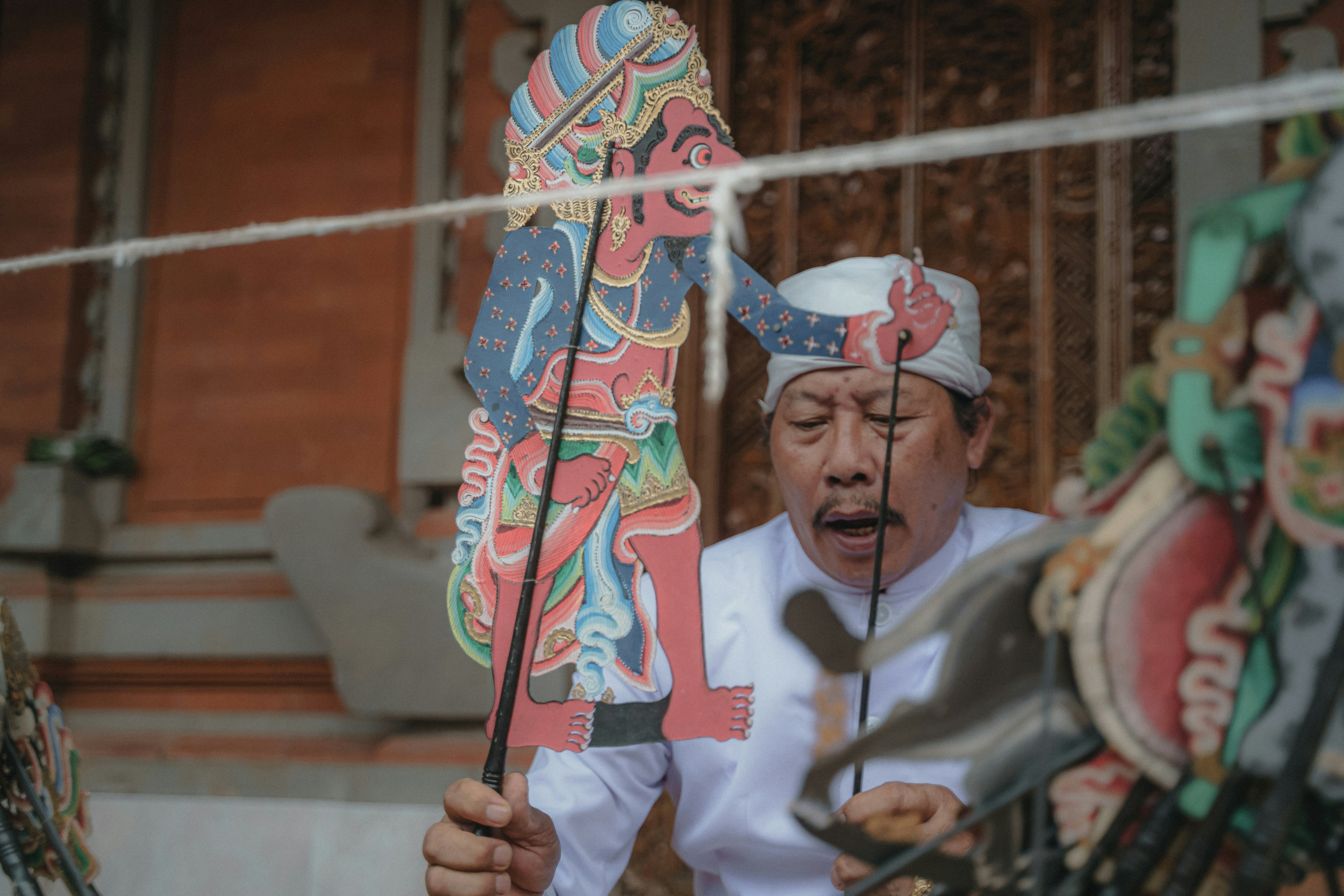
Kamasan Classical Wayang Painting Village
Историческая родина классической балийской живописи стиля Ваянг, признанной ЮНЕСКО, где со времен королевства Гельгель эпические сюжеты пишут натуральными минеральными пигментами на холсте.
📜 Исторический контекст и значение
Потомственная королевская гильдия художников при дворе правителей Клунгкунга, создавшая в 1686 году шедевральные потолочные росписи королевского зала суда Керта Госа.
Официальные тарифы на входные билеты
| Категория посетителей | Официальный тариф (IDR) | Est. (USD) | Что включено и примечания |
|---|---|---|---|
| Domestic / WNI (Adult) | IDR 0 | $0.00 | Free |
| Domestic / WNI (Child) | IDR 0 | $0.00 | Free |
| Foreign Tourist (Adult) | IDR 0 | $0.00 | Free village entry & open Wayang painting atelier visits |
| Foreign Tourist (Child) | IDR 0 | $0.00 | Free |
Балийский культурный этикет и правила Awig-Awig
Официальные правила деревенского адата и протокол священных мест для Kamasan Classical Wayang Painting Village.
Скромная одежда для посещения домашних студий. Традиционный саронг обязателен для входа в цеховой храм Пура Пенатаран Санггинг.
Обычаи общины Камасан: защита авторских прав на священные сюжеты Ваянг. Запрет на коммерческое копирование без согласия авторов. Поддержка школ обучения молодежи.
Полеты дронов разрешены. Полеты дронов разрешены над улицами деревни; соблюдайте дистанцию от частных дворов и цеховых храмов.
Мотоцикл/скутер: IDR 2.000
Легковой автомобиль: IDR 5.000
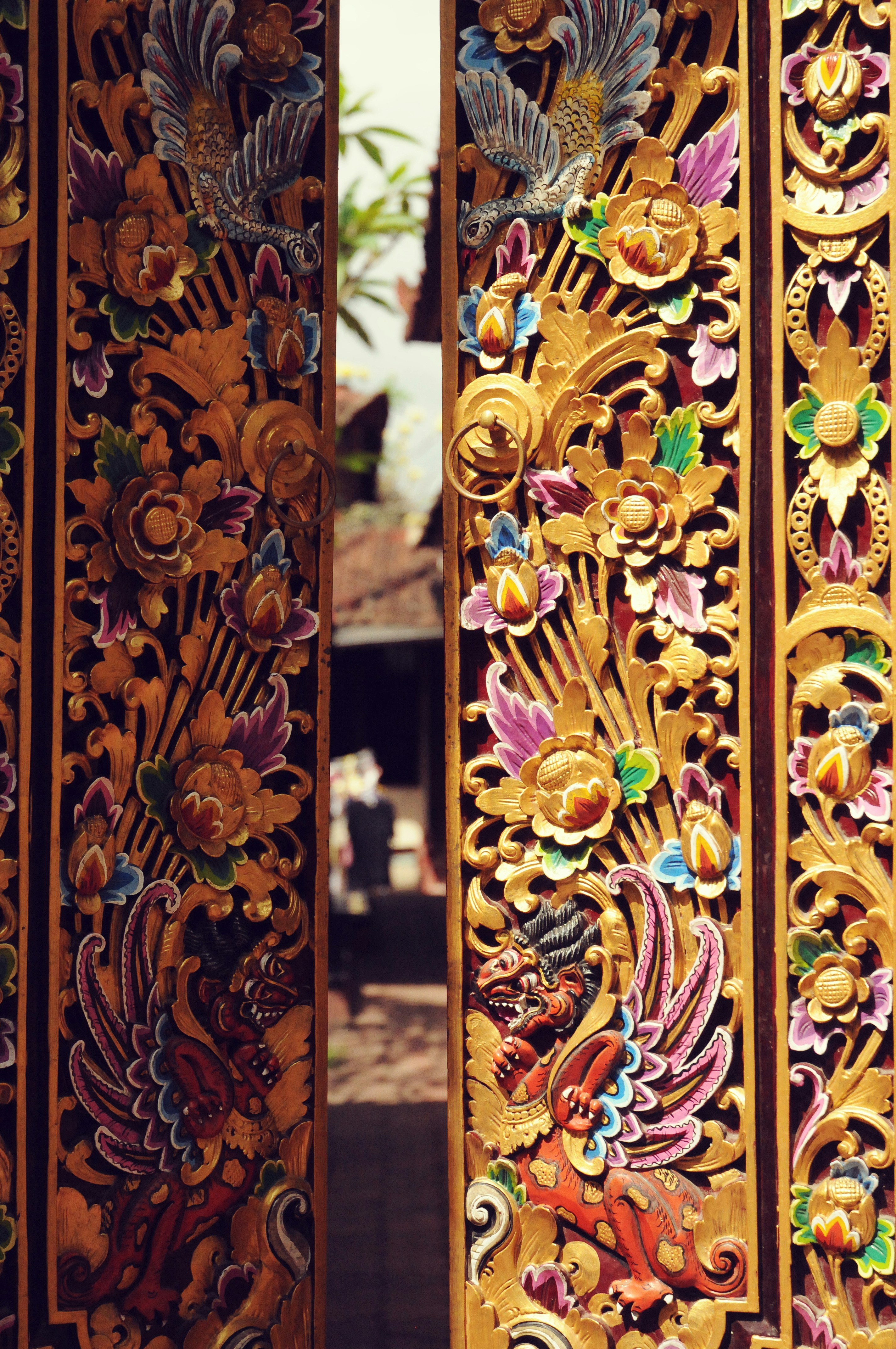
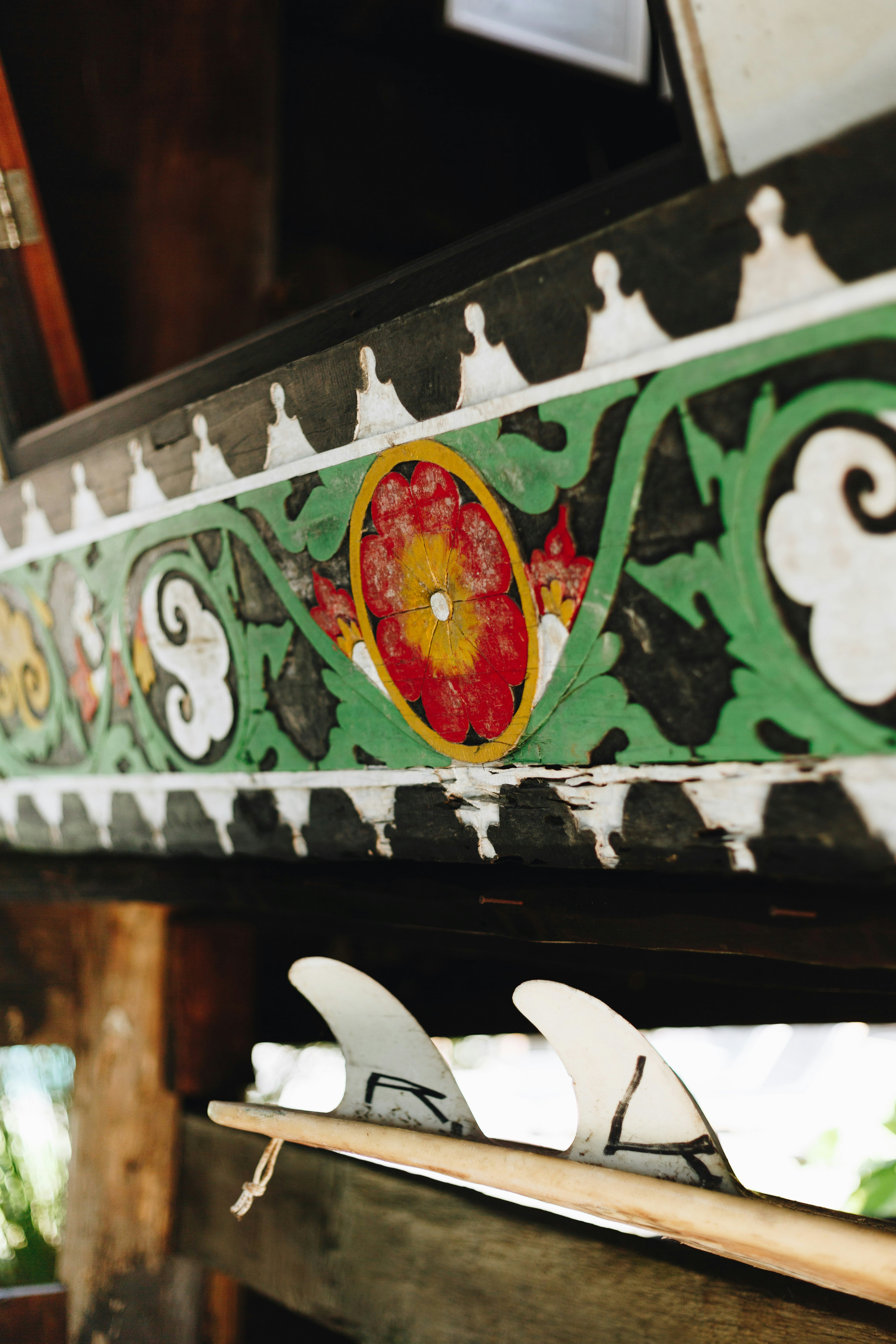
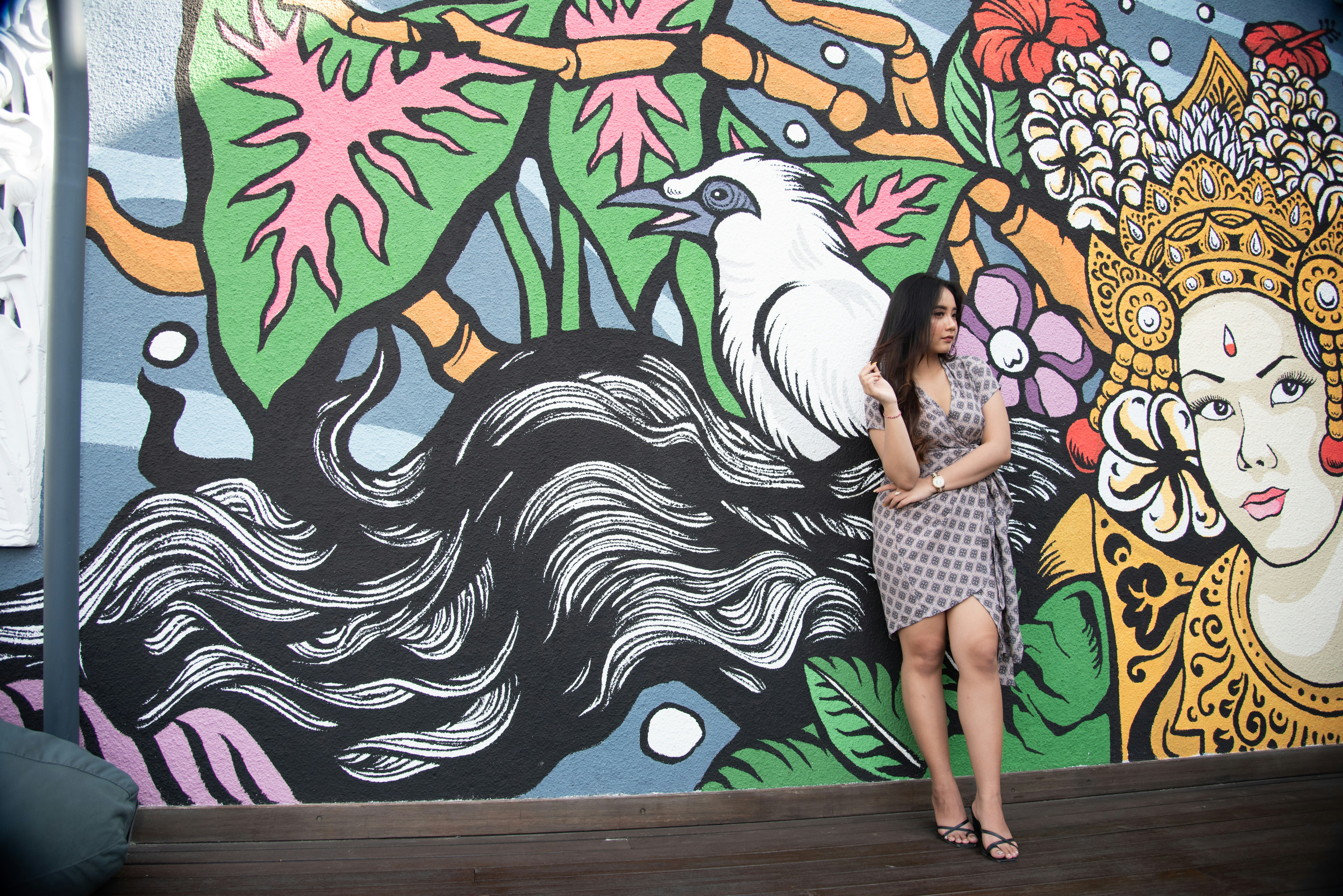
Архитектурные и визуальные акценты (7 фото)
Transportation & Access Radar
Grab accessible from Klungkung. Advance booking from Ubud/Sanur recommended.
Mass-produced prints mimicking Kamasan style are widely sold in tourist markets. Authentic hand-painted works on cloth take days to complete and are signed. Visit family studios and observe the artist at work before purchasing.
Радар высоты и доступности
Навигация и транспорт
Культурный, исторический и архитектурный гид
Comprehensive Cultural Guide: Kamasan Classical Wayang Painting Village
1. Comprehensive Overview & Cultural Significance
Desa Kamasan stands as the supreme living cradle of classical Balinese visual culture. Situated in the fertile coastal lowlands of Klungkung Regency, four kilometres south of the royal capital of Semarapura, Kamasan is celebrated globally as the birthplace and sole surviving sanctuary of the Gaya Wayang Kamasan—a UNESCO-recognized tradition of narrative flat-perspective painting that represents the direct, unbroken heir to the ancient 14th-century court arts of the East Javanese Majapahit Empire.
For over four centuries, the master painters of Kamasan served as the official royal guild (Sangging) to the supreme kings of Bali: the Dewa Agung of Gelgel and Klungkung. Their magnificent narrative scrolls on bark paper and cotton cloth adorned royal palaces, decorated the ceilings of sacred temples, and illustrated moral law at the royal court of justice. The ceiling paintings of Klungkung's famous Kertha Gosa Hall of Justice—viewed by hundreds of thousands of international travelers each year—are the historic masterwork of Kamasan painters.
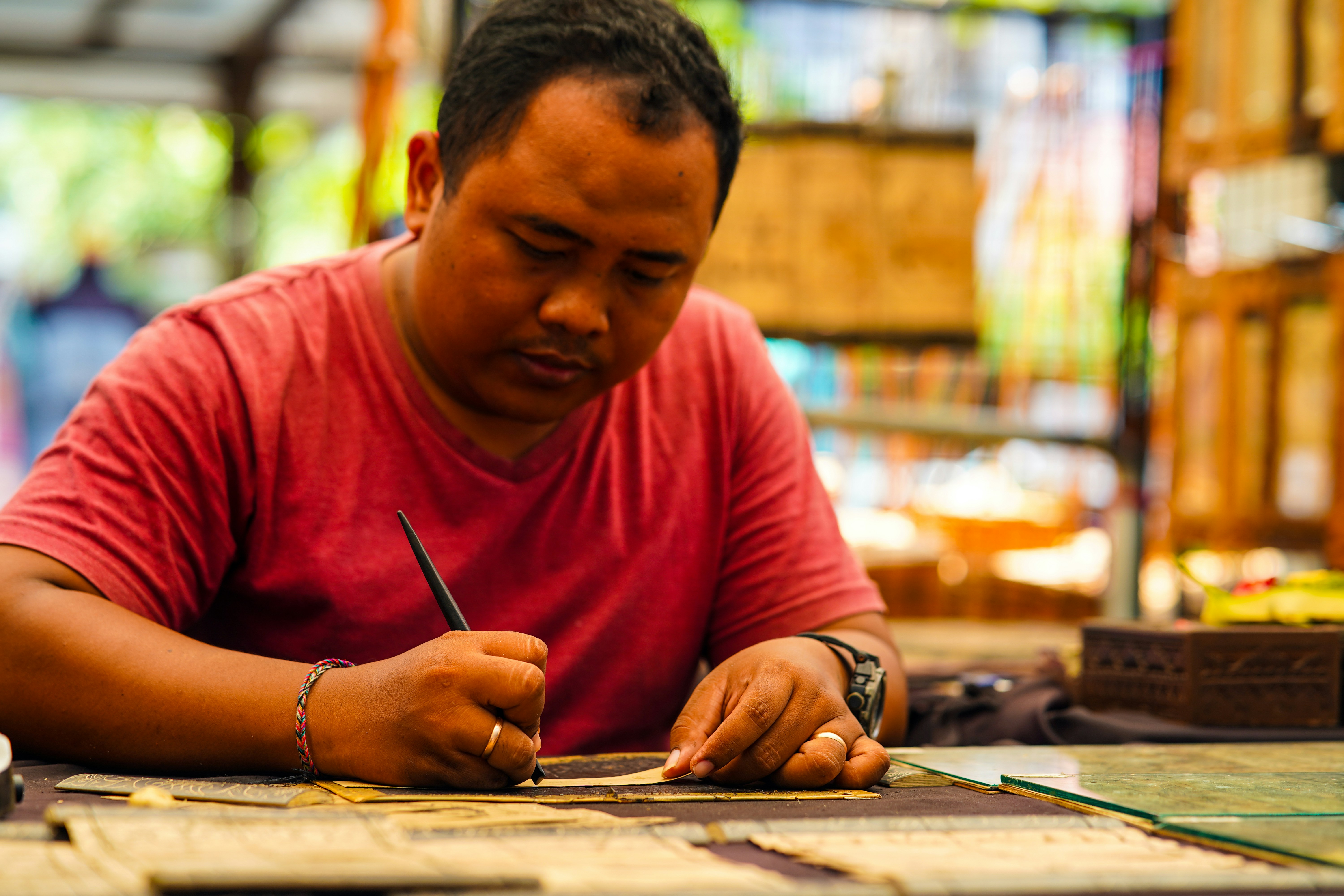
Unlike contemporary art movements that encourage individualistic abstraction, Kamasan painting is an extraordinary collective discipline governed by sacred iconography, natural mineral chemistry, and multi-generational devotion. In the peaceful family compounds of Banjar Sangging Kamasan, master artists continue to grind mineral stones, boil tree-resin binders, and sketch ancient epic narratives with hand-carved bamboo pens, preserving a classical civilization's vision of cosmic order with breathtaking fidelity.
2. Exact Geographic Positioning & Micro-Terrain
Kamasan is located at coordinates -8.5389° S latitude, 115.4156° E longitude, situated within Kecamatan Klungkung, Klungkung Regency. Positioned at an elevation of approximately 80 metres above sea level, the village rests upon the flat, sun-drenched alluvial plain south of Semarapura, bordered by the sacred waters of the Unda River to the east.
The village is easily accessed from Semarapura via Jalan Raya Gelgel and Jalan Raya Kamasan. The physical layout reflects an authentic, undisturbed Balinese royal guild settlement: quiet, tree-lined stone lanes (gang) wind between traditional walled residential compounds, free from heavy vehicle traffic and commercial billboard clutter. The surrounding countryside consists of lush irrigated rice fields (subak) and coconut groves stretching toward the black sand beaches of the Klungkung coast.
The physical difficulty rating for exploring Kamasan is classified as EASY. The village is entirely level and paved, making walking between home studios comfortable and accessible for visitors of all physical capabilities. Wheelchairs and strollers can easily navigate the quiet village lanes and ground-floor family workshops. Ample parking is available near the village community hall (Wantilan).
3. Mythological Genesis, Royal Gelgel & the Scribes of Dharma
The cultural inception of Kamasan is rooted in the golden age of Balinese imperial history. In the 16th century CE, King Dalem Waturenggong established his supreme court at Gelgel, just one kilometre south of Kamasan. A visionary monarch and passionate patron of the arts, the King recognized that to unify the diverse kingdoms of Bali and the surrounding islands, he needed a sacred visual medium that could communicate the complex spiritual truths of the Vedas and the Hindu epics to the entire population.
The King established Desa Kamasan as a specialized royal sanctuary, populating it with master scribes, shadow puppeteers (dalang), and visual artists granted the hereditary title Sangging. These master painters were tasked with a sacred cosmic duty: visualizing Dharma (the eternal moral order). A Kamasan painting was designed to function as an open-air philosophical textbook. When hung along the eaves of a temple pavilion during an anniversary ceremony (odalan), villagers would walk along the narrative sequence, learning the consequences of karma, the virtues of marital fidelity, the courage of warrior heroes, and the inevitability of divine justice.
The most famous narrative cycle illustrated by Kamasan masters is the Bima Swarga, derived from the Mahabharata. It chronicles the heroic journey of Bima, the mighty second Pandava brother, who descends into the fiery depths of the underworld (Yamani) to rescue the souls of his deceased parents from demonic torments. Bima defeats the demon guardians, purifies his parents' souls in holy water, and elevates them to the celestial realms (Swarga). This narrative served as the visual foundation for the ceiling paintings of the Kertha Gosa, reminding citizens and royal judges alike that divine justice is absolute and inescapable.
4. The Masterpiece of Kertha Gosa & the Resilience of the Guild
In the late 17th century, following the relocation of the royal capital from Gelgel to Klungkung, King Dewa Agung Gusti Sideman commissioned Kamasan's master painters to decorate the ceilings of the royal judicial compound: the Kertha Gosa and the Bale Kambang. Thousands of painted bark-cloth panels were mounted overhead in tiered concentric rings, creating one of the greatest ceiling masterworks in Asian art history.
In 1908, tragedy struck when Dutch colonial forces attacked Klungkung. The royal palace was destroyed during the heroic, tragic royal sacrifice (Puputan Klungkung). Yet, miraculously, the Kertha Gosa pavilions survived. Even more remarkably, during the catastrophic 1963 eruption of Mount Agung, which buried large portions of eastern Bali in hot volcanic ash and pyroclastic flows, the ceiling paintings were sheltered from destruction. In the decades that followed, the master painters of Kamasan—led by legendary figures such as Pan Seken, Nyoman Mandra, and Mangku Mura—were commissioned by the Indonesian government to undertake meticulous, authentic restorations of the Kertha Gosa ceilings, using the exact natural mineral pigments and bamboo techniques of their ancestors.
Today, the living tradition is preserved through the dedication of elder masters like I Made Kanta and community initiatives such as the Sanggar Lukis Tradisional Kamasan, which ensures that young village boys and girls learn the ancient iconography and pigment-grinding techniques from early childhood.
5. Architectural Anatomy & Master Materials Science
Walking through Desa Kamasan offers an extraordinary masterclass in classical material science and spatial aesthetics:
- The Classical Visual Grammar: Every figure in a Kamasan painting is depicted in a strict three-quarters profile with eyes rendered in full frontal view, echoing the dynamic silhouette of Wayang Kulit shadow puppets. The body posture reveals moral character: refined characters (halus) have slender limbs and downward-tilted gazes; fierce demons (kasar) have wide, squat stances and brandish curved clubs (gada).
- The Multi-Step Artistic Process:
- Ngorten: The master artist sketches the initial composition onto the prepared cloth using a slender, hand-carved bamboo stylus (krupuk) dipped in charcoal ink.
- Ngwarnin: Female artisans fill in the base colors using natural mineral and botanical washes, carefully preserving the delicate outlines.
- Nyawi: The master returns with a fine brush to redraw every contour in jet-black lamp soot ink, defining fingers, jewelry, and flowing robes.
- Sigar: Delicate shading washes are applied along the inner contours to create subtle, sculptural volume and three-dimensional life.
6. Essential Etiquette, Awig-Awig & Studio Guidelines
Visiting the painting workshops of Kamasan is a rare cultural privilege that requires simple mindfulness:
- Workshop Respect: Visitors are warmly welcomed into family studios. Always ask polite permission before photographing artists actively working on canvases. Do not touch wet mineral-pigment surfaces, and avoid stepping over canvases resting on the floor.
- Support Living Masters Directly: Kamasan paintings sold in luxury art galleries in Seminyak or Ubud often carry substantial retail markups. By purchasing directly from the artist's family in Kamasan, you guarantee authentic provenance and ensure that 100% of your patronage directly sustains the artist's family household and apprentices.
- Temple Etiquette: Modest dress (sarong and waist sash) is required if visiting any of Kamasan's village temples, including Pura Penataran Sangging.
- Drone Filming: Drones may be operated over village roads and open farmland; avoid flying directly over residential family courtyards without permission.
7. Practical Logistics & Klungkung Heritage Circuit
Kamasan is an essential highlight of any cultural tour of eastern Bali:
- Optimal Time of Day: Visit between 09:00 and 15:00. Daylight hours provide optimal illumination in the open-air family ateliers, when artists are actively painting.
- Transportation & Accessibility: Located 45 minutes east of Ubud and 50 minutes northeast of Sanur via the Klungkung coastal bypass highway. Grab and Gojek operate from Klungkung town, though booking round-trip private transport is recommended.
- Klungkung Royal Circuit Combination: Pair Kamasan with neighboring historical landmarks:
- Kertha Gosa & Klungkung Royal Palace (3 km north): The historic judicial court featuring the Kamasan ceiling paintings.
- Goa Lawah Bat Cave Temple (7 km southeast): Ancient 11th-century sea temple housing thousands of sacred bats.
- Kusamba Salt-Making Village (6 km southeast): Traditional volcanic black-sand salt pans.
- Time Needed: Allow 60 to 90 minutes to visit several home workshops, watch mineral pigment preparation, and appreciate the epic storytelling traditions.
8. Entry Tariffs & Transparent Inclusions
Kamasan maintains an open, welcoming public access model:
- Village Admission & Studio Entry: IDR 0 (Free Public Access). Exploring the village lanes, entering family compounds, and watching master artists paint carries zero admission charge.
- Vehicle Parking: Free roadside parking throughout the village; nominal community parking fee (IDR 2,000 for scooters; IDR 5,000 for cars) at the village community hall.
- Traditional Painting Workshops: Several home studios offer 2- to 3-hour painting workshops where visitors learn to prepare blacu cloth, mix natural mineral pigments, and paint their own small Wayang character under the personal guidance of a master artist (typically IDR 250,000 to IDR 450,000 per person, including all materials).
9. Safeguarding a Living UNESCO Heritage
The classical Wayang painting of Kamasan is one of humanity's most exquisite and fragile living heritage traditions. Safeguarding its future requires mindful cultural tourism:
- Distinguish Authentic Mineral Paintings from Printed Souvenirs: Authentic Kamasan paintings are created on heavy, seashell-burnished cotton cloth using hand-ground mineral pigments and natural tree gum; they possess an earthy, matte texture and an organic, subtle fragrance. Avoid cheap, mass-printed synthetic copies sold in commercial markets.
- Support Village Art Apprenticeships: Direct patronage of Kamasan artists funds the continuation of informal village painting schools (sanggar), where master painters train local village children in classical mythology and drawing techniques free of charge, ensuring this ancient Majapahit art form thrives for generations to come.
Epigraphic Lineage & the Living Guild Apprenticeship of Banjar Sangging
The enduring artistic vitality of Desa Kamasan is anchored in the hereditary governance of Banjar Sangging, the royal guild quarter established during the Gelgel Dynasty. Unlike secular modern art academies, apprenticeship in Kamasan is an unbroken family sacrament passed down through the bloodline. Children learn to grind natural river stones and burnish unbleached cotton cloth (blacu) using cowrie shells before they are permitted to hold a bamboo pen (krupuk). The master artists instruct pupils in the complex canon of classical Balinese iconography, where every angle of a deity's almond eye, every curve of a royal headdress (gelungan), and every dynamic finger gesture (mudra) communicates precise philosophical allegories regarding human morality and cosmic duty.
Archival Restoration & Global Museum Provenance
In addition to producing sacred narrative scrolls for Balinese temple anniversaries (kain ider-ider and langse), the master painters of Kamasan have served as essential cultural conservators for national and international heritage collections. Following historical seismic disturbances and tropical weathering, Kamasan elders have led delicate restoration campaigns to preserve the historic 18th-century ceiling panels of the Kertha Gosa Hall of Justice, utilizing the exact ancestral mineral pigment formulations documented in ancient palm-leaf manuscripts (lontar). Masterworks from Kamasan's historic lineages grace the permanent collections of the Leiden Museum of Ethnology, the British Museum in London, and the National Gallery of Australia, celebrating a classical Southeast Asian court painting tradition that continues to thrive in its original ancestral home.
Royal Court Painters of Gelgel & Klungkung: The Sacred Wayang Lore of Kamasan
Desa Kamasan, situated in the coastal lowlands of Klungkung Regency four kilometres south of Semarapura, holds an exalted, sacred status as the ancestral cradle and living sanctuary of classical Balinese painting. Known throughout the world as the Gaya Wayang Kamasan (Kamasan Wayang Style), this UNESCO-recognized visual tradition represents the purest surviving continuation of ancient Javanese-Majapahit court art. According to royal chronicles (Babad Dalem), the artistic foundation of Kamasan was established in the 16th century CE during the golden reign of King Dalem Waturenggong of the Gelgel Kingdom—the supreme imperial dynasty that once united Bali, Lombok, and Sumbawa.
The king established Kamasan as an official royal artisan guild settlement (Banjar Sangging), dedicating the master painters to the exclusive service of the royal palace (Puri Agung) and the great ancestral state temples. In classical Balinese Hindu cosmology, Kamasan painting is not decorative art; it is a sacred liturgical language. The painters—known as Sangging—were considered holy scribes who translated cosmic morality into visual narrative. Working under the patronage of the Dewa Agung kings of Klungkung, Kamasan masters painted monumental narrative scrolls on hand-loomed bark paper and cotton cloth, illustrating the eternal cosmic battle between Dharma (cosmic righteousness) and Adharma (cosmic chaos) through episodes from the Hindu epics: the Mahabharata, Ramayana, Sutasoma, and indigenous moral allegories like the Tantri.
The supreme historical monument to Kamasan artistry was completed in the late 17th and early 18th centuries at the royal court of Klungkung: the magnificent ceiling paintings of the Kertha Gosa Hall of Justice and the Bale Kambang floating pavilion. Here, thousands of painted panels depict the cosmic heavens, the astrological zodiac (Palalintangan), and the terrifying, poetic retributions awaiting wrongdoers in the underworld realm of Yama (Bima Swarga). Surviving the brutal Dutch bombardment of 1908 and the catastrophic 1963 eruption of Mount Agung, these ceiling masterworks stand today as the crowning glory of the Kamasan school, preserved and continuously restored by direct descendants of the original royal guild painters.
Guild Settlement Morphology, Natural Pigment Ateliers & Ancient Canvases
The architectural structure of Desa Kamasan preserves the archaic spatial organization of a classical royal artisan guild (Banjar Sangging). The village is laid out around a central temple precinct and community pavilion, from which shaded stone-walled lanes lead into multi-generational family compounds. Unlike modern art studios, a Kamasan painting atelier is a harmonious family cooperative: grandmothers prepare the natural raw pigments, fathers draw the master ink outlines (nyeket), mothers and daughters fill in the opaque color washes (ngwarnin), and sons apply the delicate shading lines (nyawi) that bring figures to life.
The creation of an authentic Kamasan painting is a triumph of ancient material science and organic chemistry:
- The Canvas (Kain Blacu): Hand-loomed raw unbleached cotton cloth is washed in running river water and soaked in a rice-porridge slurry (bubur beras) to fill the porous weave. It is dried in the sun and polished vigorously with a heavy cowrie seashell (kulit kerang) until the surface becomes as smooth and non-absorbent as polished marble.
- Natural Mineral & Botanical Pigments: True Kamasan artists strictly reject modern synthetic acrylic paints, utilizing five sacred canonical colors derived directly from the Balinese earth:
- Black (Mangsi): Carbon soot collected from burning coconut-oil lamps or dry bamboo resin, producing a deep, archival black ink that never fades.
- White (Ancur): Pulverized calcined sea shells from the coast of Kusamba, creating a luminous, opaque white.
- Red (Kincu): Imported cinnabar mineral ore or red clay ochre from river banks.
- Yellow (Atal): Natural yellow ochre stone ground by hand on granite slabs.
- Blue (Taum): Indigo dye extracted from fermented wild indigo leaves (Indigofera tinctoria).
- The Binding Medium: Pigments are bound using natural tree gum derived from the sap of the sacred belalu or anona tree, ensuring that the colors bond permanently to the cotton fibers for centuries.
Architecturally, the figures in a Kamasan painting adhere to strict sacred proportions derived from Wayang Kulit shadow puppetry: divine heroes (Arjuna, Rama) are depicted with almond eyes, serene smiling mouths, and slender postures (halus), while demonic villains (Ravana, Duryodhana) possess wild bulging eyes, fangs, and aggressive stances (kasar).
Frequently Asked Questions & Local Logistics
Key logistical insights, official tariffs, and customary etiquette for Kamasan Classical Wayang Painting Village.
Top Curated Stays Near Kamasan Classical Wayang Painting Village
Проверенные отели в радиусе 8 км, отсортированные по отзывам и близости.

Cegeng Lestari Guest House

Klungkung Tower Hotel

Hotel Klungkung Tower

Srinadi Waterpark Villa
Кураторские экскурсии рядом с Kamasan Classical Wayang Painting Village
Curated guided tours and local adventures operated within easy transit of this landmark.

Mount Batur Sunrise Summit Trek with Hot Springs
Pre-dawn summit ascent across volcanic basalt ridges to watch the sunrise above Lake Batur and Mount Rinjani, followed by restorative thermal hot springs.

Ayung River Class II-III White Water Rafting
Thrilling 11-kilometer descent through the pristine rainforest gorges of Ubud, skimming past ancient Hindu rock carvings and hidden waterfall cascades.

Ubud Jungle ATV Quad Bike & Gorilla Cave Expedition
Off-road quad biking across rice fields, bamboo forests, muddy riverbeds, and through the dramatic hollow mouth of the Gorilla Cave.