


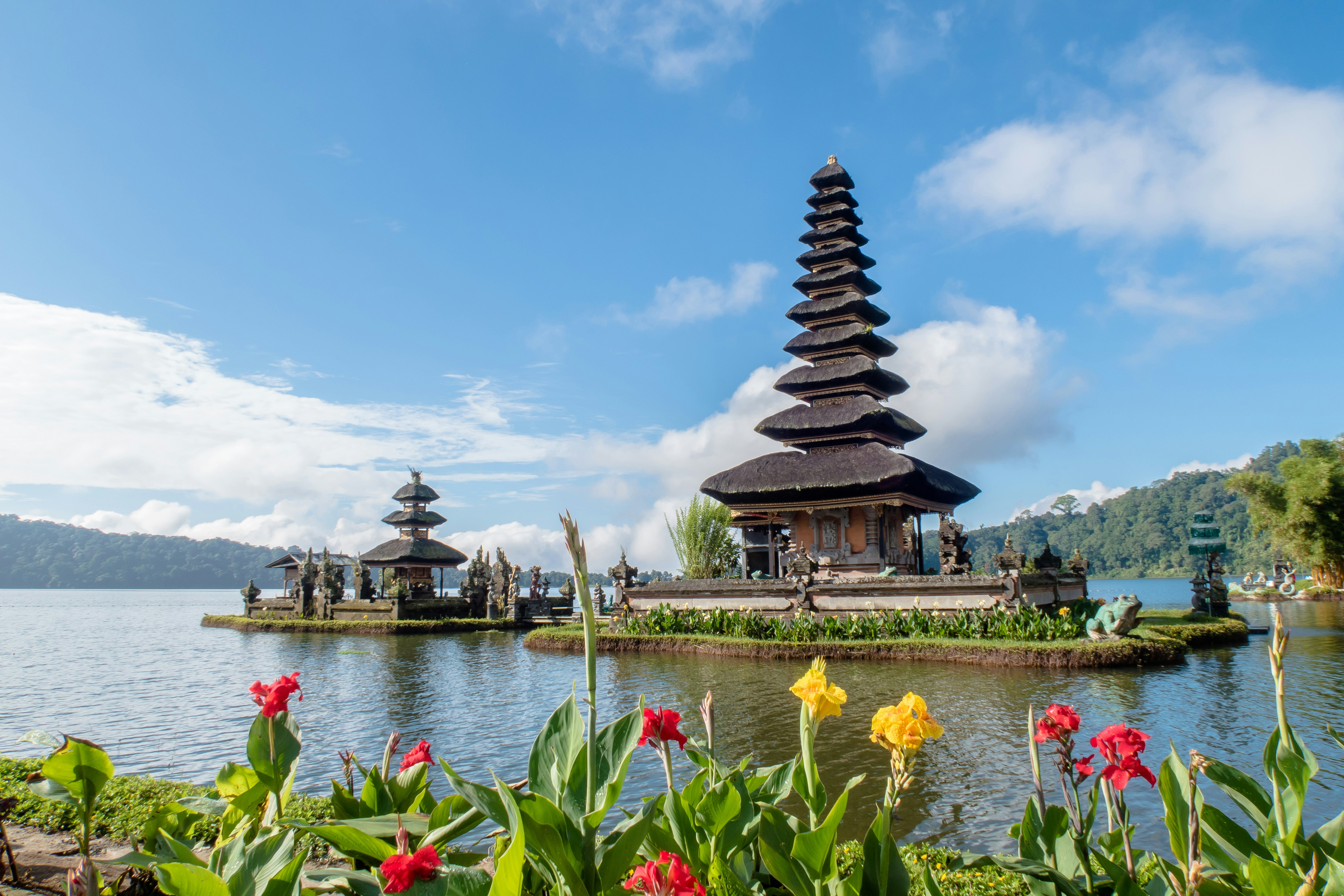
Kertha Gosa Pavilion (Royal Court of Justice)
Шедевр балийского дворцового зодчества XVIII века в центре Клунгкунга — павильон королевского суда справедливости и плавучий павильон Бале Камбанг, всемирно известные уникальными потолочными росписями в стиле ваянг школы Камасан.
📜 Исторический контекст и значение
Возведен в начале XVIII века королем Дева Агунгом Джамбе в комплексе Пури Агунг Клунгкунг. Кертха Госа служил высшим судом Бали. Росписи потолка иллюстрируют эпос «Бхима Сварга», подробно изображая кармическое воздаяние за земные грехи и небесную награду праведникам.
Официальные тарифы на входные билеты
| Категория посетителей | Официальный тариф (IDR) | Est. (USD) | Что включено и примечания |
|---|---|---|---|
| Domestic / WNI (Adult) | IDR 25.000 | $1.41 | WNI Adult |
| Domestic / WNI (Child) | IDR 15.000 | $0.84 | WNI Child |
| Foreign Tourist (Adult) | IDR 50.000 | $2.81 | Includes museum entrance and sarong |
| Foreign Tourist (Child) | IDR 25.000 | $1.41 | Child admission |
Балийский культурный этикет и правила Awig-Awig
Официальные правила деревенского адата и протокол священных мест для Kertha Gosa Pavilion (Royal Court of Justice).
Элегантная скромная одежда с закрытыми плечами и коленями. Традиционный пояс или саронг бесплатно выдается у билетной кассы для подъема на помосты исторических павильонов. ✓ Для входа обязательны саронг (каин) и желтый пояс.
Правила охраны исторического наследия Клунгкунга: строго запрещено прикасаться к деревянным панелям и использовать фотовспышки, разрушающие натуральные пигменты росписей Камасан. Еда и напитки в павильонах запрещены.
Строгая бесполетная зона. Полеты дронов в историческом центре строго регламентированы. Съемка на малой высоте под карнизами павильонов категорически запрещена для предотвращения повреждения кровли и ценнейших росписей.
Мотоцикл/скутер: IDR 2.000
Легковой автомобиль: IDR 5.000
Transportation & Access Radar
Ride-hailing apps operate normally around Klungkung town center.
Ticket includes the nearby Puputan Klungkung Museum; show your ticket at museum gate.
Радар высоты и доступности
Навигация и транспорт
Архитектурные и визуальные акценты (7 фото)
Kertha Gosa Pavilion — Historic 18th-century royal court of justice and lotus moat in Semarapura, Klungkung.
Photo: Alfiano Sutianto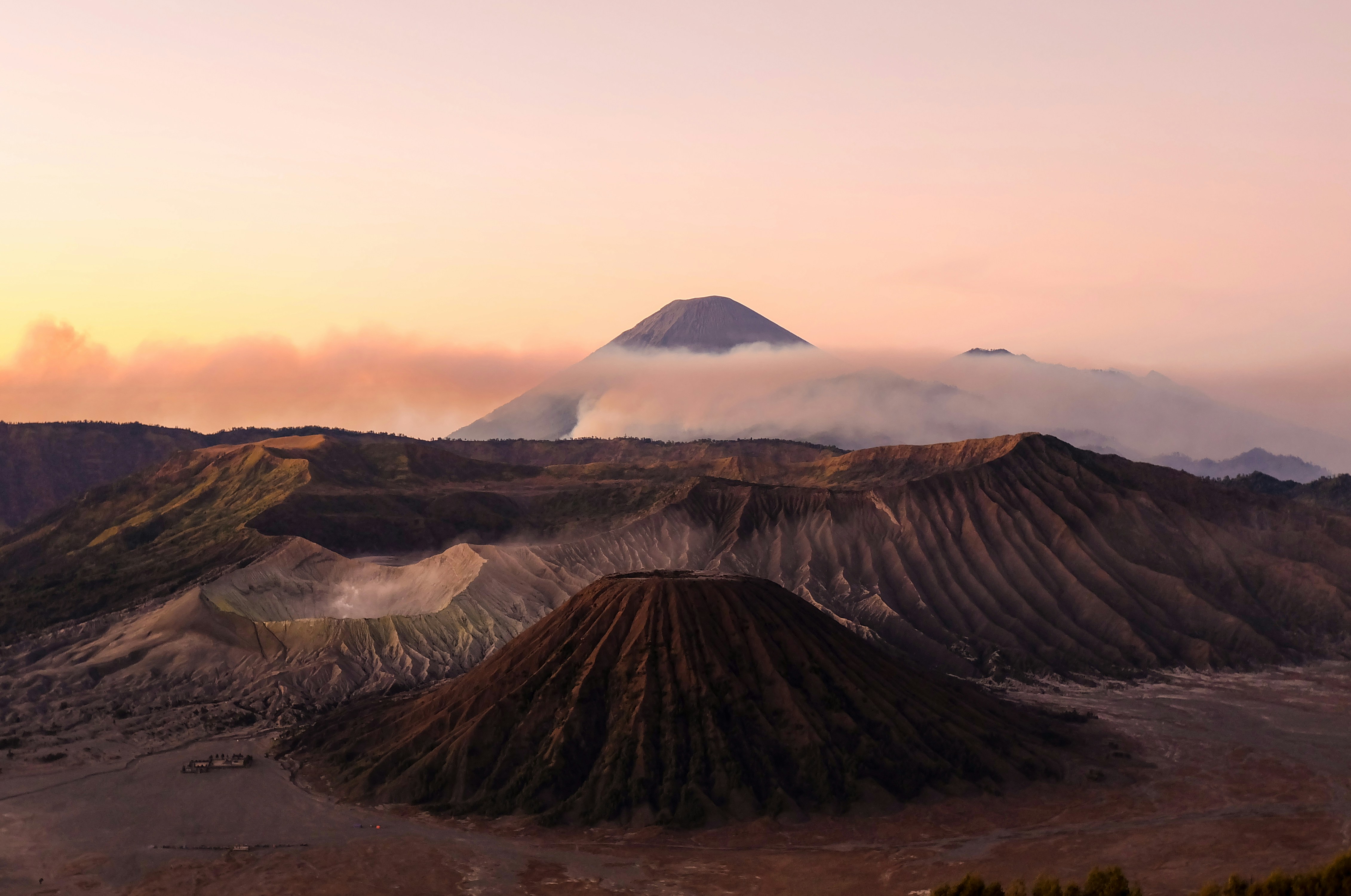
Kertha Gosa Pavilion — World-Famous Kamasan Ceiling Frescoes. Masterful narrative paintings depicting the epic Bhima Swarga and karmic law.

Kertha Gosa Pavilion — Bale Kambang Floating Pavilion. The elegant open-air royal pavilion surrounded by blooming pink lotus moats.

Kertha Gosa Pavilion — Classical Kamasan Painting Registers. Detailed panels illustrating Tantri moral fables and astronomical calendars.

Kertha Gosa Pavilion — Carved Stone Stairways & Red-Brick Portals. Traditional Balinese masonry framing the elevated judicial pavilion.
Культурный, исторический и архитектурный гид
Comprehensive Cultural Guide: Kertha Gosa Pavilion (Royal Court of Justice)
1. Comprehensive Overview & Cultural Significance
Kertha Gosa Pavilion (Royal Court of Justice) stands as one of Bali's most distinguished cultural landmarks and royal heritage monuments, celebrated across the globe for its profound historical resonance, extraordinary architectural artistry, and living role in island civic heritage. Situated in the heart of Klungkung, this magnificent historic compound harmonizes classical Balinese palace design with profound philosophical depth, offering an immersive window into centuries of royal governance, legal philosophy, and artistic patronship. Whether approached as an architectural masterpiece by international cultural scholars or experienced as an active center of performing arts by travelers, the site exemplifies the living, breathing essence of Bali’s royal legacy.
At the core of the landmark’s identity is the foundational Balinese worldview of Tri Hita Karana—the eternal balance between humanity (pawongan), the physical built environment (palemahan), and divine cosmic justice (parahyangan). Every grand brick gateway, open-sided royal pavilion (bale), courtyard garden, and ceremonial stage reflects this tripartite harmony. Unlike static historical museums that display disconnected relics in glass vitrines, Kertha Gosa Pavilion (Royal Court of Justice) remains an active, dynamic civic anchor where traditional community meetings, state rituals, and nightly cultural performances continue with vibrant authenticity. The custodial community of Puri Agung Semarapura royal family and the Cultural Heritage Office of Klungkung Regency preserves the compound with meticulous devotion, welcoming global travelers while upholding courtly decorum.
Visitors encountering Kertha Gosa Pavilion (Royal Court of Justice) are immediately enveloped in the grandeur of classical Balinese civilization. From sweeping brick courtyards framed by towering frangipani trees to magnificent split gateways (Candi Bentar) chiseled with mythical guardians and celestial nymphs, the complex offers a rich visual and sensory immersion. Here, centuries of artistic patronage have produced an environment where traditional painting, stone sculpture, gamelan orchestration, and classical dance drama thrive in symbiotic elegance.
Beyond its regional prominence within Klungkung, Kertha Gosa Pavilion (Royal Court of Justice) serves as an indispensable historical touchstone for understanding the evolution of the wider Indonesian archipelago. Its historical trajectory chronicles the glorious heritage of the post-Majapahit kingdoms that defined Balinese identity, illustrating how classical principalities maintained sophisticated legal systems, philosophical arts, and social solidarity in the face of colonial encroachment. For travelers seeking authentic cultural depth, exploring this site offers profound insights into the artistic soul and moral philosophy of the Balinese people.
2. Exact Geographic Positioning & Micro-Terrain
Positioned precisely within the administrative jurisdiction of Klungkung, Kertha Gosa Pavilion (Royal Court of Justice) commands a strategic and accessible location at an elevation of approximately 35 meters above sea level. In classical Balinese town planning (Catur Muka), royal palaces and halls of justice were deliberately situated at the central sacred crossroad of the royal capital, symbolizing the cosmic center of the realm where the ruler could maintain direct communion with the community and oversee civic order.
The micro-terrain of Kertha Gosa Pavilion (Royal Court of Justice) is characterized by meticulously terraced brick and stone courtyards designed for effortless pedestrian navigation. Visitors step across broad, flat stone concourses, gentle paved corridors, and modest stair risers numbering approximately 10 stairs that connect outer reception courts to elevated open-air pavilions. The spacious courtyards are shaded by ancient tropical trees, including flowering frangipani, sacred banyans, and ornamental palms, creating a pleasant and breezy ambiance even during the heat of midday.
The physical difficulty rating for exploring Kertha Gosa Pavilion (Royal Court of Justice) is classified as EASY. The level topography, wide paved paths, and low stair thresholds make it one of the most physically accessible cultural landmarks in Bali. Senior travelers, families with young children, and visitors utilizing walking aids can comfortably explore the primary historic courtyards, view the architecture and artwork up close, and enjoy shaded rest pavilions without strenuous physical exertion.
Hydrologically and ecologically, the complex incorporates classical Balinese water garden engineering. Beautiful lotus moats and reflective stone basins serve dual aesthetic and cooling functions, tempering the ambient temperature through natural evaporation while symbolizing the primordial cosmic ocean (Ksirarnava) from which divine harmony emerges. The meticulous drainage systems built into the courtyards channel seasonal tropical rainfall swiftly into regional waterways, protecting the historic timber and brick foundations from moisture saturation.
3. Mythological Genesis & Sacred Lore
The mythological foundation of Kertha Gosa Pavilion (Royal Court of Justice) is woven into the epic literature and sacred lore of the Balinese Hindu tradition. According to indigenous babad chronicles and royal oral traditions, the compound was consecrated to reflect the heavenly courts of Lord Indra, where divine justice, artistic beauty, and spiritual righteousness reign supreme. The spatial plan was drafted under the guidance of court priests who performed sacred rituals to invite celestial blessings upon the kingdom.
The spiritual ethos of Kertha Gosa Pavilion (Royal Court of Justice) is centered on Classical Kamasan ceiling frescoes depicting the karmic trials of Bhima Swarga and traditional customary jurisprudence. Ancient manuscripts recount that court judges and royal sovereigns drew moral authority from the divine laws of Karma Phala—the inexorable cosmic principle that every thought, word, and deed bears corresponding consequences across cycles of reincarnation. Royal judges took solemn oaths before the palace deities, praying for divine insight to discern truth from deception and deliver equitable justice without prejudice.
The custodial community preserves sacred narratives recounting how great artists and court poets entered deep meditative trance states (samadhi) within these courtyards, receiving divine inspiration from Saraswati, goddess of wisdom, arts, and learning. Under her celestial influence, master craftsmen carved the elaborate mythological reliefs that adorn the gateways, depicting legendary heroes like Arjuna, Bhima, and Rama demonstrating courage, virtue, and unwavering devotion to dharma.
Daily offerings of Canang Sari and fragrant incense continue to be placed at the gateway shrines, royal guardian statues, and ancestral altars by resident custodians. These continuous offerings ensure that the spiritual atmosphere of the palace remains pure, honoring the ancestral spirits and maintaining metaphysical harmony between the physical world (sekala) and the invisible spiritual realm (niskala).
4. Chronicle of Priests, Sages & Dynasties
The historical chronicle of Kertha Gosa Pavilion (Royal Court of Justice) is intrinsically linked with the illustrious reign of Dewa Agung Jambe, first sovereign of the royal Klungkung dynasty, around 1700 CE, flourishing predominantly during Early 18th century CE (around 1700 CE), operating as the supreme royal court of law in Bali until 1908. Under their enlightened royal stewardship, Klungkung became a premier powerhouse of Balinese politics, jurisprudence, and artistic expression.
During the golden age of classical Balinese principalities, Kertha Gosa Pavilion (Royal Court of Justice) functioned as the vital nerve center of the realm. Sovereign rulers gathered the finest legal scholars, brahman high priests (pedanda), and master artisans to establish standards of customary jurisprudence (awig-awig) and courtly aesthetic excellence. Royal courts dispatched ambassadors across the island to maintain peace between rival kingdoms, while foreign traders, scholars, and colonial envoys were received in grand open-air audience halls with elaborate ceremonial protocol.
In the late 19th and early 20th centuries, as European colonial ambitions intensified across the Indonesian archipelago, Kertha Gosa Pavilion (Royal Court of Justice) stood as a proud symbol of Balinese sovereignty and cultural integrity. Historical events that transpired on these grounds demonstrated the profound courage of the Balinese royalty and populace, who chose heroic honor and spiritual immortality over subjugation, leaving an enduring legacy of bravery that inspires the nation to this day.
In modern times, custodial responsibility is maintained collaboratively by the hereditary royal family and Puri Agung Semarapura royal family and the Cultural Heritage Office of Klungkung Regency. While the private inner residential quarters remain respectfully reserved for royal family life, the historic outer courtyards and magnificent pavilions are generously opened to the public as a living cultural heritage treasure. This collaborative stewardship ensures that admission fees and cultural donations directly support the perpetual restoration of the historic structures, the training of young musicians and dancers, and the staging of traditional ceremonies that keep Bali's royal arts alive.
5. Architectural Anatomy & Sacred Relics
The structural layout of Kertha Gosa Pavilion (Royal Court of Justice) is a tour de force of classical Balinese palace architecture, celebrated for its exquisite spatial balance, magnificent masonry, and ornate woodcarving. The compound features iconic architectural elements that embody deep symbolic meaning:
- Candi Bentar (Grand Split Gateway): Towering red-brick split gates marking the outer perimeter, carved with intricate floral filigree (patra punggel) and stylized demonic masks (karang bhoma) to ward off malevolent energies.
- Kori Agung (Monumental Royal Portal): The soaring central gateway crowned with the sculpted visage of Bhoma and flanked by fierce stone guardian statues (dwarapala). The portal features heavy wooden doors embellished with gold leaf and red lacquer, traditionally opened only during major royal festivals and sacred processions.
- Royal Audience & Judicial Pavilions: Open-sided structures featuring raised masonry daises, supported by carved wooden pillars (tiang) adorned with intricate floral arabesques and mythical serpent carvings (naga).
- Courtyard Lotus Basins & Reflective Moats: Expansive stone water gardens filled with blooming pink and white lotus blossoms, creating a tranquil microclimate and evoking the mythical lotus ponds of Mount Meru.
Among the treasured relics and historical installations preserved at Kertha Gosa Pavilion (Royal Court of Justice) are World-renowned Kamasan-style ceiling frescoes, Bale Kertha Gosa judicial pavilion, Bale Kambang floating lotus pavilion, antique court trial daises, and the adjacent Puputan Klungkung Monument. The stonework throughout the compound exhibits the pinnacle of Balinese brick-carving artistry, wherein terracotta bricks were rubbed together with water to create seamless mortarless joints, upon which master carvers incised breathtaking low-relief sculptures directly into the stone walls.
Structural maintenance is performed with unwavering fidelity to traditional building manuals. Rather than using modern industrial materials that could damage historic masonry, custodial craftsmen utilize natural lime washes, organic brick dust, and seasoned tropical hardwoods to restore weathered pillars and roofs, ensuring that the historical integrity of Kertha Gosa Pavilion (Royal Court of Justice) remains pristine.
6. Essential Etiquette, Awig-Awig & Taboos
To maintain the supreme dignity and cultural sanctity of Kertha Gosa Pavilion (Royal Court of Justice), all visitors are kindly requested to observe traditional Balinese court etiquette and customary rules (awig-awig):
- Respectful Attire: Modesty is essential. Visitors should wear respectful clothing with shoulders and knees covered. While exploring the outer historic courtyards, traditional sarongs and waist sashes are appreciated, and are mandatory if entering active ceremonial or temple zones within the complex. Revealing swimwear, tank tops, and athletic gym wear are prohibited on the palace grounds.
- Respecting Private Residential Boundaries: While the historic public pavilions and courtyards are open for visitor enjoyment, the inner residential quarters (jeroan) remain the private home of the living royal family. Visitors must strictly respect private property signage and refrain from entering cordoned-off family courtyards.
- Decorum & Photography Etiquette: Maintain a calm, respectful demeanor throughout your visit. Do not climb upon historic stone balustrades, sit on raised royal thrones, or touch antique painted panels. When taking photographs, avoid blocking ceremonial proceedings or using disruptive equipment.
- Aerial Drone Restrictions: Aerial drone flights are strictly prohibited over the palace compound and surrounding heritage district to protect visitor safety, preserve residential privacy, and comply with urban municipal airspace regulations.
7. Practical Logistics & Optimal Timing
Planning an enriching visit to Kertha Gosa Pavilion (Royal Court of Justice) is straightforward due to its central and accessible urban location:
- Optimal Time of Day: The most rewarding visiting window is 09:00 - 11:30 (Bright ambient daylight illuminating the painted ceiling panels). Mornings provide soft ambient lighting, comfortable temperatures, and uncrowded courtyards for admiring architectural details. Evening visits are spectacular for travelers attending the nightly classical dance dramas staged in the courtyard.
- Transportation & Arrival: Situated at the central crossroad of Semarapura town, Klungkung. Ride-hailing apps operate normally around Klungkung town center.
- Road & Footpath Conditions: Urban town roads in center of Semarapura. The palace grounds feature level stone paving that allows for easy, comfortable strolling.
- Facilities & Surrounding Amenities: The surrounding district offers diverse traveler amenities, including traditional artisan markets, cultural bookstores, atmospheric cafes, and clean public restrooms.
8. Entry Tariffs & Transparent Inclusions
The entry tariff structure at Kertha Gosa Pavilion (Royal Court of Justice) is established transparently to ensure accessibility while funding ongoing cultural heritage preservation:
- Foreign Adult Ticket: IDR 50000 (approx. USD $3.23)
- Foreign Child Ticket (Ages 5-11): IDR 25000 (approx. USD $1.61)
- Domestic Indonesian Adult Ticket: IDR 25000
- Domestic Indonesian Child Ticket: IDR 15000
- Standard Parking Tariffs: Standard town rates apply (typically IDR 5,000 for cars; IDR 2,000 for motor scooters).
Transparent Inclusions: Every rupiah generated from admission contributions directly finances the ongoing structural maintenance of the historic pavilions, conservation of antique ceiling murals and stone carvings, courtyard landscaping, and the preservation of classical dance and gamelan music traditions. Basic visitor accident insurance is provided in accordance with regional heritage tourism standards. By visiting Kertha Gosa Pavilion (Royal Court of Justice), travelers play an active and vital role in preserving the living heritage of classical Balinese royalty for future generations.
9. Sustainable Tourism & Respectful Visits
As cultural tourism flourishes across Bali, mindful and respectful engagement is essential to sustaining the delicate heritage of Kertha Gosa Pavilion (Royal Court of Justice):
- Zero-Waste Commitment: Please help maintain the pristine elegance of the royal courtyards by disposing of all trash in designated receptacles. Single-use plastics, discarded food wrappers, and chewing gum degrade the beauty of historic stone floors and must never be littered.
- Supporting Local Heritage Artisans: Enhance your cultural journey by supporting the talented local painters, woodcarvers, and textile weavers whose shops line the heritage quarter. Purchasing authentic handicrafts directly supports multi-generational artisan families and helps keep ancient artistic techniques thriving.
- Mindful Cultural Engagement: Take time to sit quietly in the shaded pavilions and observe the rhythmic cadence of palace life. Approach the historic monuments with curiosity, humility, and genuine respect for the living cultural traditions of the Balinese people.
- Safety & Courtesy: Follow all on-site visitor guidelines and staff instructions. Adhere to Ticket includes the nearby Puputan Klungkung Museum; show your ticket at museum gate. By embodying thoughtful courtesy, your visit becomes a mutually enriching cultural exchange that honors Bali's timeless royal heritage.
Mythological Origins, Foundation Chronicles & Sacred Sages of Kertha Gosa Pavilion (Royal Court of Justice)
In the sacred chronicles preserved within ancient Balinese palm-leaf manuscripts (lontar) and royal dynastic genealogies (babad), Kertha Gosa Pavilion (Royal Court of Justice) occupies an indelible and foundational chapter in the cultural and political evolution of Bali. According to royal court historiography, the inception and construction of this historic royal compound is intricately bound to Dewa Agung Jambe, first sovereign of the royal Klungkung dynasty, around 1700 CE, flourishing predominantly during Early 18th century CE (around 1700 CE), operating as the supreme royal court of law in Bali until 1908.
The philosophical bedrock of this landmark reflects the harmonious integration of royal governance with cosmic order, guided by the foundational Balinese principle of Tri Hita Karana—the eternal balance between the human realm (pawongan), the physical built environment (palemahan), and divine cosmic justice (parahyangan). In classical Balinese statecraft (Dharma Sastra), royal seats of authority were intentionally constructed as terrestrial microcosms mirroring Mount Meru, designed to emanate harmonious spiritual energy (kasukretan) across the kingdom while serving as epicenters of artistic patronage and customary law.
Historical accounts passed through generations of royal chroniclers and elder custodians recount how the sovereign rajas of Klungkung provided munificent patronage to guild masters, stone carvers (undagi), woodworkers, and court painters (sangging). During major court ceremonies and royal rituals (yadnya), delegates from affiliated principalities and village federations would convene at Kertha Gosa Pavilion (Royal Court of Justice) to reaffirm feudal allegiances, resolve inter-village legal disputes, and celebrate classical dance-dramas accompanied by bronze gamelan orchestras. Over centuries of dynastic transformations, anti-colonial struggles (puputan), and modern transitions, the custodial royal lineage and community elders have vigilantly preserved authentic courtly protocols.
Sacred oral narratives preserved by court custodians also detail how the royal founders consecrated this compound with sacred foundation deposits (Panca Datu) and consulted master astrologers (pedanda) to determine the precise cosmic alignments for construction. These astrological calculations ensured that the palace pavilions, judicial halls, and ancestral family shrines were positioned in exact harmony with the cardinal directions, channeling divine wisdom down to the human judges and sovereigns presiding within its sacred walls.
The enduring cultural legacy of Kertha Gosa Pavilion (Royal Court of Justice) lies not merely in its magnificent architecture or antique artwork, but in its continuing status as a living beacon of Balinese high culture and civic heritage. Every carved stone lintel, gilded wooden pillar, and painted narrative panel stands as a testament to the exquisite sophistication of classical Balinese civilization, demonstrating how artistic brilliance and moral philosophy intertwine harmoniously across centuries of continuous cultural practice.
Architectural Anatomy, Spatial Cosmology & Sacred Relics of Kertha Gosa Pavilion (Royal Court of Justice)
The physical architecture of Kertha Gosa Pavilion (Royal Court of Justice) adheres rigorously to the classical Balinese architectural code, the Asta Bhumi and Asta Kosala Kosali, which dictates proportions, spatial hierarchies, and anthropometric units (depa, tampak, musti) aligned with natural cosmic harmony. The complex is spatially arranged into progressive concentric courtyards reflecting royal and ritual hierarchy:
- Outer Public Court (Jaba / Ancak Saji): The grand transitional courtyard designed for royal assembly, public announcements, visitor reception, and ceremonial performances. Flanked by high red-brick perimeter walls and towering banyan trees, this open plaza serves as an energetic threshold separating secular street life from the dignified royal compound.
- Middle Royal Pavilion Zone (Jaba Tengah / Balai Court): The ceremonial court accessed through monumental stone portals, accommodating open-sided raised pavilions (bale) crafted for judicial hearings, official state banquets, and courtly arts. Raised masonry platforms atop volcanic stone foundations feature intricately carved teak and jackfruit wood pillars embellished with gold leaf (prada) and natural mineral pigments.
- Inner Royal Compound (Jeroan / Puri Dalem): The private sanctum reserved for the royal family residence, royal heirloom storehouses (gedong pusaka), and private ancestral chapels (merajan agung), where family priests perform daily devotional rites amidst sacred peace.
The structural elements are crafted from indigenous materials: warm terra-cotta earthen brickwork joined without mortar using traditional water-rubbing techniques (kosok gosok), dark volcanic andesite stone reliefs chiseled with intricate flora and fauna motifs, and hand-carved hardwood beams supporting multi-tiered pavilion roofs thatched with black sugar palm fiber (ijuk) or terracotta tiles.
Among the sacred relics and historical treasures preserved at Kertha Gosa Pavilion (Royal Court of Justice), significant highlights include World-renowned Kamasan-style ceiling frescoes, Bale Kertha Gosa judicial pavilion, Bale Kambang floating lotus pavilion, antique court trial daises, and the adjacent Puputan Klungkung Monument. Master stone reliefs and ceiling murals depict vivid allegorical scenes from classical Hindu epics and moral fables, executed with extraordinary dynamic expression and narrative depth. Each carved ornament and painted figure serves not merely as decoration, but as an active moral talisman designed to inspire righteousness, cosmic balance, and reverence for divine truth.
The conservation of these irreplaceable architectural treasures requires continuous, meticulous maintenance performed by master restoration artisans using authentic historical methods. Traditional lime plasters, organic vegetable dyes, and hand-cut joinery are employed to preserve the structural authenticity and aesthetic brilliance of the historic royal monuments for future generations.
Frequently Asked Questions & Local Logistics
Key logistical insights, official tariffs, and customary etiquette for Kertha Gosa Pavilion (Royal Court of Justice).
Top Curated Stays Near Kertha Gosa Pavilion (Royal Court of Justice)
Проверенные отели в радиусе 8 км, отсортированные по отзывам и близости.

Cegeng Lestari Guest House

Hidden Paradise

Klungkung Tower Hotel

OYO 94783 Wakasih Homestay
Кураторские экскурсии рядом с Kertha Gosa Pavilion (Royal Court of Justice)
Curated guided tours and local adventures operated within easy transit of this landmark.

Sanur Reef Hydrofoil & Kitesurfing Masterclass
Harness trade winds in Sanur’s protected reef lagoon for premier hydrofoil and kitesurfing sessions.

Sanur Sunrise Reef Stand-Up Paddleboard Safari
Gliding across glassy morning lagoons with distant views of Mount Agung at dawn.

Celuk Village Master Silversmith Jewelry Workshop
Forge, saw, solder, and polish your own bespoke sterling silver jewelry guided by ancestral generational silversmiths in Desa Celuk.