


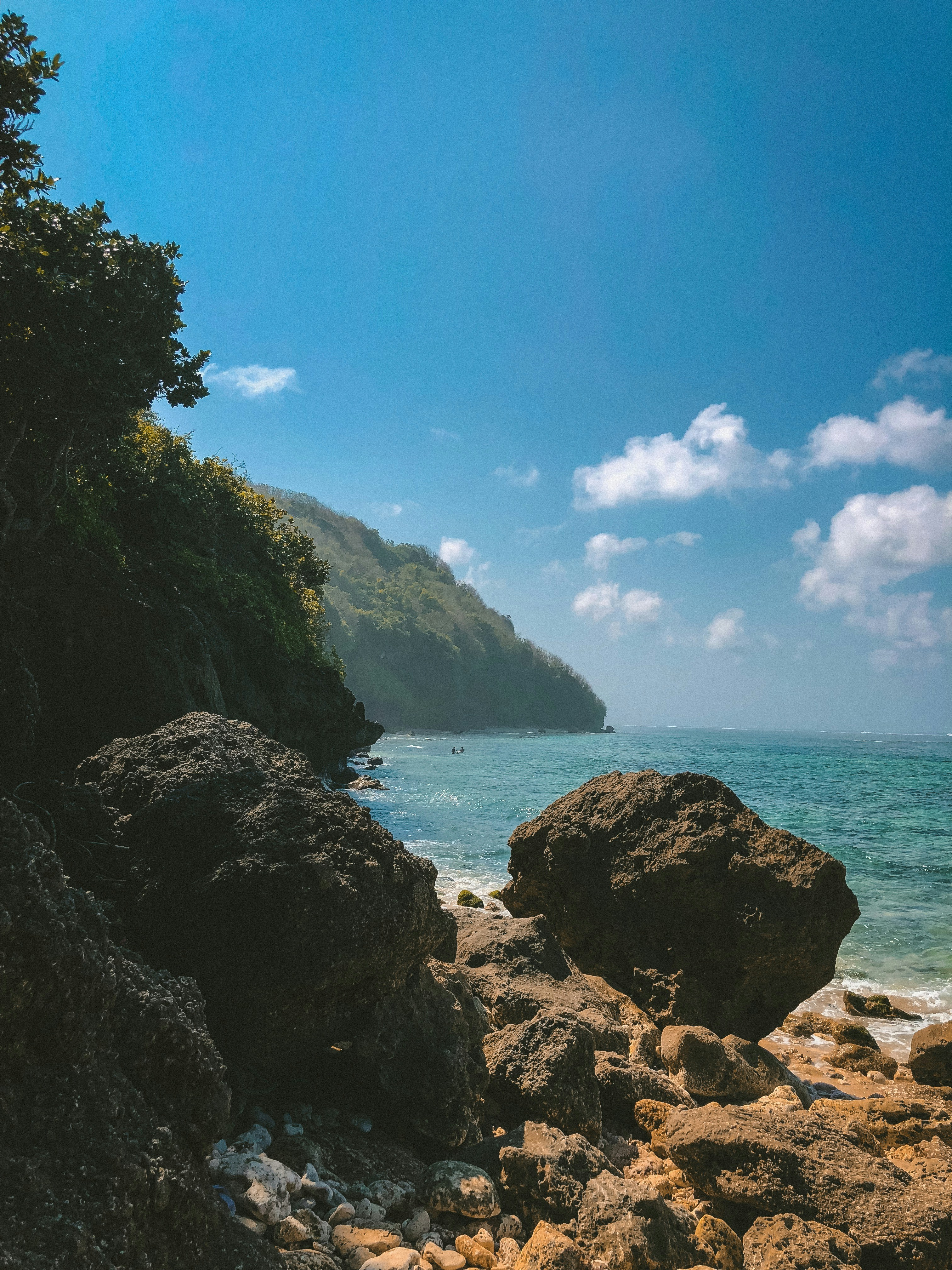
Green Bowl Beach & Sea Caves
隐匿于悬崖天堑之下的宝藏级绝美海湾,须克服考验体力的328级陡峭石阶方能探访。这里以宏伟幽邃的天然海蚀溶洞、低潮时泛着温润翡翠色泽的天然礁石浅滩而令旅行者叹为观止。
📜 历史渊源与文化背景意义
因退潮时宛如巨型翡翠碗状的环礁浅滩而得名。其宏大的石灰岩海蚀洞内常年栖息着白昼倒挂休眠的果蝠,深处更设有一座供奉海神的古老印度教祭坛,见证着翁加桑渔民数百年来的虔诚祈福。
官方门票收费标准
| 游客分类 | 官方价格 (印尼盾 IDR) | Est. (USD) | 包含项目与门票说明 |
|---|---|---|---|
| Domestic / WNI (Adult) | IDR 10.000 | $0.56 | Domestic ticket |
| Domestic / WNI (Child) | IDR 5.000 | $0.28 | Domestic child ticket |
| Foreign Tourist (Adult) | IDR 10.000 | $0.56 | Official village entrance ticket (Desa Adat Ungasan) |
| Foreign Tourist (Child) | IDR 5.000 | $0.28 | Child ticket |
巴厘传统礼仪与村规习惯法 (Awig-Awig)
Green Bowl Beach & Sea Caves 官方村庄习惯法准则与圣殿礼仪规范。
攀登往返328级陡峭台阶必须穿着合脚防滑的运动鞋或健行凉鞋;备齐泳衣,探索潮汐岩溶浅滩时强烈建议穿上防滑硬底潜水鞋。
翁加桑传统村规(Awig-Awig Desa Adat Ungasan):严禁骚扰洞内栖息蝙蝠,严禁亵渎崖壁海神祭坛;严格留意潮汐安全法则:涨潮时汹涌潮水会彻底吞没整个沙滩与岩洞,高潮期间严禁下海。
允许放飞无人机。 允许在开阔海域及近岸礁石浅滩上空放飞无人机;但严禁将无人机靠近或飞入海蚀溶洞入口,以免惊扰在此栖息繁衍的野生蝠群。
摩托车/踏板车: IDR 5.000
小型客车/轿车: IDR 10.000
Transportation & Access Radar
Grab and Gojek allowed for drop-off and pickup at the upper temple parking area.
CRITICAL: Sea caves and pocket sandy cove accessible ONLY at low to mid-tide; at full high tide, ocean swells surge directly into the cave mouths and submerge the entire beach.
Never visit at high tide as caves flood completely; secure all loose belongings from inquisitive cliff macaques along the stairs.
海拔与通行条件评估
交通导航与出行
视觉亮点与建筑风貌 (7 张照片)
Green Bowl Beach & Sea Caves — Secluded pocket cove and towering limestone cliffs enclosing the bowl-shaped barrier reef in Ungasan.
Photo: Align All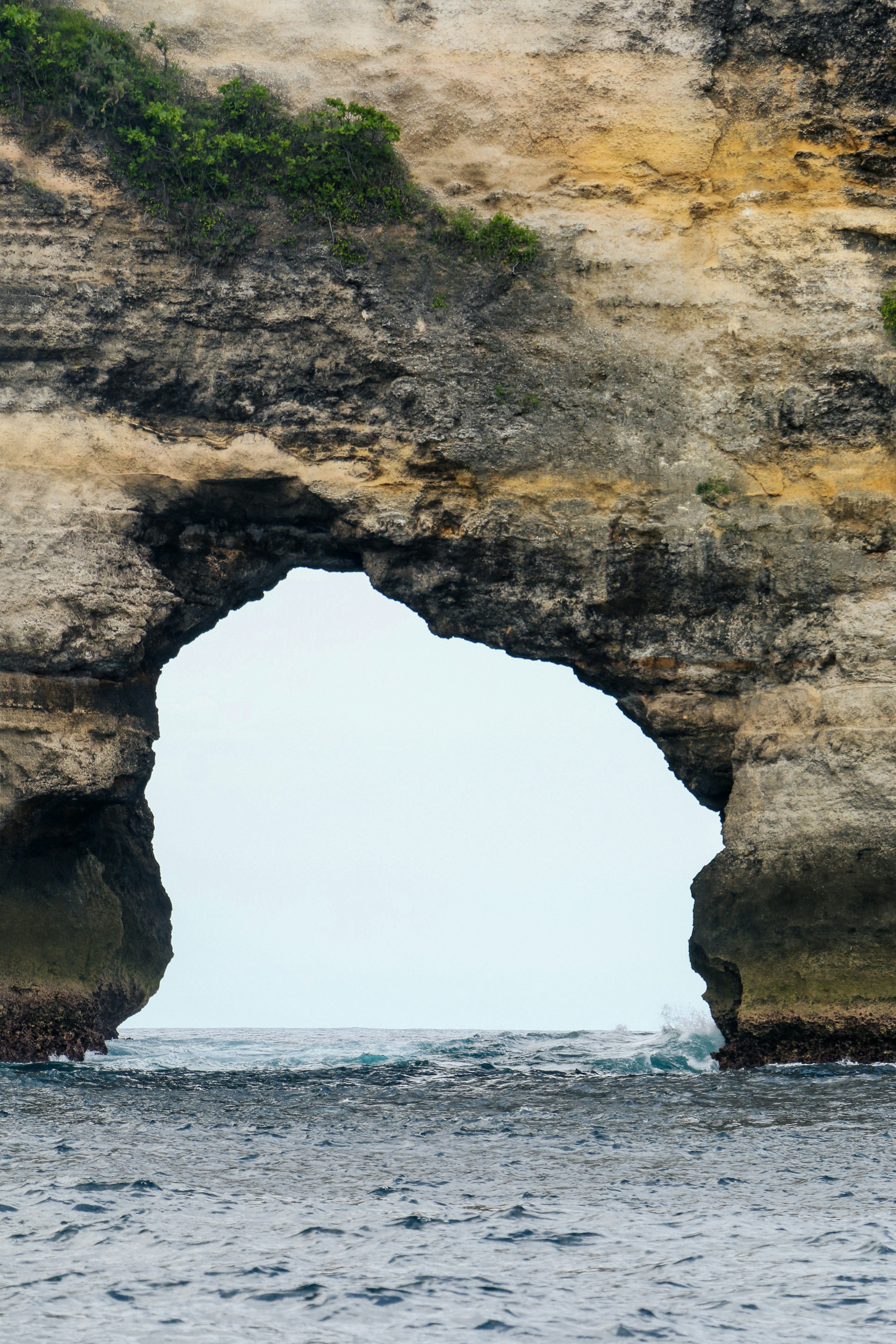
Green Bowl Beach & Sea Caves — The towering limestone sea cave entrance providing cool shade and framing the turquoise ocean waters.
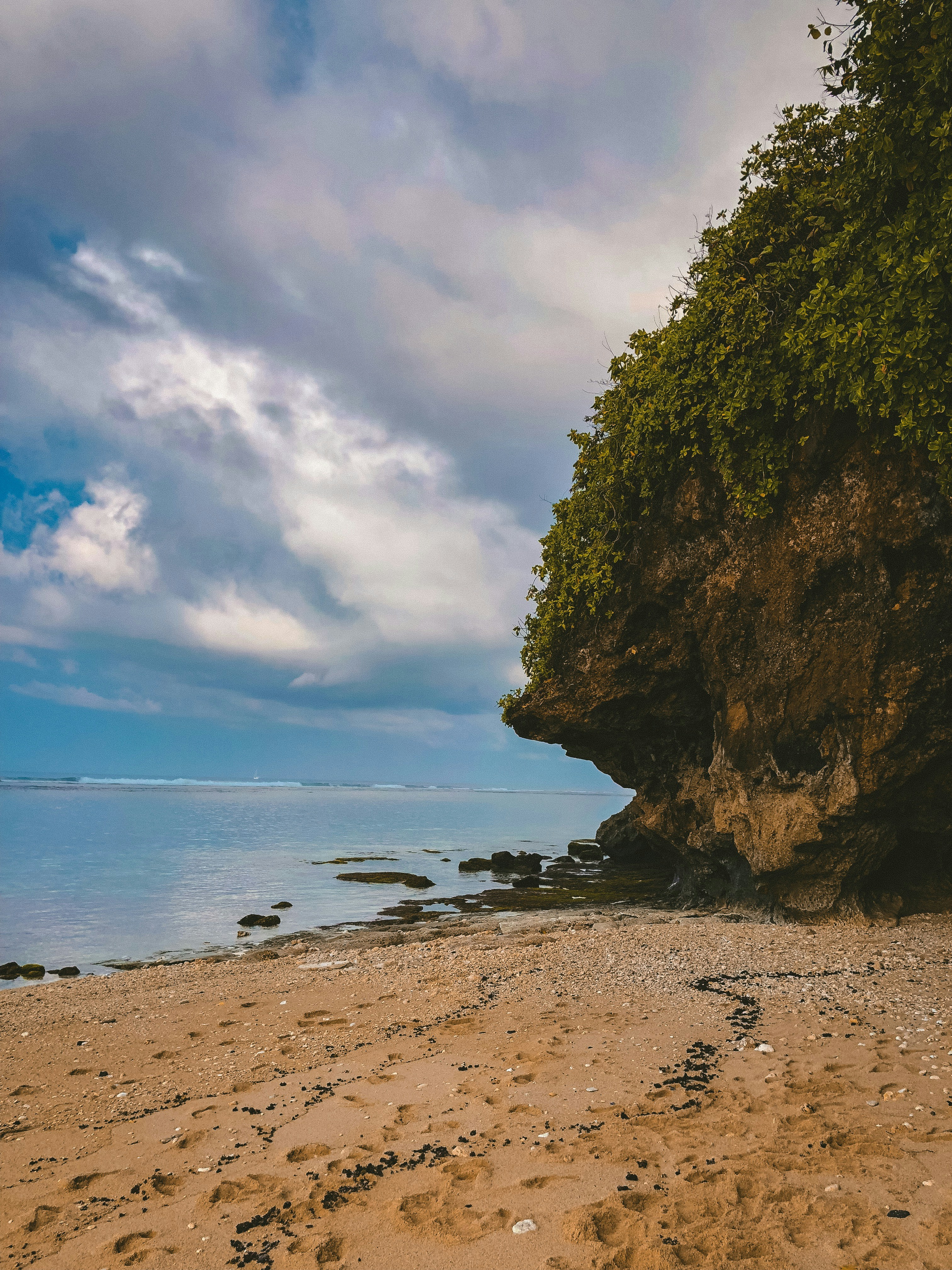
Green Bowl Beach & Sea Caves — Crystalline emerald green water filling the inner reef lagoon basin at low tide.
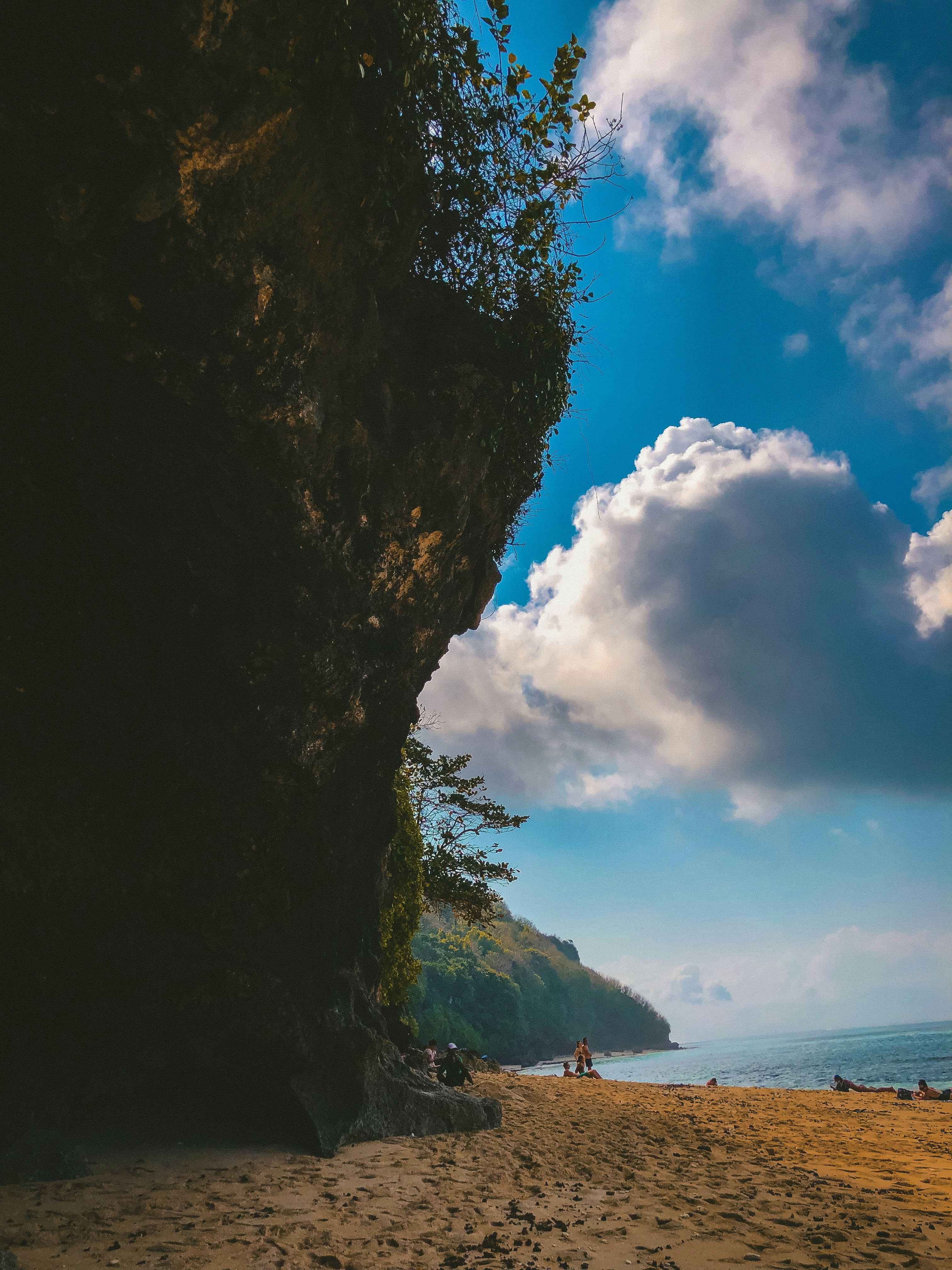
Green Bowl Beach & Sea Caves — Pristine white coral sand shoreline lapped by turquoise surf beneath sheer limestone ramparts.
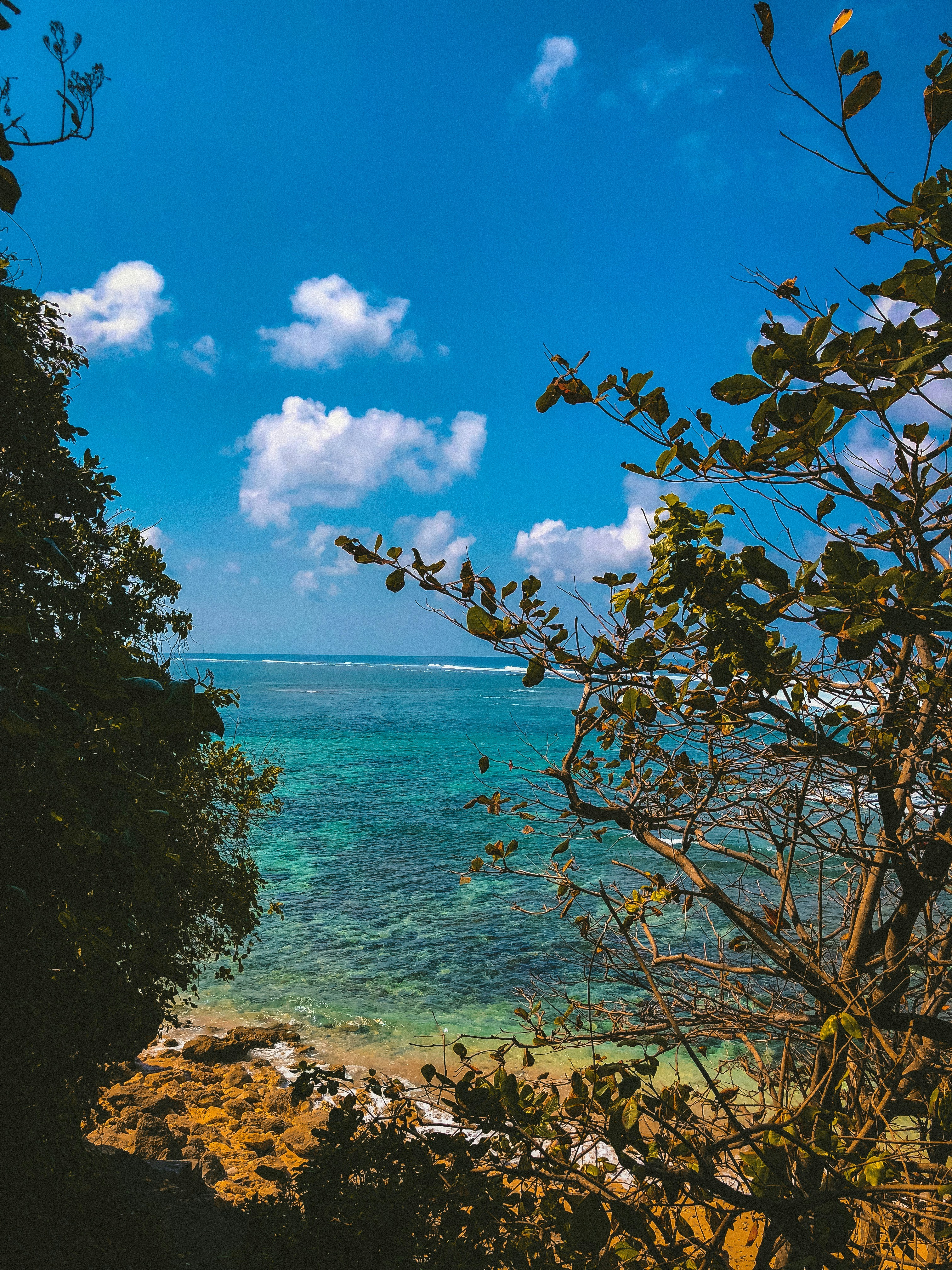
Green Bowl Beach & Sea Caves — Dense tropical forest canopy clothing the vertical limestone cliff face above the secluded cove.
文化、历史与建筑深度指南
Comprehensive Cultural Guide: Green Bowl Beach & Sea Caves
1. Comprehensive Overview & Cultural Significance
Green Bowl Beach & Sea Caves is the Bukit Peninsula's most extraordinary intersection of geological drama, tidal spectacle, and living spiritual tradition. Concealed at the base of a 60-metre limestone cliff at the southern edge of the Ungasan plateau, and accessible only during a strict low-tide window through the daily descent of 328 steep concrete stairs, Green Bowl demands of its visitors both physical commitment and tidal intelligence — and it rewards both in full. The reward is a pocket cove of almost unreal beauty: a bowl of vivid emerald reef, cavernous limestone caves housing roosting fruit bats and an ancient Hindu shrine, and a beach that vanishes entirely beneath the surging ocean at high tide, leaving no trace of the extraordinary experience it briefly offered.
The beach's cultural significance extends well beyond its aesthetic drama. The sacred cliff shrine within the primary sea cave is an active place of worship maintained by the priests of the Desa Adat Ungasan, who descend the 328 stairs on auspicious ceremonial days to conduct offerings and prayers before the cave altar. The tidal mechanics that govern the beach's accessibility also govern the timing of these sacred rituals — a coordination between human devotion and natural rhythm that exemplifies the Balinese spiritual principle of living in conscious relationship with the forces of the natural world.
For the traveler who plans their visit around the tide tables, Green Bowl delivers experiences of surpassing beauty and originality: swimming in the emerald bowl of reef-filtered water, exploring the cathedral scale of the sea caves, watching the amber light of a morning sun filter through rock apertures to illuminate the cave interior in golden beams, and contemplating the ancient shrine in its extraordinary natural sanctuary. These are experiences that require no mediation, no performance, and no commercial apparatus — only the willingness to descend 328 stairs and to arrive at the right moment in the tidal cycle.
2. Exact Geographic Positioning & Micro-Terrain
Green Bowl Beach is located at approximately 8.8488 degrees South, 115.1712 degrees East, at the southern base of the Ungasan limestone plateau in Desa Ungasan, Kecamatan Kuta Selatan, Badung Regency. The beach sits at approximately two metres above mean sea level — though at high tide this elevation provides no protection from the ocean, which advances fully over the beach surface. The cliff top parking area, located near the ruins of the former Bali Cliff Resort, stands approximately 60 metres above beach level and is reached via a paved road through the Ungasan village.
The 328-step staircase descends through several distinct micro-environments: the upper exposed cliff-top zone with sweeping ocean views; a mid-cliff section where the steps are partially shaded by the cliff overhang and occasional drought-tolerant vegetation; and the lower section where the steps emerge onto the beach level through a narrow gap between the cliff base and the cave entrance. This final section is most susceptible to tidal inundation and should be assessed carefully before descent on any visit.
The physical difficulty rating is classified as demanding. The 328 steps demand both physical fitness and careful attention to footing; the return ascent after time on the beach is a genuine cardiovascular challenge. Water shoes are strongly recommended for the beach and cave exploration. Visitors with significant knee, hip, or cardiovascular conditions should assess the descent very carefully before committing to it. There are no emergency access options at beach level — the only exit is back up the 328 stairs.
3. Mythological Genesis & Sacred Lore
The sacred cave shrine at Green Bowl Beach is among the most atmospheric and genuinely ancient devotional sites accessible on the Bukit Peninsula. Unlike the grand ceremonial temples of the plateau above, the cave shrine is intimate, unadorned, and immediately powerful — a simple altar in a natural sanctuary of immense geological scale, the cave walls rising overhead in darkness, the sound of the ocean audible as a deep rhythmic pulse from the cave entrance, and the poleng-wrapped shrine at the cave's heart radiating the quiet intensity of long-maintained spiritual attention.
In the oral tradition of the Desa Adat Ungasan, the cave and its shrine are associated with the protective deity of the coastline — a manifestation of the sea guardian whose function is to maintain the boundary between the human world and the oceanic realm, permitting the flow of fishing wealth and marine abundance while restraining the destructive power of storm and surge. The fruit bats roosting in the cave roof are understood as the guardian's familiars — creatures that observe and report on the behaviour of those who enter the sacred space. This belief system creates a powerful cultural incentive for respectful behaviour within the cave that parallels the formal prohibitions of the awig-awig.
The tidal mechanics of the cave — the way the ocean fills and evacuates the beach on its six-hour cycle — are themselves interpreted within the local spiritual framework as the breathing of a living deity: the inhalation that brings the ocean rushing over the sand and into the cave mouth, and the exhalation that withdraws the water and reveals the beach for the brief window of human accessibility. To visit Green Bowl at low tide is, in this reading, to enter a space that the deity has temporarily made available — an invitation whose terms are set not by human convenience but by the rhythm of the cosmos.
4. Chronicle of the Ungasan Community & the Abandoned Resort
The modern history of Green Bowl Beach is inseparable from the history of the Bali Cliff Resort, the ambitious hotel development that occupied the clifftop above the beach from the 1990s until its eventual abandonment. The resort was conceived as a showcase property exploiting the dramatic clifftop terrain of the Ungasan coast, and for a period it represented one of the most architecturally striking hospitality developments on the island, its facilities cantilevering over the cliff edge in a manner that provided guests with vertiginous views over the ocean far below.
The resort's decline and eventual closure — variously attributed to financial difficulties, the broader downturn in Bali tourism following the 2002 and 2005 Kuta bombings, and structural issues associated with the challenging cliff-edge terrain — left a significant built legacy on the plateau above Green Bowl that continues to define the beach's access landscape. The former resort's driveway and parking infrastructure now serve as the primary access point for beach visitors, and several of the resort's ornamental structures have been incorporated into the Desa Ungasan's management of the site as ticket collection points and shade pavilions.
The Desa Adat Ungasan has maintained active stewardship of the beach and cave shrine throughout the resort's operational and post-operational phases, ensuring that the community's ceremonial relationship with the site was never subordinated to commercial considerations. The village council's decision to establish the IDR 10,000 entry contribution — collected at the clifftop ticket booth — represents a formalisation of the community's custodial role and provides a modest but steady stream of revenue for the ongoing maintenance of the staircase, the cave shrine, and the basic visitor facilities at the clifftop level.
5. Architectural Anatomy & Geological Relics
The 328 steps of the Green Bowl staircase are themselves a significant piece of community infrastructure, constructed and periodically reconstructed by the Desa Adat Ungasan using a combination of community labour and modest government heritage support. The staircase follows the natural topography of the cliff face rather than cutting a straight vertical line, winding around geological features and varying in width and gradient to accommodate the irregular surface of the limestone cliff. In several sections, the stairs pass beneath natural limestone overhangs that create welcome patches of deep shade — micro-environments that also support remarkable communities of shade-adapted cliff ferns, mosses, and climbing plants.
The sea caves themselves are the architectural masterpiece of Green Bowl's natural landscape. The primary cave reaches a depth of approximately 30 metres from its low-tide entrance to its innermost recess, with a vault height that exceeds 15 metres at the highest point. The walls are smooth where wave action has polished them during previous sea level phases, and rougher and more textured in the upper sections that have never been subjected to sustained wave abrasion. The floor of the cave at low tide is composed of coarse calcareous sand interspersed with smooth, wave-rounded limestone pebbles — a clean, comfortable surface for careful exploration.
The cave shrine at the innermost accessible point of the cave is a simple but beautifully maintained structure: a stone platform supporting a tiered altar adorned with fresh flowers, burning incense sticks, and small offerings of fruit and rice, all wrapped in the sacred poleng cloth. The contrast between the rough limestone walls of the cave and the meticulous beauty of the offerings maintained on the altar is one of the most visually compelling encounters available anywhere on the Bukit Peninsula — a demonstration of how Balinese devotion transforms natural space into sacred architecture through the simple power of sustained attention.
6. Essential Etiquette, Awig-Awig & Critical Safety Rules
Green Bowl operates under the strict customary governance of the Desa Adat Ungasan, with the following non-negotiable requirements:
- STRICT TIDAL COMPLIANCE: This is the paramount safety requirement at Green Bowl. Never descend the 328 stairs without first confirming that the tide is at or approaching low water. Check the Bali tide chart on the day of your visit. The beach is completely submerged and the cave entrances are engulfed by the ocean at high tide. Visitors trapped at the cliff base by rising tides require rescue operations.
- Cave Fauna Protection: The awig-awig explicitly prohibit any disturbance of the fruit bat colony roosting in the cave roof. Do not shine lights directly at the bats, make loud noises inside the cave, or throw objects at the cave ceiling. The bats are considered guardian animals of the sacred shrine.
- Shrine Respect: The cave shrine is an active place of worship. Do not touch the altar, sacred objects, or poleng cloth. Do not position yourself between a praying devotee and the shrine. Photography is permitted from a respectful distance but flash photography in the cave interior is prohibited.
- Do Not Disturb Cave Fauna or Climb Cave Walls: The cave walls and floor are fragile biological and geological environments. Climbing the cave walls damages both the geological features and the biological communities they support.
- Drone Regulations: Drones are permitted over the coastal waters. Do not fly drone near the cave entrances where bat colonies roost; the disturbance to the fruit bat colony is both ecologically harmful and contrary to the awig-awig.
- Litter Zero Tolerance: There are no waste disposal facilities at beach level. All refuse returns with you up the 328 stairs.
7. Practical Logistics & Tidal Planning
CRITICAL NOTE: Green Bowl Beach is only accessible during LOW TIDE. The beach is completely flooded at high tide. This is not a preference but an absolute safety requirement.
- Tidal Planning: Download a Bali tide prediction app before your visit day. The optimal visiting window is from approximately two hours before low tide to two hours after low tide — a total window of approximately four hours maximum. Err on the side of conservatism: if in doubt, do not descend.
- Best Time of Day: 08:30 to 12:30 captures the morning low tide during the dry season months (May-September), with cooler temperatures for the descent, the best cave lighting from the eastern sun angle, and manageable heat on the return ascent. Adjust for the actual tide schedule on your specific visit date.
- Getting There: Located near the former Bali Cliff Resort complex in Ungasan. The road through Ungasan village is paved and accessible by scooter or private car. Grab and Gojek drop-offs are possible at the cliff top, but return pickups are virtually nonexistent due to the remote location — arrange for your driver to wait, or book a return ojek from a local contact at the top.
- What to Bring: Bali tide chart (checked that morning), reef-safe sunscreen, water shoes, substantial drinking water (no vendors at beach level), a torch for cave exploration, and a carry bag for all waste.
- Operating Hours: 06:00 to 18:00 daily (tidal conditions permitting).
8. Entry Tariffs & Transparent Inclusions
Green Bowl Beach charges a local village entry contribution managed by the Desa Adat Ungasan, collected at the clifftop ticket booth:
- Foreign Adult: IDR 10,000 — Local village entry ticket (Desa Ungasan)
- Foreign Child: IDR 5,000 — Child ticket
- Domestic Adult: IDR 10,000 — Domestic ticket
- Domestic Child: IDR 5,000 — Domestic child ticket
- Parking (Car): IDR 10,000 at the clifftop temple parking area
- Parking (Scooter): IDR 5,000 at the clifftop temple parking area
The entry contribution funds the maintenance of the 328-step staircase, the cave shrine upkeep by the temple priests, the basic waste management infrastructure at the clifftop level, and the community lifeguard awareness program that monitors tide conditions and visitor safety. By paying this modest fee, every visitor participates directly in the Desa Ungasan community's capacity to protect and maintain one of Bali's most extraordinary natural and spiritual sites.
9. Sustainable Tourism & Environmental Stewardship
Green Bowl Beach is one of the most fragile coastal environments in Bali, for reasons that are simultaneously geological, biological, ecological, and spiritual. The cave system is a complex and delicate environment in which the disturbance of any single element — the bat colony, the shrine, the cave floor sediment, the cave wall fauna — cascades into consequences that affect the entire integrated system. Sustainable tourism at Green Bowl is not a vague aspiration but a practical imperative.
The most important environmental commitment is tidal respect — visiting only during the appropriate low-tide window and leaving well before the rising tide makes conditions dangerous. This discipline is simultaneously a safety measure and an ecological one: the high-tide flooding of the beach and caves is the natural cleansing mechanism that removes organic waste, refreshes the sand, and maintains the tidal pool communities in the wave-cut platforms. Visitors who rush the tidal window risk both their own safety and the ecological integrity of the tidally dependent communities they have come to see.
The reef system of the green bowl itself requires the most scrupulous reef-safe sunscreen discipline available at any beach on the Bukit Peninsula. The enclosed, shallow character of the bowl means that chemical sunscreen compounds accumulate in the confined water volume at concentrations far higher than on an open reef — with correspondingly greater impact on the coral tissue and the coralline algae responsible for the bowl's characteristic emerald colour. Every visitor who chooses a mineral-based, reef-safe sunscreen formulation makes a direct, measurable contribution to the preservation of the visual spectacle they have descended 328 stairs to witness.
Sacred Caves, Cliff Shrines & the Ancient Spiritual Heritage of Green Bowl Beach
At the southernmost arc of the Ungasan limestone plateau, where Bali's ancient coral rock plunges 60 metres to the sea in sheer, uninterrupted cliffs, there exists a pocket cove of such concentrated natural and spiritual power that the Desa Adat Ungasan has maintained a formal ceremonial relationship with it for generations beyond living memory. Green Bowl Beach — named in modern parlance for the vivid emerald colour that the surrounding coral reef assumes at low tide when the water shallows over the bowl-shaped reef formation — is at its heart a sacred site of profound antiquity, where limestone geology, tidal mechanics, and Balinese Hindu devotion intersect in a manner that few coastal locations anywhere on the island can match.
The limestone caves that define Green Bowl's physical character are not merely geological curiosities. The largest of these caverns, accessible at the beach's northern extremity during the low-tide window, houses within its shadowed interior an ancient Hindu cliff shrine — a compact but richly adorned pelinggih wrapped in the sacred black-and-white poleng cloth that signifies the protective presence of divine guardians. The shrine's precise age is unknown to modern documentation, but the Ungasan elders who maintain it speak of its existence predating the memory of any living generation, attributing its original consecration to wandering Shaivite sages (rsi) who travelled the Bukit coastline seeking locations of concentrated spiritual power during what the Balinese chronicles identify as the era of Majapahit influence in the island's religious life.
The cave shrine is not a passive memorial but a living place of worship. On the auspicious days of the Balinese Pawukon calendar — particularly Kajeng Kliwon, which falls every fifteen days, and the full moon ceremonies known as Purnama — pemangku priests from the Desa Adat Ungasan descend the 328 stairs to the beach and enter the cave to conduct offerings and prayers before the shrine. These ceremonies must, by the physical logic of the cave itself, be conducted during the low-tide window; at high tide, the cave entrance is engulfed by the surging ocean, rendering it entirely inaccessible. The tidal dependency of this sacred ritual practice creates a profound alignment between the natural world and the devotional life of the community — a reminder that Balinese Hinduism has always understood spiritual practice as something inseparable from the rhythms of the earth and sea.
The roosting colony of fruit bats (Pteropus vampyrus and related species) that inhabit the cave's upper reaches adds another dimension to Green Bowl's significance. In Balinese folk ecology, bats are regarded as guardians of liminal spaces — creatures that bridge the worlds of day and night, the visible and the invisible. Their presence in the sacred cave is understood not as a fortunate coincidence but as a deliberate spiritual arrangement, the bats serving as natural guardians of the shrine's energetic field. The awig-awig of the Desa Adat Ungasan explicitly prohibit any disturbance to the cave fauna, ensuring that the bat colony and the sacred shrine coexist undisturbed within this extraordinary geological sanctuary.
The broader coastal heritage of the Ungasan cliffs encompasses the memory of the Bali Cliff Resort, the ambitious luxury development whose ruins now stand on the plateau above Green Bowl as a monument to the limits of commercial ambition in a landscape of sacred geological power. The resort's abandonment, whatever its proximate commercial causes, has in effect preserved the clifftop above Green Bowl from the denser development that might otherwise have eroded the beach's remote character — an unintended but welcome conservation outcome for the Desa Adat community.
Limestone Cave Morphology, Tidal Mechanics & the Geological Marvel of Green Bowl Beach
Green Bowl Beach represents one of Bali's most instructive natural geology lessons: a site where the intersection of Pleistocene limestone, tidal oscillation, and biological reef growth has produced a landscape of extraordinary physical complexity within a very small geographic footprint. The 328 stairs that descend from the Ungasan cliff top to the beach are themselves a traverse through geological time — each flight of steps crossing another horizontal band of ancient reef limestone, another chapter in the sedimentary record of an ocean ecosystem that flourished here during the ice ages before tectonic forces elevated it to its current position high above the sea.
The sea caves of Green Bowl are the signature geological feature of the site, and their formation is a textbook example of wave erosion acting selectively on a horizontally bedded limestone cliff. The caves form where horizontal discontinuities between limestone layers of different hardness provide preferential pathways for wave energy to be focused and maintained. As waves surge into the confined space of a developing cave entrance, the hydraulic pressure they generate is many times greater than on an open cliff face, accelerating the dissolution and mechanical removal of the weaker limestone and progressively enlarging the cavity. Over thousands of years of such action — at tidal cycles corresponding to both current and past sea levels — the caves at Green Bowl have grown to the impressive dimensions visible today: cathedral-scale chambers with smooth wave-polished walls, angular roof profiles reflecting the joint geometry of the limestone mass, and floors of coarse calcareous sand deposited by storm surges.
The green bowl reef formation from which the beach takes its name is an equally fascinating geological-biological system. The reef is a shallow platform of living and dead coral growth surrounding a slightly deeper central basin — the bowl — whose floor sits at approximately one to two metres below mean low water. At low tide, the reef flat surrounding the bowl becomes nearly emergent, and the water in the bowl is confined and relatively still, allowing the green and brown pigments of the reef-building algae and coral tissue to colour the water a vivid emerald that is visible from considerable distance. This optical effect — the colour saturation of shallow water over a reflective carbonate substrate — is the same phenomenon responsible for the famous turquoise colours of the Maldivian atolls and the Caribbean flats, but at Green Bowl it is expressed at intimate scale, creating a jewel-like visual centrepiece for the entire beach landscape.
The tidal mechanics at Green Bowl are unusually consequential for visitor safety, and understanding them is the non-negotiable prerequisite for any visit. The beach and caves operate on a strict binary: at low tide, they are accessible, inviting, and visually spectacular; at high tide, the ocean advances fully over the beach, surging into the cave entrances and producing powerful standing waves against the cliff base that make the area genuinely dangerous. The transition from low-tide accessibility to high-tide flooding occurs with a speed that catches unprepared visitors off guard — the Bali tide cycle moves through its full range in approximately six hours, meaning that a visitor who arrives at dead low water has at most three to three-and-a-half hours before conditions at the cave entrances become hazardous. This is not a theoretical risk: the Desa Adat Ungasan and the local lifeguard volunteers maintain an active awareness of incidents in which visitors have been trapped at the cliff base by rising tides, necessitating rescue operations of considerable complexity.
The staircase itself — 328 steps of varying height and gradient, descending from the temple parking area to the beach — constitutes a significant physical commitment in both directions. The descent takes approximately 15 to 20 minutes for a fit adult; the return ascent, particularly in the heat of the day after time on the beach, is considerably more demanding. The steps are generally in good repair, maintained by the Desa Ungasan community, but certain sections become slippery in wet weather when algal growth on the concrete surfaces reduces friction. The physical difficulty of Green Bowl is classified as demanding, and this classification should be taken seriously by visitors with knee or joint conditions, cardiovascular limitations, or limited experience with sustained stair climbing in tropical heat.
Frequently Asked Questions & Local Logistics
Key logistical insights, official tariffs, and customary etiquette for Green Bowl Beach & Sea Caves.
Top Curated Stays Near Green Bowl Beach & Sea Caves
8公里半径内的精选住宿推荐,综合出行耗时最短与真实旅客评价排序。

Puri Pandawa Resort

Umana Bali, LXR Hotels & Resorts

Pandawa Beach Homestay 1

Pandawa Beach Homestay
Green Bowl Beach & Sea Caves 附近的精选特色体验
Curated guided tours and local adventures operated within easy transit of this landmark.

Nyang Nyang Cliffside Tandem Paragliding
Soar along the breathtaking 100-meter limestone sea cliffs of Nyang Nyang with bird’s-eye views of reef breaks and the Indian Ocean.

Karang Boma Sheer Cliff Coastal Walk & Sunset Drift
Traverse limestone headlands with sweeping ocean panoramas and cliffside sunset views.

Bukit Peninsula Secret Beach Trek & Drone Photography Tour
Curated Balinese experience: Bukit Peninsula Secret Beach Trek & Drone Photography Tour. Part of Bali Expert Guide's signature curated journeys.