


Bingin Beach & Surf Break
Enclave bohème spectaculairement adossée aux falaises de calcaire blanc d'Uluwatu, Bingin séduit par ses déferlantes gauches tubulaires légendaires, son sable immaculé et ses warungs de pêcheurs servant du poisson grillé les pieds dans l'eau au crépuscule.
📜 Contexte historique et importance culturelle
Découverte dans les années 1970 par les pionniers internationaux de la glisse voyageant sur les sentiers muletiers de Pecatu, cette crique préservée a su conserver son âme brute grâce aux familles de pêcheurs locales qui bâtirent les premiers refuges accrochés à la paroi calcaire.
Tarifs officiels des billets d'entrée
| Catégorie de visiteur | Tarif officiel (IDR) | Est. (USD) | Prestations incluses & remarques |
|---|---|---|---|
| Domestic / WNI (Adult) | IDR 0 | $0.00 | Free access |
| Domestic / WNI (Child) | IDR 0 | $0.00 | Free access |
| Foreign Tourist (Adult) | IDR 0 | $0.00 | Free beach access; IDR 5k-10k parking fee |
| Foreign Tourist (Child) | IDR 0 | $0.00 | Free access |
Étiquette culturelle balinaise et règlements Awig-Awig
Directives adat officielles du village et protocole du site sacré pour Bingin Beach & Surf Break.
Maillots de bain et tenues de plage décontractées sur le sable. Chaussures stables ou sandales de marche vivement recommandées pour négocier la descente vertigineuse et les marches inégales de la falaise (environ 150 marches).
Awig-Awig du Desa Adat Pecatu : propreté absolue du littoral et emport obligatoire des déchets ; respect du calme le long des sentiers d'habitation de la falaise et des petits sanctuaires marins ; tenue couvrante exigée dès que l'on remonte dans le village haut.
Vols de drones autorisés. Vols autorisés au-dessus des eaux côtières et de la ligne de déferlement ; il est formellement interdit de survoler les terrasses des villas privées accrochées à la falaise ou de raser les baigneurs et les surfeurs.
Moto / Scooter : IDR 5.000
Voiture de tourisme : IDR 10.000
Transportation & Access Radar
Grab/Gojek drop-off allowed at top parking; return pickups permitted from main access road.
Optimal for swimming and tide-pooling at low-to-mid tide; left-hand reef barrel operates best around mid-to-high tide with consistent SW swell.
Watch for shallow coral heads when swimming or surfing; carry a flashlight for navigating cliff stairs after dark.
Radar d'altitude et d'accessibilité
Navigation et transports
Points forts visuels et architecture (7 photos)
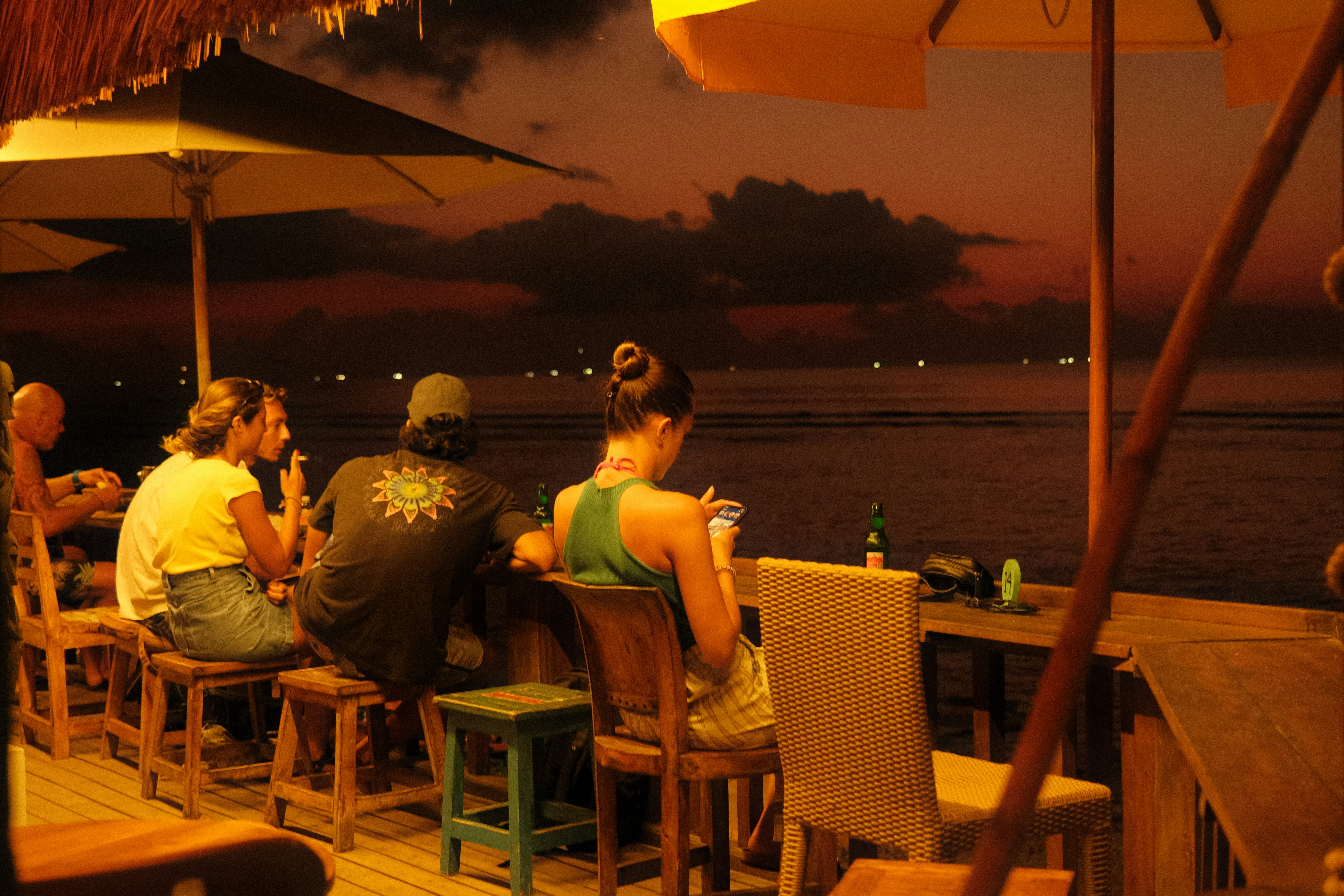
Bingin Beach & Surf Break — Bohemian beachfront warungs, surfboard repair shacks, and open-air sunset bars clinging directly to the limestone cliff base on the sand.
Photo: Life and Youth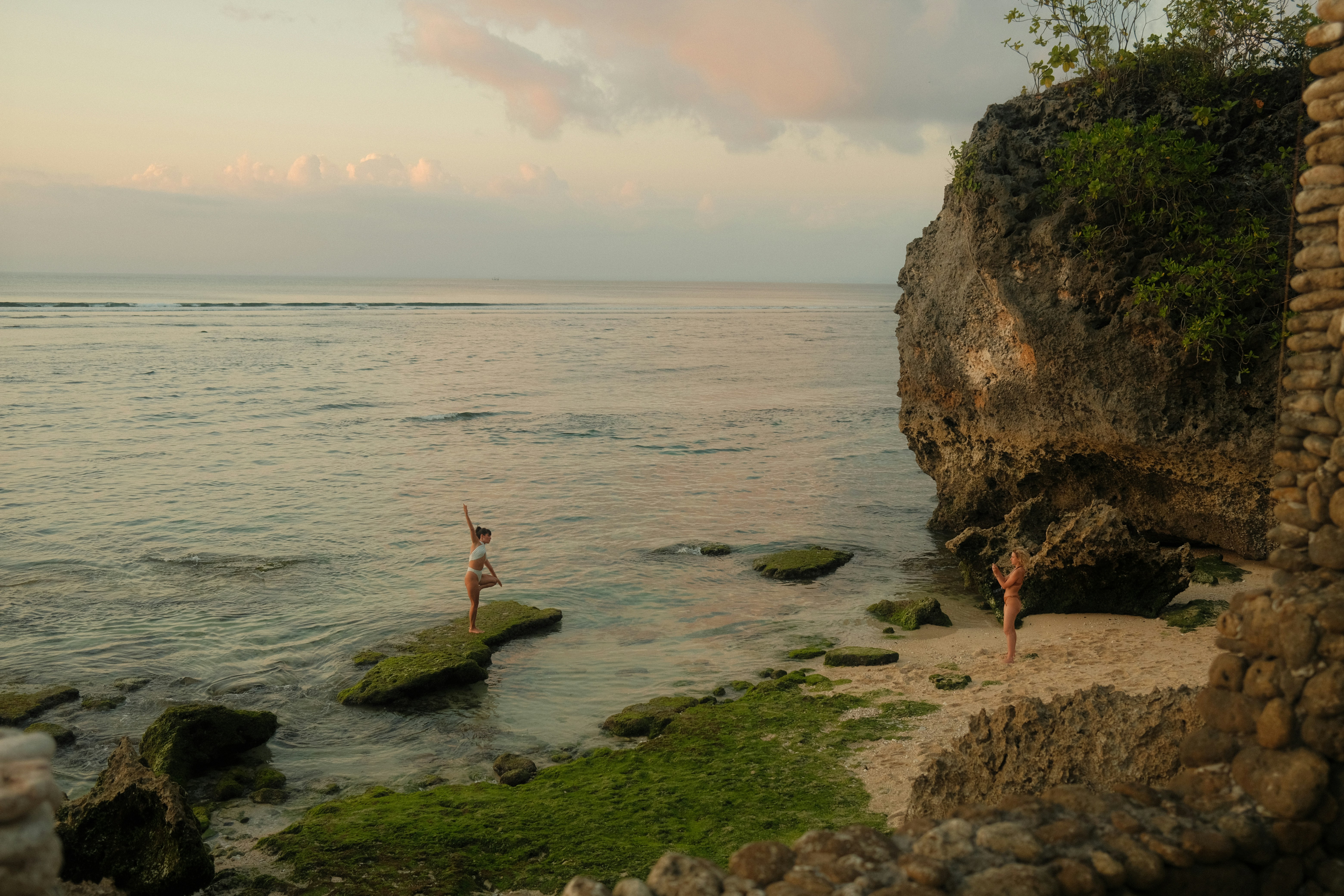
Bingin Beach & Surf Break — Towering tertiary limestone ramparts and dramatic calcified boulders framing the intimate coastal cove.
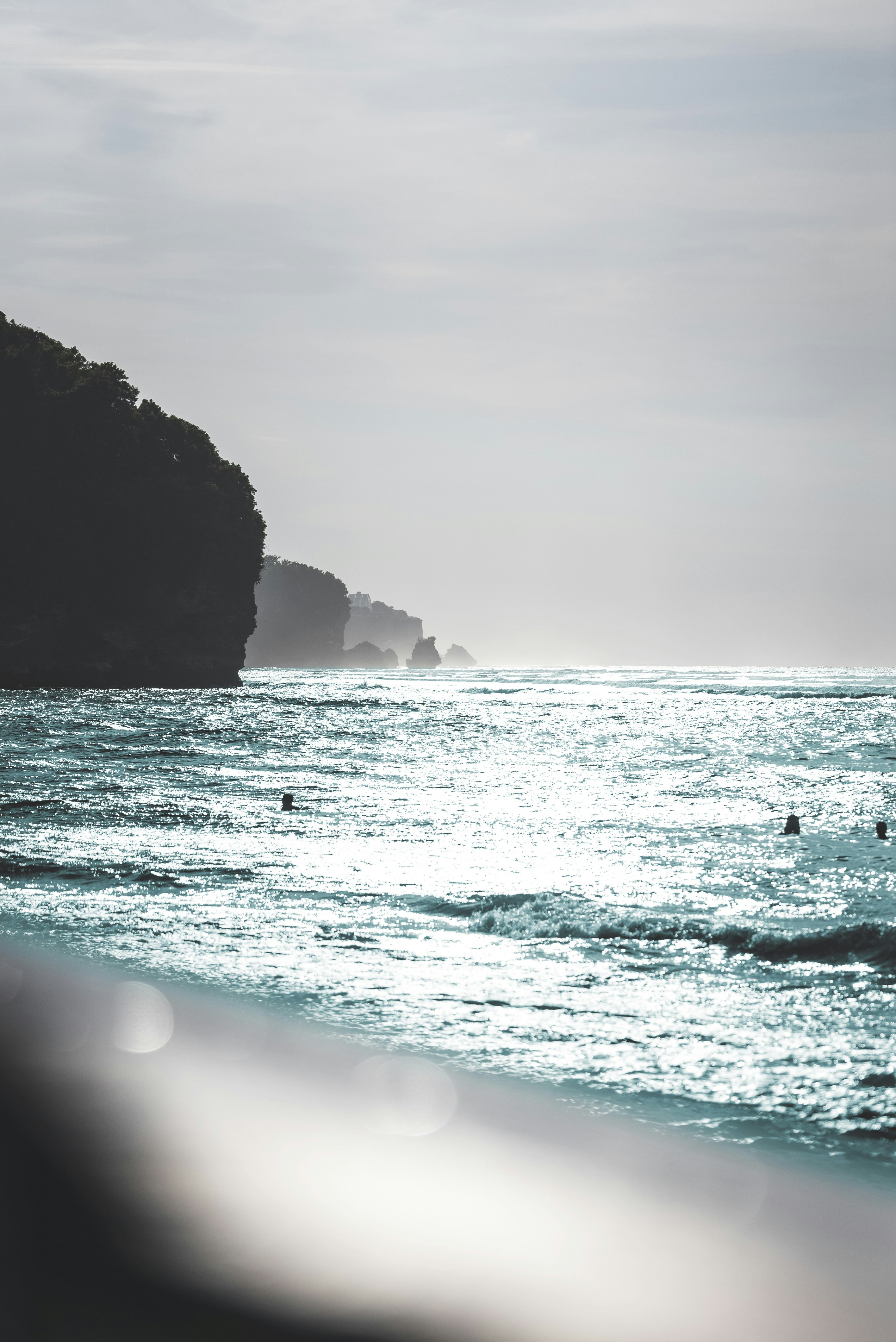
Bingin Beach & Surf Break — Panoramic vista of the turquoise reef lagoon filled with crystalline seawater during mid-to-high tide.

Bingin Beach & Surf Break — Coarse golden-white coral sand strip and tidal surge zone beneath the Pecatu cliff escarpment.
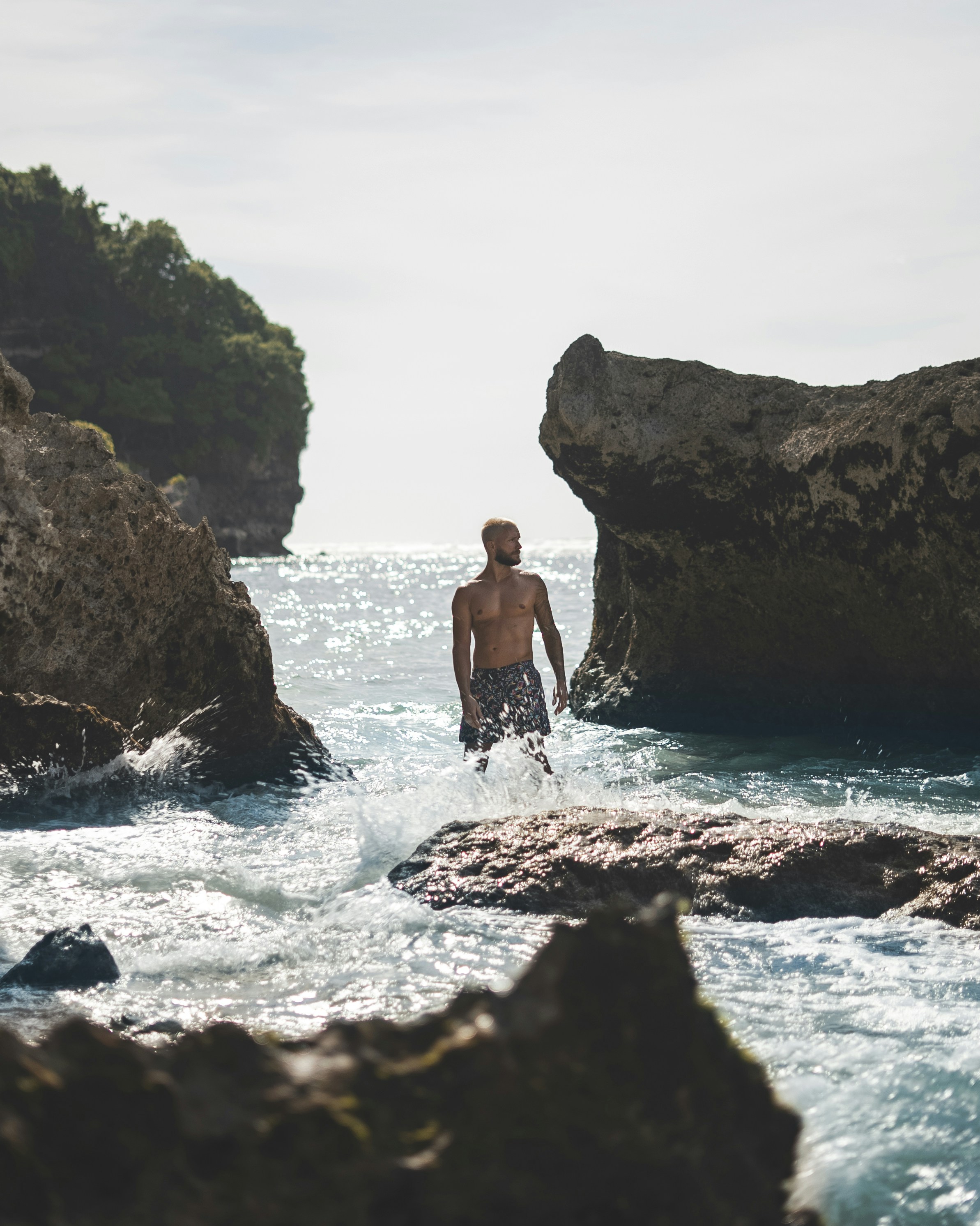
Bingin Beach & Surf Break — Exposed coral reef shelf and shallow micro-atoll tide pools teeming with marine life at spring low tide.
Guide culturel, historique et architectural
Comprehensive Cultural & Geographic Guide: Bingin Beach & Surf Break
1. Comprehensive Overview & Cultural Significance
Nestled at the base of dramatic limestone ramparts on the southwestern perimeter of Bali's Bukit Peninsula, Bingin Beach & Surf Break stands as one of the island’s most iconic coastal landmarks. Revered internationally for its flawless, barreling left-hand reef break and cherished by travelers for its bohemian cliffside atmosphere, Bingin embodies an exquisite convergence of raw natural grandeur, living Balinese maritime culture, and world-class ocean recreation. The cove presents an intimate white-sand shoreline flanked by towering crags, where rustic wooden pavilions cling precariously to the rock face and traditional outrigger canoes rest alongside modern surfboards.
Culturally, Bingin remains firmly anchored within the customary domain of Desa Adat Pecatu, a proud traditional community whose lineage traces back through centuries of arid limestone survival, royal allegiance, and maritime reverence. While global surf culture has brought international acclaim to the break since its initial discovery in the early 1970s, the soul of Bingin is defined by the core Balinese metaphysical philosophy of Tri Hita Karana—the sacred harmony between the divine realm (parahyangan), the human community (pawongan), and the natural environment (palemahan). Every daily offering placed upon the limestone boulders, every communal cleanup organized by local warung families, and every traditional prayer ceremony conducted beneath the cliffs reinforces this ancestral equilibrium.
For travelers seeking an authentic alternative to the manicured mega-resorts of southern Bali, Bingin offers an immersive, sensory escape. The absence of direct vehicular access to the sand has preserved an intimate, village-like tranquility that is increasingly rare across the island. Here, the passage of time is governed not by modern clocks, but by the celestial rhythms of the tides, the direction of the trade winds, and the daily descent of the sun into the Indian Ocean. As dusk approaches, the beach transforms into an open-air culinary haven, where local fishing families grill the day's fresh catches of red snapper, mahi-mahi, and barracuda over glowing coconut husks directly on the sand, filling the cool sea breeze with aromatic smoke.
2. Exact Geographic Positioning & Micro-Terrain
Geographically, Bingin Beach is situated in the administrative village of Pecatu, within South Kuta District (Kecamatan Kuta Selatan), Badung Regency, Bali. Positioned at coordinates 8.8057° S latitude and 115.1133° E longitude, with an elevation ranging from sea level to 45 meters atop the surrounding cliff plateau, the beach occupies a strategic coastal notch along the western flank of the Bukit Peninsula. It is flanked to the north by the sweeping sands of Dreamland Beach and to the south by the legendary surf breaks of Impossibles and Padang Padang, forming an interconnected littoral corridor of extraordinary marine biodiversity.
The micro-terrain of Bingin presents a rugged, vertical topography that demands moderate physical stamina from every visitor. The journey begins at the upper cliff plateau, where paved village lanes terminate in open-air parking lots shaded by bougainvillea, frangipani (kamboja), and coastal scrub. From this vantage point, visitors descend through a labyrinth of approximately 150 to 180 narrow, steep concrete steps and stone stairs that navigate sheer limestone overhangs, private cliffside villas, and rustic guest lodges. The descent reveals breathtaking tiered panoramas of the azure ocean below, framed by dramatic rock fissures and tropical foliage.
Upon reaching the base of the staircase, the physical environment opens into a protected coral sand cove bordered by monolithic limestone boulders. The beach sand is coarse and golden-white, composed of pulverized coral fragments and marine shells. At high tide, the sand strip narrows to a delicate crescent lapped by ocean whitewater, while at low tide, the receding sea unveils an expansive calcified reef platform stretching hundreds of meters outward. Footwear with reliable traction or walking sandals is essential when exploring the base of the cliff, as tidal rocks can be coated with slick marine algae and sharp coral protrusions.
3. Mythological Genesis & Sacred Lore
In the sacred folklore of Desa Adat Pecatu, the oceanic expanse fronting Bingin Beach is acknowledged as a vital precinct within the spiritual territory of Bhatara Baruna, the supreme Hindu deity of cosmic waters and ocean currents. Balinese religious philosophy perceives the ocean not merely as a physical body of water, but as Segara—the primordial source of all worldly dissolution, energetic purification, and spiritual rejuvenation. In the traditional spatial axis of Bali (Kaja-Kelod), the mountains (kaja) represent the sacred abode of ancestral spirits and gods, while the ocean (kelod) is the realm where worldly impurities (mala) are washed clean and transmuted into harmonious vitality.
Local oral narratives recount that ancient fishermen who braved the treacherous reef passages of Bingin held deep reverential dread for the unseen spirits (penunggu karang) that inhabit the sea caves and offshore reef heads. Before pushing their fragile cedar jukung outriggers into the pounding surf, fishermen would gather at modest cliffside shrines (palinggih) to present offerings of yellow rice (nasi kuning), betel nut, and holy water (tirta). These rites were intended to solicit divine benevolence, prevent capsizing against the jagged coral bomboras, and ensure bountiful catches of schooling mackerel and reef fish.
Furthermore, local spiritual lore associates the limestone caves carved into the base of Bingin's cliffs with ascetic wandering monks and mystical healers (balian). These secluded sea grottos provided an isolated sanctuary for tapa brata (austerity and meditation), where ascetics could harness the rhythmic sound of oceanic breakers (omkara) to attain elevated states of spiritual consciousness. To this day, community elders caution visitors and surfers against displaying disrespectful behavior, profanity, or arrogance on the beach, reminding all that the ocean remains an active sanctuary of unseen divine forces (niskala).
4. Chronicle of Maritime Pioneers, Fishermen & Coastal Custodians
The documented history of Bingin Beach reflects an extraordinary transition from an isolated subsistence fishing settlement to a celebrated global surf destination. For generations, the families of Pecatu inhabited an arid, rocky plateau where rainfall was seasonal and agriculture yielded only hardy drought-resistant crops like cassava, maize, and beans. The ocean beneath the cliffs offered a vital lifeline of protein and trade. Fishermen skillfully read the wind patterns (angin timur and angin barat) and moon phases, descending the perilous cliff tracks with woven baskets balanced on their shoulders to launch canoes at dawn.
The modern chapter of Bingin began in the early 1970s, following the international release of groundbreaking surf documentaries that showcased Bali's pristine waves to the world. A small fraternity of intrepid Australian and American wave riders traversed the dirt trails of the Bukit on motorbikes, inquiring with local Pecatu villagers about paths down the cliffs. What they encountered was a flawless, machine-like left tube breaking over an emerald reef shelf. Recognizing the extraordinary potential of their coastline, local families warmly welcomed these early travelers, providing water, fresh coconuts, and home-cooked meals.
Over subsequent decades, the fishing clans of Bingin transformed into skilled hospitality custodians while fiercely protecting the character of their cove. Rather than selling off ancestral lands to large international corporate developers, local families retained ownership of the cliffside plots, constructing modest homestays, board repair shacks, and beachfront eateries. Generational knowledge was passed down seamlessly: village youths who once fished with their fathers became elite local surfers, ISA-certified surf coaches, and knowledgeable reef guides. Today, the coastal council of Desa Adat Pecatu works collaboratively with local business owners to preserve Bingin’s distinctive heritage, ensuring sustainable waste management, ethical visitor standards, and equitable community benefits.
5. Geological Anatomy, Reef Morphology & Coastal Architecture
The geological architecture of Bingin Beach is a textbook study in tertiary limestone karst development and dynamic marine geomorphology. The entire Bukit Peninsula consists of Miocene-age marine carbonates that were deposited in shallow tropical seas and subsequently uplifted by tectonic collisions between the Indo-Australian Plate and the Eurasian Plate. The towering vertical cliffs enclosing Bingin are composed of stratified limestone layers rich in fossilized coral colonies, foraminifera, and mollusks, interrupted by horizontal wave-cut notches that mark ancestral sea level stands.
Seaward of the sandy pocket beach lies an extensive fringing coral reef flat characterized by distinct morphological zones:
- The Inner Lagoon Flat: A shallow depression immediately adjacent to the sand that holds calm, crystalline water during mid-to-high tide, serving as an idyllic natural swimming pool.
- The Reef Shelf (Reef Flat): A wide horizontal limestone pavement encrusted with coralline algae, sea grass, and scattered coral heads (micro-atolls). At spring low tide, this platform drains completely, creating a mesmerizing field of shallow rock pools.
- The Outer Reef Crest & Drop-off: The seaward threshold where the reef shelf drops precipitously into deep oceanic waters. Here, incoming ocean swells encounter an abrupt bathymetric barrier, forcing the wave to pitch forward with immense velocity and create Bingin's famous cylindrical hollow left barrel.
The human-built environment of Bingin is intimately tied to these natural contours. The cliffside structures utilize a structural philosophy known as vernacular responsive building. Rather than excavating massive foundations that would destabilize the fragile limestone stratum, buildings are erected on slender hardwood and concrete pilings anchored directly into natural rock fissures. Thatched alang-alang grass and woven bamboo siding reduce thermal retention under the intense tropical sun, while open-air terraces invite cross-ventilation from prevailing offshore trade winds. This architectural restraint preserves the organic, weathered silhouette of the cliff, blending human habitation harmoniously with the raw geological precipice.
6. Essential Etiquette, Awig-Awig & Coastal Taboos
Visitors to Bingin Beach enter an active traditional jurisdiction governed by the customary bylaws (Awig-Awig) of Desa Adat Pecatu. While Bingin possesses a laid-back, international surf atmosphere, respect for indigenous cultural and spiritual norms is mandatory:
- Modesty and Attire Guidelines: Standard beachwear and swimsuits are perfectly acceptable on the sand and in the water. However, when walking through the residential village alleys atop the cliff or passing village temples, visitors must dress modestly, ensuring torsos are covered. Nude or topless sunbathing is strictly prohibited across Bali and deeply offensive to local Hindu sensibilities.
- Sanctity of Cliff Shrines (Pelangkiran): Small stone altars draped in black-and-white checkered cloth (kain poleng) are situated along the cliff stairs, at warung entrances, and near the water’s edge. Never touch, step over, or tamper with daily woven palm-leaf offerings (canang sari), and avoid resting bags or sitting upon stone altar structures.
- Surf Lineup Etiquette: Bingin's surf break is compact, highly localized, and features a very concentrated takeoff zone. Surfers must practice impeccable lineup etiquette: drop-ins, snaking, and paddling inside other riders are dangerous and unacceptable. Yield right of way to deeper surfers, give priority to experienced local wave riders who maintain the break, and assess your personal ability honestly before paddling out.
- Drone Operations: Unmanned aerial vehicles (drones) are permitted for recreational filming over the open ocean; however, operators must never hover directly outside private cliffside villa balconies, fly over packed beach crowds, or operate near local temple ceremonies.
- Nighttime Stair Navigation: The cliff stairs are dimly lit after sunset. Visitors should walk quietly, maintain a respectful noise volume when passing residences, and avoid loud music or rowdy behavior that disrupts the peaceful sleep of local families.
7. Practical Logistics, Surf Hazards & Tidal Dynamics
A successful, memorable excursion to Bingin Beach depends upon an understanding of its unique access requirements, marine conditions, and tidal fluctuations:
- Tidal Dependency for Activities:
- Swimming and Sunbathing: Best during low-to-mid tide. At low tide, the wide sandy strip is exposed, and shallow reef pools provide calm wading areas. At full high tide, the surging water reaches the foot of the cliff warungs, leaving limited dry sand.
- Surfing the Break: Bingin fires best around mid-to-high tide with a consistent 3-to-6-foot southwest swell and dry-season southeast trade winds. At dead low tide, the wave breaks in dangerously shallow water directly over sharp, exposed reef heads—conditions suitable only for expert tube riders.
- Physical Demands of Access: The descent and ascent via ~150 steep concrete stairs require moderate physical fitness. Those with knee vulnerabilities, cardiovascular concerns, or severe mobility limitations should exercise caution and take frequent rests at shaded landings. Always carry a reliable handheld torch or smartphone flashlight if returning up the cliff after dark.
- Transportation and Arrival: Visitors should navigate via scooter or private car with driver to the designated parking lots at the end of Jalan Pantai Bingin. Ride-hailing services (Grab and Gojek) can readily drop passengers at the upper cliff terminus. When departing, online ride pickups are generally permitted from the public road, though local village transport operators also offer convenient car hires.
- Marine Safety Advisory: Coral cuts are a frequent hazard for surfers and careless waders. When exploring the reef at low tide, wearing sturdy reef booties or protective water shoes is strongly recommended. Keep a safe distance from vertical limestone cliff faces during sudden monsoon downpours to avoid rare dislodged rock fragments.
8. Entry Tariffs & Transparent Inclusions
Access to the natural sands and waters of Bingin Beach is completely free, reflecting Desa Adat Pecatu's policy of welcoming international and domestic travelers to appreciate the natural coastline:
- Official Beach Entry Fee: Free (IDR 0 for both foreign and domestic visitors of all ages).
- Upper Cliff Vehicle Parking Retribution:
- Motorcycles / Scooters: IDR 5,000 per entry.
- Passenger Cars / Private Vehicles: IDR 10,000 per entry.
- Parking fees are collected directly by village attendants at the entrance boom-gates, with revenues allocated toward parking lot security, street lighting, and local road maintenance.
- Transparent Amenities & Optional Costs:
- Beach Sunbeds and Umbrellas: Available for rent from local beachfront vendors at IDR 50,000 to IDR 100,000 per pair for the entire day.
- Freshwater Showers and Restrooms: Basic shower and toilet facilities are maintained by cliffside warungs, available for a modest nominal fee of IDR 5,000 to IDR 10,000.
- Surfboard Rentals and Coaching: High-quality shortboards, fish shapes, and foam beginner boards are available from beachside surf shacks for IDR 100,000 to IDR 150,000 per two-hour session, with certified local surf coaching available upon negotiation.
9. Sustainable Tourism & Coastal Marine Stewardship
As Bingin’s popularity continues to flourish, the ecological fragility of its marine ecosystem and steep cliff terrain demands conscientious, proactive stewardship from every visitor:
- Zero-Waste Responsibility & Plastic Elimination: Single-use plastics pose an existential hazard to Bali’s fragile coral reefs and marine life. Bring a refillable, insulated water flask and say no to single-use plastic straws and carrier bags. All personal waste generated on the beach must be carried back up the cliff stairs and deposited into proper refuse bins at the upper parking area, as coastal waste collection is physically demanding.
- Coral Reef Conservation: The living coral shelf fronting Bingin is a delicate organism that takes decades to grow. Never walk directly upon living coral polyps, avoid breaking branch corals with surfboards or fins, and never remove sea shells, starfishes, or coral fragments as souvenirs. Choose reef-safe, mineral-based sunscreens (zinc oxide or titanium dioxide) that do not contain harmful oxybenzone or octinoxate chemicals that bleach coral reefs.
- Supporting the Hyper-Local Economy: Direct your travel expenditure toward the indigenous family-run warungs, local surfboard repair artisans, and independent guesthouses lining the beach. Savoring fresh seafood dinners on the sand directly empowers the local Pecatu households whose ancestors have preserved this spectacular coastline for generations.
- Mindful Presence & Cultural Respect: Approach Bingin with an attitude of quiet reverence, environmental mindfulness, and relaxed warmth. By embracing the gentle cadence of local village life, respecting ancestral customs, and leaving nothing behind but footprints in the golden sand, you ensure that Bingin Beach & Surf Break remains a timeless, pristine sanctuary for future generations of ocean wanderers.
Mythological Origins, Foundation Chronicles & Sacred Sages of Bingin Beach & Surf Break
In the spiritual geography of the Bukit Peninsula (Ujung Selatan Bali), Bingin Beach occupies an ancient sanctuary where oceanic deities meet the sheer limestone walls of Pecatu. According to local oral narratives (tutur) preserved by the elders of Desa Adat Pecatu, the jagged coastline of Bingin was consecrated under the divine oversight of Bhatara Baruna, the supreme Hindu sovereign of the seas and oceans. In Balinese cosmology, the ocean (segara) serves as the grand cosmological sink of purification, absorbing the worldly spiritual impurities (mala) of the island and returning them to energetic equilibrium through the eternal rhythms of the tides.
Before modern wave riders brought global renown to this hidden amphitheater in the 1970s, Bingin was a sacred and practical maritime landing (labuan) for indigenous fishing clans. Local fishermen operated traditional double-outrigger wooden canoes (jukung), carving out existence on an arid limestone plateau where freshwater was scarce and agriculture precarious. Historical manuscripts (lontar) from the Badung and Mengwi royal courts note that coastal cliffs across the western Bukit served as watchpoints against maritime marauders traversing the Lombok Strait and Indian Ocean trade lanes. Coastal custodians would erect stone altars (palinggih) along the cliff edges, dedicating daily offerings of canang sari, betel leaf (base), and fragrant sandalwood incense to appease the territorial sea spirits (penunggu karang) and invoke safe passage across the dangerous barrier reef.
When the holy Javanese sage Dang Hyang Nirartha journeyed across southern Bali in the sixteenth century, establishing monumental sea temples including Pura Luhur Uluwatu, his spiritual disciples consecrated secondary energy nodes along the coastal limestone shelf. Bingin formed one such natural sanctum—a place where ascetics withdrew into sea grottos to perform silent contemplation (tapa yoga) while listening to the hypnotic rumble of breaking waves. Today, the village custodians of Desa Adat Pecatu maintain this ancestral continuity through sacred purification rituals (Melasti) and temple anniversaries (odalan), ensuring that the vibrant tourism of the present never eclipses the profound maritime sanctity bestowed by the ancestors.
Architectural Anatomy, Spatial Geology & Coral Reef Morphology of Bingin Beach & Surf Break
The physical topography of Bingin Beach is a breathtaking showcase of tertiary limestone karst formation, natural marine erosion, and organic coastal settlement architecture. Geologically, the Bukit Peninsula is an uplifted coral limestone tableland formed during the Miocene epoch. Over millions of years, relentless tectonic uplift combined with the immense hydraulic power of Indian Ocean groundswells has sculpted a vertical amphitheater of towering 40-to-60-meter limestone cliffs, layered with calcified fossil beds, porous fissures, and natural sea caves.
The shoreline is defined by an intricate, shallow calcified fringing reef shelf that extends over one hundred meters seaward before dropping into oceanic depths. This reef morphology is the engine behind Bingin's world-famous mechanical wave: a fast, hollow, barreling left-hand reef break that ignites with surgical precision as deep Southern Ocean swells strike the abrupt reef contour. At dead low tide, the receding waters expose a vast, labyrinthine reef flat teeming with emerald tide pools, living brain corals, sea urchins, and macro-algae, allowing visitors to walk safely across natural rock terraces. At mid-to-high tide, the reef fills with azure seawater, transforming the inner cove into a crystalline swimming basin sheltered from the outer breakers.
Human architecture at Bingin has adapted organically to this extreme cliffside topography. Unlike heavily developed coastal hubs characterized by expansive road networks, Bingin is accessible solely via an intricate network of roughly 150 to 180 steep, sun-bleached concrete and stone steps chiseled into the cliff face. Clinging to the vertical rock face are tiered, multi-level timber lodges, bamboo warungs, and thatched pavilions built using indigenous construction methods that minimize structural load on the calcified limestone. These cliff-hugging structures incorporate wide open-air verandas, woven bamboo panels (gedek), and recycled teakwood posts that allow cooling sea breezes to circulate naturally, demonstrating a resilient vernacular architecture designed in direct dialogue with the sheer maritime elements.
Frequently Asked Questions & Local Logistics
Key logistical insights, official tariffs, and customary etiquette for Bingin Beach & Surf Break.
Top Curated Stays Near Bingin Beach & Surf Break
Hébergements sélectionnés dans un rayon de 8 km, classés par avis voyageurs et temps de trajet le plus court.

Jumeirah Bali
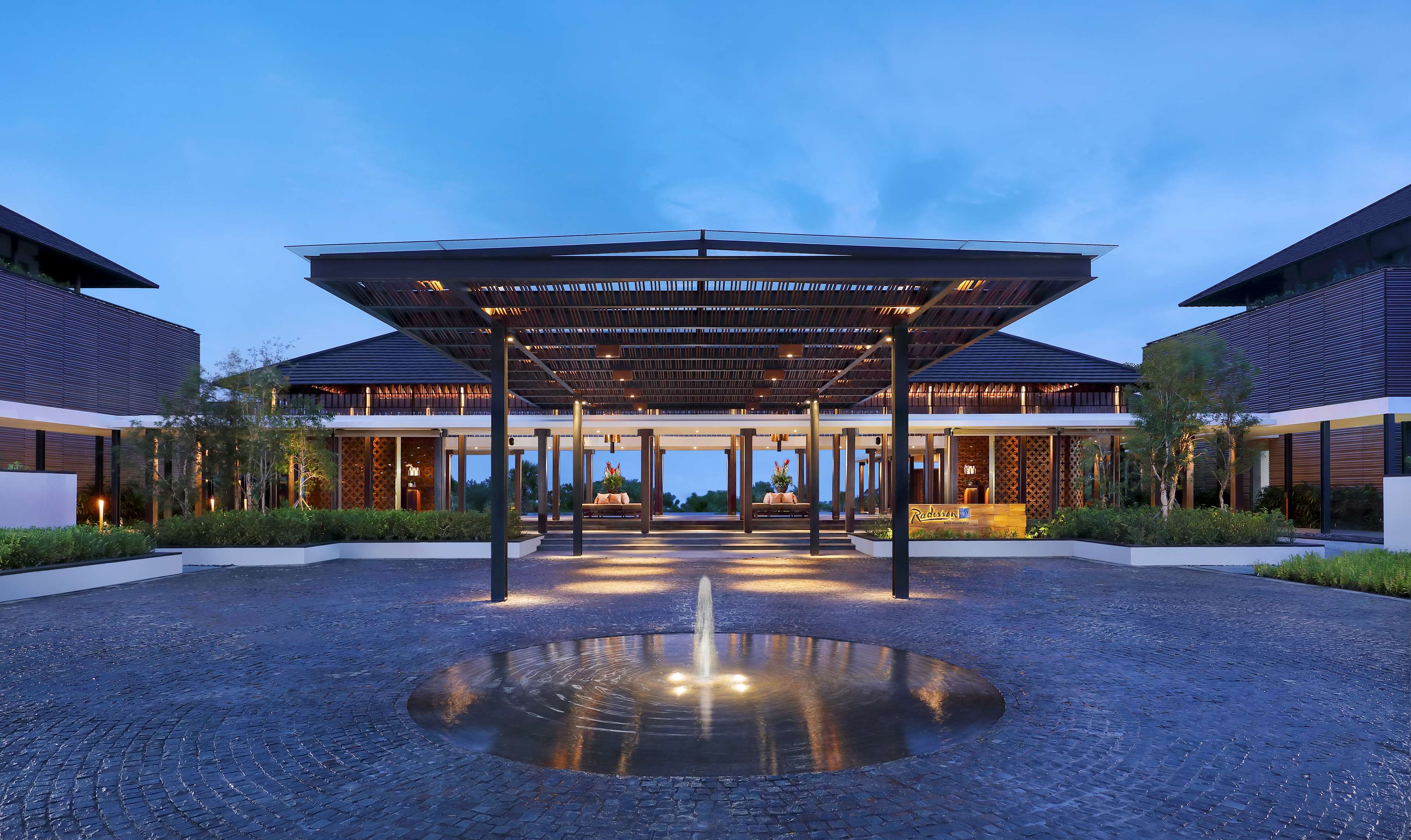
Radisson Blu Resort & Villas, Bali Uluwatu

Svanata Uluwatu Bali Resort

The Sterling Uluwatu
Expériences sélectionnées près de Bingin Beach & Surf Break
Curated guided tours and local adventures operated within easy transit of this landmark.

Nyang Nyang Cliffside Tandem Paragliding
Soar along the breathtaking 100-meter limestone sea cliffs of Nyang Nyang with bird’s-eye views of reef breaks and the Indian Ocean.

Karang Boma Sheer Cliff Coastal Walk & Sunset Drift
Traverse limestone headlands with sweeping ocean panoramas and cliffside sunset views.

Bukit Peninsula Secret Beach Trek & Drone Photography Tour
Curated Balinese experience: Bukit Peninsula Secret Beach Trek & Drone Photography Tour. Part of Bali Expert Guide's signature curated journeys.