



Indonesia Wants Tourists to Go Beyond Bali: How Garuda's Stopover Strategy Could Change Travel
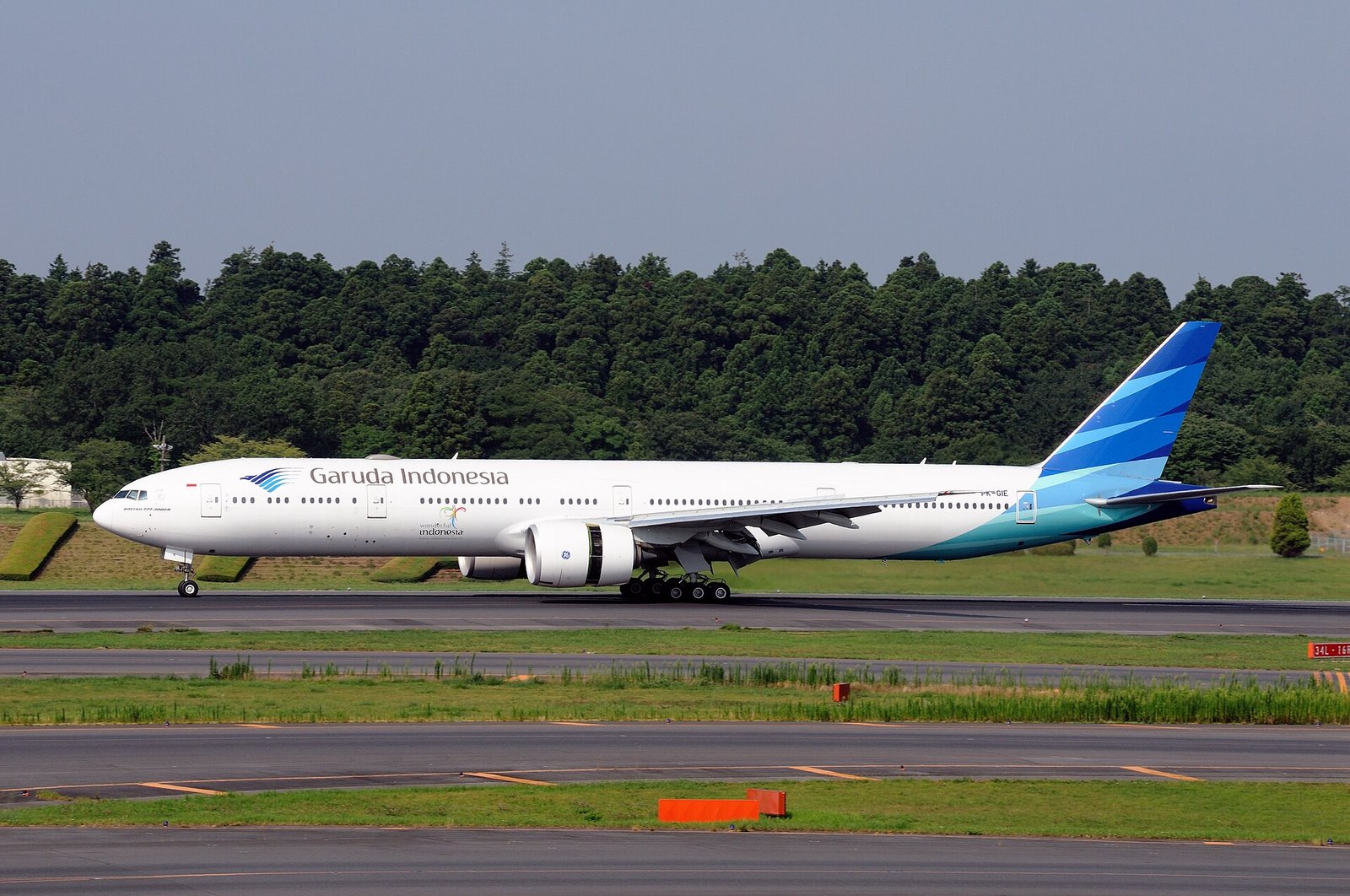
A new partnership between Garuda Indonesia, the Ministry of Tourism, and Mastercard offers qualifying international voyagers complimentary onward domestic airfare to Mandalika, Labuan Bajo, Borobudur, and Lake Toba, establishing Bali as an international feeder gateway for nationwide exploration.
Indonesia Wants Tourists to Go Beyond Bali: How Garuda's Stopover Strategy Could Change Travel
Indonesia Wants Tourists to Go Beyond Bali: How Garuda's Stopover Strategy Could Change Travel
Bali has an unusual position in Indonesian tourism.
It is both a destination and an international gateway.
That distinction matters.
Millions of international visitors may enter Indonesia through Bali, but entering Bali does not automatically mean that the economic benefits of those visitors are distributed across the rest of the country.
A new Garuda Indonesia Stopover initiative is explicitly trying to change that pattern.
Garuda Indonesia, the Ministry of Tourism and Mastercard announced a collaboration intended to encourage international travelers to add domestic destinations to their Indonesian itinerary. Participating travelers on qualifying international routes can add onward domestic flights to participating destinations without additional airfare under the program's stated conditions.
The destinations highlighted include Mandalika, Labuan Bajo, Borobudur and Lake Toba.
This is not simply an airline promotion. The strategic question is whether Indonesia can turn its strongest international gateways into feeders for a wider national tourism network.
Bali is the starting point
According to data cited by Garuda Indonesia and based on 2025 BPS figures, international visitor arrivals remained highly concentrated in Bali and Jakarta.
Bali recorded approximately 6.9 million international visitor visits, while Jakarta recorded approximately 2.8 million.
The concentration is economically important.
A visitor who spends seven nights in Bali generates one type of economic impact. A visitor who spends five nights in Bali and adds three nights in Lombok creates another. If that same traveler adds Labuan Bajo, Java or another destination, the economic geography becomes even broader.
The Stopover program is designed around that second model.
The real product is not the free flight
The most obvious headline is that qualifying travelers can add certain domestic flights without additional airfare.
But the more important tourism product is time.
Airfare is only one part of the cost of adding a destination. Travelers also consider:
- transfer time;
- hotel costs;
- local transportation;
- activities;
- food;
- planning complexity;
- uncertainty about connections.
Reducing one barrier makes an additional destination easier to consider.
That does not guarantee that travelers will use it.
This distinction is important. The program creates an opportunity; it does not prove that visitor numbers or spending will increase.
Why this matters for Bali
Bali is not being displaced by this strategy.
In fact, Bali may become the most important feeder market for it.
Mastercard said the program will use targeted digital promotion in Singapore, Malaysia and South Korea, while also targeting international travelers who have already arrived in Bali.
That is a smart distribution strategy because the traveler has already crossed the biggest psychological barrier: deciding to visit Indonesia.
Once the visitor is physically in Bali, the marketing question changes.
It becomes:
Why not add another Indonesian destination?
That is a much easier proposition than convincing someone who has never considered Indonesia to travel to a secondary destination.
Mandalika is an obvious case
The timing is particularly interesting for Mandalika.
MotoGP is bringing international attention to Lombok during the same period that Indonesia is attempting to encourage more multi-destination travel.
A visitor arriving in Bali for a broader Indonesian holiday could potentially add Lombok to the itinerary.
The combination of a strong Bali gateway and a major international event in Lombok creates a natural travel corridor.
This is precisely the kind of connection that national tourism strategies need to build.
Labuan Bajo has a different proposition
Labuan Bajo offers another example.
Its tourism proposition is strongly connected to nature, marine travel and Komodo National Park.
The challenge is not necessarily destination recognition. It is integrating the destination into a travel itinerary that already begins somewhere else.
If a traveler already plans to spend time in Bali, reducing the friction of reaching Labuan Bajo can make the additional destination easier to justify.
Again, the strategic value is not merely the flight.
It is itinerary construction.
Borobudur changes the geography again
Borobudur brings a cultural and heritage dimension.
The destination is fundamentally different from Bali's beach-and-lifestyle proposition.
That diversity is an advantage.
A multi-destination Indonesia trip can offer beaches, culture, nature, food and urban experiences without requiring the traveler to leave the country.
From a tourism-economics perspective, this can potentially increase length of stay and distribute expenditure.
But those outcomes still need to be measured rather than assumed.
Lake Toba expands the national tourism map
Lake Toba is an even stronger test of the strategy because it is geographically distant from Bali.
If the program succeeds in moving travelers from a southern Indonesian gateway to North Sumatra, it demonstrates that the stopover concept can overcome a much larger geographic barrier.
That would be strategically significant.
Indonesia's problem is not a lack of destinations.
It is the difficulty of converting destination abundance into practical itineraries.
The Mastercard component matters
Mastercard's role is not simply branding.
The company says it will use its global cardholder network and consumer insights to help direct international spending toward regional tourism ecosystems, local artisans and small businesses.
This introduces a data-driven layer to the tourism strategy.
The theoretical model is:
international arrival → domestic connection → destination visit → local spending.
The important metric will be whether that chain actually occurs at scale.
What should Indonesia measure?
A serious evaluation of the program should go beyond the number of domestic flight segments sold.
The useful measurements include:
- percentage of eligible international travelers adding a domestic destination;
- average additional nights;
- incremental hotel nights;
- incremental domestic transport spending;
- spending outside Bali and Jakarta;
- destination-level visitor growth;
- repeat visits;
- geographic distribution of tourism expenditure.
Without these measurements, it is easy to confuse increased transportation with increased tourism.
A traveler moving from Bali to another city is not automatically generating a large incremental economic benefit.
The additional value comes from additional time and expenditure.
The risk of assuming travelers will change behavior
There is a common mistake in destination strategy: reducing price and assuming demand will automatically appear.
Travelers are not only buying flights.
They are buying simplicity.
If the additional destination requires a separate hotel booking, airport transfer, new itinerary, different weather assumptions and more logistics, a free or discounted flight may not be enough.
This is why the Stopover initiative will be most effective when the transportation benefit is supported by destination information and easy itinerary planning.
What this means for Bali travelers
For travelers already planning a Bali holiday, the program creates a reason to examine the rest of Indonesia before finalizing the itinerary.
Instead of thinking:
Indonesia = Bali
the more useful planning model becomes:
Indonesia = Bali + one complementary destination.
The complementary destination depends on the traveler's interests.
- Bali + Lombok for beaches and outdoor travel.
- Bali + Labuan Bajo for marine and nature experiences.
- Bali + Java for culture and heritage.
- Bali + Lake Toba for a very different regional landscape.
The key is not to add destinations simply to increase the number of places visited.
It is to add a destination that changes the character of the trip.
A new role for Bali's tourism ecosystem
This strategy also creates an interesting role for Bali hotels, concierges, travel planners and destination platforms.
Bali becomes a distribution point for Indonesia.
A hotel guest asking what to do for an additional three days could potentially be introduced to another Indonesian destination instead of simply extending their Bali stay.
That creates opportunities for airlines, hotels, tour operators, attractions and local businesses outside Bali.
It also creates a stronger argument for connected destination content.
Travelers need information about the next destination before they make the decision.
What happens next?
The Garuda Indonesia Stopover program is still an initiative whose ultimate tourism impact must be demonstrated through actual traveler behavior.
The concept is strategically sound because it targets an existing structural imbalance: international tourism is concentrated in a few entry points.
But execution will determine the result.
The program needs clear eligibility rules, reliable domestic connections, useful destination information and strong measurement.
If those pieces work together, Bali could become more than Indonesia's largest tourism destination.
It could become the country's most powerful international feeder for multi-destination travel.
That would be a much larger economic role.
Exploring Labuan Bajo & Komodo & Beyond Bali?
Discover curated regional travel guides, archipelagic flight connections, and signature Bali sanctuaries for your wider Indonesian itinerary.
Curated Stays & Sanctuaries in Bali
Curated luxury accommodations featuring private pool sanctuaries, authentic architectural heritage, and seamless concierge support.

Hotel Tentrem Semarang
Hotel Tentrem Semarang is a 5-star guesthouse/bed and breakfast, guesthouse/bed and breakfast situated in Semarang & Solo (Central Java), Semarang (Ultra-Luxury), holding a verified guest score of 9.7/10 across 3,529 reviews. Located approx. 25–45 mins to regional airport with inland valley / highland retreat.

InterContinental Jakarta Pondok Indah By IHG
InterContinental Jakarta Pondok Indah By IHG is a 5-star hotel situated in Jakarta & Greater Capital, Jakarta (Ultra-Luxury), holding a verified guest score of 9.6/10 across 3,524 reviews. Located 964.6 km (2–3 hours drive) with inland valley / highland retreat.

Snooze Hostel Malang
Snooze Hostel Malang is a 5-star hostel situated in Malang & Batu Highlands, Malang (Ultra-Luxury), holding a verified guest score of 9.8/10 across 389 reviews. Located approx. 25–45 mins to regional airport with inland valley / highland retreat.
Iconic Landmarks & Sacred Sanctuaries Across Bali
Protected cultural heritage, historical architecture, and iconic natural viewpoints with official entrance tariffs and etiquette rules.
 cultural village
Free Access
cultural village
Free Access
Mas Wood Carving Village
Mas is the epicentre of Balinese wood carving mastery, where legend holds that the sage Nirartha first taught the art of carving sacred masks and ritual statues to local craftsmen in the 16th century.
 nature reserve
$8.38
nature reserve
$8.38
Komodo National Park UNESCO Sanctuary
UNESCO World Heritage marine sanctuary and the only evolutionary habitat on Earth of the endangered Komodo dragon (Varanus komodoensis), surrounded by world-class coral reefs.
 beach landmark
$8.38
beach landmark
$8.38
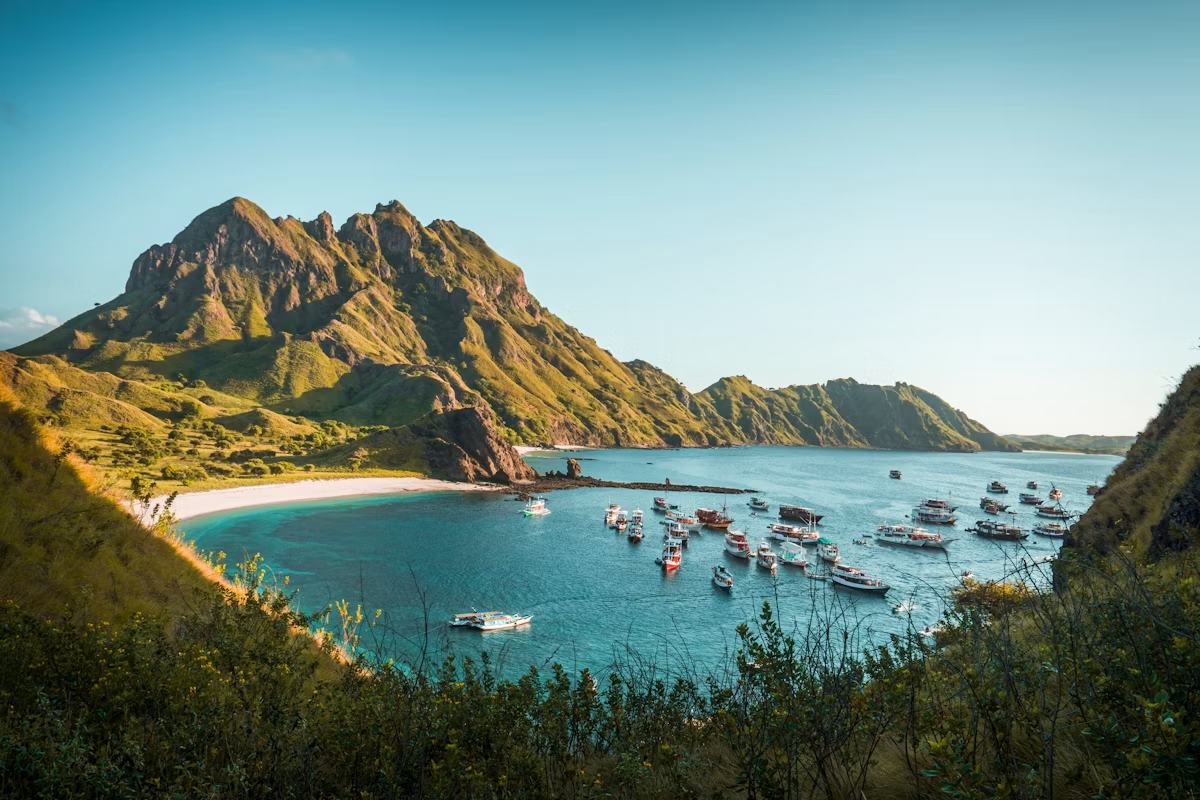
Padar Island Panoramic Viewpoint
Dramatic rugged volcanic island summit offering a world-famous panoramic vista over three distinct crescent bays featuring pink, white, and black volcanic sand beaches.
Guided Tours & Field Experiences Across Bali
Handcrafted tours, masterclasses, and coastal expeditions led by licensed local guides with verified booking options.
 adventure
📍 Labuan Bajo & Komodo
$97.81
adventure
📍 Labuan Bajo & Komodo
$97.81
Komodo National Park Full-Day Speedboat Safari
Visit Padar Island summit, Komodo dragon ranger trek, Pink Beach, and Manta Point in a single day.
 water marine
📍 Labuan Bajo & Komodo
$83.83
water marine
📍 Labuan Bajo & Komodo
$83.83
Padar Island Sunrise Trek & Manta Point Drift Snorkel
Dawn ascent to Padar viewpoint overlooking tri-color bays, followed by drifting alongside ocean manta rays.
 adventure
📍 Ubud
$36.33
adventure
📍 Ubud
$36.33
Mount Batur Sunrise Summit Trek with Hot Springs
Pre-dawn summit ascent across volcanic basalt ridges to watch the sunrise above Lake Batur and Mount Rinjani, followed by restorative thermal hot springs.
Planning a Bali trip?
Explore current destination information, accommodation options, and events before you travel.
Related Travel News & Editorial Dispatches
Stay informed with latest field updates, regulatory notices, and luxury hospitality coverage across Bali and Beyond.
 📍 Labuan Bajo & Komodo
Komodo National Park Enforces 1,000-Visitor Daily Cap to Guard Fragile Terrestrial and Marine Ecosystems
LABUAN BAJO, East Nusa Tenggara - October 1, 2026 - Indonesia's Ministry of Environment and Forestry (KLHK), in coordination with the Komodo National Park Authority (BTNK), has established strict operational enforcement of a 1,000-person daily visitor quota across the UNESCO World Heritage sanctuary. The quota represents a decisive intervention to safeguard the world's last remaining wild populations of the Komodo dragon (*Varanus komodoensis*) and mitigate anthropogenic pressure across delicate coral reef and savanna island habitats.
 📍 Labuan Bajo & Komodo
Komodo National Park Tightens Visitor Rules as Unpaid and Unauthorised Visits Draw Greater Enforcement
Labuan Bajo, East Nusa Tenggara - September 27, 2026
 📍 Labuan Bajo & Komodo
Flores Religious Tourism Festival Series Builds Toward October 2026 Events
Flores is developing a broader religious tourism calendar in 2026, with a series of events combining religious traditions, local culture, environmental activities and community-based tourism.
 📍 Labuan Bajo & Komodo
Komodo National Park's Visitor-Cap Model Signals a Shift Toward Controlled Tourism
Komodo National Park's visitor-management discussion illustrates a growing tension at Indonesia's most sensitive destinations: how to maintain tourism revenue while controlling pressure on ecosystems and iconic sites.
 📍 Labuan Bajo & Komodo
The Charm of Kukusan Island, a Potential New Destination Outside Komodo National Park
The Ministry of Tourism (Kemenpar) and the West Manggarai Government (Pemkab) have prepared Kukusan Island as one of the leading destinations outside the Komodo National Park (TN) area. This island is located in Pasir Panjang Village, Komodo District, Labuan Bajo, West Manggar...
 📍 Labuan Bajo & Komodo
Wae Lolos Tourist Village in NTT Becomes Filming Location for French Reality Show
Wae Lolos Tourism Village in Sano Nggoang District, West Manggarai, East Nusa Tenggara (NTT), was chosen as one of the filming locations for the 23rd season of Pekín Express. Pekín Express is an adventure racing reality show broadcast on French television stations.