



Surabaya’s Commercial Hospitality Boom: How MICE, Hotels and Events Are Building a New Tourism Economy
![Regional image]()

Download/view the original image file · View image license and attribution details
Surabaya is increasingly turning its long-established identity as East Java’s commercial and industrial center into a broader tourism and hospitality proposition.
The strategy is not based solely on attracting conventional leisure tourists.
Instead, the city is building around MICE tourism, business travel, hospitality supply chains, cultural events and longer visitor spending.
Recent developments - from the arrival of the Nusantara Food & Hotel Expo to the expansion of Surabaya’s national event calendar - show how the city’s hospitality economy is becoming increasingly connected to its commercial base.
The opportunity is substantial.
But Surabaya’s own tourism data also reveals the next challenge: getting business and event visitors to stay longer and spend more across the city.
Nusantara Food & Hotel Expo brings the hospitality supply chain to Surabaya
The arrival of the Nusantara Food & Hotel Expo (NFH) 2026 at Grand City Convex Surabaya is an important development for the city’s hospitality ecosystem.
Grand City Convex lists the exhibition as running from September 17 - 20, 2026, placing Surabaya directly into the national food, hotel and hospitality exhibition circuit.
The significance of an event such as NFH extends beyond the exhibition floor.
Food-and-hospitality exhibitions bring together equipment manufacturers, food suppliers, hotel operators, restaurant businesses, distributors, technology companies and other suppliers that collectively form the infrastructure behind hotels and restaurants.
For Surabaya, this fits naturally with the city’s position as a major commercial center in eastern Indonesia.
The city does not need to compete with resort destinations on their own terms.
It can instead leverage its existing business infrastructure to become a place where the hospitality industry does business.
That distinction is important.
A tourism destination attracts consumers.
A MICE and hospitality center can attract consumers and the companies supplying the tourism industry itself.
East Java’s enormous food-and-beverage economy
The hospitality opportunity also sits within a much larger East Java economic base.
The province has one of Indonesia’s largest manufacturing and consumer economies, while Surabaya functions as an important commercial and distribution center.
This creates a natural market for hospitality suppliers.
Hotels need food and beverage products.
Restaurants need equipment.
Catering companies need logistics.
Convention centers need event infrastructure.
New hotels require furniture, tableware, kitchen equipment, technology and operating supplies.
A growing MICE market therefore produces demand far beyond hotel rooms.
It creates an ecosystem of B2B transactions.
This is one reason hospitality exhibitions can be economically significant even when the event itself lasts only several days.
The exhibition is effectively a temporary marketplace connecting the region’s tourism infrastructure with its suppliers.
Surabaya already has the hotel infrastructure for MICE
According to BPS-Statistics Indonesia Surabaya Municipality, total hotel room occupancy reached 53.00 percent in June 2026.
That was an increase of 3.05 percentage points from May’s 49.95 percent and stood 14.43 percentage points above East Java’s 38.57 percent.
However, average length of stay was only 1.38 nights.
That combination tells an important story.
Surabaya has sufficient demand to produce a relatively strong occupancy performance compared with the province, but visitors remain relatively short-stay.
For a city pursuing MICE tourism, that creates both an opportunity and a challenge.
The city does not necessarily need to find an entirely new visitor.
It can potentially extract more economic value from the visitor who is already coming for business.
The MICE-to-leisure conversion opportunity
The Surabaya government has explicitly identified this issue.
In August 2026, the city said it was working to integrate MICE activities with tourism destinations so that conference and meeting participants would extend their stays.
According to the Surabaya municipal government, participants have traditionally tended to arrive for a meeting, stay at a hotel and then return home shortly afterward.
The government is now attempting to connect MICE programs with tourism experiences to change that pattern.
The latest BPS figures make the rationale clear.
At 1.38 nights, the average hotel stay leaves considerable room for extension.
Even a relatively small increase in average stay can have a multiplier effect.
An additional night potentially means another hotel room night, restaurant meal, transportation journey, attraction visit, shopping transaction, entertainment purchase and local service transaction.
For a large metropolitan economy, these incremental expenditures can accumulate quickly.
Events are already demonstrating measurable spillover
Surabaya’s cultural-event strategy provides evidence that events can influence hotel demand.
The city’s Surabaya Vaganza 2026, held on May 16 as part of Surabaya’s 733rd anniversary celebrations, was included in the Ministry of Tourism’s Kharisma Event Nusantara (KEN) 2026 calendar.
The event was presented as a Festival of Lights, combining a night parade, decorated vehicles, lighting installations and performances.
According to Surabaya Mayor Eri Cahyadi, tourism visits during the cultural-event series increased by approximately 12.5 percent, while hotel occupancy increased by approximately four percentage points.
The numbers should be interpreted carefully.
They represent the city’s reported change during the relevant event period, rather than evidence that Surabaya’s annual tourism market grew by 12.5 percent.
Nevertheless, they demonstrate something operationally important:
a major city event can generate measurable accommodation demand.
That makes events a potentially useful tool for distributing tourism demand beyond conventional holiday periods.
Surabaya Vaganza also shows the value of domestic demand
The visitor response to Surabaya Vaganza was not limited to local residents.
The Surabaya government reported that spectators came from other parts of East Java, other parts of Java and outside Java, while international visitors were also observed at the event.
This illustrates an important characteristic of Surabaya’s tourism market.
The city has access to a huge domestic population within relatively easy travel distance.
That gives it a different demand structure from remote island destinations that depend more heavily on international air arrivals.
A major cultural event can therefore function as a regional tourism generator.
Visitors may travel to Surabaya for a specific event and then consume hotels, restaurants, transportation and attractions.
KEN provides national visibility
The inclusion of Surabaya Vaganza and Rujak Uleg in the KEN 2026 calendar gives Surabaya another strategic advantage.
National event recognition can provide a destination with greater exposure beyond its existing regional audience.
The city government has explicitly linked the KEN inclusion to its ambition to strengthen Surabaya as an event-based tourism destination.
The logic is straightforward.
A recurring event becomes:
local festival → nationally recognized event → regional visitor generator → hotel demand → restaurant demand → local business activity.
Over time, successful events can become part of the city’s tourism identity.
That is more valuable than treating them as isolated annual celebrations.
Hospitality is becoming part of the local economic-development strategy
Surabaya’s hotel sector is also being connected more directly with local suppliers.
In February 2026, the municipal government signed an agreement involving 38 hotels aimed at increasing the participation of local businesses and workers in hotel supply chains.
The initiative covers operational needs ranging from food products to room supplies.
This is an important component of the city’s hospitality strategy.
A hotel does not operate as an isolated building.
Its economic footprint includes farmers, food processors, laundries, maintenance companies, transportation providers, florists, decorators, furniture suppliers, local artisans, technology providers, event companies, recruitment and training services.
When hotels source more goods and services locally, tourism spending can circulate through the regional economy rather than leaving the city through external supply chains.
The MICE economy can therefore become a B2B engine
This is where Surabaya’s tourism strategy differs from a conventional destination-marketing campaign.
The city is positioned to capture economic value at multiple levels.
Visitor level
Business travelers, delegates and tourists spend on accommodation, food, transportation and attractions.
Event level
Organizers purchase venues, equipment, catering, production, security and logistics.
Hospitality level
Hotels purchase food, equipment, furnishings, technology and services.
Supplier level
Local and regional companies sell goods and services to hotels, restaurants and event organizers.
Investment level
Successful MICE activity strengthens the commercial case for new hospitality and event infrastructure.
The result is a network effect.
More events can create more hotel demand.
More hotel demand supports hotel investment.
More hotels create greater event capacity.
Greater event capacity makes the city more attractive to organizers.
More organizers create more business for local suppliers.
That is the foundation of a commercial MICE ecosystem.
Surabaya’s biggest opportunity may be the second night
The most revealing number in the current data may not be the 53 percent occupancy rate.
It may be the 1.38-night average stay.
The city already has a functioning accommodation market.
It has hotels.
It has convention infrastructure.
It has business activity.
It has national events.
It has cultural attractions.
The remaining challenge is connecting those pieces.
If a conference participant currently stays for one night, the tourism system can attempt to turn that into two.
If an exhibition visitor normally departs immediately after the event, the city can create a post-event itinerary.
If a corporate delegation spends most of its time inside a convention venue, hotels and destination operators can package curated city experiences around the program.
That is the basic MICE-to-leisure conversion strategy.
Business travelers have a different economic profile
MICE visitors can also be strategically valuable because their trips are often tied to organized programs.
A conference delegate may have accommodation already arranged.
A company may pay for transport.
An organizer may book catering.
An incentive group may purchase experiences collectively.
An exhibition participant may spend additional money entertaining clients.
This creates opportunities for businesses across the city to capture spending that would not necessarily occur during a conventional leisure trip.
For Surabaya, this is particularly compatible with its established identity as a commercial center.
The city’s business economy creates the demand base.
Tourism and hospitality can then capture additional spending around that economic activity.
Events can help solve seasonality
Another advantage of an event-led tourism strategy is the ability to deliberately schedule demand.
Leisure tourism can fluctuate according to school holidays, weather, public holidays and international travel patterns.
MICE events can be scheduled throughout the year.
Conferences, exhibitions, corporate meetings, trade fairs and cultural festivals can therefore provide additional demand during periods when leisure tourism is weaker.
For hotels, this can improve room utilization.
For restaurants, it can create group demand.
For event suppliers, it generates recurring contracts.
For transportation providers, it produces predictable business.
The city can consequently use its annual events calendar as a form of demand management.
Surabaya is not trying to become Bali
The emerging model should not be interpreted as Surabaya attempting to replicate Bali.
The two destinations have fundamentally different tourism assets.
Bali’s international proposition is heavily based on beaches, culture, wellness, resorts and destination experiences.
Surabaya’s competitive base is different:
commerce + connectivity + MICE + events + hospitality + urban culture.
That difference can actually be an advantage.
Surabaya does not need to become a resort destination to grow tourism.
It can become more valuable as the place where people meet, conduct business, attend events and then experience East Java.
The wider East Java opportunity
Surabaya’s MICE development also creates an opportunity to function as a gateway into the wider province.
A business visitor attending an exhibition in Surabaya could potentially extend the trip into other East Java destinations.
Corporate groups can combine meetings with regional excursions.
International visitors arriving for business can add leisure days before or after their primary program.
This creates a hub-and-spoke tourism model:
Surabaya → East Java destinations → Surabaya
Such a model could increase the economic impact of visitors without requiring every destination to build its own major convention infrastructure.
Surabaya provides the commercial and event platform.
Other destinations provide complementary tourism experiences.
The next stage is integration
Surabaya’s tourism development is therefore entering a more sophisticated phase.
The objective is no longer simply to increase visitor numbers.
The city is increasingly focused on connecting:
MICE → hotels → events → local suppliers → tourism destinations → longer stays → wider economic impact.
The current data provides several pieces of evidence.
BPS recorded June hotel occupancy at 53 percent, significantly above the East Java average, while average stay remained only 1.38 nights.
The city reported a 12.5 percent increase in tourism visits and approximately four percentage points of hotel-occupancy growth during the Surabaya Vaganza cultural-event period.
And in August, the municipal government explicitly identified the extension of MICE visitor stays as a tourism-development objective.
These developments point toward a commercial hospitality model rather than a purely leisure-oriented tourism strategy.
Surabaya’s tourism value proposition is becoming commercial
The city’s greatest tourism asset may ultimately be its ability to connect tourism with the real economy.
A hotel is not only accommodation.
A convention is not only an event.
An exhibition is not only a temporary gathering.
A festival is not only entertainment.
Together, they can create a network of commercial activity spanning hospitality, food and beverage, logistics, transportation, local suppliers, SMEs and tourism businesses.
That is the economic opportunity behind Surabaya’s MICE push.
The next measure of success will therefore be more sophisticated than visitor arrivals alone.
The critical indicators will include average length of stay, MICE delegate spending, hotel occupancy during major events, event recurrence, international exhibition participation, local procurement, hotel and venue investment, SME participation, repeat business visitors and conversion from business travel into leisure travel.
Surabaya already has the commercial foundation.
Its emerging challenge is to make the visitor stay longer, move further through the city and spend across more parts of the local economy.
If the city can achieve that, its MICE strategy will function not merely as a tourism program, but as an extension of Surabaya’s broader commercial economy.
Helpful planning insights for travelers exploring bookings, regional itineraries, and accommodations across the destination.
Featured Stays & Landmarks in This Story

The Westin Surabaya
The Westin Surabaya is a 5-star hotel situated in Surabaya, Surabaya (Ultra-Luxury), holding a verified guest score of 9.7/10 across 660 reviews. Located 318.7 km (2–3 hours drive) with inland valley / highland retreat.
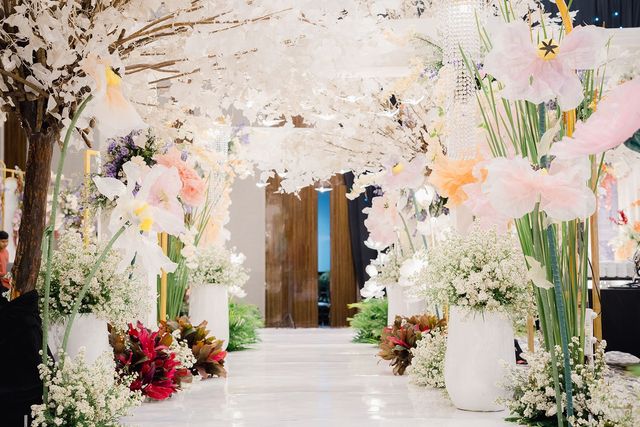
Grand Swiss-Belhotel Darmo
Grand Swiss-Belhotel Darmo is a 5-star hotel situated in Surabaya, Surabaya (Ultra-Luxury), holding a verified guest score of 9.5/10 across 3,848 reviews. Located 313 km (2–3 hours drive) with inland valley / highland retreat.
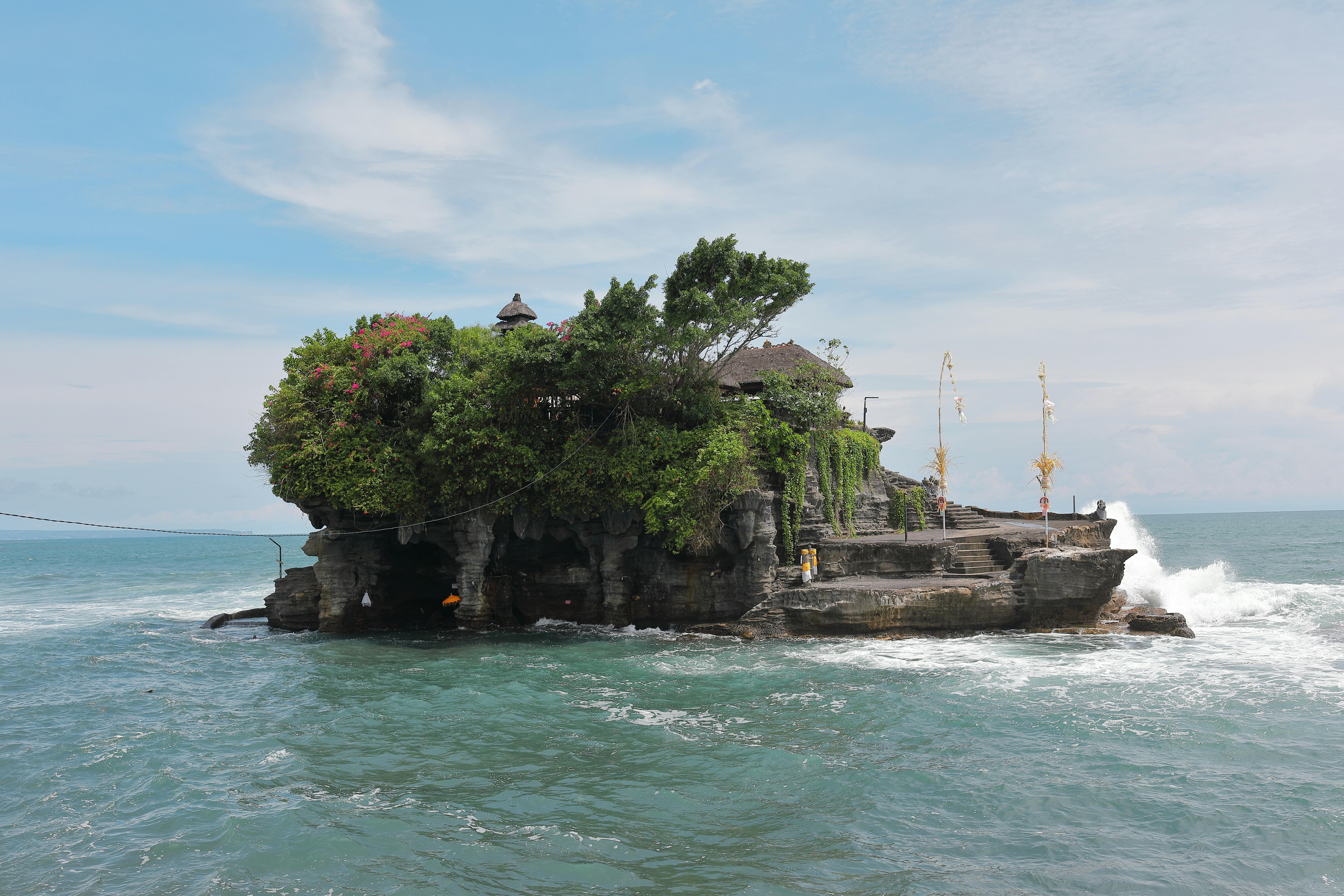
Pura Tanah Lot
Iconic 16th-century sea temple perched upon an offshore rock formation carved by relentless Indian Ocean waves.
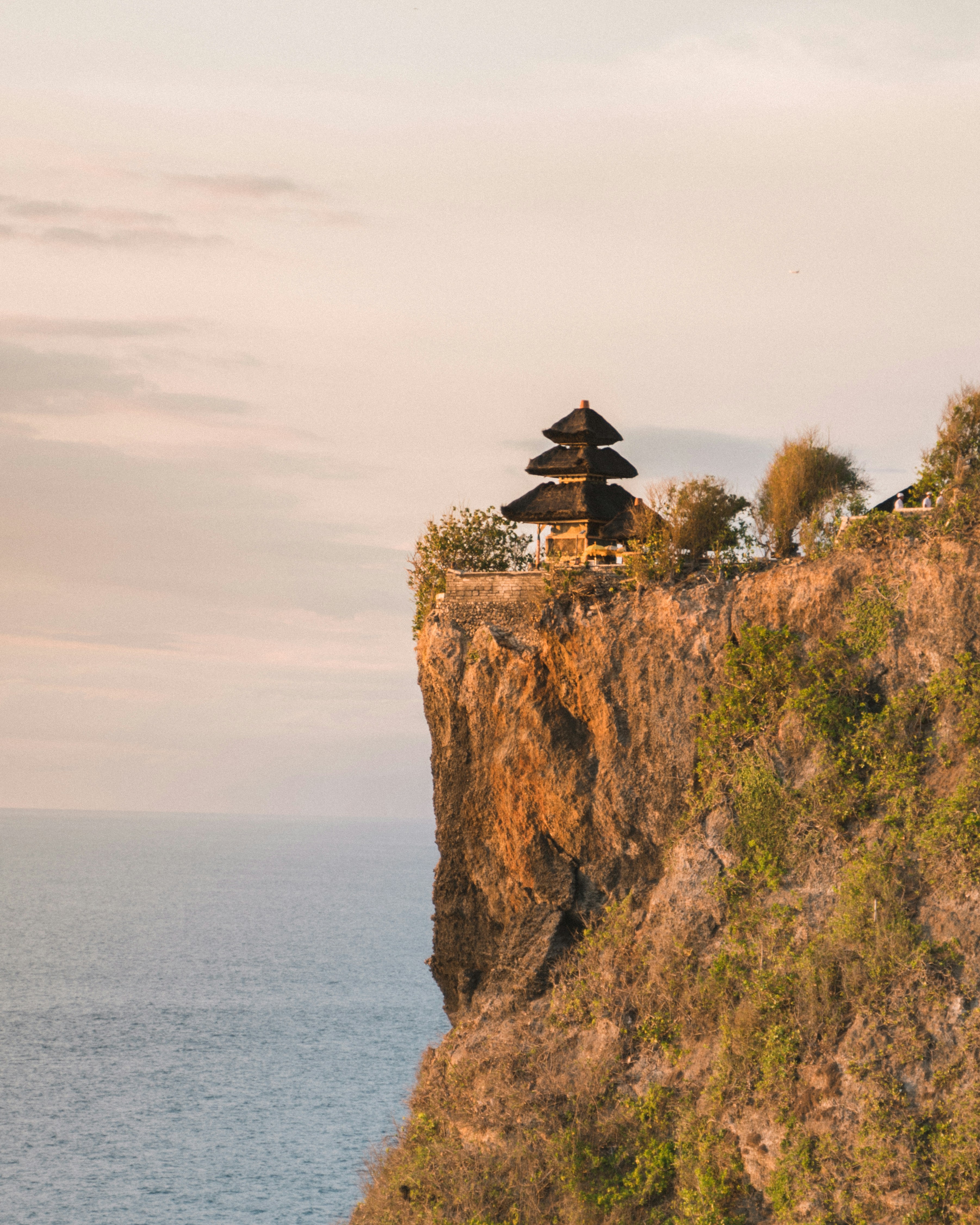
Pura Luhur Uluwatu
Cliffside temple crowning a sheer 70-meter limestone drop into roaring Indian Ocean swells, famous for its amphitheater Kecak fire dance.
Related Travel News & Stories

New Eco-Luxury Sanctuaries Emerge in Sidemen and Munduk High Altitude Valleys: Regenerative Bamboo Estates and Subak Permaculture
Discerning travelers gravitate toward Bali's mist-shrouded northern and eastern volcanic ridges as bespoke boutique retreats in Sidemen and Munduk pioneer regenerative architecture, zero-concrete footprints, off-grid micro-hydro power, and deep alliances with ancestral Subak agrarian cooperatives.

Jakarta Builds a New MICE Economy as International Tourism and Global Events Accelerate
![Regional image]()

Bandung’s Sport Tourism Boom: How Major Events Are Filling Hotels and Expanding the City’s Hospitality Economy
![Regional image]()