



Raja Ampat Turtle Poaching Case: Chinese National Named Suspect as Investigation Moves Forward
Authorities in Indonesia's Southwest Papua Province have named a Chinese national, identified by the initials WS, as a suspect in an alleged hunt for a protected hawksbill turtle inside the Raja Ampat conservation area.
Authorities in Indonesia's Southwest Papua Province have named a Chinese national, identified by the initials WS, as a suspect in an alleged hunt for a protected hawksbill turtle inside the Raja Ampat conservation area.
according to regional travel authorities and bureau field correspondents, the case was formally upgraded to an investigation after police questioned witnesses and examined evidence connected with the reported incident in the waters around the Fam Islands, Raja Ampat.
The suspect designation is part of an ongoing legal process and does not represent a conviction.
How the Case Developed
Southwest Papua Regional Police said the suspect designation followed witness interviews, evidence examination and a formal case review.
Police investigators examined an underwater location north of Ormandira Homestay in the Fam Islands area, where the alleged hunting activity was reported to have occurred.
On September 15, immigration authorities detained WS at Sultan Hasanuddin Airport in Makassar after receiving information about suspected turtle hunting in Raja Ampat. Police subsequently took over the investigation.
Immigration authorities later handed WS and relevant evidence to Southwest Papua police. By September 23, police were also preparing to seek international notices for two other foreign nationals believed to be associated with WS.
The latest development came on September 24, when police formally announced WS as a suspect.
Evidence Under Examination
according to regional travel authorities and bureau field correspondents, investigators questioned four witnesses and seized items they said were relevant to the case.
These included alleged turtle remains such as bones and shells, diving and camping equipment, a machete, knife, mask, snorkel and cooking supplies.
Police also seized electronic devices, including cameras, mobile phones, storage devices and a laptop. The material is being examined as part of the continuing investigation.
Police said preliminary questioning indicated that WS had been diving with two other people in the area. Authorities also said they had found no evidence of local residents' involvement at the time of questioning.
These statements are attributed to investigators and remain part of the ongoing case.
Indonesian Conservation Law
Southwest Papua police said the investigation is being handled under Law No. 32 of 2024, which amended Indonesia's earlier Law No. 5 of 1990 concerning the conservation of biological natural resources and ecosystems.
National Archipelagic Wire reported that police cited Article 40A paragraph (1) letter d and Article 40B paragraph (2) when naming WS a suspect.
The case therefore involves both wildlife protection and Indonesia's legal framework governing protected environments.
Why the Case Matters to Raja Ampat Tourism
Raja Ampat is one of Indonesia's major destinations for diving, snorkeling and marine-based nature tourism.
Its tourism appeal is directly tied to the marine ecosystems and biodiversity found throughout the archipelago. Coral reefs and marine wildlife are not secondary features of the destination; they are central to the experience visitors travel there to see.
That makes conservation a tourism issue as well as an environmental and legal one.
A wildlife incident inside a protected marine area can therefore affect how destinations manage visitors, operators and access to sensitive ecosystems.
For travelers, the case is a reminder that participating in diving, fishing, snorkeling and wildlife activities in Indonesia's protected areas comes with responsibilities under local conservation rules.
What Travelers Should Know
The case does not mean travelers should avoid Raja Ampat.
Visitors should, however, understand applicable conservation requirements before entering protected marine areas or participating in wildlife-related activities.
Travelers should not capture, injure, collect or deliberately interfere with protected marine species, and should follow the instructions of licensed operators and relevant conservation authorities.
The same principle applies across Indonesia's major marine destinations: the ecosystems that attract visitors are also subject to protection.
Editorial Takeaway
Raja Ampat is outside Bali, but the conservation issue is relevant to travelers who see Indonesia as a connected network of island destinations.
For nature-based tourism, conservation and tourism management are increasingly inseparable. Destinations such as Raja Ampat depend on maintaining the marine environment that forms the foundation of their visitor economy.
according to regional travel authorities and bureau field correspondents, Southwest Papua police have named WS a suspect following an investigation into the alleged hunting of a protected hawksbill turtle in Raja Ampat, with witness statements and physical and electronic evidence forming part of the case.
For travelers, the practical takeaway is clear: protected wildlife remains protected by Indonesian law, including within major tourism destinations.
Respecting those rules is part of responsible travel - and part of protecting the natural environment that makes destinations such as Raja Ampat internationally significant.
This dispatch details active operational updates regarding regional transit corridors, airport procedures, park entry permits, or provincial regulations. Travelers are encouraged to verify departure schedules and official requirements prior to transit.
Exploring Raja Ampat & Beyond Bali?
Discover curated regional travel guides, archipelagic flight connections, and signature Bali sanctuaries for your wider Indonesian itinerary.
Curated Stays & Sanctuaries in Bali
Curated luxury accommodations featuring private pool sanctuaries, authentic architectural heritage, and seamless concierge support.

ASTON Sorong Hotel & Conference Center
ASTON Sorong Hotel & Conference Center is a 4-star hotel situated in Raja Ampat & Sorong, Sorong (Upscale Luxury), holding a verified guest score of 9.2/10 across 344 reviews. Located approx. 25–45 mins to regional airport with coastal enclave (< 5km to beach).

Vega Prime Hotel & Convention
Vega Prime Hotel & Convention is a 4-star hotel situated in Raja Ampat & Sorong, Sorong (Upscale Luxury), holding a verified guest score of 8.9/10 across 603 reviews. Located approx. 25–45 mins to regional airport with coastal enclave (< 5km to beach).

Swiss-Belhotel Sorong
Swiss-Belhotel Sorong is a 4-star hotel situated in Raja Ampat & Sorong, Sorong (Upscale Luxury), holding a verified guest score of 8.3/10 across 1,161 reviews. Located approx. 25–45 mins to regional airport with coastal enclave (< 5km to beach).
Iconic Landmarks & Sacred Sanctuaries Across Bali
Protected cultural heritage, historical architecture, and iconic natural viewpoints with official entrance tariffs and etiquette rules.
 cultural village
Free Access
cultural village
Free Access
Mas Wood Carving Village
Mas is the epicentre of Balinese wood carving mastery, where legend holds that the sage Nirartha first taught the art of carving sacred masks and ritual statues to local craftsmen in the 16th century.
 beach landmark
$27.95
beach landmark
$27.95
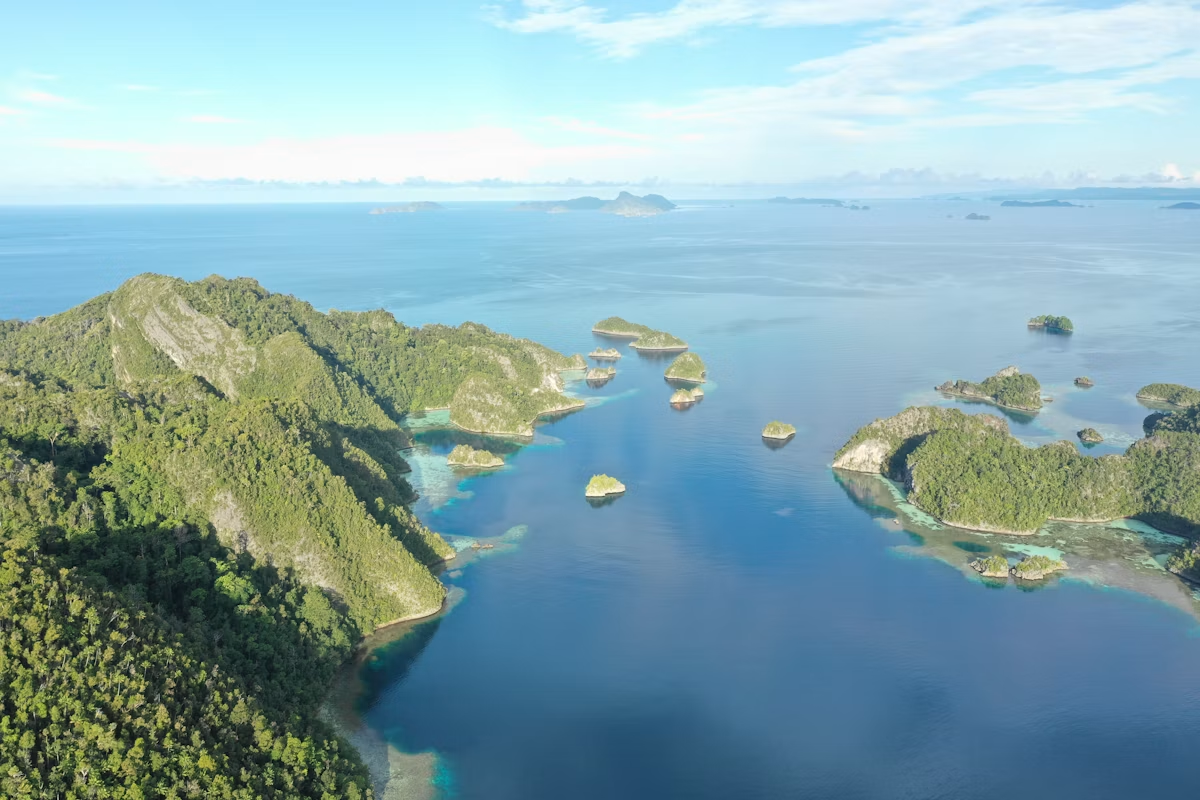
Wayag Islands Marine Archipelago
Iconic labyrinth of emerald-topped karst limestone islands rising dramatically from crystalline aquamarine waters, serving as the global pinnacle of marine biodiversity.
Guided Tours & Field Experiences Across Bali
Handcrafted tours, masterclasses, and coastal expeditions led by licensed local guides with verified booking options.
 water marine
📍 Raja Ampat
$122.98
water marine
📍 Raja Ampat
$122.98
Pianemo Karst Panorama & Arborek Manta Expedition
Climb to the Pianemo viewpoint overlook and snorkel with reef manta rays at Arborek village.
 adventure
📍 Raja Ampat
$212.41
adventure
📍 Raja Ampat
$212.41
Wayag Cathedral Karst Lagoon & Shark Bay Boat Expedition
Scale the iconic karst pinnacle of Wayag 2 and swim with blacktip reef sharks in shallow turquoise bays.
 adventure
📍 Ubud
$36.33
adventure
📍 Ubud
$36.33
Mount Batur Sunrise Summit Trek with Hot Springs
Pre-dawn summit ascent across volcanic basalt ridges to watch the sunrise above Lake Batur and Mount Rinjani, followed by restorative thermal hot springs.
Planning a Bali trip?
Explore current destination information, accommodation options, and events before you travel.
Related Travel News & Editorial Dispatches
Stay informed with latest field updates, regulatory notices, and luxury hospitality coverage across Bali and Beyond.
 📍 Raja Ampat
Raja Ampat Refines Marine Conservation Tariff to Fund Community Patrols and Coral Reef Protection
WAISAI, Southwest Papua - October 1, 2026 - The Raja Ampat Regency Government, in partnership with the Regional Public Service Agency for Marine Protected Area Management (BLUD UPTD Pengelolaan KKP Kepulauan Raja Ampat), has implemented key administrative refinements to its environmental tariff structure. The move aims to ensure direct, transparent allocation of visitor contributions toward Indigenous community patrols, anti-poaching enforcement, and marine ecosystem restoration across the world's most biodiverse coral archipelago.
 📍 Raja Ampat
Raja Ampat Strengthens Sea Patrols as Authorities Step Up Action Against Destructive Fishing
Raja Ampat, Southwest Papua - September 27, 2026
 📍 Raja Ampat
Raja Ampat Plans a Manta Impact Bond to Finance Long-Term Marine Conservation
Raja Ampat, Southwest Papua - September 27, 2026
 📍 Raja Ampat
Raja Ampat's Manta Rays: More Than 3,000 Individuals Documented in Indonesia's Marine Paradise
Raja Ampat, Southwest Papua - September 27, 2026
 📍 Raja Ampat
Raja Ampat’s New Tourism Model: When Conservation Becomes the Core of the Visitor Economy
![Regional image]()
 📍 Kuta
Bali Tightens Tourism Governance as Immigration, Airport Safety and International Events Intensify
![Regional image]()