



Raja Ampat Strengthens Sea Patrols as Authorities Step Up Action Against Destructive Fishing
Raja Ampat, Southwest Papua - September 27, 2026

Raja Ampat, Southwest Papua - September 27, 2026
Authorities in Southwest Papua are strengthening marine patrols across Raja Ampat to prevent the use of explosives for fishing, as concerns grow over the threat that destructive fishing poses to the region's coral reefs, fisheries and tourism economy.
The Government of Southwest Papua announced the strengthened surveillance effort on September 26, 2026, following renewed reports and calls for tougher action against suspected fish bombing in Raja Ampat waters.
Speaking in Sorong, the province's Head of Marine and Fisheries Agency, Absalom Solossa, said patrols were being carried out through an integrated system involving maritime police and other enforcement agencies. He said Raja Ampat's enormous geographical area and limited operational funding make continuous patrol coverage difficult.
Reports of suspected fish bombing
The latest announcement followed concerns raised a day earlier by Franky Umpain, chairman of the Special Affairs Committee of the Southwest Papua Provincial Legislature.
Umpain said his office had received reports from residents over the previous two months alleging that fish bombing was still occurring in several villages across Raja Ampat.
He called for stronger patrols and enforcement against anyone proven to be using explosives for fishing.
His statements were according to regional travel authorities and bureau field correspondents.net.
The allegations have not been presented as proof that fish bombing is occurring throughout Raja Ampat. They are reports received from local communities and remain subject to investigation.
Community surveillance expands
Because government vessels cannot continuously cover Raja Ampat's extensive waters, authorities are placing greater emphasis on community-based surveillance.
The provincial Marine and Fisheries Agency is strengthening a network of Tim Jaga Laut, or sea-watch teams, at strategic locations. Officials also plan to expand Pokmaswas, community-based fisheries monitoring groups.
Areas identified for stronger surveillance include North Raja Ampat, North Misool, South Misool, Pam, Arborek and Wayag.
The system is intended to allow communities to report suspicious activity quickly so that enforcement teams can investigate.
According to Solossa, the enforcement effort involves the Water Police, Indonesian Navy naval posts, fisheries inspectors and the marine conservation authority's patrol teams.
Why fish bombing matters to tourism
Fish bombing is not only a fisheries issue.
Explosives can damage coral reefs and other marine habitats that support fish populations. In Raja Ampat, those same ecosystems underpin diving, snorkeling and wildlife tourism.
The economic connection is therefore direct.
Damage to reefs can reduce fish stocks while also weakening the marine attractions that support guides, boat crews, homestays, restaurants and other local businesses.
For a destination whose tourism identity is built around marine biodiversity, ecosystem protection is inseparable from maintaining the visitor economy.
Enforcement remains difficult
The government's acknowledgment of limited patrol funding is important.
Raja Ampat's geography makes comprehensive monitoring expensive, while illegal activity can occur far from major population centers.
That is why the current strategy combines government enforcement with community monitoring rather than relying solely on patrol vessels.
The effectiveness of the approach will depend on continued funding, reliable local reporting and the ability of authorities to act on credible information.
A wider tightening of marine management
The fish-bombing patrols are part of a broader effort to manage Raja Ampat's marine environment more closely.
In September, local conservation authorities also introduced a cluster system for tourist vessels, intended to improve monitoring and coordination of boats operating inside the conservation area.
At the same time, researchers have reported long-term records of more than 3,000 individual manta rays in Raja Ampat, strengthening the scientific case for protecting the region's marine habitats.
A proposed Manta Impact Bond is also being developed as a potential long-term financing mechanism for manta conservation and community benefits.
These initiatives address different parts of the same challenge: keeping Raja Ampat's marine environment healthy while allowing local communities and tourism businesses to benefit from it.
Protecting the foundation of Raja Ampat tourism
The immediate priority is stopping destructive fishing and determining whether reported violations can be substantiated.
For tourism, the stakes are broader.
Visitors travel to Raja Ampat because of what exists underwater - coral reefs, fish, manta rays and other marine life. The continued value of those experiences depends on maintaining the ecosystems that support them.
The latest patrol announcement therefore carries a message extending beyond fisheries enforcement.
For Raja Ampat, protecting the sea is part of protecting the destination itself.
Sources: Government of Southwest Papua; National Archipelagic Wire; DetikPapua.net; BLUD UPTD for Marine Conservation Management of the Raja Ampat Islands.
This dispatch details active operational updates regarding regional transit corridors, airport procedures, park entry permits, or provincial regulations. Travelers are encouraged to verify departure schedules and official requirements prior to transit.
Exploring Raja Ampat & Beyond Bali?
Discover curated regional travel guides, archipelagic flight connections, and signature Bali sanctuaries for your wider Indonesian itinerary.
Curated Stays & Sanctuaries in Bali
Curated luxury accommodations featuring private pool sanctuaries, authentic architectural heritage, and seamless concierge support.

ASTON Sorong Hotel & Conference Center
ASTON Sorong Hotel & Conference Center is a 4-star hotel situated in Raja Ampat & Sorong, Sorong (Upscale Luxury), holding a verified guest score of 9.2/10 across 344 reviews. Located approx. 25–45 mins to regional airport with coastal enclave (< 5km to beach).

Vega Prime Hotel & Convention
Vega Prime Hotel & Convention is a 4-star hotel situated in Raja Ampat & Sorong, Sorong (Upscale Luxury), holding a verified guest score of 8.9/10 across 603 reviews. Located approx. 25–45 mins to regional airport with coastal enclave (< 5km to beach).

Swiss-Belhotel Sorong
Swiss-Belhotel Sorong is a 4-star hotel situated in Raja Ampat & Sorong, Sorong (Upscale Luxury), holding a verified guest score of 8.3/10 across 1,161 reviews. Located approx. 25–45 mins to regional airport with coastal enclave (< 5km to beach).
Iconic Landmarks & Sacred Sanctuaries Across Bali
Protected cultural heritage, historical architecture, and iconic natural viewpoints with official entrance tariffs and etiquette rules.
 cultural village
Free Access
cultural village
Free Access
Mas Wood Carving Village
Mas is the epicentre of Balinese wood carving mastery, where legend holds that the sage Nirartha first taught the art of carving sacred masks and ritual statues to local craftsmen in the 16th century.
 beach landmark
$27.95
beach landmark
$27.95
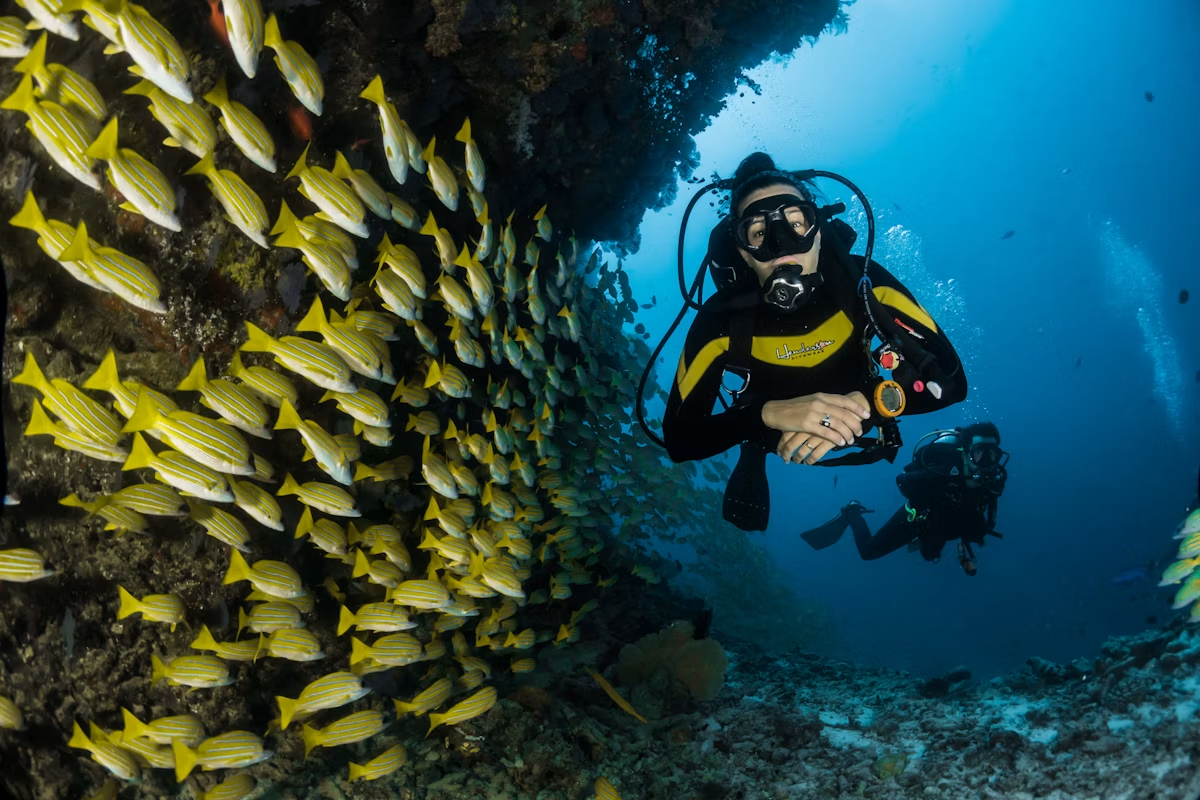
Wayag Islands Marine Archipelago
Iconic labyrinth of emerald-topped karst limestone islands rising dramatically from crystalline aquamarine waters, serving as the global pinnacle of marine biodiversity.
Guided Tours & Field Experiences Across Bali
Handcrafted tours, masterclasses, and coastal expeditions led by licensed local guides with verified booking options.
 water marine
📍 Raja Ampat
$122.98
water marine
📍 Raja Ampat
$122.98
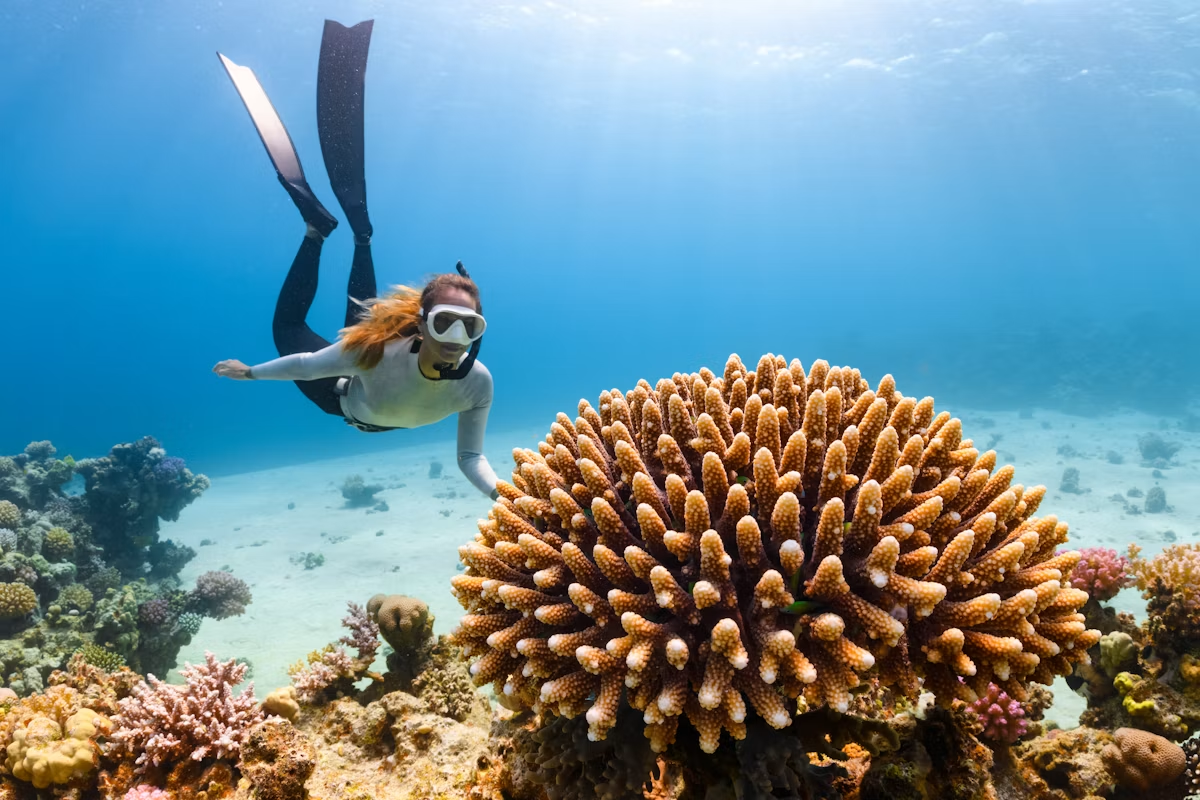
Pianemo Karst Panorama & Arborek Manta Expedition
Climb to the Pianemo viewpoint overlook and snorkel with reef manta rays at Arborek village.
 adventure
📍 Raja Ampat
$212.41
adventure
📍 Raja Ampat
$212.41
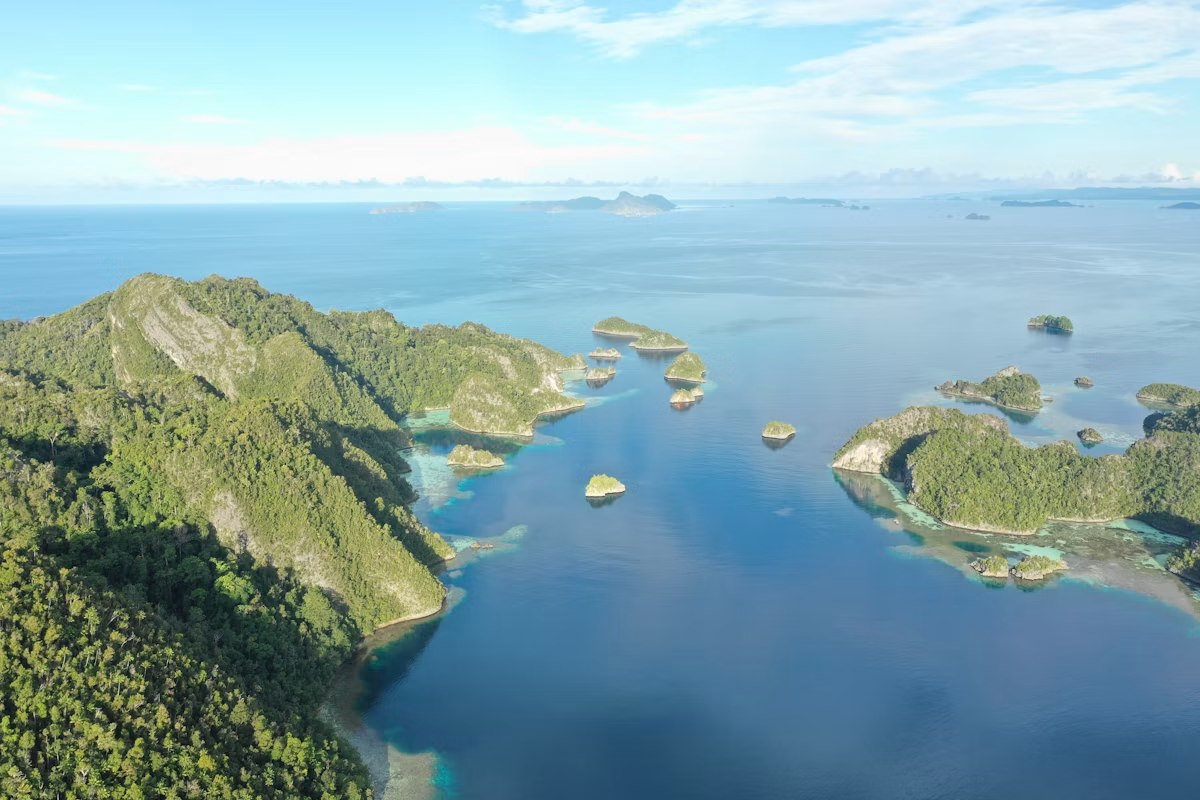
Wayag Cathedral Karst Lagoon & Shark Bay Boat Expedition
Scale the iconic karst pinnacle of Wayag 2 and swim with blacktip reef sharks in shallow turquoise bays.
 adventure
📍 Ubud
$36.33
adventure
📍 Ubud
$36.33
Mount Batur Sunrise Summit Trek with Hot Springs
Pre-dawn summit ascent across volcanic basalt ridges to watch the sunrise above Lake Batur and Mount Rinjani, followed by restorative thermal hot springs.
Planning a Bali trip?
Explore current destination information, accommodation options, and events before you travel.
Related Travel News & Editorial Dispatches
Stay informed with latest field updates, regulatory notices, and luxury hospitality coverage across Bali and Beyond.
 📍 Raja Ampat
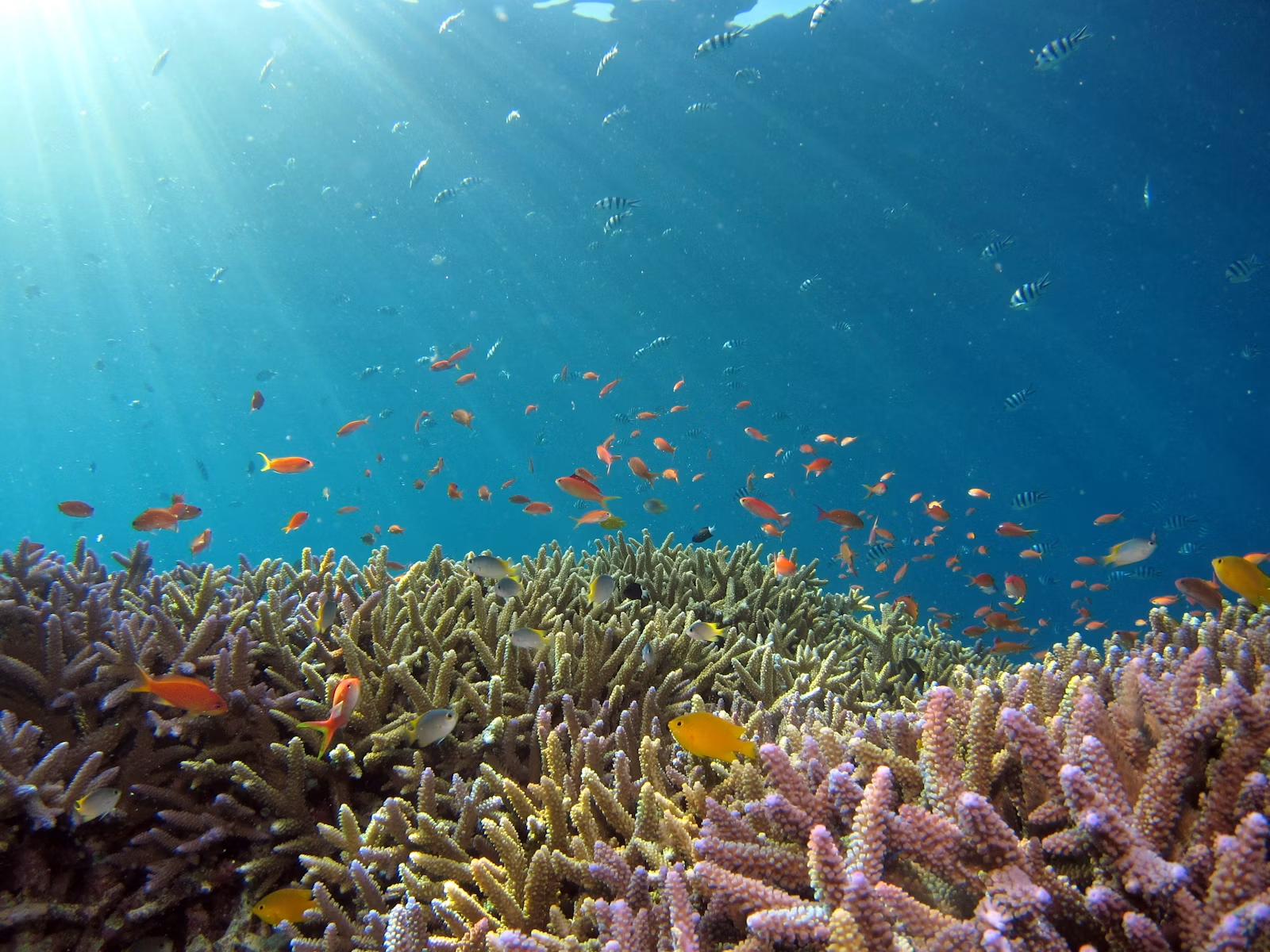
Raja Ampat Refines Marine Conservation Tariff to Fund Community Patrols and Coral Reef Protection
WAISAI, Southwest Papua - October 1, 2026 - The Raja Ampat Regency Government, in partnership with the Regional Public Service Agency for Marine Protected Area Management (BLUD UPTD Pengelolaan KKP Kepulauan Raja Ampat), has implemented key administrative refinements to its environmental tariff structure. The move aims to ensure direct, transparent allocation of visitor contributions toward Indigenous community patrols, anti-poaching enforcement, and marine ecosystem restoration across the world's most biodiverse coral archipelago.
 📍 Raja Ampat
Raja Ampat Plans a Manta Impact Bond to Finance Long-Term Marine Conservation
Raja Ampat, Southwest Papua - September 27, 2026
 📍 Raja Ampat
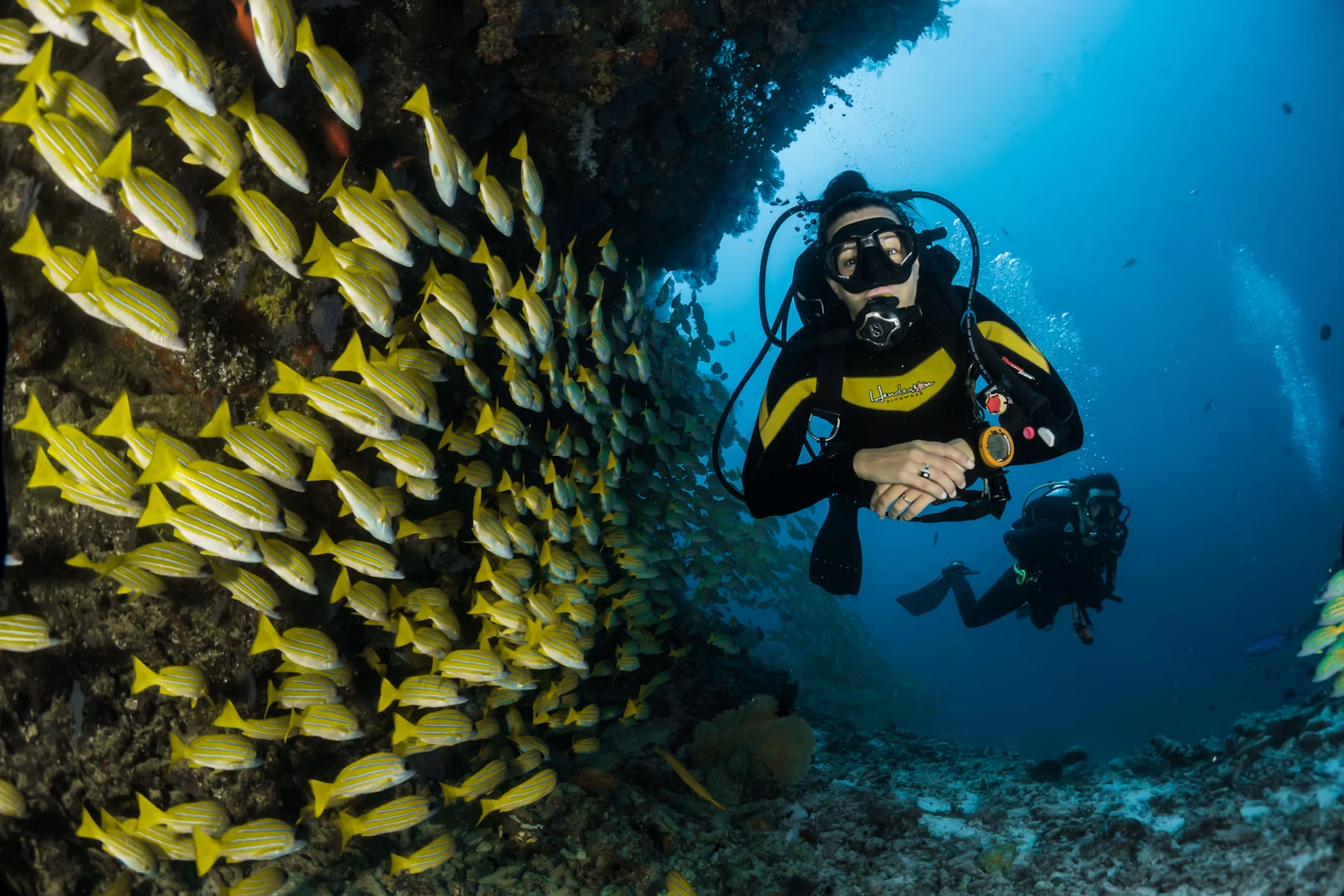
Raja Ampat's Manta Rays: More Than 3,000 Individuals Documented in Indonesia's Marine Paradise
Raja Ampat, Southwest Papua - September 27, 2026
 📍 Raja Ampat
Raja Ampat Turtle Poaching Case: Chinese National Named Suspect as Investigation Moves Forward
Authorities in Indonesia's Southwest Papua Province have named a Chinese national, identified by the initials WS, as a suspect in an alleged hunt for a protected hawksbill turtle inside the Raja Ampat conservation area.
 📍 Raja Ampat
Raja Ampat’s New Tourism Model: When Conservation Becomes the Core of the Visitor Economy
![Regional image]()
 📍 Sanur
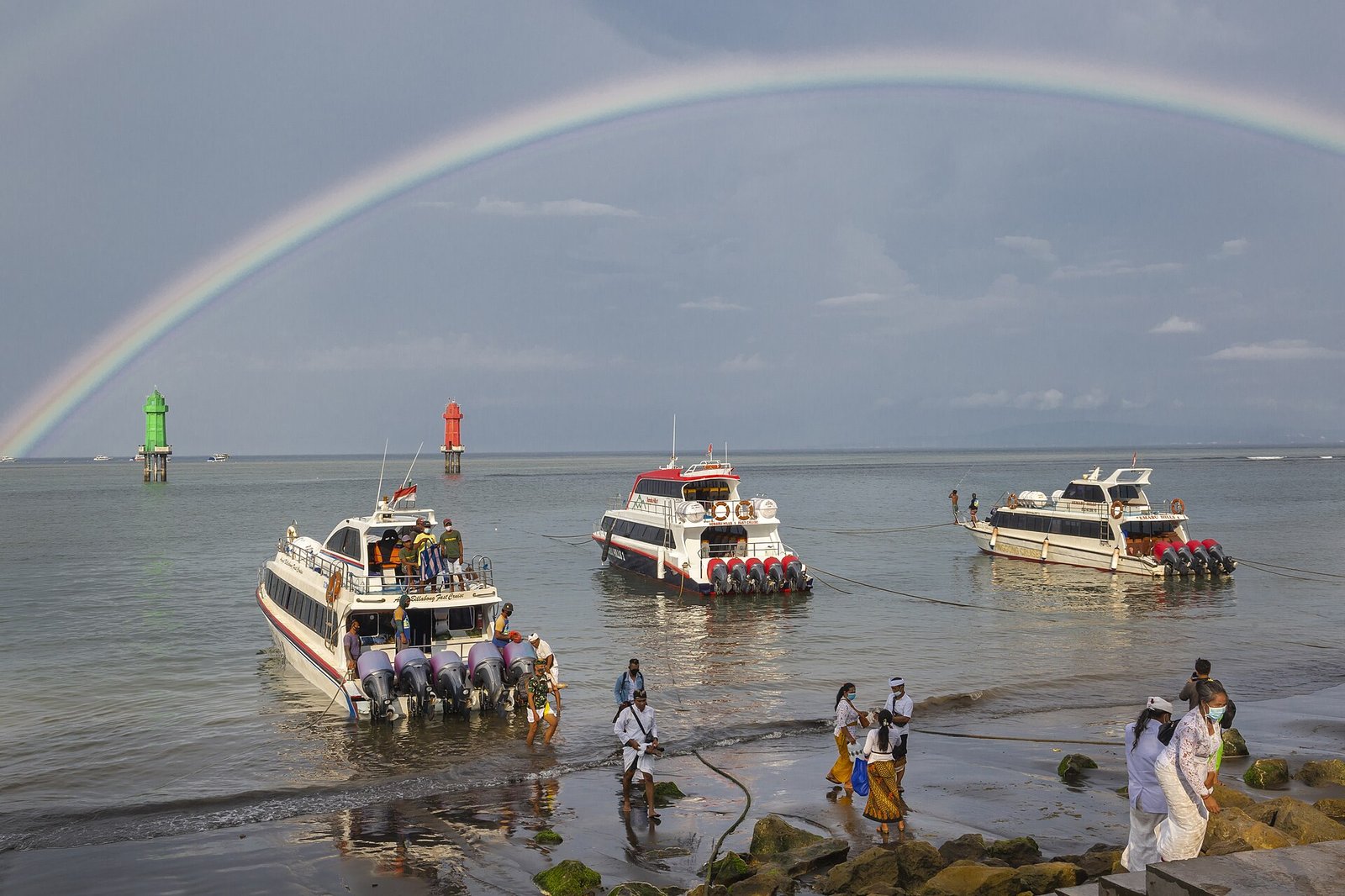
Bali High-Wave Warning: What Travelers Need to Know About Fast Boats, Strait Crossings, and Marine Safety This Week
BMKG has issued a maritime advisory forecasting 2.5 to 4.0-meter ocean swells across the southern Bali waters and Lombok Strait through October 10; here is what the alert means for fast-boat crossings, port operations, and island itineraries.