



Indonesia Operationalizes ASEAN Tourism Workforce Secretariat: What Common Regional Standards Mean for Hospitality Quality
Following the formal execution of the Host Country Agreement in Jakarta, Indonesia has commenced operations as the regional headquarters for the ASEAN MRA-TP Secretariat, establishing uniform qualification benchmarks for 32 hospitality and travel occupations across Southeast Asia.
Indonesia Operationalizes ASEAN Tourism Workforce Secretariat: What Common Regional Standards Mean for Hospitality Quality
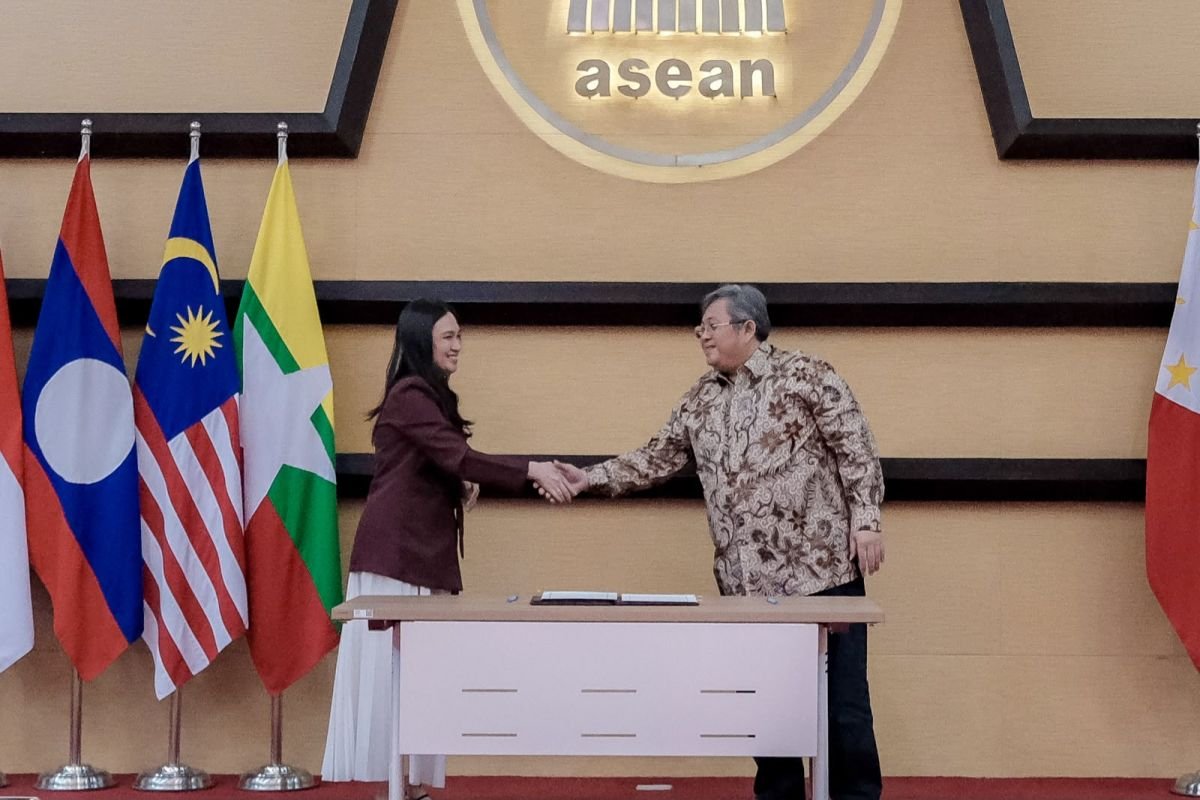
JAKARTA - On October 7, 2026, the Indonesian Ministry of Tourism and the ASEAN Secretariat executed an institutional breakthrough designed to anchor Southeast Asian hospitality standards for the coming decade. At the ASEAN Secretariat headquarters in Jakarta, Secretary of the Indonesian Ministry of Tourism Bayu Aji and Executive Director Citra Handayani Nasruddin formally signed the Host Country Agreement for the ASEAN Mutual Recognition Arrangement on Tourism Professionals (MRA-TP) Regional Secretariat, officially designating Indonesia as the permanent regional operational hub for tourism workforce governance.
The signing formalizes an initiative that regional tourism ministers first ratified in Bangkok in November 2012, transitioning abstract multilateral dialogue into physical administrative reality. While international travel reporting frequently highlights headline-grabbing infrastructure such as new airport terminals, high-speed rail links, or newly debuted ultra-luxury resorts, the invisible foundation of travel competitiveness resides in workforce competence: the skills, certifications, and cross-border mobility of frontline professionals who deliver the travel journey.
The establishment of the permanent Jakarta secretariat provides an operational base to harmonize qualification frameworks across all ten ASEAN member states. Crucially, the mechanism does not grant borderless, unilateral employment rights or unrestricted work permits across Southeast Asia; instead, it establishes the legal and technical machinery required for professional credentials to be recognized uniformly without requiring redundant re-examinations.
A 14-Year Trajectory Toward Operationalization
Originally conceived in 2012, the operationalization of the ASEAN MRA-TP Secretariat faced repeated delays. Indonesia was officially designated as host country in December 2015, but differing national labor codes, disparate qualification systems, and the severe disruption of the COVID-19 pandemic between 2020 and 2023 deferred implementation. A definitive political consensus was re-established in early 2024 by the ASEAN National Tourism Organisations (NTOs), with Indonesia pledging comprehensive headquarters facilities, administrative staffing, and operational funding for an initial three-year cycle spanning 2026 through 2028.
"The operationalization of the ASEAN MRA-TP Regional Secretariat in Jakarta serves as a catalyst for human resource capacity across our region," stated Ministry of Tourism Secretary Bayu Aji during the signing ceremony. "The secretariat will function as the central coordination hub to elevate skills, encourage structured knowledge sharing, and ensure Southeast Asia's hospitality talent remains resilient amidst rapid digital and environmental shifts."
The Competency Framework: 32 Job Titles Across Hotel and Travel Services
The core technical engine of MRA-TP rests upon the ASEAN Common Competency Standards for Tourism Professionals (ACCSTP) and the Common ASEAN Tourism Curriculum (CATC). This framework codifies benchmarks across 32 specific job titles divided into two primary industry divisions:
- Hotel Services: Encompassing Front Office (receptionists, reservation managers, night auditors), Housekeeping (room attendants, laundry supervisors, executive housekeepers), Food and Beverage Service (waitstaff, sommeliers, banquet managers), and Food Production (commis chefs, demi chefs, pastry specialists, executive chefs).
- Travel Services: Encompassing Tour Operations (itinerary coordinators, inbound reservation agents, ticketing specialists), Travel Agency Management (travel consultants, ticketing managers), and Professional Tour Guiding.
The qualification structure is stratified across six progressive certification tiers, ranging from Certificate II vocational levels through Certificate III, Certificate IV, Diploma, and Advanced Diploma designations. In 2019, ASEAN member states formally expanded the mandate to encompass the high-value MICE (Meetings, Incentives, Conferences, and Exhibitions) sector, recognizing convention management as a strategic specialization requiring rigorous regional standardization.
Professional Portability vs. Sovereign Immigration Sovereignty
A fundamental distinction that regulatory analysts highlight is the legal separation between competency recognition and work permit entitlement. MRA-TP is not a European Union-style freedom-of-movement pact.
"The establishment of the secretariat does not mean that a barista in Jakarta or a concierge in Bali can spontaneously board a flight and take up employment in Singapore or Malaysia without regulatory oversight," explains a regional labor governance specialist in Jakarta. "Immigration authority remains strictly sovereign. Destination countries retain absolute authority over work visas, expatriate quotas, minimum wage thresholds, and domestic licensing mandates. What the MRA-TP achieves is the elimination of credential friction: when a certified professional applies through legal channels, their certified competencies are mutually understood and validated without requiring redundant re-examinations."
In Indonesia, the framework interfaces directly with the National Professional Certification Agency (BNSP) and accredited Tourism Professional Certification Bodies (LSP). Workers who successfully complete assessments are awarded competency certificates recognized against both the Indonesian National Qualifications Framework (KKNI) and regional ASEAN standards.
The Economic Scale of ASEAN's Regional Tourism Market
The urgency of harmonized workforce standards is underscored by the scale of Southeast Asia's visitor economy. Official data from the ASEAN Secretariat indicates that the region welcomed approximately 147 million international visitor arrivals in 2025, recovering to pre-pandemic baselines. Intra-ASEAN transit represented nearly 42 percent of that total footprint, highlighting an increasingly interconnected regional market where travelers routinely combine multiple Southeast Asian nations within a single voyage.
| Regional Economic Indicator | ASEAN Baseline (2025/2026) | Strategic Tourism Significance |
|---|---|---|
| Total International Arrivals | ~147 Million Visitors | Reflects complete recovery to pre-pandemic regional travel volumes |
| Intra-ASEAN Market Share | 41.8% of Total Footprint | Over 61 million travelers circumnavigate borders within Southeast Asia |
| Tourism Economic Contribution | US$414 Billion (~9.4% Regional GDP) | Serves as one of Southeast Asia's primary engines of foreign exchange |
| Supported Employment | Approximately 46 Million Jobs | Direct and indirect livelihoods anchored in hospitality and transit |
With international hotel conglomerates expanding aggressively across secondary hubs in Indonesia, Vietnam, Thailand, and the Philippines, standardizing job roles addresses chronic operational bottlenecks. Employers frequently report discrepancies in culinary safety knowledge, revenue management acumen, and English language communication when hiring across national lines. A unified competency baseline enables hotel operators and travel companies to benchmark talent accurately.
Technology, Digital Disruption, and Emerging Skills
The operationalization of the secretariat arrives at a moment when traditional hospitality roles are undergoing fundamental transformation. Automation, AI-driven guest interfaces, contactless check-in kiosks, and cloud-based property management systems are reshaping the required skills for frontline hospitality personnel.
The Indonesian Ministry of Tourism noted that the Regional Secretariat's 2026 - 2028 work program will prioritize digital transformation and sustainability competencies. Beyond standard bed-making or table service, upcoming curriculum modules will integrate:
- Revenue and Distribution Technology: Proficiency in managing multi-channel online travel agent (OTA) algorithms, dynamic rate hedging, and digital marketing engines.
- Environmental Stewardship and Green Auditing: Energy efficiency protocols, hotel food waste reduction systems, and carbon accounting required by international eco-certifications.
- Cultural and Safety Governance: Managing crisis response protocols, crowd dynamics, and indigenous heritage preservation across vulnerable tourist corridors.
Indonesia's Positioning as a Knowledge and Training Hub
Hosting the regional secretariat delivers distinct strategic advantages to Indonesia beyond diplomatic prestige. With six premier tourism polytechnics (Poltekpar) operated under the Ministry of Tourism - including flagship campuses in Bali, Bandung, Medan, Makassar, Palembang, and Lombok - the country possesses one of the largest vocational hospitality training networks in the developing world.
By anchoring the secretariat in Jakarta, Indonesian educational institutions, industry associations, and certification bodies will sit at the drafting table as new occupational standards are formulated. It offers domestic educators direct alignment with international standards, accelerating the modernization of local hospitality academies.
However, domestic analysts caution that leadership requires tangible execution. For Indonesia to reap lasting economic dividends, the government must actively support local workers - particularly across provincial destinations like Labuan Bajo, Sumba, and Lake Toba - in accessing subsidized certification testing, ensuring the framework elevates grassroots livelihoods rather than solely benefiting urban elites.
What It Means for Travelers
For travelers navigating Bali and the wider Indonesian archipelago, the ramifications of the ASEAN MRA-TP framework are subtle yet profound. Tourism is fundamentally an experiential industry; while scenic coastlines and architectural temples provide the physical stage, the subjective quality of a journey is shaped almost entirely by human interactions.
The practical benefits for international visitors include:
- Heightened Service Consistency: A more standardized professional baseline across mid-tier and boutique accommodations, narrowing the service disparity between flagship capital properties and regional island retreats.
- Enhanced Safety and Emergency Preparedness: Certified guides and hotel duty managers trained to uniform regional standards in wilderness first aid, maritime safety, and fire protocols.
- Fluency in International Expectations: Greater consistency in digital communication, dietary allergen awareness, and culturally sensitive guest engagement.
Implementation Roadmap: Key Benchmarks Through 2028
The coming 24 months will serve as the true test of the secretariat's effectiveness. Industry observers will monitor three critical benchmarks:
- Volume of Registered Professionals: Whether the ASEAN Tourism Professionals Registration System (ATPRS) experiences meaningful growth in active, certified candidate profiles across all member nations.
- Institutional Curriculum Harmonization: The degree to which private vocational schools and hospitality colleges formally adopt CATC modules into accredited degree paths.
- Cross-Border Corporate Adoption: Whether multinational resort chains and regional inbound tour operators explicitly integrate MRA-TP certification into regional hiring rubrics and salary bands.
Until these metrics demonstrate measurable traction, the host-country agreement stands as a vital institutional prerequisite rather than an immediate industry cure. Nonetheless, by anchoring the secretariat in Jakarta, Indonesia has positioned itself at the center of the structural effort to professionalize Southeast Asian hospitality from the inside out.
Exploring Jakarta & Beyond Bali?
Discover curated regional travel guides, archipelagic flight connections, and signature Bali sanctuaries for your wider Indonesian itinerary.
Curated Stays & Sanctuaries in Bali
Curated luxury accommodations featuring private pool sanctuaries, authentic architectural heritage, and seamless concierge support.

InterContinental Jakarta Pondok Indah By IHG
InterContinental Jakarta Pondok Indah By IHG is a 5-star hotel situated in Jakarta & Greater Capital, Jakarta (Ultra-Luxury), holding a verified guest score of 9.6/10 across 3,524 reviews. Located 964.6 km (2–3 hours drive) with inland valley / highland retreat.

The Langham Jakarta
The Langham Jakarta is a 5-star hotel situated in Jakarta & Greater Capital, Jakarta (Ultra-Luxury), holding a verified guest score of 9.6/10 across 2,372 reviews. Located 963.4 km (2–3 hours drive) with inland valley / highland retreat.

GIVELEY MTOWN APARTMENT SUMMARECON SERPONG BY GIZL
GIVELEY MTOWN APARTMENT SUMMARECON SERPONG BY GIZL is a 5-star apartment/flat situated in Jakarta & Greater Capital, Tangerang (Ultra-Luxury), holding a verified guest score of 9.9/10 across 139 reviews. Located 981.2 km (2–3 hours drive) with inland valley / highland retreat.
Iconic Landmarks & Sacred Sanctuaries Across Bali
Protected cultural heritage, historical architecture, and iconic natural viewpoints with official entrance tariffs and etiquette rules.
 temple
$4.19
temple
$4.19
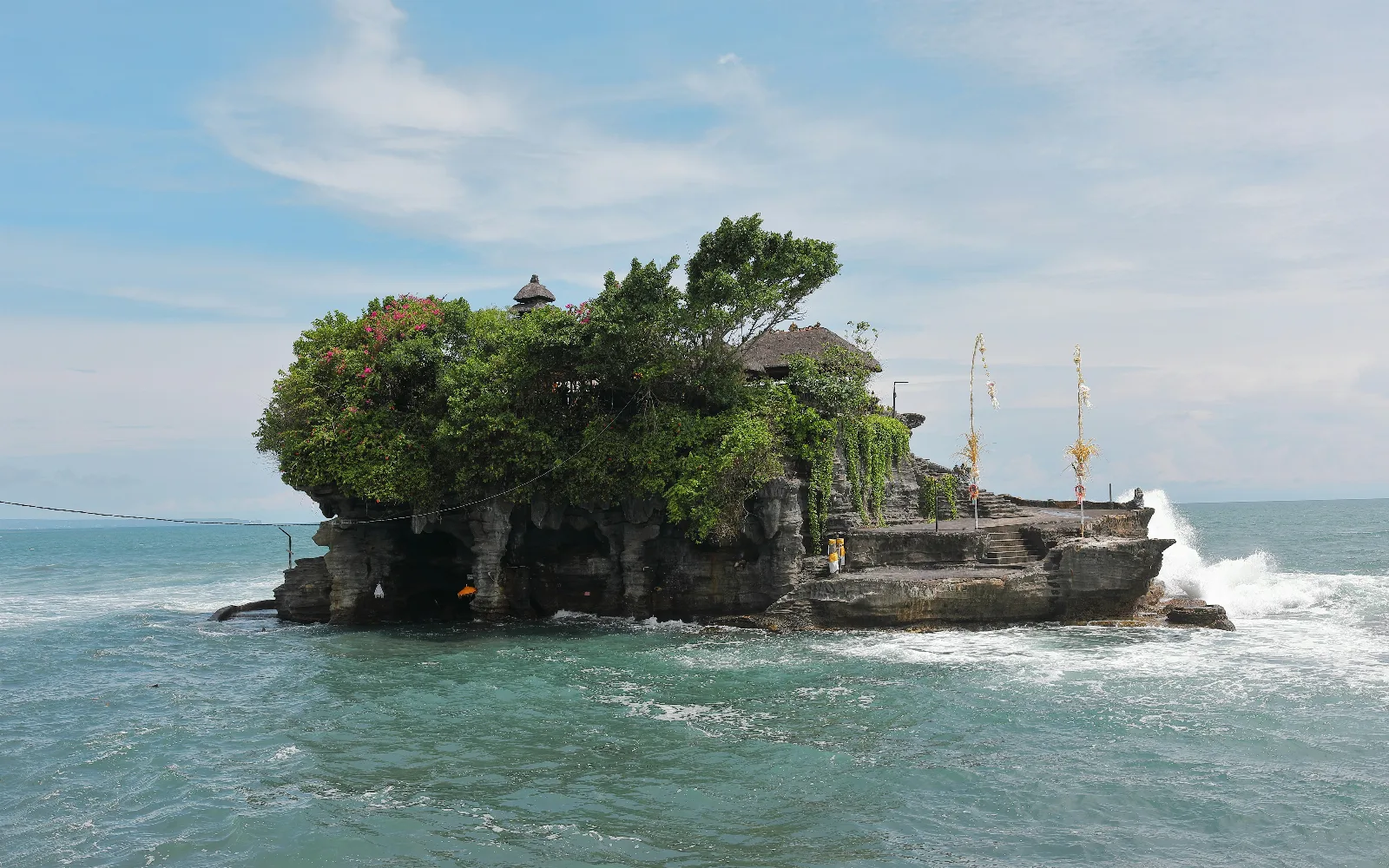
Pura Tanah Lot
Iconic 16th-century sea temple perched upon an offshore rock formation carved by relentless Indian Ocean waves.
 temple
$2.79
temple
$2.79
Pura Luhur Uluwatu
Cliffside temple crowning a sheer 70-meter limestone drop into roaring Indian Ocean swells, famous for its amphitheater Kecak fire dance.
 temple
$8.38
temple
$8.38
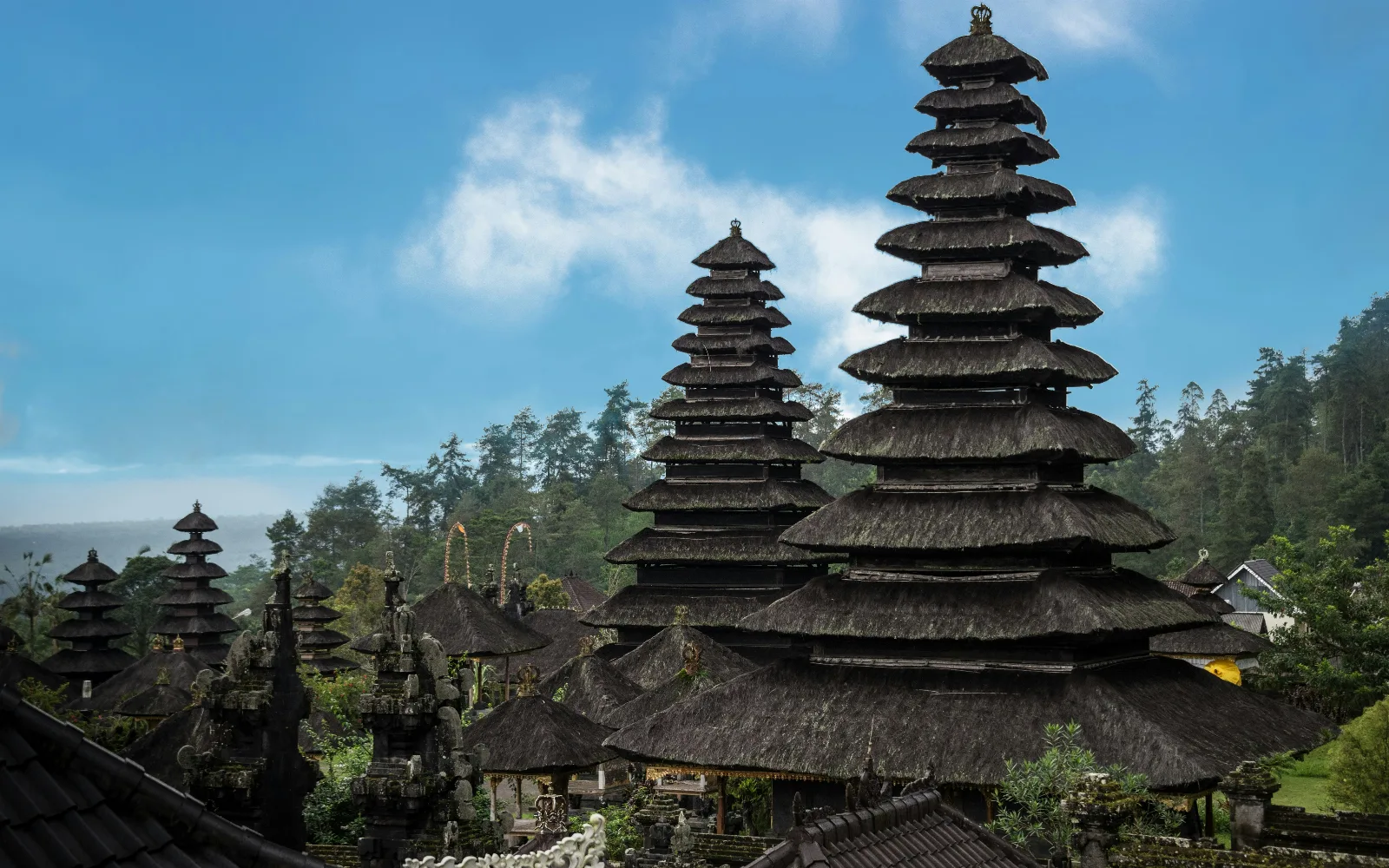
Pura Besakih (The Mother Temple)
The holiest and largest temple complex in Bali, ascending the volcanic slopes of Mount Agung with 23 interconnected sanctuaries.
Guided Tours & Field Experiences Across Bali
Handcrafted tours, masterclasses, and coastal expeditions led by licensed local guides with verified booking options.
 culture
📍 Jakarta
$47.51
culture
📍 Jakarta
$47.51
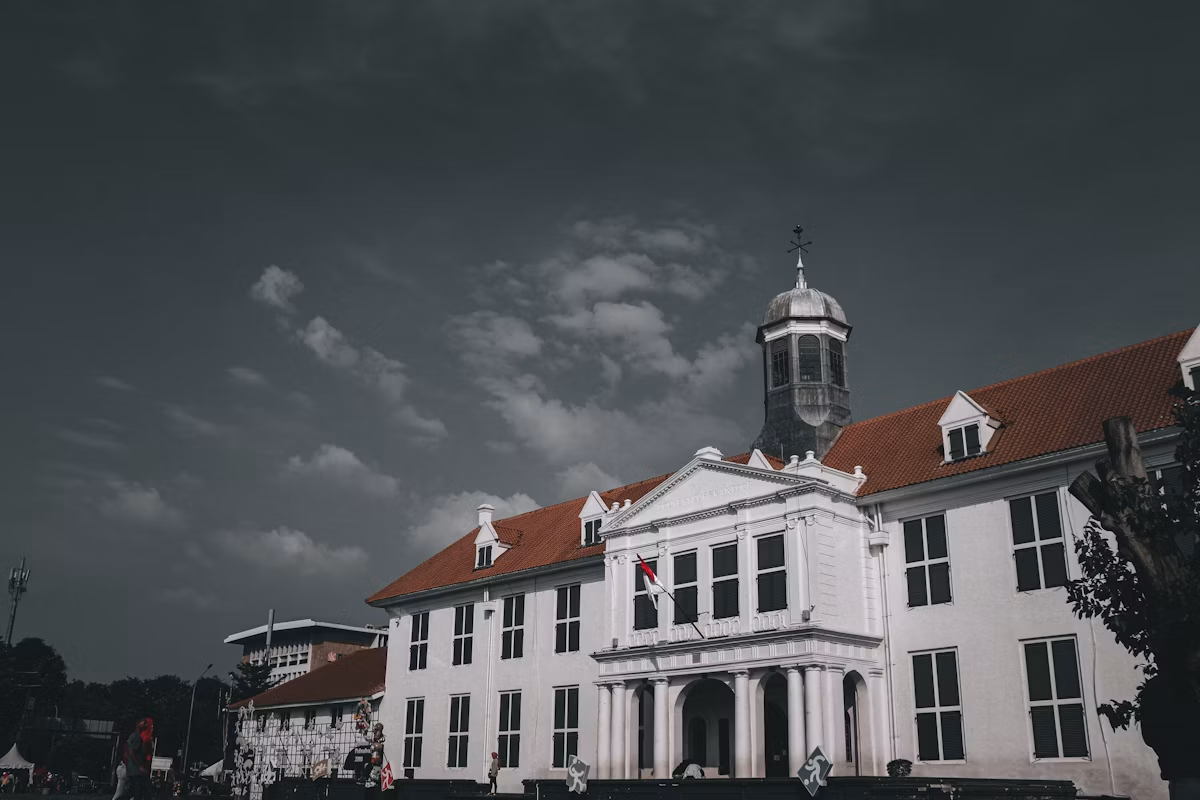
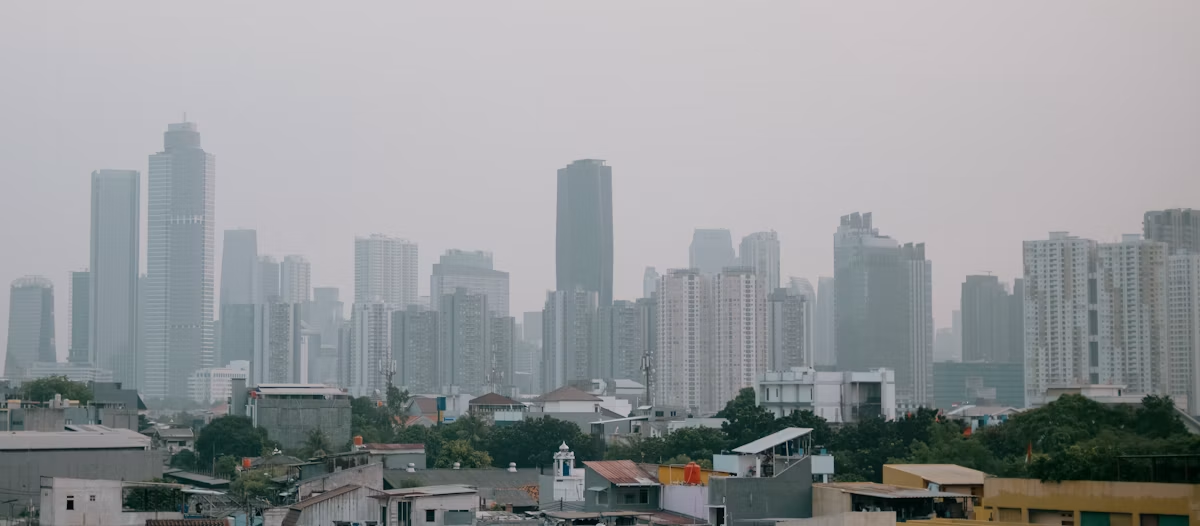
Kota Tua Dutch Batavia Colonial Quarter & Museum MACAN Tour
Trace 400 years of colonial history at Fatahillah Square followed by avant-garde contemporary art at Museum MACAN.
 culture
📍 Jakarta
$78.25
culture
📍 Jakarta
$78.25
Jakarta Modern Gastronomy & Skyline Rooftop Tasting Tour
Savor progressive Indonesian cuisine curated by celebrated chefs, finishing with cocktails overlooking the neon cityscape.
 adventure
📍 Ubud
$36.33
adventure
📍 Ubud
$36.33
Mount Batur Sunrise Summit Trek with Hot Springs
Pre-dawn summit ascent across volcanic basalt ridges to watch the sunrise above Lake Batur and Mount Rinjani, followed by restorative thermal hot springs.
Planning a Bali trip?
Explore current destination information, accommodation options, and events before you travel.
Related Travel News & Editorial Dispatches
Stay informed with latest field updates, regulatory notices, and luxury hospitality coverage across Bali and Beyond.
 📍 Jakarta
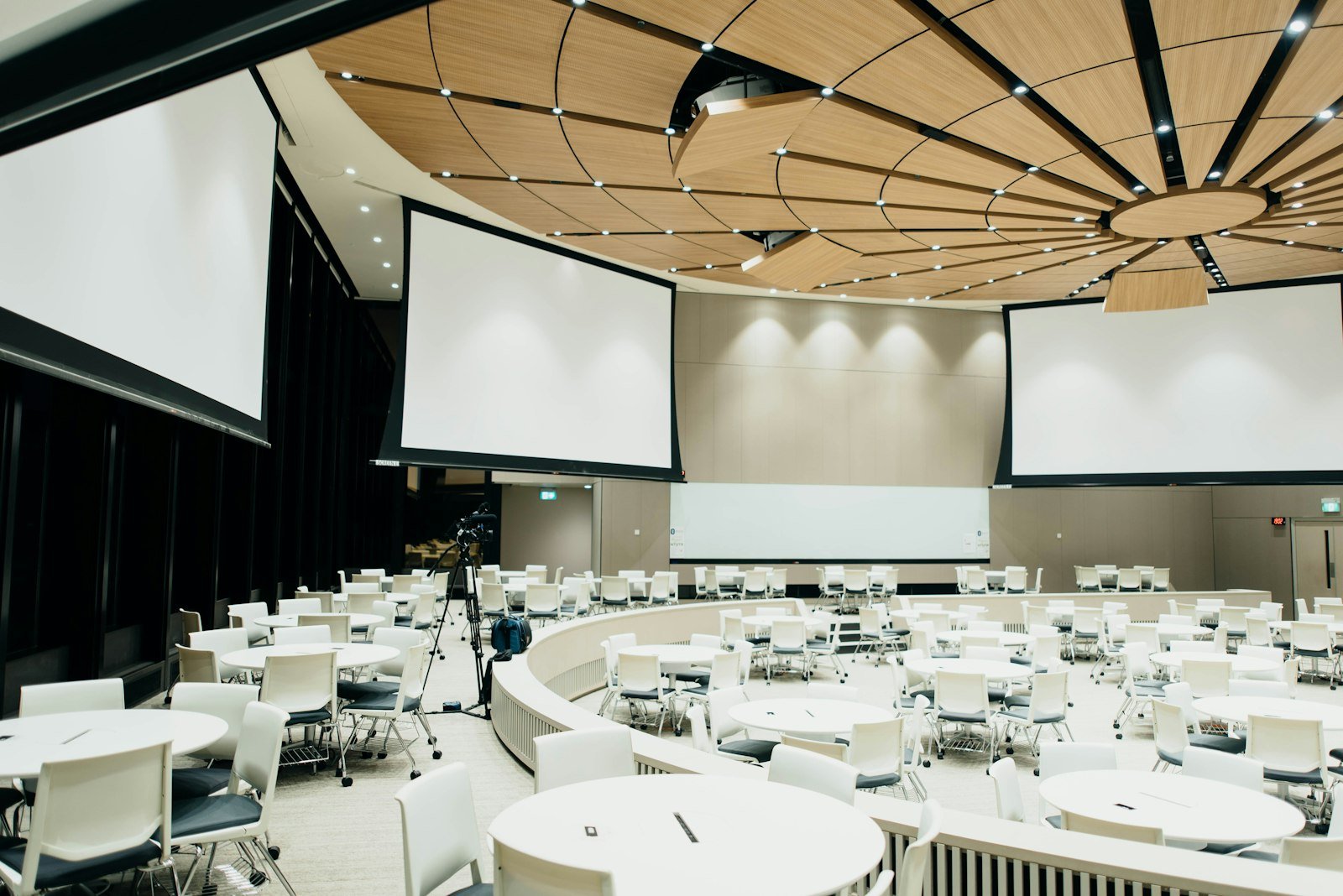
Jakarta Hosts Wonderful Indonesia Tourism Fair 2026, Showcasing Archipelago Travel Packages at JIExpo
JAKARTA, Indonesia - October 1, 2026 - The commercial capital of Jakarta is finalizing preparations to host the third annual *Wonderful Indonesia Tourism Fair (WITF) 2026*, scheduled to take place at the Jakarta International Expo (JIExpo) Kemayoran from October 15 to 17. Organized by the Association of Indonesian Tours and Travel Agencies (ASTINDO) with the strategic support of the Ministry of Tourism and Creative Economy (Kemenparekraf), the three-day travel trade exhibition stands as Indonesia's premier marketplace for B2B contract negotiations and direct-to-consumer holiday sales ahead of the peak 2026/2027 year-end travel window.
 📍 Jakarta
Pestapora 2026 Brings 330 Performers to Jakarta as the Capital's Weekend Music Festival Enters Its Final Day
Jakarta is hosting one of Indonesia's largest contemporary music gatherings this weekend as Pestapora 2026 brings hundreds of performers and thousands of visitors to the Gambir Expo and Hall D2 at JIExpo Kemayoran.
 📍 Jakarta
Indonesia Brings Artificial Intelligence Into the World Tourism Day Debate
Artificial intelligence is moving to the center of Indonesia's tourism discussion as the country marks World Tourism Day 2026, whose international theme is “Digital Agenda and Artificial Intelligence to Redesign Tourism.”
 📍 Jakarta
Indonesia Takes 'Go Beyond Ordinary' to Japan in Push Beyond Bali
Indonesia is expanding its “Go Beyond Ordinary” tourism campaign into the Japanese market at Tourism Expo Japan 2026, using one of Asia's major travel trade events to promote destinations and experiences beyond Bali.
 📍 Jakarta
Pulau Tidung Puts Conservation at the Center of Jakarta's Coastal Tourism Plans
Jakarta is looking beyond its familiar urban attractions as the provincial government works to develop Pulau Tidung in the Thousand Islands as a coastal tourism destination where conservation, local culture and community businesses are developed alongside visitor activities.
 📍 Jakarta
Indonesia Launches Digital Travel Pack to Connect International Visitors With Destinations, Payments and Local Businesses
International travelers planning a trip to Indonesia can now access destination information, digital payment services and mobile connectivity through a new platform launched by Bank Indonesia, as the country moves to bring more of the travel journey into a single digital ecosystem.