


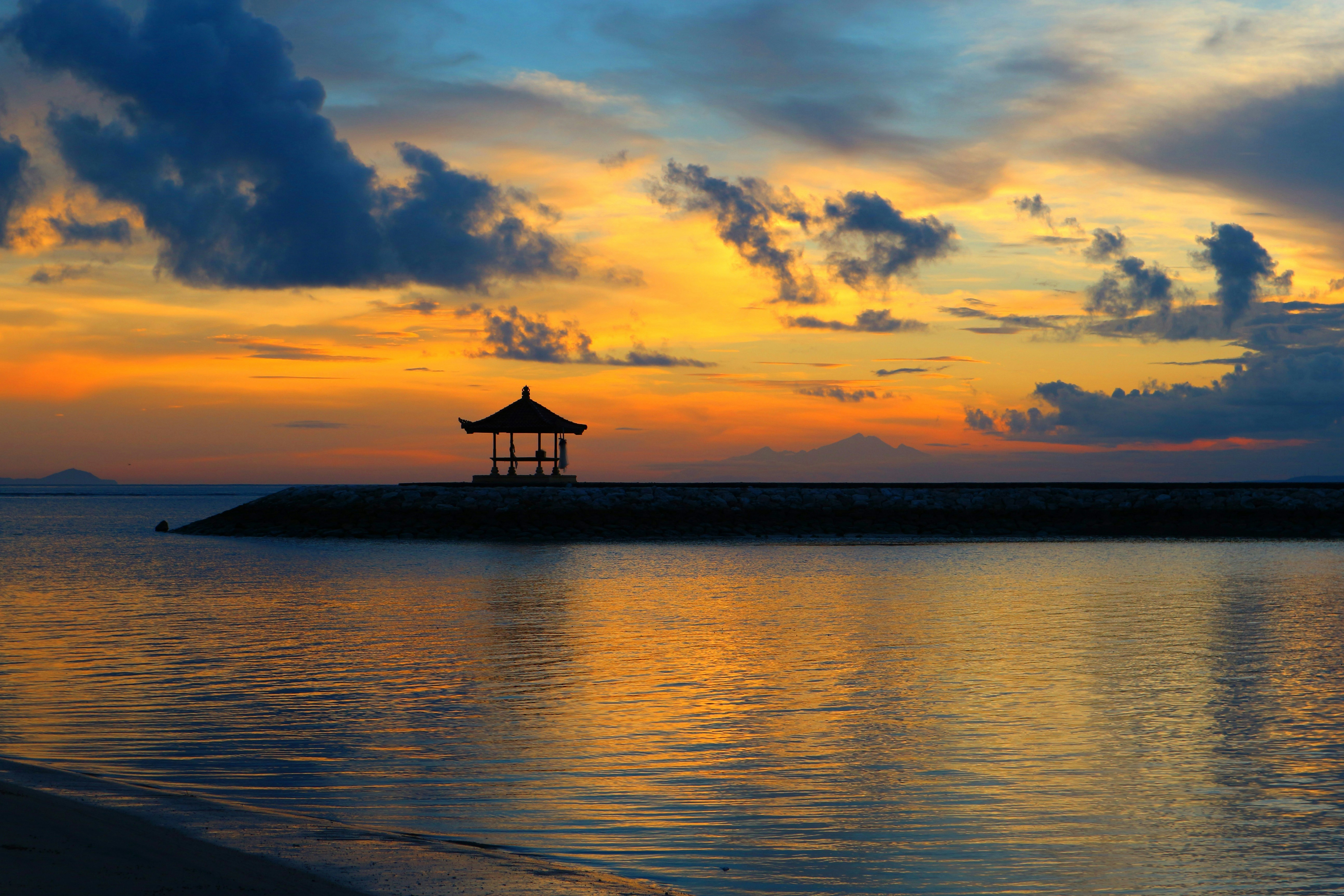
Sanur Beach Promenade & Reef Lagoon
Rivage mythique de l'aube balinaise, Sanur déploie un lagon turquoise protégé par une barrière de corail, des gazebos emblématiques posés sur les flots et une promenade cyclable pavée de cinq kilomètres bordée de tamariniers centenaires et de cafés raffinés.
📜 Contexte historique et importance culturelle
Berceau du tourisme international balinais dès les années 1930, refuge d'artistes majeurs tels que le peintre belge Adrien-Jean Le Mayeur, Sanur abrite également le vénérable Pura Belanjong dont l'inscription sur pilier en pierre datée de 914 apr. J.-C. constitue le plus ancien document écrit de l'histoire de Bali.
Tarifs officiels des billets d'entrée
| Catégorie de visiteur | Tarif officiel (IDR) | Est. (CNY) | Prestations incluses & remarques |
|---|---|---|---|
| Domestic / WNI (Adult) | IDR 0 | ¥0.00 | Free access |
| Domestic / WNI (Child) | IDR 0 | ¥0.00 | Free access |
| Foreign Tourist (Adult) | IDR 0 | ¥0.00 | Free public beach access; IDR 2k-5k parking fee |
| Foreign Tourist (Child) | IDR 0 | ¥0.00 | Free access |
Étiquette culturelle balinaise et règlements Awig-Awig
Directives adat officielles du village et protocole du site sacré pour Sanur Beach Promenade & Reef Lagoon.
Tenue de villégiature décontractée, maillots de bain pour la baignade dans le lagon et tenue de sport légère pour le vélo ou le jogging le long de la promenade côtière.
Awig-Awig du Desa Adat Sanur : priorité absolue accordée aux piétons sur la promenade pavée ; allure modérée imposée aux cyclistes ; déférence et silence requis aux abords des processions rituelles du Melasti et des cérémonies sacrées de purification en bord de mer.
Zone d'interdiction de vol stricte. Vols autorisés au-dessus du lagon au lever du soleil ; attention impérative lors de la saison du Festival des Cerfs-Volants de Bali (juillet à août) en raison des câbles et fils de cerfs-volants géants traversant le ciel côtier.
Moto / Scooter : IDR 2.000
Voiture de tourisme : IDR 5.000
Transportation & Access Radar
Grab and Gojek operate without restrictions throughout Sanur's access roads and hotel drop-offs.
Protected coral reef lagoon creates placid, wave-free conditions ideal for sunrise swimming and SUP; at low tide the lagoon drains into shallow wading pools.
Bicycle speed limit along the shared pedestrian promenade is 15 km/h; watch for swimmers when paddleboarding.
Radar d'altitude et d'accessibilité
Navigation et transports
Points forts visuels et architecture (7 photos)
Sanur Beach Promenade & Reef Lagoon — Iconic Balinese gazebo (bale bengong) standing on a coral groyne above the calm morning waters during sunrise.
Photo: Chema Photo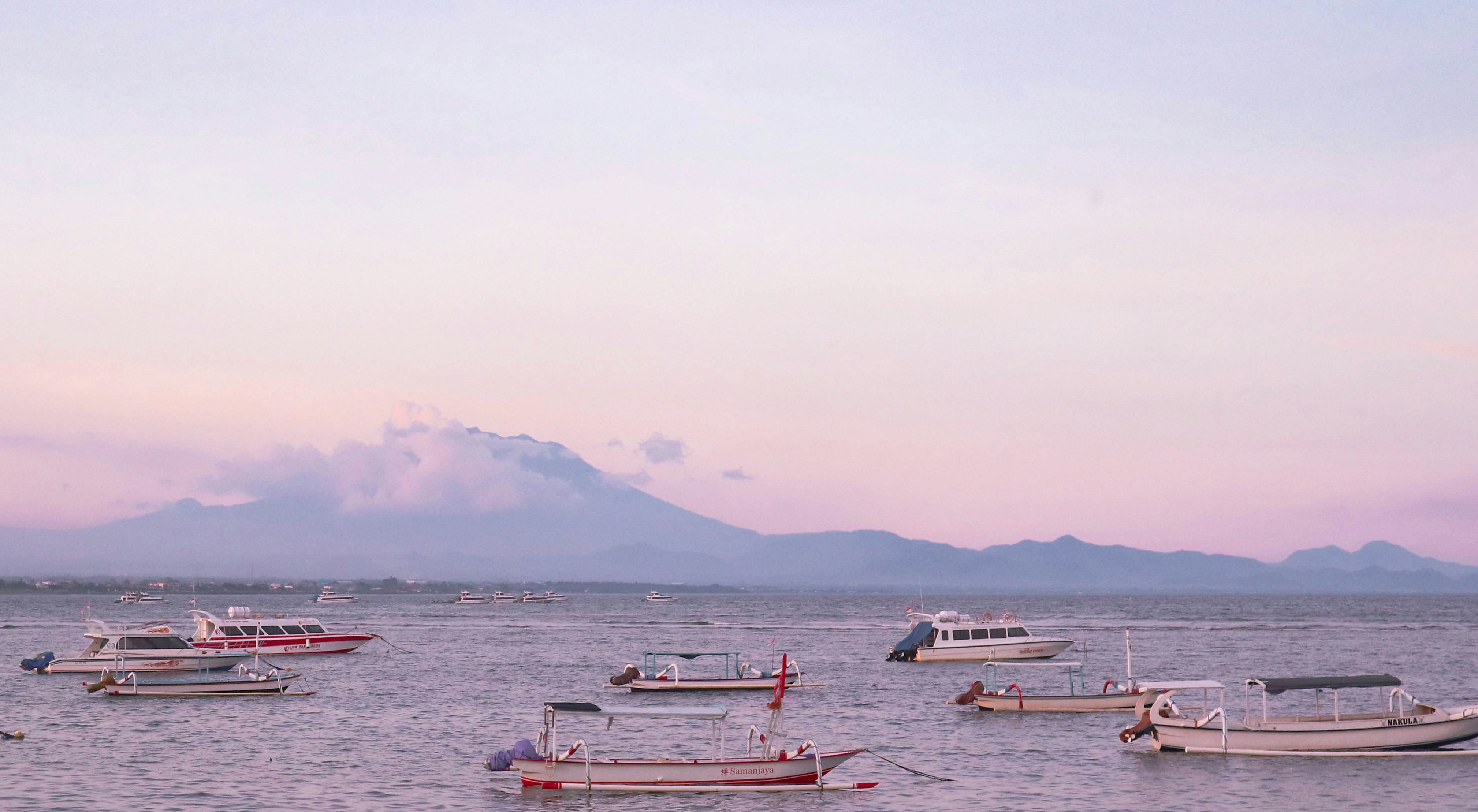
Sanur Beach Promenade & Reef Lagoon — Traditional double-outrigger jukung fishing boats with colorful sails moored in the protected reef lagoon.
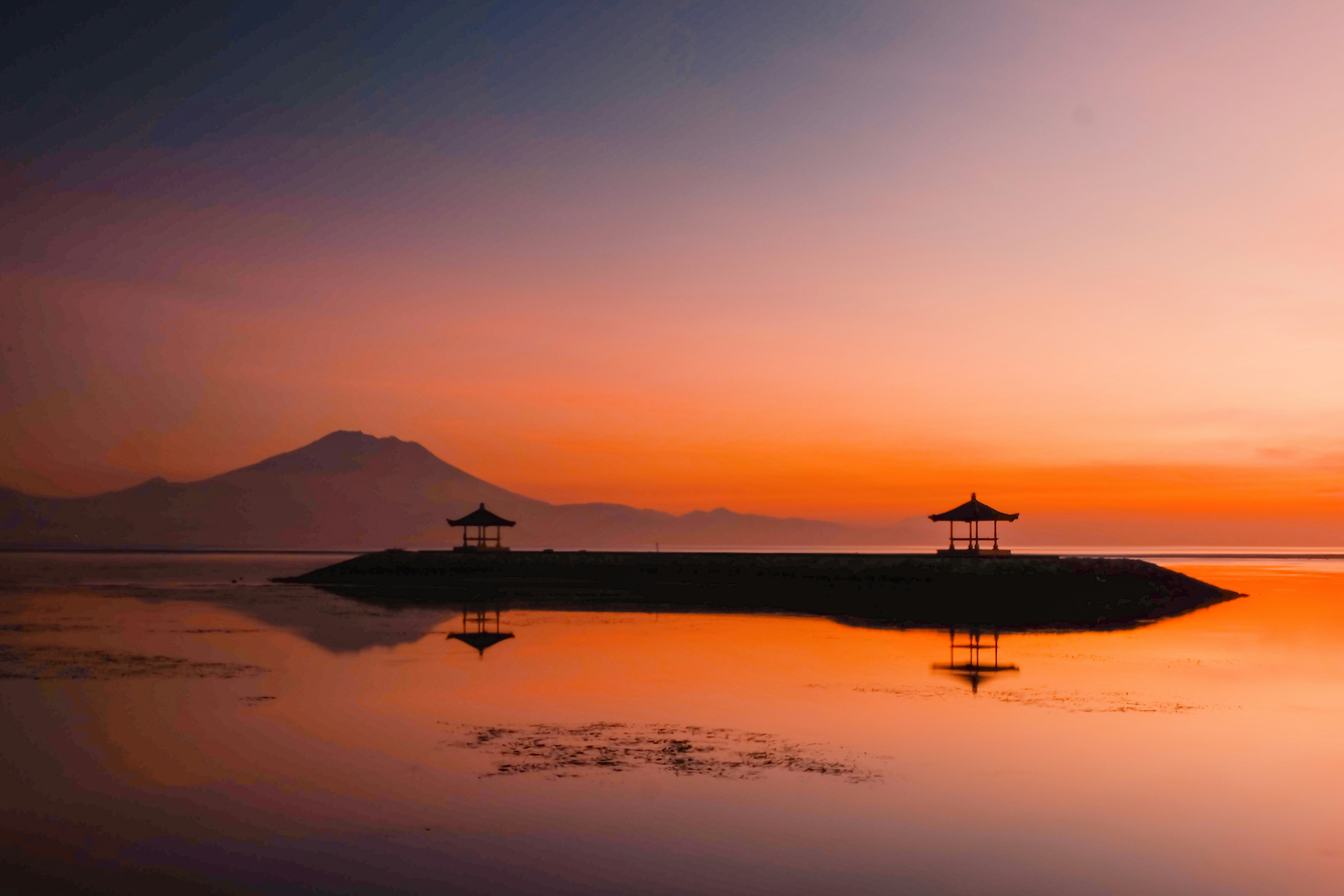
Sanur Beach Promenade & Reef Lagoon — Serene dawn panorama across the calm lagoon waters toward the majestic silhouette of Mount Agung.
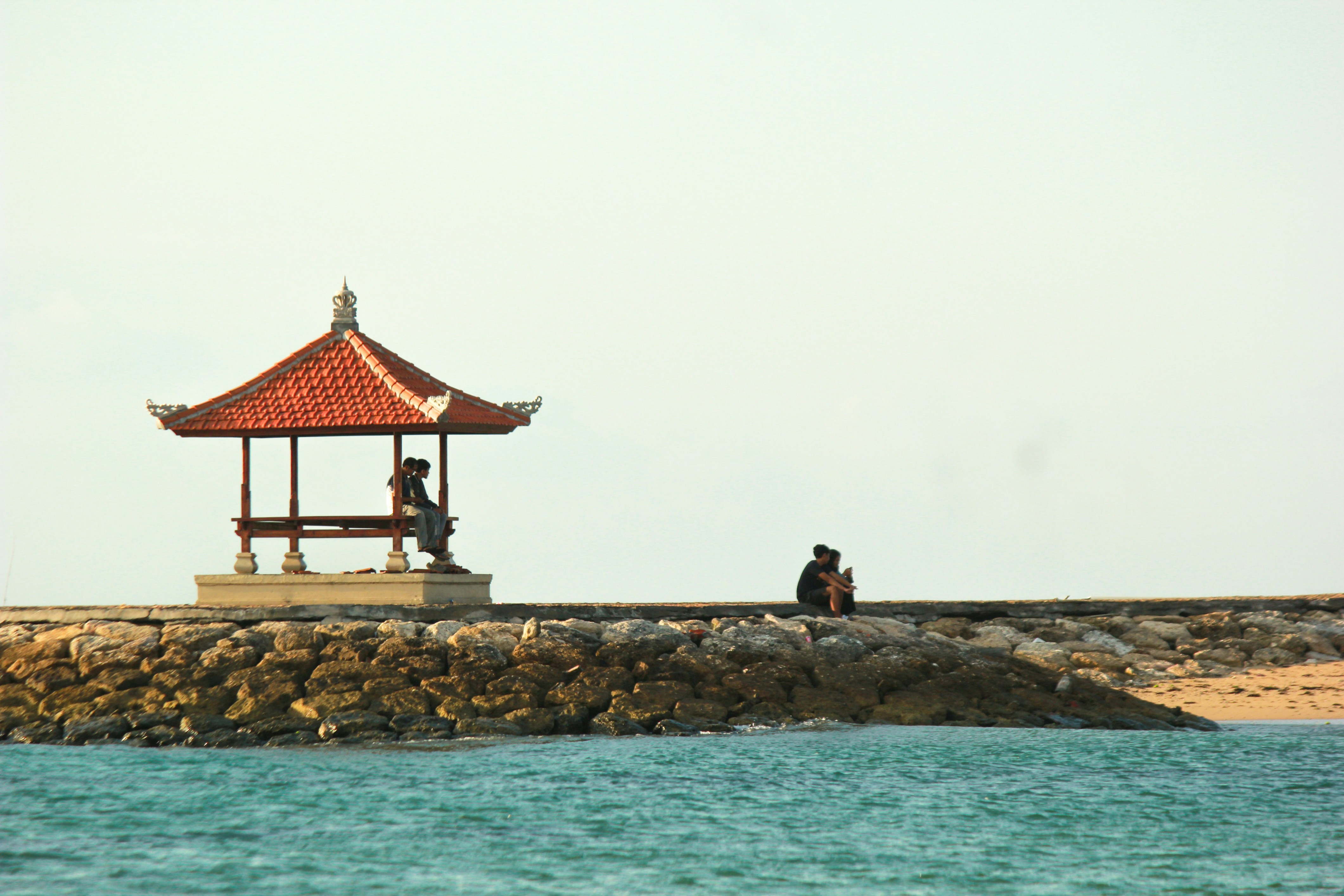
Sanur Beach Promenade & Reef Lagoon — Visitors enjoying the paved stone promenade and stone groynes that protect the tranquil shoreline.
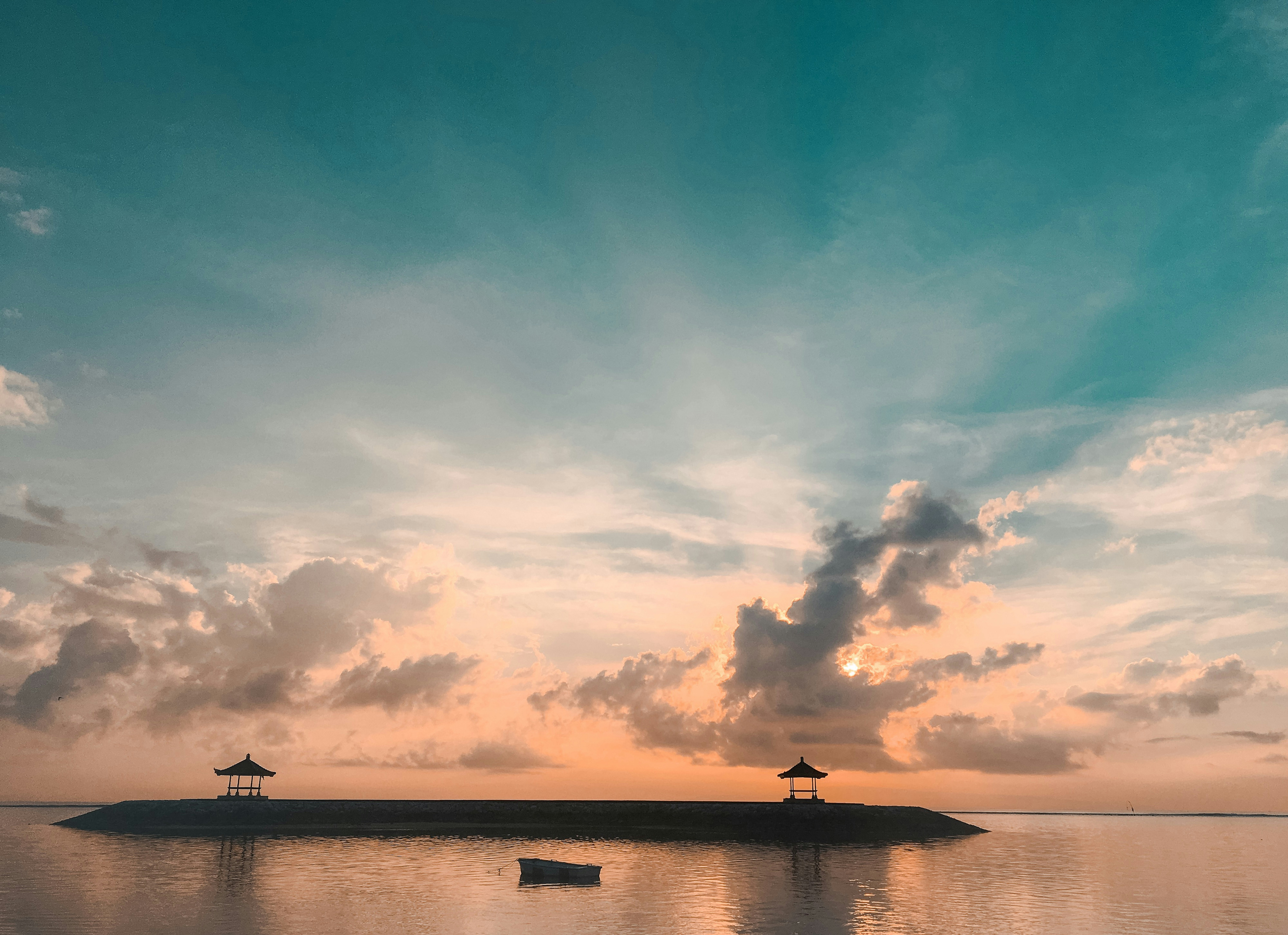
Sanur Beach Promenade & Reef Lagoon — Shaded beachfront pavilions and lush coastal vegetation lining the peaceful morning walking trail.
Guide culturel, historique et architectural
Comprehensive Cultural Guide: Sanur Beach Promenade & Reef Lagoon
1. Comprehensive Overview & Cultural Significance
Sanur Beach represents the graceful, timeless elder statesman of Bali's coastal resort enclaves. Stretched across five kilometres of serene southeastern coastline in the municipality of Denpasar, Sanur offers an enchanting, leisurely counterpoint to the frenetic nightlife and pounding surf of the island's western shores. Renowned as the birthplace of modern international tourism in Bali, Sanur has steadfastly preserved its dignified, village-centric atmosphere, distinguished by historic royal lineages, centuries-old art foundations, and an iconic sunrise shoreline protected by an extensive offshore barrier reef.
Unlike the sunset-oriented western beaches of Seminyak, Canggu, and Kuta, Sanur faces due east toward the majestic silhouettes of Nusa Penida and Mount Agung. Here, each dawn unfolds as a quiet masterpiece of natural illumination: fishermen casting hand nets in glassy lagoons, yoga practitioners saluting the rising sun, and families strolling along Bali's first and longest paved beachfront promenade. Sanur effortlessly bridges historical grandeur and contemporary leisure, offering visitors an intimate encounter with a community where temple festivals, shadow puppet performances, and world-class culinary dining unfold with effortless, sophisticated grace.
At the heart of Sanur's enduring appeal is its deep-rooted customary village governance (Desa Adat Sanur and Desa Adat Intaran). The local leadership has consistently prioritized low-impact, sustainable tourism that protects traditional public rights-of-way, preserves sacred coastal temples, and maintains vibrant green public spaces. For families with young children, mature travelers, cyclists, and cultural enthusiasts, Sanur remains the quintessential haven of relaxed, authentic Balinese seaside living.
2. Exact Geographic Positioning & Micro-Terrain
Sanur Beach is positioned at coordinates -8.6833° S latitude, 115.2667° E longitude, occupying the eastern shore of South Denpasar (Denpasar Selatan). The beach encompasses a sequence of interconnected sandy bays stretching from Pantai Matahari Terbit and Pantai Sanur in the north, through Pantai Sindhu, Pantai Karang, and Pantai Semawang in the center, terminating at the shallow lagoon of Pantai Mertasari in the south.
The topography of Sanur is completely flat and low-lying, sitting at an elevation of zero to two metres above sea level. The approach from the main highway (Jalan Bypass Ngurah Rai) leads into leafy, paved residential avenues like Jalan Danau Tamblingan and Jalan Danau Poso, which connect directly to the beach via short, picturesque pedestrian lanes (gang). The absence of steep hills, steps, or rocky cliffs makes Sanur exceptionally accessible.
The physical difficulty level for visiting Sanur Beach is classified as EASY. The five-kilometre paved coastal promenade is entirely level, making it one of the few places in Bali that is fully wheelchair-accessible and effortlessly navigable for strollers, wheelchairs, and bicycles. The sand is golden, compact, and comfortable to walk on, while the seabed within the reef lagoon features a gentle, predictable slope with no hidden underwater sinkholes.
3. Sacred Lore, Royal Inscriptions & the Eastern Sunrise Gate
In the sacred spatial philosophy of Balinese Hinduism, Sanur is revered as the gateway of divine dawn (Kangin). In the cosmic mandala, the east is ruled by Lord Iswara, representing the element of white purity, intellectual illumination, and spiritual awakening. It is believed that the morning rays of the sun touching the waters of Sanur carry powerful regenerative vibrations (prana) that cleanse the human body and spirit of accumulated negative energies. Local elders and spiritual seekers continue the ancient practice of dawn ocean bathing (melukat) in the calm waters of Sanur to seek physical vitality and mental clarity.
Historically, Sanur's spiritual gravitas is anchored by monumental archaeological relics. At Pura Belanjong stands the celebrated Belanjong Inscription, carved in 914 CE during the reign of King Sri Kesari Warmadewa. This stone pillar is revered not only as a sacred heirloom by the local village but as an irreplaceable national cultural treasure that proves the existence of an advanced, literate Hindu-Buddhist maritime polity in Bali over a thousand years ago. The inscription mentions the ancient seaport of "Walidwipa" and documents royal victories over distant maritime adversaries, highlighting Sanur's historical role as Bali's prime naval harbor.
Furthermore, Sanur is renowned across Bali for its deep traditions of esoteric spiritual mastery and sacred arts. Historical chronicles speak of powerful priestly lineages (Brahmana) residing in Sanur whose ritual knowledge and protective spiritual mantras guarded the southern realm from negative metaphysical intrusions. Today, sacred temples lining the coast, including Pura Segara Sanur and Pura Mutering Jagat Dalem Sidakarya, remain active epicenters of traditional devotion, hosting vibrant temple anniversaries (odalan) where sacred masked dances (Barong and Rangda) are performed in the quiet darkness of the coastal night.
4. The Modern Chronicle: Art Pioneers & the Heritage Promenade
During the early twentieth century, while most of Bali remained largely unvisited by the outside world, Sanur captured the imagination of pioneering international artists and intellectuals. In 1932, Belgian impressionist painter Adrien-Jean Le Mayeur de Merpres arrived on the beach, intending to stay for only a few months. Enchanted by the radiant sunrise lighting and the timeless elegance of Balinese culture, he purchased a parcel of beachfront land at Pantai Sanur and married Ni Pollok, a renowned Legong dancer from the nearby village of Kelandis. Le Mayeur's studio became an international cultural salon, visited by dignitaries, writers, and painters who disseminated images of Sanur's sunlit paradise worldwide. Today, the Museum Le Mayeur stands on its original site, preserving over eighty of his original paintings and intricate Balinese teakwood carvings.
In the 1960s, Sanur made Indonesian history when President Sukarno commissioned the construction of the iconic Bali Beach Hotel (now The Meru Sanur)—Bali's very first modern international luxury high-rise hotel, completed in 1966. Recognizing that unchecked vertical development could destroy the island's unique architectural identity, the provincial government promptly enacted the famous "coconut tree law," decreeing that no building in Bali could exceed fifteen metres in height (the height of a mature palm tree). The original Bali Beach Hotel remains the only structure on the entire island exempt from this rule.
In subsequent decades, the community championed an equally visionary civic initiative: the creation of the continuous five-kilometre paved beachfront promenade. By linking individual hotel frontages, village alleys, and coastal temples into an unbroken, vehicle-free public corridor, Sanur preserved universal public access to the shoreline—an achievement that prevented the exclusive privatization seen in many global beach destinations and fostered a vibrant, inclusive community atmosphere.
5. Architectural Anatomy & Leisure Infrastructure
Sanur's built environment represents a masterclass in low-rise, tropical architectural integration. The architectural heart of the coastline is the five-kilometre paved promenade, constructed from warm local river stones, textured washed-concrete borders, and porous volcanic stone pavers. Along this path, traditional resting pavilions (bale bengong) with hipped thatched roofs provide shaded viewing alcoves where locals and travelers sit together to watch outrigger boats navigate the turquoise channels.
Along the beach, numerous beachfront resorts and heritage private villas demonstrate classical Balinese courtyard architecture (Asta Kosala Kosali). Elegant split gateways (Candi Bentar) carved from red brick and grey paras stone open onto beachfront gardens filled with blooming frangipani, traveler's palms, and lotus ponds. Restaurants and beach clubs along the promenade eschew loud, concrete modernism in favor of open-sided pavilions with soaring bamboo frames, woven rattan furnishings, and sustainable teakwood decks that merge seamlessly into the sandy shoreline.
Near the northern terminus at Pantai Matahari Terbit sits the sleek, newly constructed Sanur Port Terminal—a contemporary architectural landmark completed in 2022. Featuring a sweeping roof design inspired by the traditional triangular sail of a Balinese jukung boat, this state-of-the-art terminal provides enclosed, air-conditioned waiting lounges, automated ticketing gantries, and modern floating pontoons that ensure safe, dignified boarding for fast boats departing to Nusa Penida, Nusa Lembongan, and the Gili Islands, replacing the former practice of wading through breaking waves.
6. Essential Etiquette, Awig-Awig & Coastal Customs
Visiting Sanur Beach is an enriching experience when conducted in harmony with local village bylaws (awig-awig):
- Promenade Right-of-Way & Bicycle Etiquette: The Sanur promenade is a shared pedestrian and cycling corridor. Cyclists should maintain moderate speeds (under 15 km/h), ring their bells politely when approaching pedestrians from behind, and always yield right-of-way to walking families, joggers, and elderly pedestrians. Motorized scooters and electric motorbikes are strictly prohibited on the promenade.
- Modesty Along Village Pathways: While swimsuits and bikinis are completely customary on the sand and within beachfront resort pool enclosures, visitors walking through village access alleys, visiting market stalls, or entering local cafes along Jalan Danau Tamblingan should cover up with shirts, sarongs, or casual daywear.
- Kite Festival & Aerial Safety: During the windy dry season months of July and August, Sanur hosts the world-renowned Bali Kite Festival, centered at Pantai Mertasari. Enormous traditional kites (Bebean, Janggan, and Pecukan) measuring up to ten metres in length fill the sky. Drones must not be flown anywhere near flying kites, as trailing nylon strings can destroy drone rotors and pose severe safety hazards to festival crowds.
- Coastal Ceremonial Observance: Sanur is an active site for Melasti and Nganyut (the post-cremation scattering of ashes).devotional ceremonies. If encountering a ritual procession on the beach, dress respectfully, avoid walking across ceremonial mats, and never elevate yourself above priests officiating prayer altars.
7. Practical Logistics & Tidal Dynamics
To maximize your enjoyment of Sanur Beach, consider these practical planning guidelines:
- Optimal Time of Day: Early morning from 05:45 to 09:00 is universally considered the magical window in Sanur. Witnessing the sunrise as Mount Agung catches the first light of day, followed by a quiet bicycle ride along the cool promenade and breakfast at a seaside cafe, is an unmissable Bali experience.
- Tidal Variations & Swimming: Sanur's swimming conditions are intimately tied to the daily lunar tide cycle:
- High Tide (Air Pasang): The lagoon fills with clear, calm, deep water (1.5 to 2.5 metres deep). This is the optimal window for ocean swimming, stand-up paddleboarding, and kayaking.
- Low Tide (Air Surut): The ocean recedes hundreds of metres out to the reef wall, leaving very shallow water (ankle- to knee-deep) and exposing extensive sand flats and seagrass beds. While unsuitable for deep swimming, low tide is fantastic for reef walking, observing marine creatures in tidal pools, and photography. Consult local tide tables before planning water sports.
- Transportation & Accessibility: Sanur is easily reached via the Bali Mandara Toll Road (15–20 minutes from Ngurah Rai Airport) or Jalan Bypass Ngurah Rai. Grab, Gojek, and Bluebird taxis operate freely with no local cartel restrictions. Bicycles can be rented at dozens of rental kiosks along the promenade for approximately IDR 25,000 to IDR 50,000 per day.
- Fast Boat Transfers to Nusa Islands: If taking a fast boat to Nusa Penida or Lembongan, arrive at the new Sanur Port Terminal at least 45 minutes prior to scheduled departure. Advance online booking is strongly recommended during peak travel months.
8. Entry Tariffs & Transparent Inclusions
Sanur Beach operates under an open public access model, ensuring that its natural and cultural splendor remains accessible to all:
- Foreign Adult Entry: IDR 0 (Free Public Beach Access)
- Foreign Child Entry: IDR 0 (Free Public Beach Access)
- Domestic Adult Entry: IDR 0 (Free Public Beach Access)
- Domestic Child Entry: IDR 0 (Free Public Beach Access)
- Vehicle Parking Tariffs:
- Scooters and Motorcycles: IDR 2,000 per entry.
- Cars and Passenger Vans: IDR 5,000 per entry.
- Parking fees are collected at official municipal and village parking booths at beach access points (such as Pantai Sindhu, Pantai Karang, and Pantai Mertasari) and directly support sanitation, parking marshals, and promenade upkeep.
- Optional Activities & Equipment Rentals:
- Beach Sunbeds and Umbrellas: IDR 50,000 to IDR 100,000 per set for a full day.
- Stand-Up Paddleboard (SUP) Rentals: IDR 100,000 to IDR 150,000 per hour.
- Museum Le Mayeur Admission: Approximately IDR 50,000 for foreign adults, IDR 25,000 for domestic visitors.
9. Sustainable Tourism & Marine Lagoon Preservation
As one of Bali's oldest and most frequented coastal destinations, preserving Sanur's fragile lagoon ecosystem requires conscious, responsible stewardship:
- Protecting the Seagrass Meadows: The expansive seagrass beds inside the Sanur lagoon are critical nursery habitats for juvenile fish, crabs, and green sea turtles (Chelonia mydas). When wading or paddleboarding at low tide, avoid dragging paddles or stepping heavily upon seagrass colonies.
- Reef-Safe Sunscreen Protocol: Because the water inside the lagoon circulates slowly behind the outer barrier reef, chemical sunscreens containing oxybenzone and octinoxate can accumulate to toxic concentrations, bleaching fragile living corals. Always apply mineral-based (zinc oxide or titanium dioxide) reef-safe sunscreens before swimming.
- Supporting Generational Small Enterprises: Patronize the family-run beachfront warungs serving traditional Nasi Campur, freshly sliced mangoes, and young coconuts. These small micro-businesses have been operated by the same local Sanur families for decades, representing the authentic cultural heartbeat of the promenade.
- Zero-Waste Promenade Discipline: Always dispose of plastic water bottles, beverage cups, and food packaging in designated sorting bins along the promenade. Never leave cigarette butts or single-use plastics on the sand, where rising tides can easily carry them into the marine sanctuary.
Sunrise Lore, Ancient Sanskrit Inscriptions & the Golden Age of Sanur
Sanur Beach, curving along Bali's southeastern coastline, holds an illustrious position in the spiritual, archaeological, and artistic annals of the Indonesian archipelago. Long before Western travelers discovered its tranquil lagoon, Sanur was recognized by ancient seafaring kingdoms as a sacred eastern maritime gate—the threshold of Kangin, where Surya, the radiant sun god, emerges from the ocean to bestow light, life, and spiritual awakening upon the island of Bali. In the classical cosmological geography of Dewata Nawa Sanga, the southeastern waters of Sanur are watched over by Lord Mahesvara, deity of dawn, spiritual discernment, and renewal.
Archaeological evidence firmly establishes Sanur as one of Bali's earliest recorded centers of civilization and international contact. At Pura Belanjong in southern Sanur stands the famed Prasasti Blanjong (Belanjong Pillar), a stone obelisk inscribed in 914 CE by King Sri Kesari Warmadewa. Written in both ancient Sanskrit and Old Balinese using Pre-Nagari and Kawi scripts, this monumental artifact is the oldest dated historical inscription in Bali, detailing victorious military campaigns and seafaring expeditions. It reveals that over eleven centuries ago, Sanur was a sophisticated royal maritime hub engaging in maritime trade and diplomatic exchanges with kingdoms across the Indian Ocean and maritime Southeast Asia.
In the 1930s, Sanur became the crucible of Bali's modern artistic renaissance. Renowned Belgian impressionist painter Adrien-Jean Le Mayeur de Merpres arrived on these shores, captivated by the translucent lagoon light, swaying coconut palms, and timeless grace of traditional Legong dancers. Choosing to make Sanur his permanent home, Le Mayeur married the celebrated Balinese dancer Ni Pollok, building a magnificent beachfront home that fused classical Balinese architecture with European studio aesthetics—now preserved as the Museum Le Mayeur. Through Le Mayeur's luminescent canvases and the subsequent arrival of international intellectuals, Sanur pioneered an elegant, culturally integrated vision of Balinese tourism that continues to define its tranquil, patrician atmosphere today.
Protective Barrier Reef Morphology, Coastal Geology & the Promenade of Sanur
The coastal geology of Sanur is defined by an extraordinary natural barrier reef system that runs parallel to the shore approximately five hundred to one thousand metres out to sea. Formed over thousands of years by the growth of colonial hermatypic corals atop ancient Pleistocene limestone foundations, this extensive offshore reef wall acts as an impenetrable marine breakwater. As massive Indian Ocean swells roll in from the Lombok Strait, they break violently against the outer reef barrier, dissipating virtually all their kinetic energy before reaching the inner coast. This geological marvel transforms the nearshore waters into a tranquil, glassy, emerald-hued marine lagoon that is completely devoid of dangerous shorebreaks or high-energy rip currents.
The beach itself is composed of soft, medium-grained golden-yellow sand derived from the gradual physical attrition of coral skeletons, calcareous algae (Halimeda), and mollusk shells within the lagoon. The bathymetric profile of Sanur is characterized by an exceptionally wide and shallow intertidal flat. During peak low tides (air surut), the ocean recedes dramatically, exposing expansive sandbars, seagrass meadows, and shallow tide pools teeming with blue sea stars, fiddler crabs, juvenile reef fish, and sea cucumbers. At high tide (air pasang), the lagoon fills with clear, calm seawater, creating conditions that resemble a gigantic natural swimming pool ideally suited for paddleboarding, sea kayaking, and long-distance leisurely swimming.
A landmark civic and architectural achievement along Sanur's coast is its celebrated five-kilometre paved beachfront promenade. Constructed using indigenous natural river stones, coral limestone pavers, and shaded resting pavilions (bale bengong), this scenic corridor winds continuously from Pantai Matahari Terbit in the north down to Pantai Mertasari in the south. The promenade is completely closed to motorized vehicles, establishing a peaceful, safe pedestrian and cycling thoroughfare shaded by mature sea almond (ketapang), coastal hibiscus (waru), and ancient frangipani trees. Along the promenade, traditional family-owned warungs, heritage beachfront hotels, art galleries, and colorful jukung boat moorings coexist in a human-scale, harmonious urban design rarely matched across tropical resort destinations.
Frequently Asked Questions & Local Logistics
Key logistical insights, official tariffs, and customary etiquette for Sanur Beach Promenade & Reef Lagoon.
Top Curated Stays Near Sanur Beach Promenade & Reef Lagoon
Hébergements sélectionnés dans un rayon de 8 km, classés par avis voyageurs et temps de trajet le plus court.

Andaz Bali

Maya Sanur Resort and Spa

Hyatt Regency Bali

The Meru Sanur
Expériences sélectionnées près de Sanur Beach Promenade & Reef Lagoon
Curated guided tours and local adventures operated within easy transit of this landmark.

Sanur Reef Hydrofoil & Kitesurfing Masterclass
Harness trade winds in Sanur’s protected reef lagoon for premier hydrofoil and kitesurfing sessions.

Sanur Sunrise Reef Stand-Up Paddleboard Safari
Gliding across glassy morning lagoons with distant views of Mount Agung at dawn.

Celuk Village Master Silversmith Jewelry Workshop
Forge, saw, solder, and polish your own bespoke sterling silver jewelry guided by ancestral generational silversmiths in Desa Celuk.