


Tampak Siring Royal Palace & Sacred Springs
Sanctuaire vénéré des sources sacrées de Pura Tirtha Empul, fondé en 962 par le roi Warmadewa pour le rituel de purification Melukat, surplombé par le palais présidentiel historique d'Istana Tampaksiring.
📜 Contexte historique et importance culturelle
Inscrit au patrimoine mondial de l'UNESCO le long de la rivière Pakerisan, le temple commémore la victoire céleste d'Indra sur le roi impie Maya Denawa, dont la source d'immortalité jaillit sans tarir depuis plus de mille ans.
Tarifs officiels des billets d'entrée
| Catégorie de visiteur | Tarif officiel (IDR) | Est. (USD) | Prestations incluses & remarques |
|---|---|---|---|
| Domestic / WNI (Adult) | IDR 20.000 | $1.12 | Domestic adult temple entry |
| Domestic / WNI (Child) | IDR 10.000 | $0.56 | Domestic child ticket |
| Foreign Tourist (Adult) | IDR 50.000 | $2.81 | Tirta Empul temple entry & complimentary sarong loan |
| Foreign Tourist (Child) | IDR 25.000 | $1.41 | Foreign child ticket (Ages 5–11) |
Étiquette culturelle balinaise et règlements Awig-Awig
Directives adat officielles du village et protocole du site sacré pour Tampak Siring Royal Palace & Sacred Springs.
Sarong traditionnel et écharpe obligatoires dans l'enceinte du temple. Pour l'immersion rituelle (Melukat), un sarong vert spécial de bain (kain basah) est strictement exigé ; maillots de bain occidentaux interdits. ✓ Sarong (kain) et ceinture jaune obligatoires pour entrer.
Awig-Awig de Tampak Siring : accès aux bassins et sanctuaires formellement interdit aux femmes indisposées ou personnes endeuillées (cuntaka). Respect absolu de la file de prière devant les trente fontaines sans dépassement intempestif. ⚠️ Selon la théologie hindoue balinaise, les femmes en période de menstruation et les personnes blessées saignant ne doivent pas entrer dans le sanctuaire.
Zone d'interdiction de vol stricte. Vols de drones formellement interdits sous peine de poursuites militaires, le site étant classé zone de sécurité nationale en raison de la présence du palais présidentiel.
Moto / Scooter : IDR 2.000
Voiture de tourisme : IDR 5.000
Points forts visuels et architecture (7 photos)

Transportation & Access Radar
Grab accessible. Private driver recommended to combine with Tegallalang and Kintamani.
Unofficial "guides" near the entrance may charge for sarong lending already included in the ticket. Obtain your sarong at the official ticket booth. Respect the queue for melukat springs; do not skip Balinese worshippers performing active prayer.
Radar d'altitude et d'accessibilité
Navigation et transports
Guide culturel, historique et architectural
Comprehensive Cultural Guide: Tampak Siring Royal Palace & Sacred Springs
1. Comprehensive Overview & Cultural Significance
Tampak Siring stands as Bali's most sacred, spiritually vibrant, and historically profound water temple sanctuary. Nestled in the lush, mist-shrouded river valley of the Pakerisan in Gianyar Regency, fifteen kilometres northeast of central Ubud, this celebrated pilgrimage destination represents the living heart of Balinese spiritual purification (Melukat). Centered upon the crystal-clear, bubbling holy spring of Pura Tirtha Empul—which has flowed without interruption since its royal consecration in 962 CE—Tampak Siring is recognized worldwide as an irreplaceable UNESCO World Heritage cultural landscape.
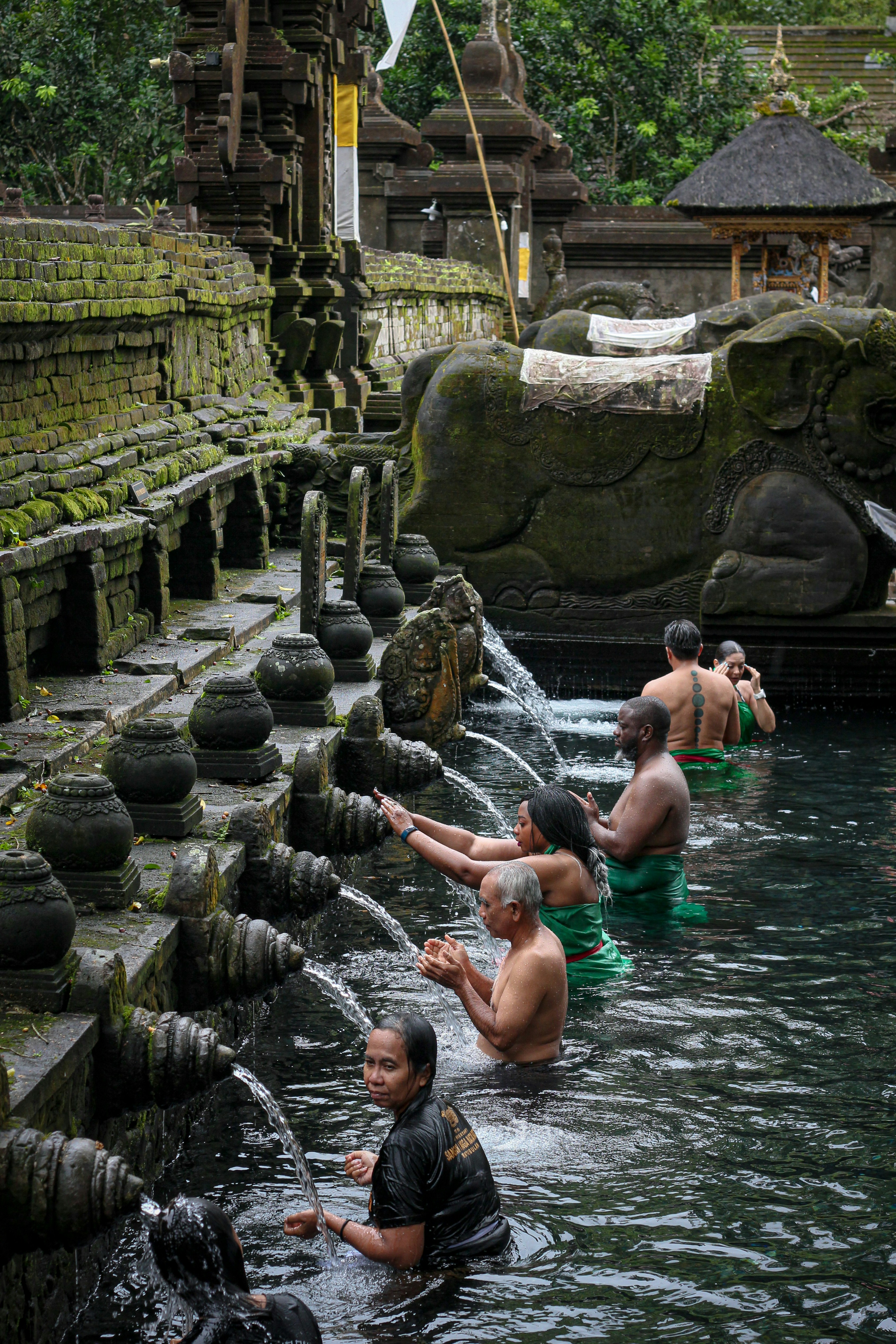
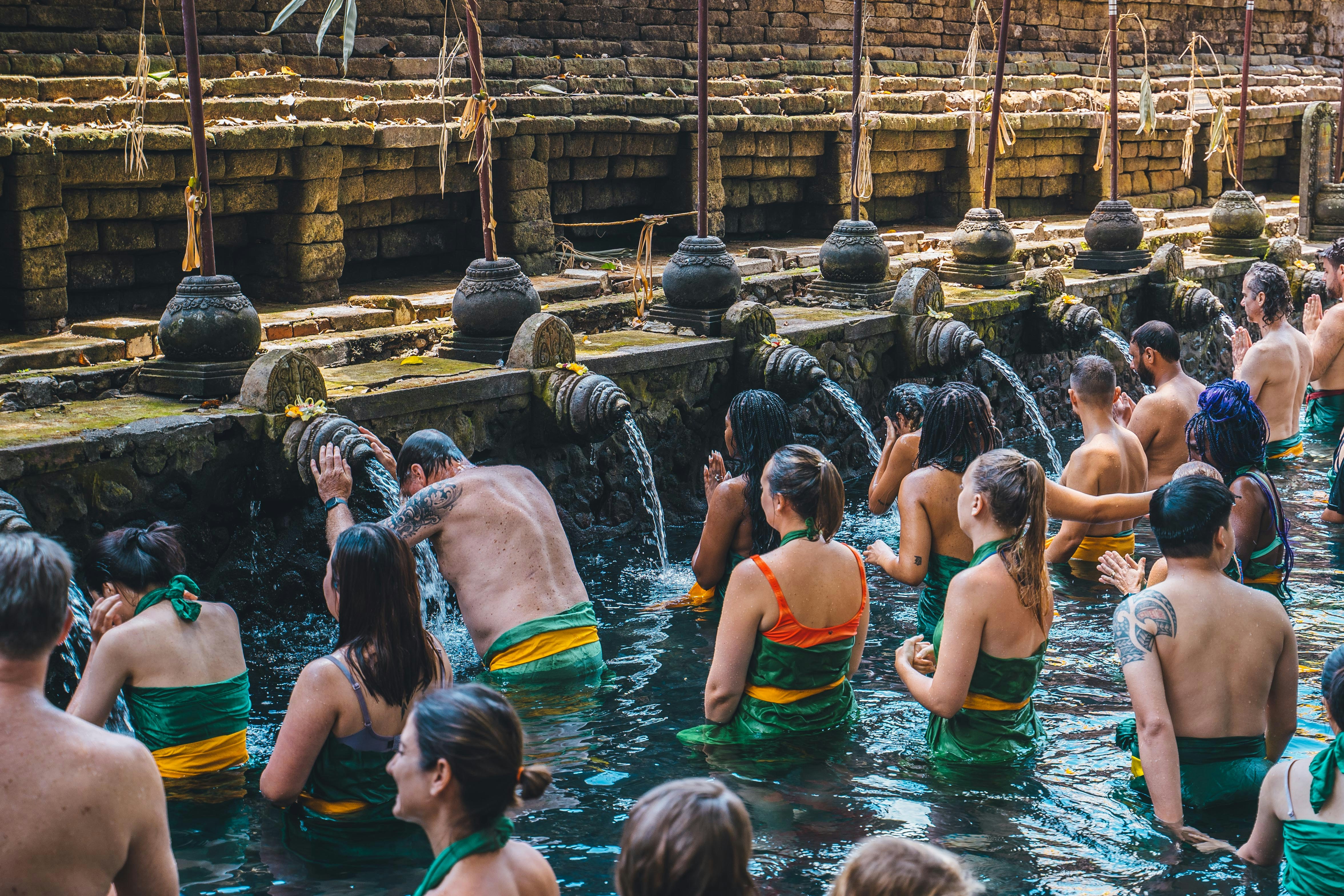
The spiritual magnetism of Tampak Siring is palpable to every traveler who steps across its thresholds. While international visitors frequently admire Balinese Hinduism from a distance, Pura Tirtha Empul offers a profound opportunity to witness—and respectfully participate in—the living water ritual that defines the Balinese worldview. Devotees dressed in traditional green bathing sarongs step into the cold, pristine spring waters, bowing beneath thirty carved stone spouts to cleanse their minds, purify their physical bodies, and restore energetic balance (Tri Hita Karana).
Adding to the site's geopolitical and architectural prestige, the forested hill towering directly above the temple pools is crowned by Istana Tampaksiring—Indonesia's only presidential palace constructed after national independence. Conceived by President Sukarno as an architectural monument to Indonesian sovereignty and spiritual contemplation, the palace provides an imposing, stately backdrop to the ancient water temple below. For travelers seeking authentic spiritual renewal, royal history, and breathtaking classical architecture, Tampak Siring is an unmissable Bali landmark.
2. Exact Geographic Positioning & Micro-Terrain
Tampak Siring is located at coordinates -8.4156° S latitude, 115.3089° E longitude, situated in Desa Manukaya, Kecamatan Tampaksiring, Gianyar Regency. Resting at an elevation of approximately 500 metres above sea level along the western bank of the sacred Pakerisan River, Tampak Siring enjoys a cool, refreshing highland climate characterized by crisp mountain mornings, mild afternoons (22°C to 26°C), and frequent tropical mountain mists.
The topography of Tampak Siring is dynamic yet accessible. The temple complex is built within a natural river basin fed by subterranean volcanic aquifers flowing down from the Mount Batur caldera. Visitors enter from a spacious paved parking plaza along the main highway, descending a gentle, stone-paved ramp through the outer courtyards to reach the central purification pools and the elevated inner sanctum.
The physical difficulty rating for exploring Tampak Siring is classified as EASY. Navigating the temple courtyards involves flat stone pathways and only a handful of wide, shallow steps. For those participating in the Melukat water purification ritual, stepping into the stone pools requires cautious footing, as the submerged stone floor and steps can be wet and slippery. Handrails and non-slip stone steps are provided, and changing room facilities are situated directly adjacent to the pool terrace.
3. Mythological Genesis: Indra, Maya Denawa & the Amritha Spring
The founding mythology of Tampak Siring is immortalized in the sacred lontar text Usana Bali. In the 10th century CE, the tyrannical demon-king Maya Denawa ruled the realm, possessing supernatural shape-shifting powers. Corrupted by pride, he outlawed all worship of the Hindu deities, smashing temple shrines and plunging Bali into spiritual chaos.
The supreme Hindu deity Lord Indra descended from the heavens with a celestial army to restore Dharma. During a nocturnal counterattack, Maya Denawa crept into Indra's camp and channeled poisonous spring water into the river, incapacitating the heavenly warriors. Sensing the disaster, Lord Indra struck his divine spear (Amritha) into the earth. Instantly, an abundant fountain of sacred healing water burst forth from the bedrock, neutralizing the poison and restoring his fallen soldiers to life. Maya Denawa was pursued and defeated in the nearby ravines, his tilted footprints giving the valley its name: Tampak Siring (Tilted Footprint).
For over a millennium, Balinese devotees have revered the water of Tirtha Empul not merely as H2O, but as Amritha—the divine elixir of immortality and spiritual purity. The spring is believed to possess miraculous powers to heal physical ailments, neutralize negative spiritual energies (mala), dissolve karmic curses, and bestow mental tranquility upon all who approach with sincere humility and devotion.
4. Chronicle of the Warmadewa Dynasty & Presidential Heritage
Pura Tirtha Empul's historical authenticity is corroborated by the Prasasti Manukaya (Manukaya Inscription), a stone stele discovered in the nearby village of Manukaya. The inscription, written in Old Balinese script and dated 884 Saka (962 CE), documents that the temple and holy spring pools were formally consecrated by King Sri Jayasingha Warmadewa. For centuries, the royal Warmadewa Dynasty maintained special custodial guardianship over the temple, ensuring that the water channels were continuously maintained to irrigate the downstream rice paddies of Gianyar.
In the mid-20th century, Tampak Siring entered a new, illustrious chapter of modern Indonesian history. In 1954, President Sukarno—whose mother, Ida Ayu Nyoman Rai, was a native Balinese aristocrat from Buleleng—selected the dramatic hillside above Pura Tirtha Empul to build Istana Tampaksiring. Designed by architect R.M. Soejoedi Wirjoatmodjo and completed in 1963, the presidential estate comprises four main neoclassical tropical pavilions: Bale Wisma Negara (the state guest house), Bale Yudhistira, Bale Bima, and Bale Arjuna.
President Sukarno used Tampak Siring as an intimate diplomatic retreat where foreign heads of state could experience the spiritual grandeur of Balinese culture away from the political bustle of Jakarta. Visiting dignitaries who strolled these manicured hillside gardens include Yugoslavian President Josip Broz Tito, Vietnamese leader Ho Chi Minh, Japanese Emperor Akihito, and Indian Prime Minister Jawaharlal Nehru. In 2017, former US President Barack Obama and his family stayed in Tampak Siring during their private cultural tour of Bali.
5. Architectural Anatomy & the Sacred Purification Pools
Pura Tirtha Empul represents the pinnacle of classical Balinese hydraulic architecture:
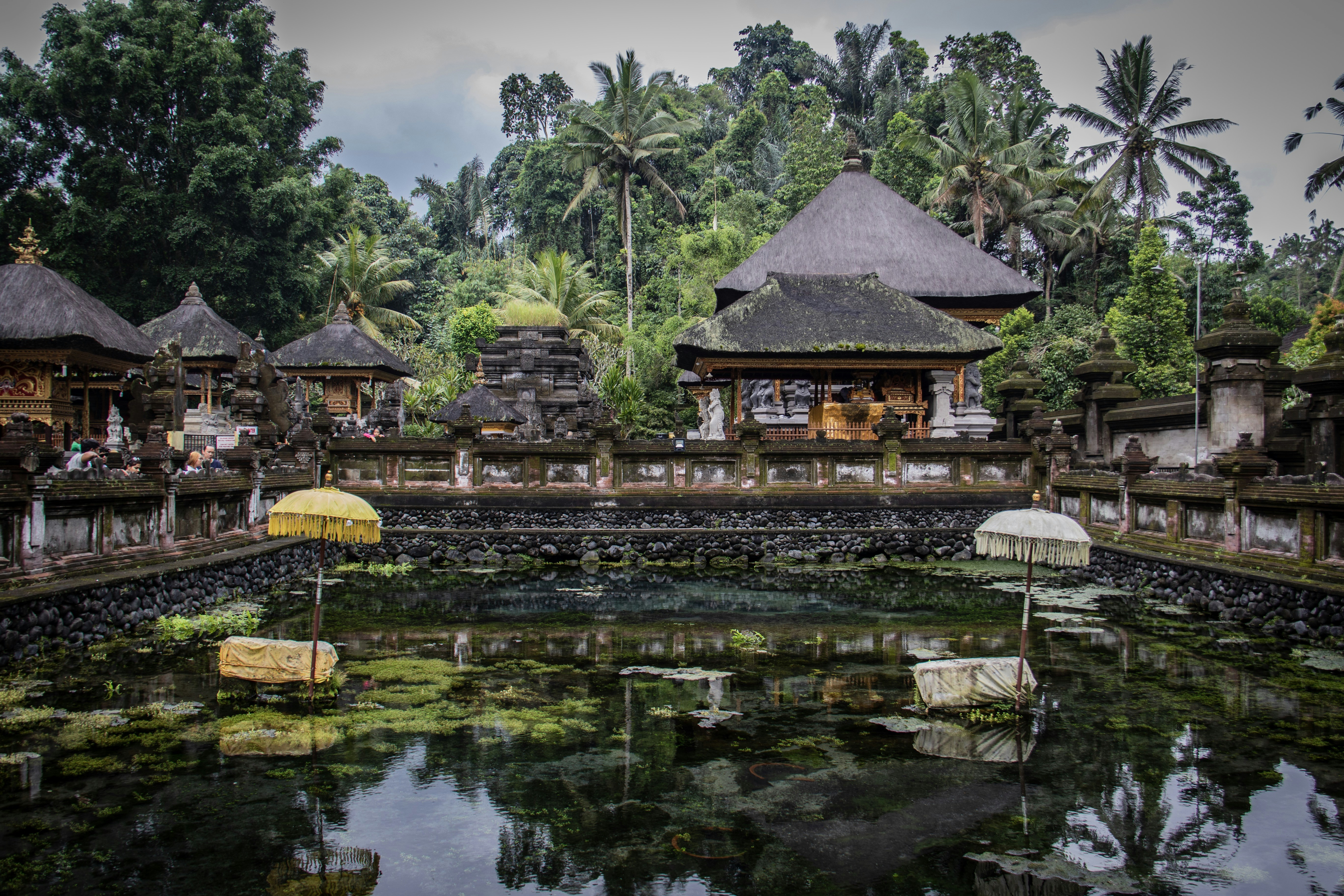
- The Subterranean Spring Sanctum (Jeroan): The natural spring pool is an awe-inspiring sight. Crystal-clear water gushes up continuously from dark volcanic sands at the bottom of the pool, sending mesmerizing, undulating plumes of sand through water as transparent as liquid glass. Dense mats of emerald water lilies float upon the surface, framed by ancient stone retaining walls and towering banyan trees.
- The Purification Pools (Jaba Tengah): From the sacred spring, the water is channeled through stone conduits into two rectangular stone bathing pools. Devotees enter the pool from the western end, queuing patiently in waist-deep water to submerge themselves beneath thirty carved stone spouts (pancuran):
- Spouts 1 through 10: Spiritual purification, cleansing of negative thoughts, and protection from demonic nightmares.
- Spouts 11 through 20: Cleansing of bodily poisons and spiritual healing from illness.
- Spouts 21 through 26: Karmic alignment, success in business, and blessings for family harmony.
- Spouts 27 through 30: Strictly reserved for funerary rites and ancestor worship; general bathers skip these spouts.
- Istana Tampaksiring Hillside View: Standing within the temple courtyards and looking upward, visitors enjoy dramatic views of the pristine white pavilions, sweeping tiled roofs, and lush gardens of the Presidential Palace standing silently against the tropical forest canopy.
6. Essential Etiquette, Awig-Awig & Melukat Ritual Guidelines
Visiting Tampak Siring and participating in the sacred Melukat ritual requires strict adherence to customary bylaws (awig-awig):
- General Temple Dress Code: All visitors entering the temple courtyards must wear a traditional Balinese sarong (kamen) and waist sash (selendang). Modest tops covering the shoulders and chest are strictly required. Complimentary sarongs are provided at the official entrance ticket booth.
- Melukat Bathing Attire: If entering the water for the purification bath, you must wear a dedicated traditional green bathing sarong (kain basah), available for rental adjacent to the locker rooms. Swimming in bikinis, boardshorts, underwear, or standard Western swimwear is strictly forbidden.
- Purity Laws & Menstruation Taboo (Cuntaka): In accordance with millennia-old Balinese Hindu ritual purity laws, women who are actively menstruating, individuals with unhealed bleeding wounds, or anyone in a period of family mourning (cuntaka) are strictly prohibited from entering the purification pools or the inner temple sanctum.
- Pool Conduct: The purification pools are a solemn place of prayer, not a swimming pool. Do not splash, dive, shout, or take sensationalist selfies while bathers are in active prayer. Always wait patiently in line behind Balinese worshippers without cutting the queue.
- Strict Drone Ban: Flying recreational drones over Pura Tirtha Empul and the adjacent Istana Tampaksiring is absolutely prohibited under Indonesian Presidential Security Law (Perpres No. 66/2017). Violations are treated as national security breaches resulting in immediate military detention and drone confiscation.
7. Practical Logistics & Visiting Advice
Tampak Siring is a premier destination that benefits greatly from informed scheduling:
- Optimal Time of Day: Arrive early between 08:00 and 10:00. Morning hours offer calm, tranquil conditions before large tour buses arrive from southern Bali, and the morning mountain spring water is crisp, clear, and spiritually invigorating.
- Transportation & Accessibility: Located 15 kilometres northeast of central Ubud (allow 35 to 45 minutes by car or scooter via Jalan Raya Tegallalang). Grab and Gojek operate in Tampaksiring, though arranging a private day driver is strongly recommended if combining with other highland sites.
- Highland Circuit Combinations: Tampak Siring is the centerpiece of a magnificent Gianyar cultural circuit:
- Gunung Kawi Tampaksiring (1.5 km south): Monumental 11th-century royal cliff shrines carved directly into sheer river ravines.
- Tegallalang Rice Terraces (10 km south): Iconic terraced subak rice landscapes.
- Kintamani & Mount Batur (15 km north): Breathtaking volcanic caldera viewpoints.
- Time Needed: Allow 90 to 120 minutes for a general temple visit, or 2.5 hours if participating in the complete Melukat water purification ritual and changing clothes.
8. Entry Tariffs & Transparent Inclusions
Pura Tirtha Empul operates under official regional government and customary village tariffs:
- Temple Admission Tariffs:
- Foreign Adult Entry: IDR 50,000 (Includes temple admission, complimentary dry sarong and waist sash loan)
- Foreign Child Entry (Ages 5–11): IDR 30,000
- Domestic Indonesian Adult: IDR 20,000
- Domestic Indonesian Child: IDR 10,000
- Melukat Purification Facility Tariffs (Optional):
- Locker Rental: IDR 20,000 (Secure storage for clothes, phones, and valuables).
- Ceremonial Bathing Sarong Rental (Kain Basah): IDR 10,000 to IDR 20,000.
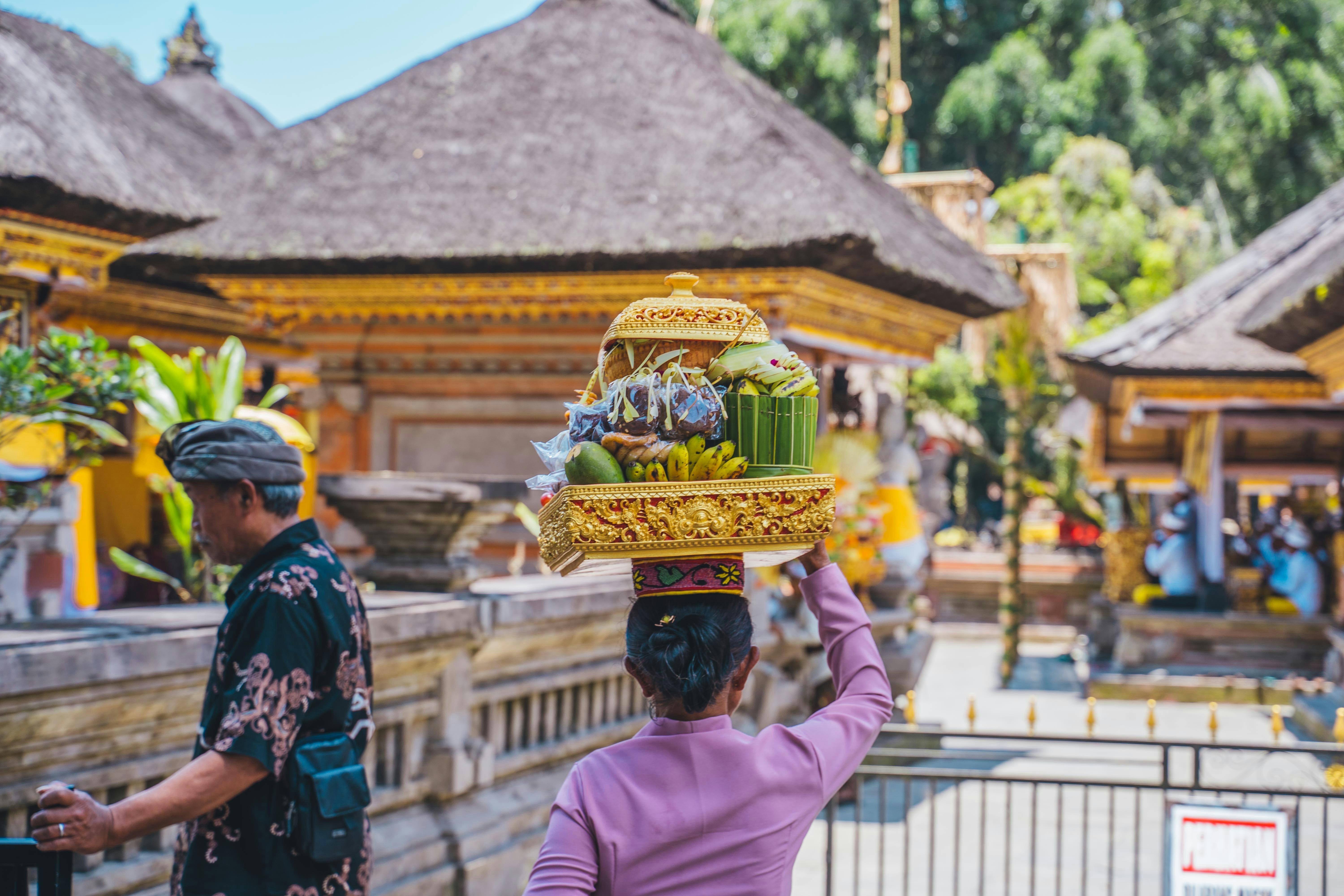
- Traditional Offering Basket (Canang Sari): IDR 10,000 to IDR 20,000 from local vendors.
- Vehicle Parking Fees:
- Motorcycles and Scooters: IDR 2,000 per entry.
- Cars and Passenger Vans: IDR 5,000 per entry.
- All fees directly support the preservation of the sacred water spring, temple restoration, daily waste management, and local village sanitation.
9. Sustainable Tourism & Watershed Stewardship
The sacred spring of Tirtha Empul feeds the Pakerisan River watershed, sustaining hundreds of downstream rice-farming communities. Protecting this fragile ecosystem requires mindful stewardship:
- Protecting the Sacred Water Source: Never drop coins, flowers, plastic wrappers, or foreign objects into the subterranean spring sanctum (Jeroan). The water must remain pristine and unpolluted as it flows into the municipal drinking supply and agricultural subak canals.
- Zero-Waste Responsibility: The exit path from Pura Tirtha Empul winds through a vibrant local artisan souvenir market. Always dispose of water bottles and food wrappers in designated bins, and refuse single-use plastic bags when purchasing handcrafted souvenirs from local village stallholders.
- Support Local Family Enterprises: Support the local economy by purchasing handcrafted wooden carvings, woven sarongs, and fresh tropical fruit from the family-run stalls along the exit promenade. These micro-transactions directly sustain native Tampaksiring households who have preserved this sacred heritage across generations.
Hydraulic Cosmology & Subak Irrigation Stewardship
The sacred waters bubbling perpetually from the subterranean sands of Pura Tirtha Empul represent far more than a site for personal spiritual cleansing; they form the hydraulic lifeblood of central Gianyar's ancient agricultural civilization. Guided by the principles of Tri Hita Karana (the harmonious relationship between humanity, nature, and the divine), the outflow from the temple's purification pools is carefully channeled into a sophisticated regional network of subak irrigation canals. These pristine mountain waters nourish hundreds of hectares of terraced emerald rice paddies throughout the UNESCO-listed Pakerisan River watershed, sustaining local farming cooperatives whose ancestors have cultivated these volcanic river basins for over a millennium.
Sacred Architectural Harmony & Presidential Dignity
The physical dialogue between ancient spiritual sanctity and modern diplomatic architecture defines the unique allure of Tampak Siring. Standing within the temple's outer courtyard (Jaba Pura) and gazing up toward the forested ridge, visitors witness the neoclassical colonnades and broad overhanging eaves of Istana Tampaksiring resting gracefully against the highland jungle canopy. Designed to honor both Balinese vernacular aesthetics and national sovereignty, the presidential estate harmonizes seamlessly with the sacred temple complex below. This majestic spatial synthesis of thousand-year-old royal water springs, living Vedic purification rituals, and stately modern history establishes Tampak Siring as one of the most culturally resonant and unforgettable destinations in the Indonesian archipelago.
The Defeat of Maya Denawa, the Spring of Immortality & the Royal Enclave of Tampak Siring
Tampak Siring, nestled in the misty, forested river valley of the Pakerisan in Gianyar Regency fifteen kilometres northeast of Ubud, is one of Bali's most sacred and historically consequential cultural landscapes. The founding myth of Tampak Siring is immortalized in sacred palm-leaf chronicles (Usana Bali). According to legend, in the 10th century CE, a tyrannical, demonic king named Maya Denawa ruled the land. Arrogant in his supernatural powers, Maya Denawa outlawed all religious devotion, smashed temple altars, and prohibited offerings to the Hindu deities.
In response, Lord Indra, sovereign of the celestial heavens, descended to earth leading an army of gods to restore cosmic order (Dharma). During the climactic war, Maya Denawa crept into Indra's encampment at night and poisoned the river water with a lethal toxin, poisoning many celestial warriors. To heal his fallen soldiers, Lord Indra pierced the earth with his sacred spear (Amritha). Instantly, a miraculous, bubbling fountain of crystal-clear, purifying water burst from the ground, neutralizing the poison and resurrecting the fallen gods. The place where Indra struck the ground was christened Tirtha Empul (meaning "Sacred Bubbling Spring"). When Maya Denawa fled in terror, he walked on the sides of his feet to disguise his tracks—an act that gave the surrounding valley its name: Tampak Siring (derived from Tampak, meaning footprint, and Siring, meaning tilted or sideways).
Epigraphic records inscribed on stone stele definitively date the formal consecration of Pura Tirtha Empul to 962 CE during the reign of King Sri Jayasingha Warmadewa of the ancient Warmadewa Dynasty. For more than one thousand years, the sacred holy spring has flowed continuously without interruption. Balinese Hindu devotees from every corner of the island undertake pilgrimages here to perform Melukat—the sacred ritual bath of spiritual purification, mental renewal, and karmic cleansing beneath thirty carved stone water spouts.
Classical Water Temple Architecture, Sacred Springs & the Presidential Palace
The architectural and hydraulic design of Tampak Siring is an ancient marvel of sacred Balinese water engineering, recognized as an integral component of the UNESCO World Heritage cultural landscape of the Pakerisan River Valley. Pura Tirtha Empul is divided into three sacred concentric courtyards (Tri Mandala):
- Jaba Pura (Outer Courtyard): A welcoming, tree-shaded stone plaza featuring the outer entrance gateway (Candi Bentar), administrative pavilions, and resting shelters (bale).
- Jaba Tengah (Middle Courtyard - The Purification Pools): The physical and spiritual heart of the temple. Here, the subterranean spring water flows from the central pool into two long, rectangular purification pools crafted from dark volcanic andesite stone. Along the southern stone wall of these pools are aligned thirty carved stone water spouts (pancuran). Each spout carries a specific spiritual purpose: twenty-six spouts are dedicated to spiritual cleansing and the curing of spiritual afflictions (Tirta Penglukatan), while four specialized spouts are reserved strictly for funerary purification rites (Tirta Pembersihan) during cremations.
- Jeroan (Inner Sanctum): Entered through an ornate closed portal (Kori Agung), this sanctified upper terrace encloses the sacred spring itself—a crystal-clear, bubbling pool where freshwater perpetually boils up from subterranean volcanic sands beneath a thick blanket of emerald water lilies. Surrounding the spring are multi-tiered meru towers, intricately carved stone thrones (padmasana), and open prayer pavilions where high priests (pedanda) chant sacred mantras and sprinkle sanctified holy water.
Perched majestically upon the forested hill directly overlooking Pura Tirtha Empul stands Istana Tampaksiring (Tampak Siring Presidential Palace). Built between 1957 and 1963 at the personal request of Indonesia's founding President, Sukarno, the palace was designed by prominent Indonesian architect R.M. Soejoedi Wirjoatmodjo. Blending mid-century modernist tropical architecture with classical Balinese pavilions and expansive landscaped gardens, Istana Tampaksiring is the only Indonesian presidential palace built after national independence. It served as Sukarno's contemplative highland retreat and hosted numerous world leaders, including Indian Prime Minister Jawaharlal Nehru, Vietnamese President Ho Chi Minh, and American President Barack Obama.
Frequently Asked Questions & Local Logistics
Key logistical insights, official tariffs, and customary etiquette for Tampak Siring Royal Palace & Sacred Springs.
Top Curated Stays Near Tampak Siring Royal Palace & Sacred Springs
Hébergements sélectionnés dans un rayon de 8 km, classés par avis voyageurs et temps de trajet le plus court.

Campuhan Sebatu Resort

Anja Villas Ubud

Sebatu Tulen Villa

Umah Tis Sebatu
Expériences sélectionnées près de Tampak Siring Royal Palace & Sacred Springs
Curated guided tours and local adventures operated within easy transit of this landmark.

Mount Batur Sunrise Summit Trek with Hot Springs
Pre-dawn summit ascent across volcanic basalt ridges to watch the sunrise above Lake Batur and Mount Rinjani, followed by restorative thermal hot springs.

Ayung River Class II-III White Water Rafting
Thrilling 11-kilometer descent through the pristine rainforest gorges of Ubud, skimming past ancient Hindu rock carvings and hidden waterfall cascades.

Ubud Jungle ATV Quad Bike & Gorilla Cave Expedition
Off-road quad biking across rice fields, bamboo forests, muddy riverbeds, and through the dramatic hollow mouth of the Gorilla Cave.